
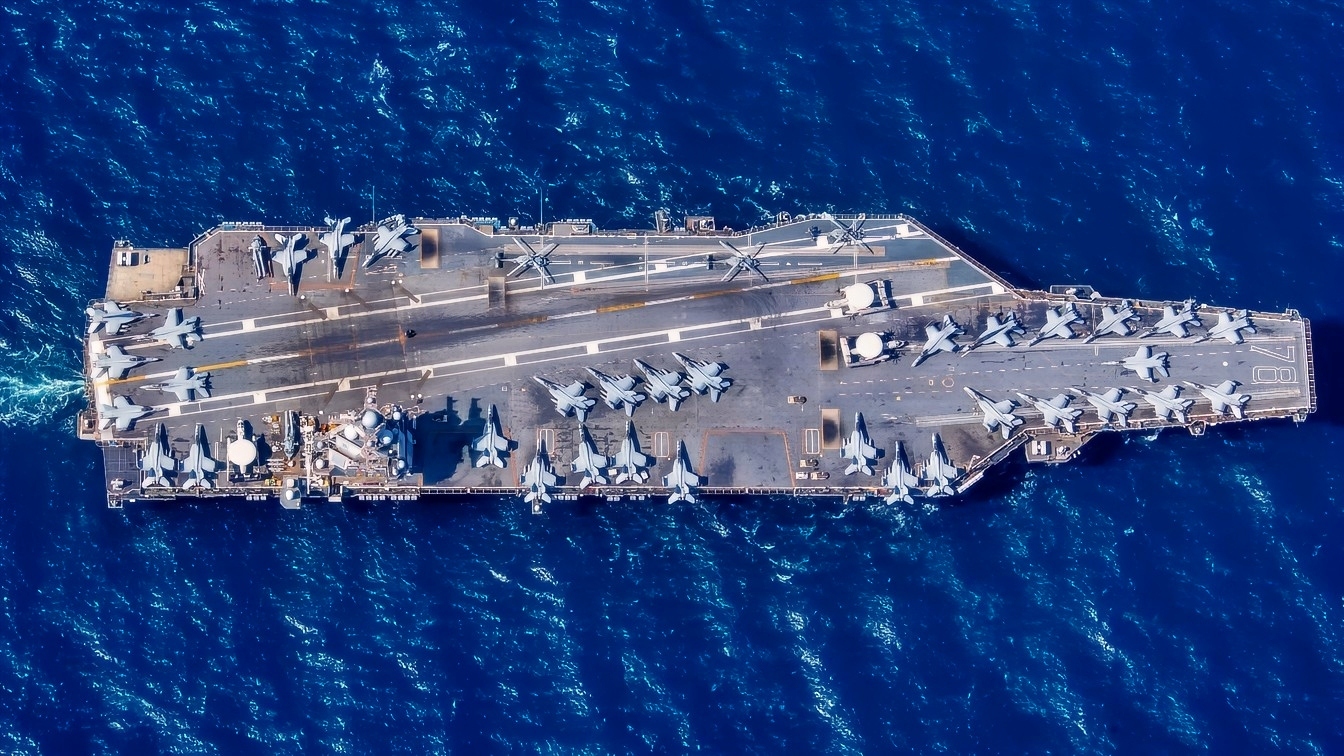
The Iran War Puts America’s Middle East Bases Near the Strait of Hormuz in Question – For decades now, the United States has relied on its bases throughout the Middle East for military support, whether that’s launching aircraft and moving supplies or directing naval operations to respond quickly to regional crises. Those bases are a fixture of American foreign policy, but the war with Iran has exposed those facilities in ways many thought weren’t possible.
Iran, with its enormous missile stockpile, has seriously damaged American military sites spanning Kuwait and Qatar to Bahrain, and now, the Pentagon is considering whether it is even worthwhile to restore its Persian Gulf bases to their original conditions, or simply maintain a smaller presence in the Middle East once the war comes to an end.
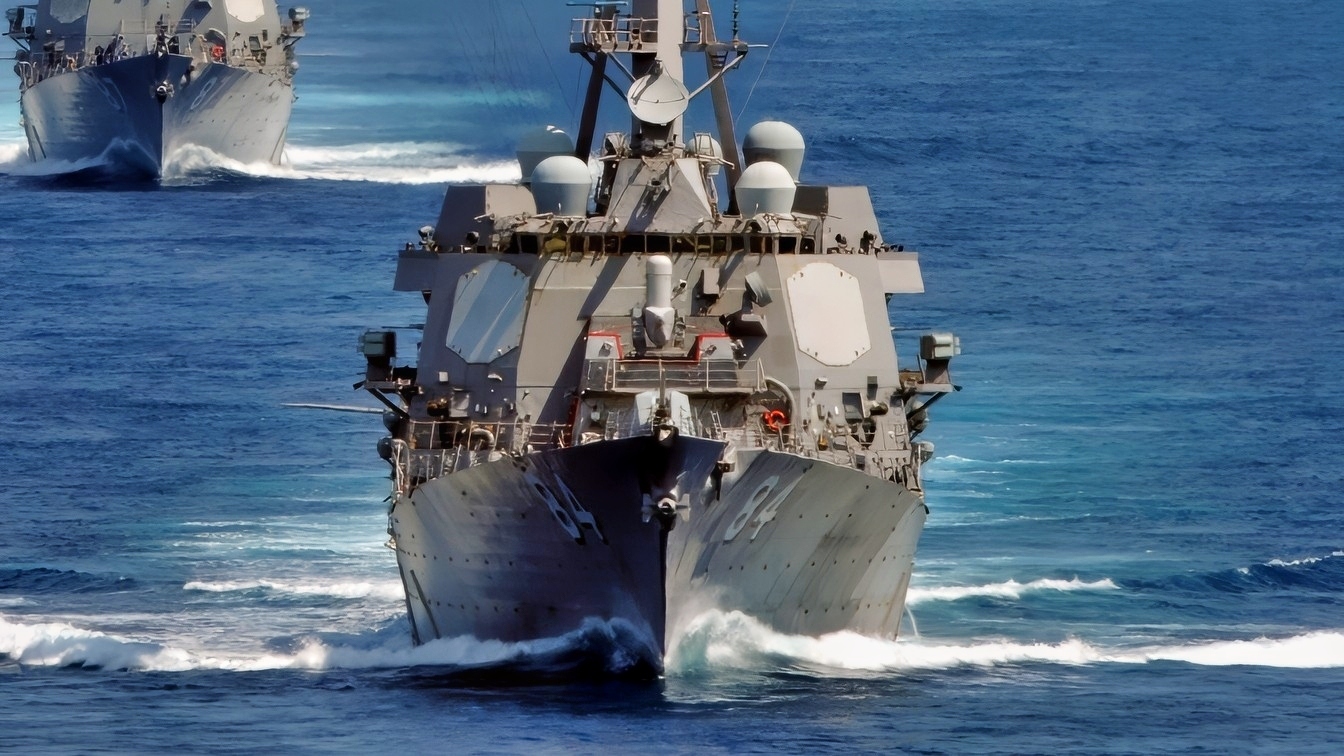
The Arleigh Burke-class guided-missile destroyers USS Bulkeley, right, and USS Mason participate in a strait transit exercise. Bulkeley and Mason are part of the Enterprise Carrier Strike Group and are conducting work-ups and flight operations in preparation for an upcoming deployment. (U.S. Navy photo by Seaman Jared M. King)
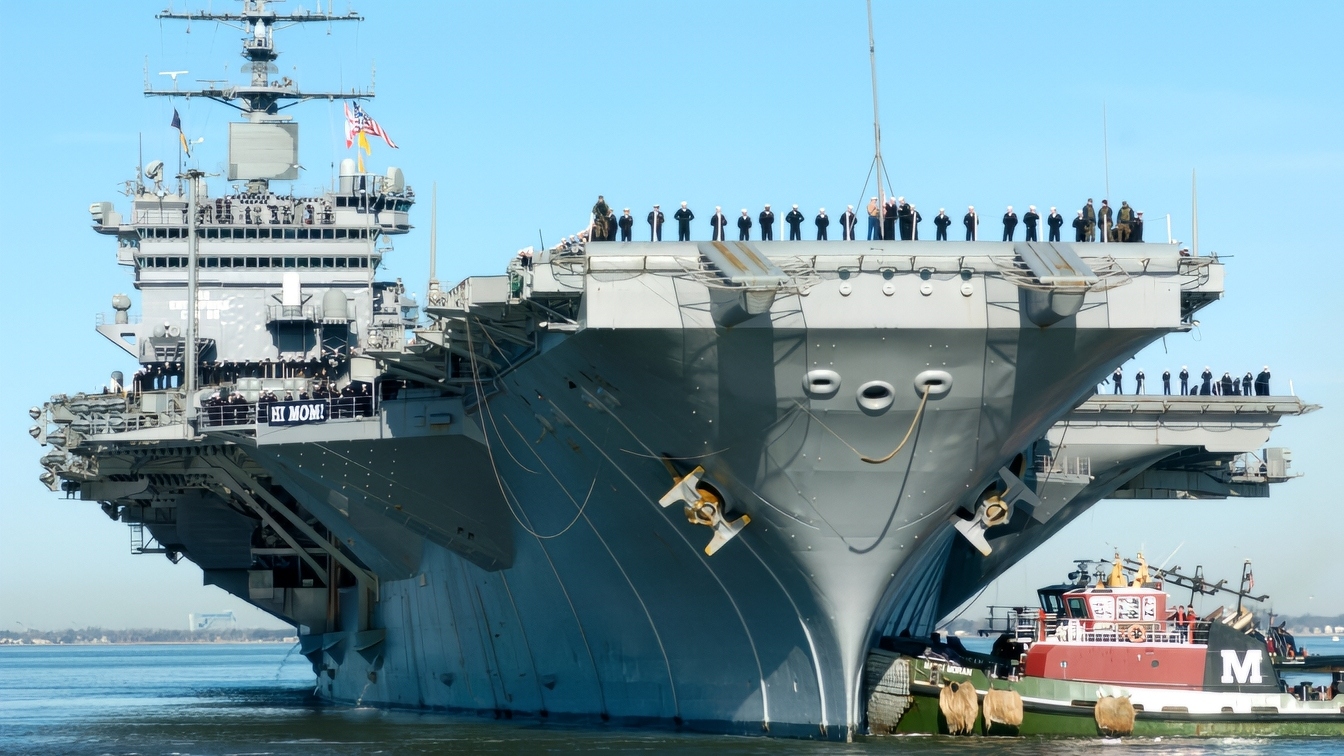
Naval Station Norfolk, Va. (Feb. 29, 2004) – The crew “mans the rails” aboard the nuclear powered aircraft carrier USS Enterprise (CVN 65) as she approaches pier 12 where thousands of family members await. The carrier completed a six-month deployment in support of the global war on terrorism. U.S. Navy photo by Chief Journalist (SW/AW) Dave Fliesen, Fleet Combat Camera, Atlantic. (RELEASED)
It is a fundamental change in American posture globally, and something President Trump and his formerly anti-war allies have long suggested could be on the cards — but ironically, it may now be happening because a much smaller adversary caused substantial damage during a war the president started.
Why the Bases Were Built
America’s military presence in the Middle East is spread out across a series of air bases and naval headquarters, as well as various Army facilities.
Every base serves a different purpose, and the network has been built gradually over decades, partly to prepare for potential contingencies and partly to serve previous combat operations.
In Bahrain, for example, the U.S. Navy established its Middle East Force in 1949 to maintain a presence in the Persian Gulf, with the country becoming home to the U.S. Fifth Fleet in 1995. Today, its headquarters at Naval Support Activity Bahrain assist in directing naval operations across the Gulf region and beyond – a region that includes the approaches to the Strait of Hormuz.
And in Kuwait, U.S. presence expanded after American forces helped expel Iraqi troops in 1991. Camp Arifjan became a major Army supply and equipment hub supporting operations in Iraq and across the region. The Ali al-Salem Air Base is located in western Kuwait and provides U.S. forces with an airfield used to transport personnel and cargo.
Meanwhile, in Qatar, the Al Udeid Air Base, which was built in 1996 by Qatar, has served a significant role in U.S. global combat and military operations — especially after the September 11 attacks.
In 2003, the United States moved air command functions from Prince Sultan Air Base in Saudi Arabia to the base.
The Combined Air Operations Center at Al Udeid directs air missions throughout the region.
Prince Sultan Air Base, located southeast of Riyadh, was used during the 1991 Gulf War.
What Iran Hit
Despite U.S. air defenses, Iran has successfully caused damage at many of America’s most important overseas bases.
Iran began striking facilities used by American forces after the U.S. and Israel attacked Iran on February 28, and by March 1, satellite imagery was already showing damage to communications equipment stations at Al Udeid and Camp Arifjan.
The satellite imagery also showed damage at the Fifth Fleet headquarters in Bahrain and the Al Dhafra Air Base in the United Arab Emirates. Damage was also reported at Prince Sultan Air Base.
Six U.S. service members were also killed during a drone strike on Kuwait’s Port Shuaiba that same month.
In May, a Washington Post analysis identified widespread damage, including to fuel storage sites, communications systems, air defense equipment, and even aircraft.
Despite being a much smaller force, Iran had successfully caused damage to major American military sites and even forced the U.S. to disperse its operations to protect service members and equipment. The analysis counted more than 228 damaged or destroyed structures or pieces of equipment across 15 U.S. sites.
Could the U.S. Pull Back?
If the U.S. intended to maintain its presence, the obvious and only solution is to rebuild those sites and replace damaged equipment. But as the U.S. struggles to maintain its offensive operations amid a shortage of precision-guided missiles and interceptors, reports now indicate that the Pentagon is considering whether it is even worth rebuilding its Gulf bases.
According to another Washington Post report, this time published in August, defense officials are now assessing whether to keep fewer troops near Iran and move some farther west.
In September, CNN reported that military and intelligence officials were discussing maintaining a smaller regional presence after the war—a suggestion that might have drawn praise from President Trump’s base had he not chosen to begin the war with Iran, but which now seems, to some, like an admission of defeat.
But no decision has been officially announced. The strikes have, though, forced the U.S. to confront the possibility that it may have been overextended to begin with, and that keeping its forces so close to an enemy may no longer offer the advantage it used to.
About the Author: Jack Buckby
Jack Buckby is a British researcher and analyst specializing in defense and national security, based in New York. His work focuses on military capability, procurement, and strategic competition, producing and editing analysis for policy and defense audiences. He brings extensive editorial experience, with a career output spanning over 1,000 articles at National Security Journal, and has previously authored books and papers on extremism and deradicalization.


