
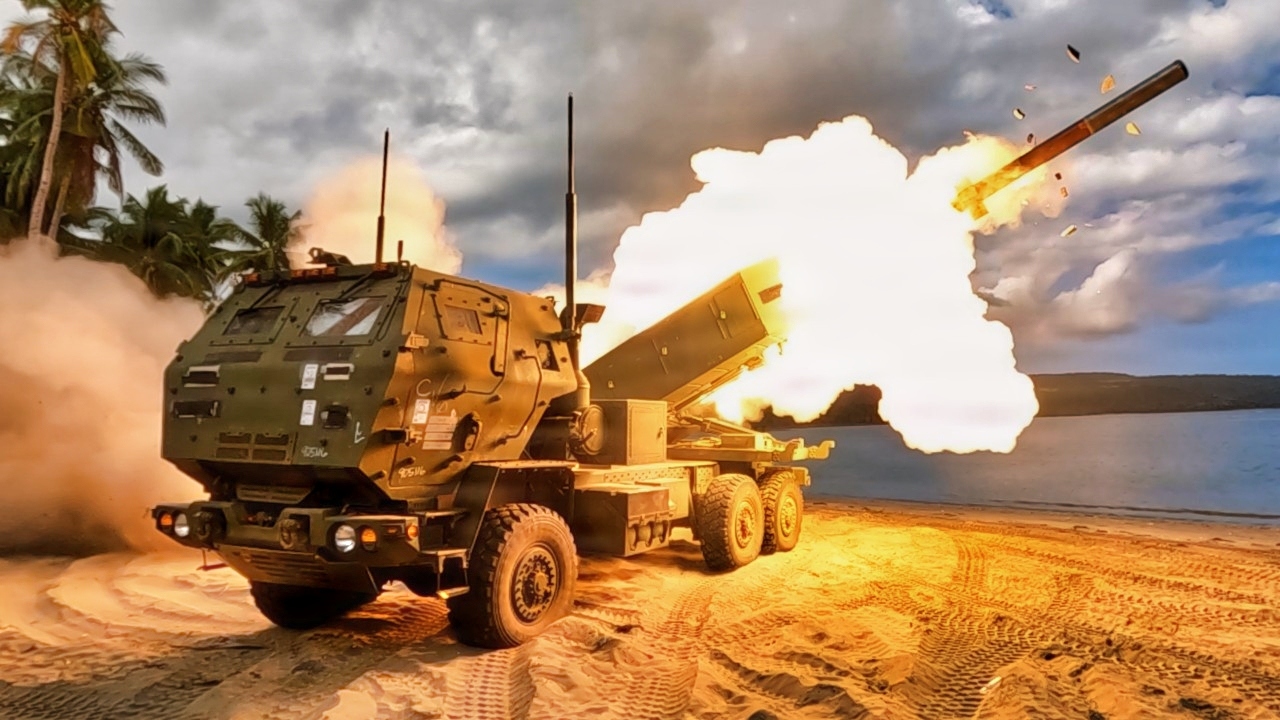
Zelenskyy Says North Korean Ballistic Missiles Used In Deadly Strike: Russia may have used a North Korean ballistic missile during one of its most recent attacks on Ukraine, according to Ukrainian President Volodymyr Zelenskyy.
The missile struck the village of Radushne near Kryvyi Rih in Ukraine’s Dnipropetrovsk region during the overnight Russian barrage into July 30, hitting a family home and killing several people. Ukrainian investigators were still examining fragments from the impact site, but officials said preliminary evidence and the weapon’s flight characteristics pointed to a North Korean short-range ballistic missile.
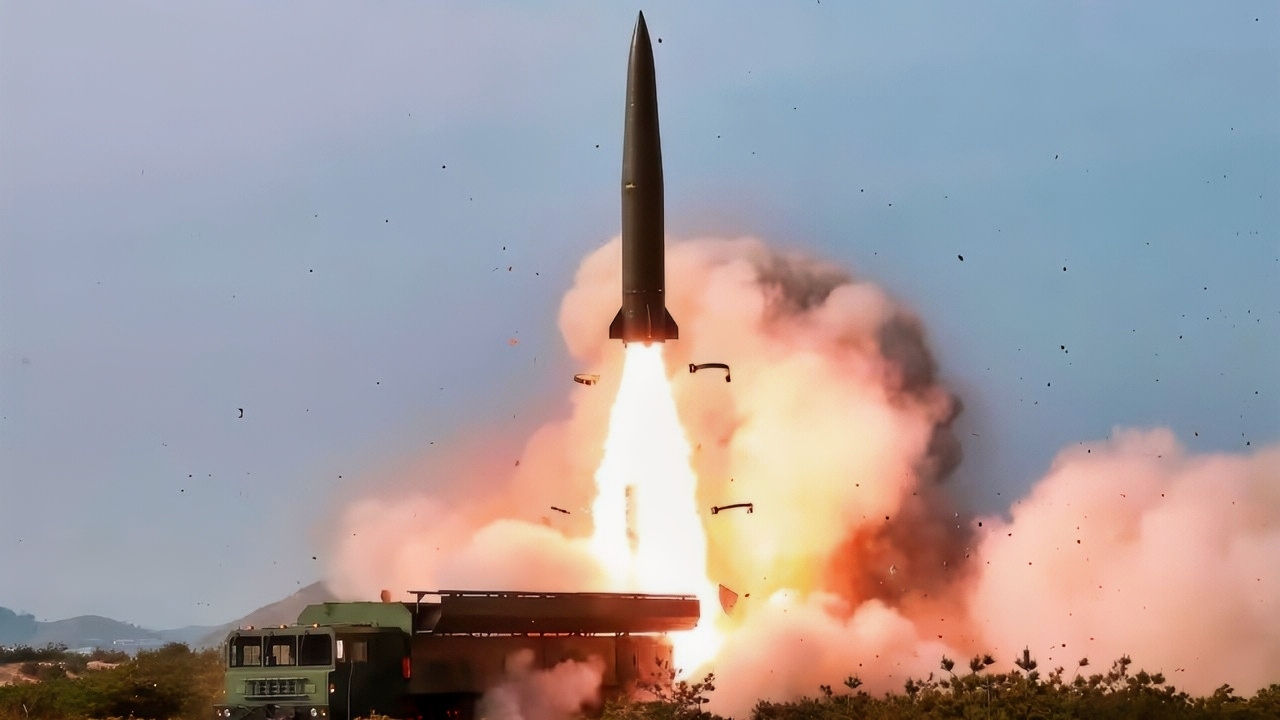
North Korea Missile Test Creative Commons Image
The apparent use of North Korean missiles could indicate that Russia received a new shipment from Pyongyang, amid reports that Russia and North Korea are cooperating militarily and economically. The news also comes as Moscow looks to exploit Ukraine’s well-publicized Patriot interceptor shortage by firing ballistic missiles at targets throughout the country’s major cities.
What Zelenskyy Claimed
In his nightly video address from Kyiv on July 30, Zelenskyy discussed the strike and claimed that Russia had used a North Korean missile.
“In the strike on Radushne, for the first time in a while, the Russians used a North Korean missile, according to preliminary data. Of course, more examinations will follow, and everything will be verified, but as of now – it is a North Korean ballistic missile,” Zelenskyy said.
“The alliance between the Moscow scumbags and the deranged regime in North Korea exists for the sake of missiles, North Korean troops on our borders here in Europe, and killing our Ukrainian children,” he continued.
A Ukrainian military source familiar with the attack also told Reuters that radar operators had detected two flight tracks that were characteristic of North Korean KN-23 or KN-24 missiles approaching the Kryvyi Rih area. Investigators were attempting to recover and examine debris to determine the missile’s exact origin and type.
The strike occurred during a larger Russian attack that involved more than 70 missiles and approximately 280 drones fired at targets throughout Ukraine, with officials reporting casualties and damage in several regions. Ukrainian air defenses also struggled against Russian ballistic missiles amid the ongoing interceptor shortage, which Zelenskyy hopes Western allies will address in the coming days and weeks.
Meet the KN-23 and KN-24
The two possible weapons identified by Ukraine are the KN-23 and KN-24, which are the Western designations for North Korean road-mobile and solid-fuel short-range ballistic missiles. The KN-23, also known as the Hwasong-11Ga, is frequently compared with Russia’s Iskander-M missile. It is believed to have a range of approximately 450 to 690 kilometers.
The KN-24, meanwhile, has been assessed as having a range of around 400 kilometers, and is said to resemble the U.S.-made Army Tactical Missile System in its appearance and configuration. Both missiles can follow depressed or quasi-ballistic trajectories and maneuver during flight, making their paths more difficult for air-defense operators to predict. Their solid-fuel propulsion also allows launch crews to fire more quickly than with liquid-fueled missiles, which require lengthy preparation.
Ukraine has previously indicated that North Korean missiles pose a threat, noting that they possess larger warheads and, in some variants, much longer ranges than Russia’s standard Iskander missiles.
Investigators Previously Confirmed North Korean Weapons Usage
After examining wreckage from a missile that struck Kharkiv in January 2024, investigators from Conflict Armament Research concluded that North Korean missiles were in use in Ukraine. Investigators said that the structural features and internal components of the weapon used were consistent with those manufactured by North Korea.
Later, the U.S. Defense Intelligence Agency compared images of debris recovered in Ukraine with photographs released by North Korean state media and reached the same conclusion.
More than 290 foreign electronic components were documented in the wreckage examined by Conflict Armament Research, with approximately three-quarters linked to companies incorporated in the United States. While it doesn’t mean that U.S. manufacturers are aware that their components are being used in North Korea, it does demonstrate how effective the North Koreans have become at avoiding sanctions and obtaining U.S. technology and hardware.
North Korea to Russia’s Rescue
North Korea’s involvement in the Ukraine war is well established at this point. The isolationist, communist regime has contributed in numerous ways to Russia’s war effort, with Western and South Korean intelligence agencies estimating that Pyongyang has already deployed as many as 14,000 troops to Russia. Many of those troops were used to help Russian forces recapture territory in the Kursk region following Ukraine’s cross-border offensive.
This month, Zelenskyy also warned that as many as 30,000 more North Korean soldiers could soon be committed to the war as Russia prepares to intensify its efforts in the eastern Donetsk region.
About the Author:
Jack Buckby is a British researcher and analyst specializing in defense and national security, based in New York. His work focuses on military capability, procurement, and strategic competition, producing and editing analysis for policy and defense audiences. He brings extensive editorial experience, with a career output spanning over 1,000 articles at 19FortyFive and National Security Journal, and has previously authored books and papers on extremism and deradicalization.


