

In a recent post in Russia Matters, the question was asked, “Is Russia Losing More Soldiers In Ukraine Than Its Recruiting?”
In the piece, they state, and correctly so, that this question has been asked since 2024, when the Institute for the Study of War (ISW) wrote that, “Russia may have increased its recruitment rate in recent weeks [of December 2024], although this recruitment rate appears to be thousands of troops short of Russia’s ever-increasing monthly casualty totals.”
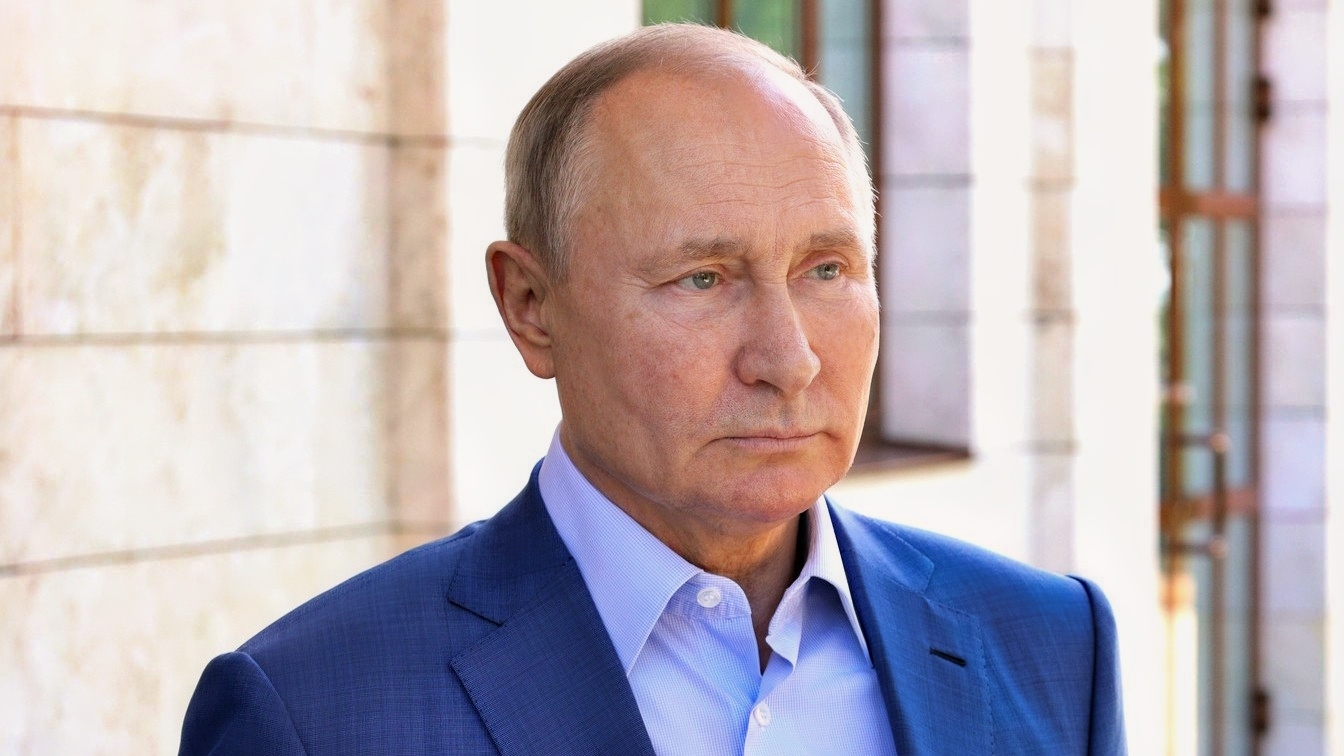
Putin in May of 2021 Russian Federation Photo
The ISW repeated these claims several more times. It should be noted that the ISW is one of the most respected and quoted sites, and is frequently used here.
However, RM argues that the Russians may not be losing more troops than they can replace through recruiting and questions the veracity of Russia’s possible mobilization.
RM Spells Out The Data Of Russians Lost And Recruited
In the article, RM posted the following: “Russia is estimated to have been losing approximately 5,000-8,200 soldiers per week while recruiting approximately 5,500-8,000 per week.
“The estimates in the table do not support a firm conclusion that Russia is consistently losing more personnel than it recruits.
Nor does it support a firm conclusion that Russia is consistently recruiting more soldiers to fight in Ukraine than it loses there.
“The table shows substantial overlap between the estimated ranges, with balances ranging from a recruitment surplus of roughly 3,000 per week—comparing roughly 8,000 recruits with roughly 5,000 losses—to a deficit of roughly 2,700 per week—comparing about 5,500 recruits with 8,200 losses.”
Inside the piece, the authors ask the question of whether Russian losses include the killed and wounded, and how many of those wounded were returned to duty. It does make for a compelling argument.

T-14 Armata Tank. Image Credit: Creative Commons.
Ukraine War: Are Russian Casualties Returning Too Quickly?
Regarding RM’s question about wounded personnel returning to combat units, an interesting development has emerged.
Russian Deputy Defense Minister Anna Tsivileva stated that approximately 96 percent of wounded personnel eventually return to active duty. That number seems a tad too high.
During the War in Afghanistan, approximately 51 to 55 percent of the U.S. service members wounded in action (WIA) were able to return to duty within 72 hours. Many of those were considered minor or superficial wounds.
The remaining 45 to 49 percent suffered injuries severe enough to require long-term hospitalization or medical evacuation out of the theater (typically through Landstuhl Regional Medical Center in Germany).
Of American wounded, more than 2.5 percent suffered amputations. That doesn’t take into consideration serious wounds, burns, etc. And the US has much better casualty care than the Russian military.
In Iraq, the Pentagon and the New England Journal of Medicine released on November 16, 2004, a report stating that a total of 10,726 service members had suffered war injuries.
Of these, 1361 died, 1004 of them killed in action; 5174 were wounded in action and could not return to duty; and 4191 were less severely wounded and returned to duty within 72 hours.
In regard to Russian casualties, however, independent media and intelligence investigations have documented numerous instances where soldiers with shrapnel still embedded in their bodies, or those requiring crutches or ongoing medical care, are reassigned back to combat units.
Radio Free Europe reported that three Russian soldiers, “One had head and chest wounds and lost his left eye and his hearing in both ears. Another was blind in one eye and could see only dim, blurred shapes through the other. A third had broken bones, multiple shrapnel wounds, a ruptured radial nerve, and a “completely useless right arm” that ‘just hangs there, dangling.”
“All three Russian men, seriously wounded in the war against Ukraine, were sent back to the front despite their condition, according to relatives, friends, and activists.”
“They force them to sign a new contract.
They’re usually locked up in the guardhouse for a few days. They’re simply left in the barracks, in a cell, without food or water.
And they’re forced to sign a paper stating that the last military medical commission [finding] was ‘fake,'” one soldier said. “After that, they organize a new commission for them. It will then declare the discharged soldier fit for service. There’s no way out.”
That sounds like a military struggling to meet its staffing demands.
“The Rates (Casualties) Are Astounding”
While Russian President Putin continues to paint a picture of inevitable victory, Moscow hasn’t accomplished one of its strategic goals since beginning this “special military operation.”
According to research by the Center for Strategic and International Studies (CSIS), Russia has suffered 1.4 million casualties, including killed, wounded, and missing soldiers. Russia’s dead have topped 450,000, and that number rises every day.
The Russians are losing between 30,000 and 35,000 troops every month. But instead of gaining ground, they are losing it. CSIS reported that “Russia’s territorial control in Ukraine shrank in the spring of 2026, with a net loss of roughly 400 square kilometers in April and May.”
Seth G. Jones and Riley McCabe, the authors of the CSIS study, said, “These rates are astounding.
“Russian fatalities in Ukraine are more than four times greater than all US fatalities in all wars combined since World War II, and more than nine times greater than all Soviet and Russian fatalities in all wars combined since World War II.”
They both agree that the casualty rate has likely risen to nearly eight to one in the first half of 2026, meaning that for every Ukrainian soldier killed, wounded, or missing, there are eight Russian casualties.
However, these numbers don’t necessarily mean that casualty rates outpaced recruitment numbers.
Russian Objectives: Unmet And Unlikely To Improve
Putin’s objectives in the war were to take Kyiv in a matter of days and the entire country in a few weeks, thereby rendering Ukraine a vassal state under Moscow’s control.
Putin sought to limit NATO’s expansion and shatter the alliance, thereby increasing Russia’s sphere of influence across Eastern Europe.
Russian attempts to take Kyiv and Kharkiv early in the war’s first days were thrown back with horrific casualties. Since then, the fighting in the Donbas and in southern Ukraine has turned into a bloody war of attrition.
Ukraine’s resolve has stiffened rather than broken. And NATO has expanded…right to Russia’s doorstep. Finland, which shares a 1,340-kilometer border with Russia, has joined NATO along with Sweden.
And rather than splitting NATO, its support for Ukraine is now stronger than ever.
While Russian officials report that contract recruitment remains on track with roughly 200,000 enlistments in the first half of the year, independent analysts and intelligence analysts indicate that high battlefield casualty rates are matching or even outpacing the monthly influx of new volunteers.
Despite Russian claims to the contrary, recruitment is down 20 percent since last year. And as Russian government officials decry the mobilization rumors after the Duma election as lies, as the ISW noted, Putin had already, at the end of last year, “signed a law changing the administrative process of Russian military conscription to a year-round cycle instead of the previous biannual cycles, thereby significantly increasing the rate at which Russia could summon and process larger numbers of conscripts and reservists.”
Russia is also actively laying the legal and security groundwork to manage potential domestic unrest and a large-scale manpower call-up.
Reports and intelligence assessments indicate the Kremlin is preparing for a new wave of mobilization—potentially targeting 300,000 to 500,000 personnel—while bracing for the internal fallout such an unpopular move could trigger.
About the Author: Steve Balestrieri
Steve Balestrieri is a National Security Columnist. He served as a US Army Special Forces NCO and Warrant Officer. In addition to writing on defense, he covers the NFL for PatsFans.com and is a member of the Pro Football Writers of America (PFWA). His work was regularly featured in many military publications.


