


Trump Threatened to Destroy a Civilization. Iran Cut All Contact. What Happens Now?
President Donald J. Trump’s deadline for the Islamic Republic of Iran to end its blockade of the Strait of Hormuz is rapidly approaching.
It is evident that the forty-seventh president believes that issuing serious threats to the Iranian regime is the best way to end this conflict and reopen the Strait of Hormuz.

F-22 Raptor In the Air. Image Credit: Creative Commons.
Escalation Breeds Escalation
The White House issued a new threat in which President Trump ominously declared that “A whole civilization will die tonight, never to be brought back again.”
In response to this recent presidential post on Truth Social, the Islamic Republic of Iran has officially ended all contacts, including informal and indirect, with the American government. What is clear now is that, regardless of whether Trump truly wants a peace deal, the president is increasing hostility toward Iran.
Meanwhile, Iran refuses to lift its blockade of the vital oil transit chokepoint, the Strait of Hormuz. In fact, Tehran is escalating its actions by moving to formalize its blockade of the Strait by imposing tolls on any civilian ship trying to pass through the waterway, to be paid in Chinese yuan.
At this point, we must expect that the president, whether he truly wants to or not, will be compelled to escalate military actions against the Islamic Republic beyond what he has already done. There is evidence indicating that the White House is preparing for such an escalation.
Last weekend, an American F-15 Strike Eagle was shot down while on a mission near the Iranian coast, suggesting that some preparations for a potential US ground invasion were in progress. This coincides with recent threats from the president to launch a massive bombing campaign if Iran refused to negotiate.
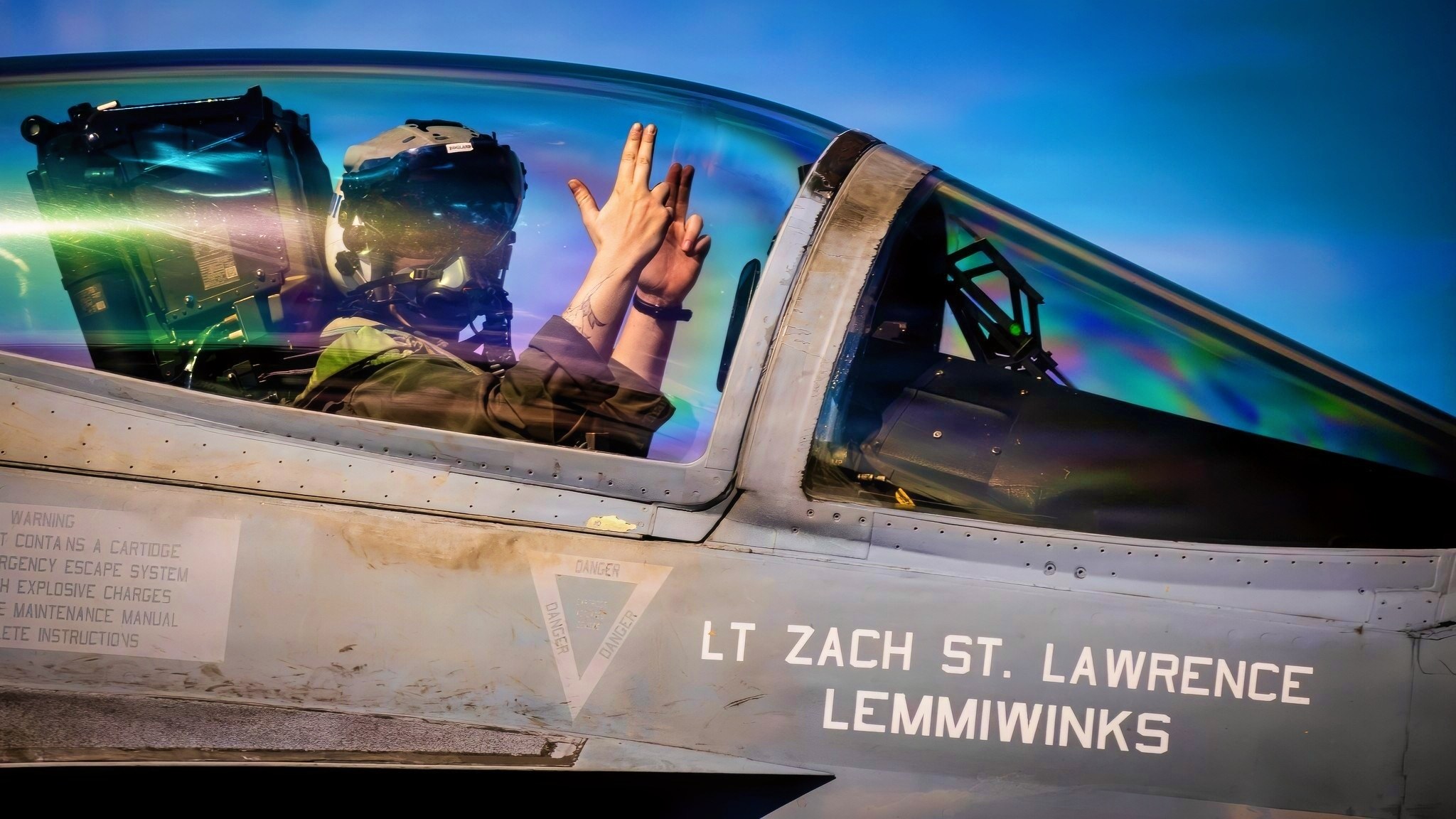
A U.S. Sailor assigned to Strike Fighter Squadron 37 signals to arm ordnance in an F/A-18E Super Hornet aircraft on the flight deck of the world’s largest aircraft carrier, Ford-class aircraft carrier USS Gerald R. Ford (CVN 78), while underway in the Caribbean Sea, Nov. 30, 2025. U.S. military forces are deployed to the U.S. Southern Command area of responsibility in support of Operation SOUTHERN SPEAR, Department of War-directed operations, and the president’s priorities to disrupt illicit drug trafficking and protect the homeland. (U.S. Navy photo)
Airpower Illusions
Indeed, Bloomberg reports that the U.S. military plans to use its entire JASSM-ER stockpile in the upcoming air strike against Iran, which is clearly part of the president’s broader escalation against the Islamic Republic.
However, nowhere in the history of modern warfare has an airpower-only conflict resulted in the overthrow of a targeted regime. In fact, most cases show that the population of the besieged country rallies around its government, no matter how unpopular that government is in the eyes of the people.
Trump, or at least his associates, understands this.
Yet, Trump continues to demand regime change and what amounts to the surrender of the Islamic Republic on key issues like the Strait of Hormuz closure, their ballistic missile arsenal, and the development of nuclear weapons. None of which the Iranian government is likely to give up now that Trump has vowed to destroy their entire ancient civilization.
So, the upcoming aerial assault, supposedly unlike anything seen before, will likely lead to US forces being deployed on the ground. Currently, there are at least two Marine Expeditionary Units (MEUs) in the area, thousands of paratroopers from the US Army’s 82nd Airborne Division, and numerous US Special Forces troops ready for action.
Furthermore, the USS Gerald R. Ford, despite sustaining fire damage from a supposed laundry fire, remains in the region, along with the USS Abraham Lincoln, and a third carrier, the USS George H.W. Bush, is heading to bolster this assembled flotilla.
None of this suggests de-escalation.
The Inevitable Ground Troop Question
And airstrikes alone will not alter Iran’s calculations. Although the Trump administration has committed a large number of troops to the region, there are still far too few to fully invade Iran as the Americans did in Iraq in 2003.
Instead, it seems the Trump administration is ramping up its airstrikes to prepare the battlefield for a limited number of US troops, whose mission will be confined in scope and duration (at least that’s what Trump appears to want).

Iran Missiles. Image Credit: Creative Commons.
At the very least, the American people can expect to see a few thousand of their troops landing along the Iranian coastline with a mission to essentially establish ground-based sea control.
Unfortunately, any possible landing area along the Iranian coast is filled with significant risks to US ground forces because Americans have yet to sufficiently eliminate Iran’s ability to launch missile volleys and drone swarms.
While the upcoming large bombing campaign likely aims to address this issue, the Iranians have had plenty of time to strengthen their offensive capabilities to ensure they stay combat-ready if American landings occur anywhere on their territory.
In other words, what Trump expects to be a smooth, easy ground campaign to seize locations like Kharg Island or Qeshm Island (or even conduct a uranium hunt deep inside Iran) will turn into a long-lasting struggle ending in failure, pushing the president to escalate even further.
A Battlespace Designed to Bleed America
We know that any ground operation in Iranian territory will quickly go awry, considering how the most recent alleged rescue attempt of a downed American F-15 Strike Eagle pilot and the onboard weapons officer (WSO) took place deep inside Iran.

Iran’s missile capabilities. Image Credit: Creative Commons.
While there are no reported American casualties from that operation, several expensive aircraft were lost, and the entire mission nearly ended in total failure. In fact, nearly $400 million worth of aircraft have been lost due to the attempted ground operation inside Iran this past weekend.
That was just a preview of any escalation involving ground troops that the president is considering, as Tehran remains unmoved by his sweeping, overly aggressive threats to wipe out their entire civilization by tonight unless they negotiate.
From Demonstration to Commitment
What is unfolding isn’t a carefully planned strategy but a ladder of escalation with no clear summit—and with no obvious way down now.
The effort to reopen the Strait of Hormuz through the kind of force discussed above risks turning a regional crisis into a prolonged war, one characterized less by decisive victories than by increasing costs and shrinking options.
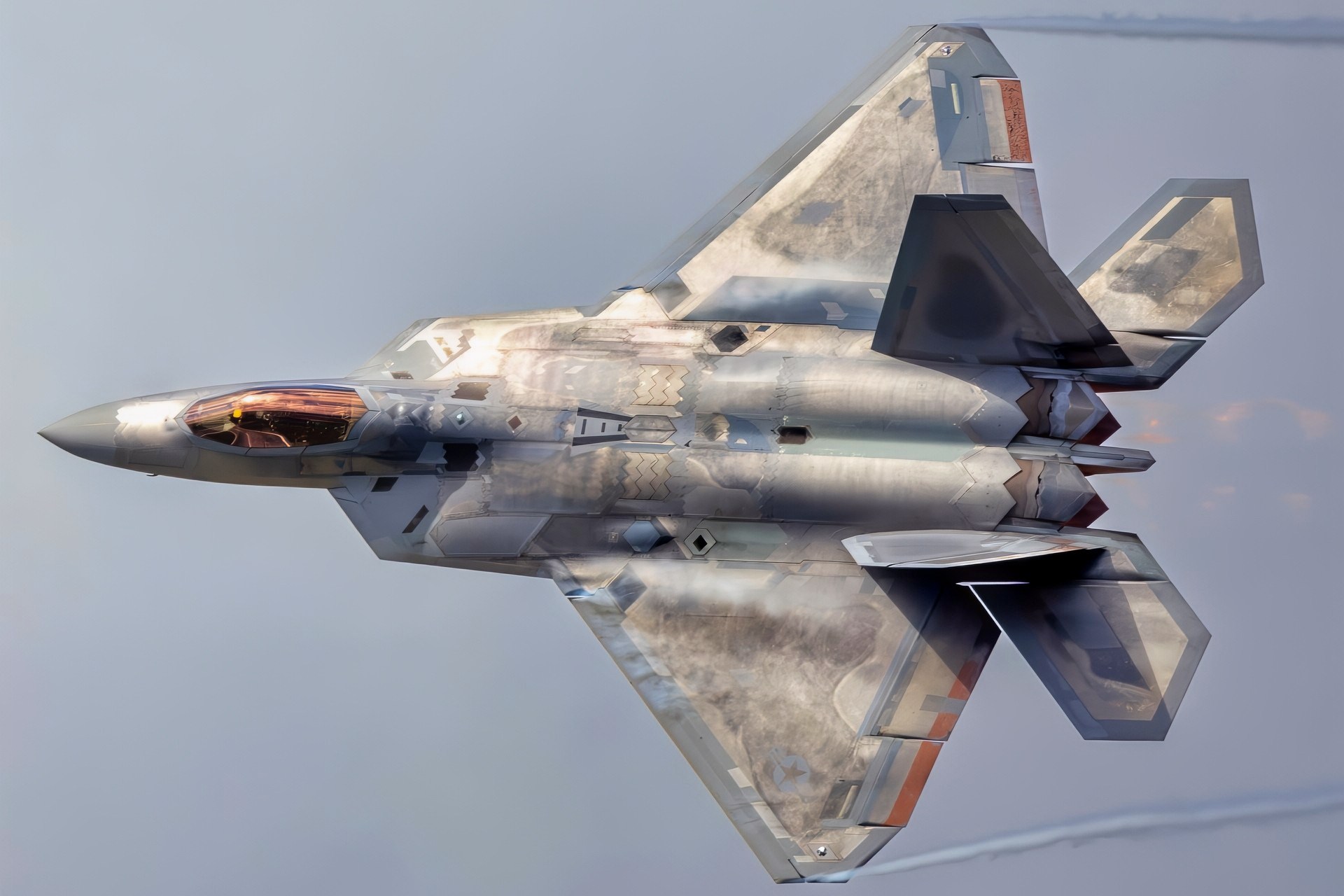
An F-22 Raptor performs an aerial demonstration at Naval Air Station Oceana, Virginia, Sept. 21, 2025. Designed for both air superiority and ground attack missions, the F-22 demonstrates the flexibility and power of fifth-generation fighter technology. (U.S. Air Force photo by Staff Sgt. Lauren Cobin)
In attempting to force Iran to comply, Washington might risk a conflict that transforms the region—and challenges the reach of American power.
About the Author: Brandon J. Weichert
Brandon J. Weichert is the Senior National Security Editor. Recently, Weichert became the editor of the “NatSec Guy” section at Emerald. TV. He was previously the senior national security editor at The National Interest. Weichert is the host of The National Security Hour on iHeartRadio, where he discusses national security policy every Wednesday at 8 pm Eastern. He hosts a companion show on Rumble entitled “National Security Talk.” Weichert consults regularly with various government institutions and private organizations on geopolitical issues. His writings have appeared in numerous publications, among them Popular Mechanics, National Review, MSN, and The American Spectator. And his books include Winning Space: How America Remains a Superpower, Biohacked: China’s Race to Control Life, and The Shadow War: Iran’s Quest for Supremacy. Weichert’s newest book, A Disaster of Our Own Making: How the West Lost Ukraine, is available for purchase wherever books are sold. He can be followed via Twitter/X @WeTheBrandon.


