
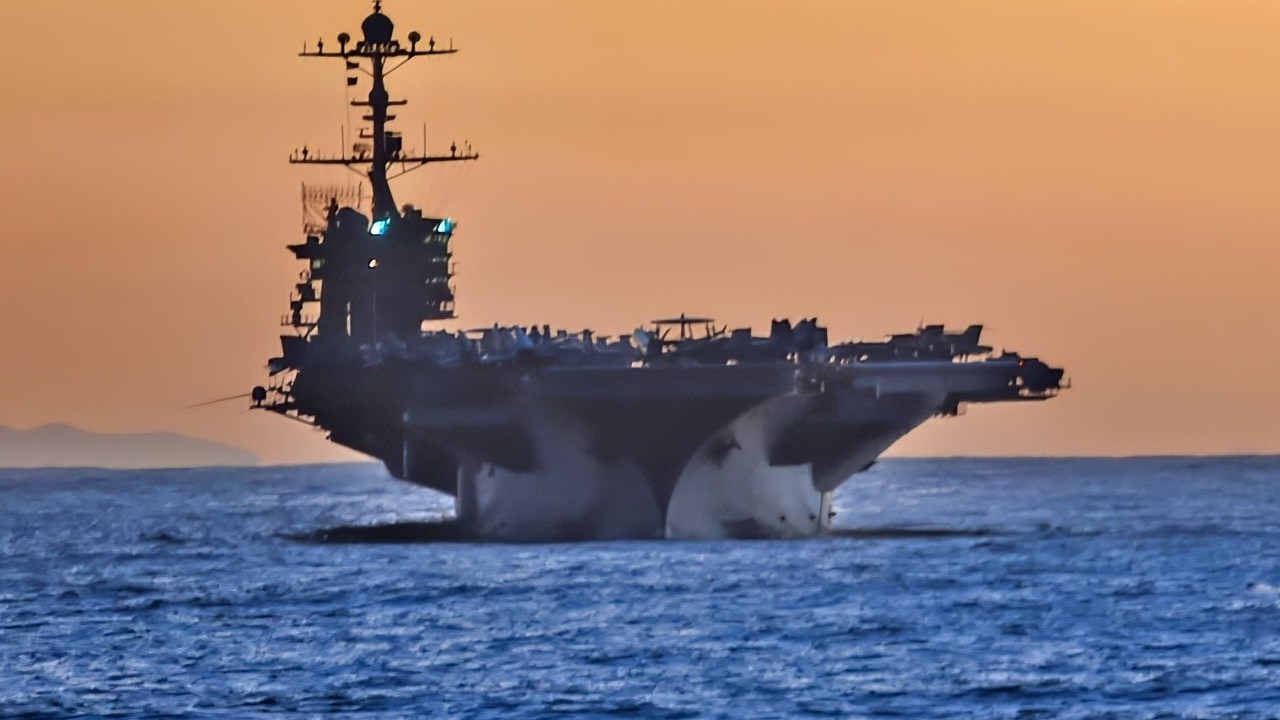
Summary and Key Points: Defense analyst Jack Buckby evaluates the ongoing aircraft carrier obsolescence debate through the lens of Operation Epic Fury in 2026. Some argue the carrier is nothing more than old ‘battleship’ in today’s world of missiles and cheap drones.
-While the USS Gerald R. Ford and USS Abraham Lincoln have established air dominance over Iran, Buckby asserts that neutralizing a regional power with an “obliterated” navy does not simulate the high-threat A2/AD environment of the Indo-Pacific.
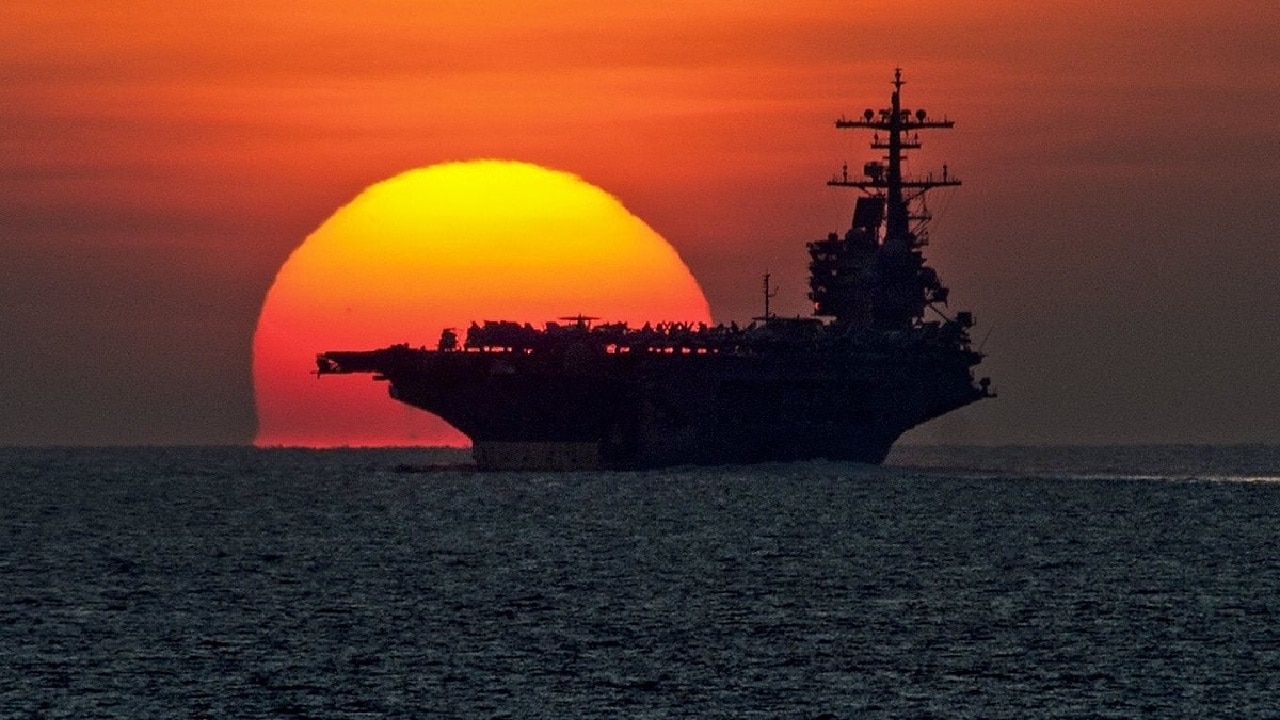
Aircraft Carrier in the Sunset. Image Credit: U.S. Navy.
-The report highlights that China’s long-range anti-ship ballistic missiles (ASBMs) and hypersonic swarms represent a superior “kill chain” that Iran’s “mosaic” strategy lacks, leaving the ultimate question of the supercarrier’s 21st-century survivability unresolved.
The Iran War Doesn’t Settle the Aircraft Carrier Debate
The ongoing U.S.-Israeli campaign against Iran has placed U.S. carriers at the center of American military operations in the Middle East, with three carrier strike groups sent to the region to support air operations.
The war has so far proven that U.S. naval might is globally unmatched, but it is also reviving a long-running debate within defense circles: are aircraft carriers really at risk of becoming obsolete?
To some observers and analysts, modern warfare is evolving in ways that make large surface ships increasingly vulnerable. Between long-range missiles and drones, and increasingly capable submarines, it’s now clear that the massive supercarriers that project U.S. power globally could one day become the naval equivalent of battleships: powerful but ultimately vulnerable.
The current war with Iran, however, has not provided a clear answer to that question.

Navy Aircraft Carrier. Image Credit: Creative Commons.

USS Gerald R. Ford Aircraft Carrier. Image Credit: Creative Commons.

Aircraft Carrier Turn US Navy. Image Credit: US Navy.
Despite Tehran’s rhetoric about destroying American naval assets, Iran has not seriously attempted to attack them – in part, of course, because its Navy was completely obliterated.
It could be said, then, that the conflict could actually demonstrate how carriers remain effective against regional powers – but at the same time, the war doesn’t tell us any more about whether they could survive in a war against a more technologically advanced adversary like China.
Why Iran Is Not a Real Test of Aircraft Carrier Vulnerability
Iran does possess several weapons designed to threaten naval forces. These include anti-ship cruise missiles, naval mines, drones, and fast attack craft capable of operating in the Persian Gulf. Tehran has also promoted newer systems such as long-range anti-ship missiles intended to target ships operating hundreds of miles from its coastline.
This was true even before the U.S. sent its most powerful carrier strike groups to destroy its conventional naval capacity.
But sinking a U.S. aircraft carrier requires much more than just possessing anti-ship weapons. Carrier strike groups are protected by multiple layers of systems and assets that include guided-missile destroyers equipped with the Aegis combat system, interceptor missiles, electronic warfare systems, and advanced air wings.
To destroy an aircraft carrier at sea, an adversary must complete a complex kill chain that begins with detecting and tracking the ship continuously, generating accurate targeting data, and finally guiding weapons to a moving target while simultaneously overcoming advanced defensive countermeasures.
Failure at any point in these stages means that the attack will fail.
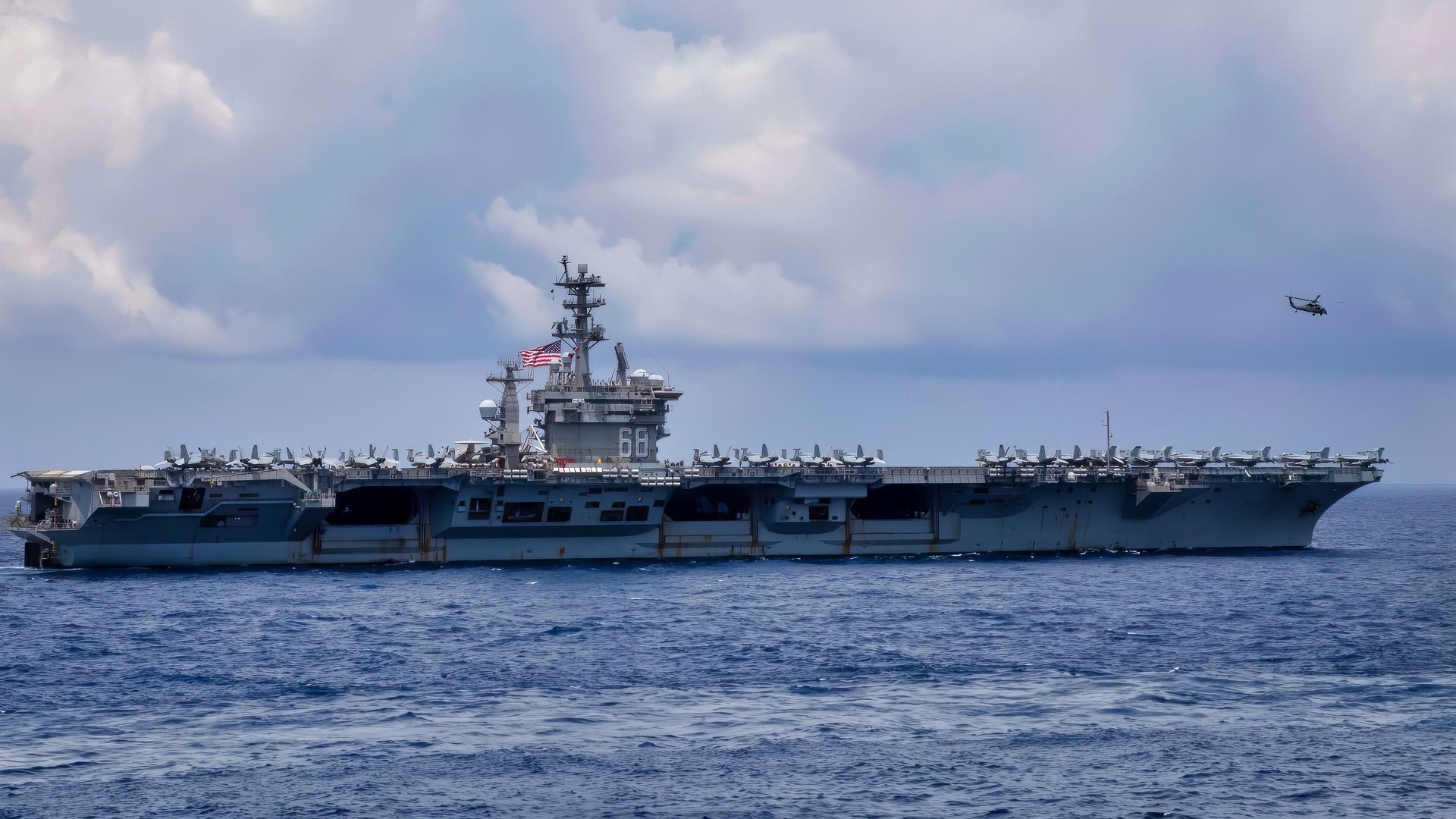
(Feb. 15, 2023) U.S. Navy aircraft carrier USS Nimitz (CVN 68) flies the battle ensign during expeditionary strike force operations with the Nimitz Carrier Strike Group including the Arleigh Burke-class guided-missile destroyer USS Decatur (DDG 73). Nimitz Carrier Strike Group (NIMCSG) and Makin Island Amphibious Ready Group (MKI ARG) with embarked 13th Marine Expeditionary Unit (MEU) are conducting combined ESF operations, demonstrating unique high-end war fighting capability, maritime superiority, power projection and readiness. Operations include integrated training designed to advance interoperability between the two groups while simultaneously demonstrating the U.S. commitment to our alliances and partnerships in the Indo-Pacific region. (U.S. Navy photo by Mass Communication Specialist 2nd Class David Negron)

USS Harry S. Truman Aircraft Carrier U.S. Navy Image.
Iran lacks the surveillance network and assets required to reliably carry out a compelling operation like this.
Even with its current missile and drone arsenal – the largest in the Middle East – it was highly unlikely Iran could have sunk a U.S. supercarrier even before the U.S. conducted its air campaign and strikes against its remaining assets. And it’s for that reason why the current conflict provides only a limited insight into the future vulnerability of aircraft carriers.
The Technologies Driving the Carrier Debate
The argument that aircraft carriers may eventually become obsolete is rooted in technological changes in modern naval warfare and the recent advances of larger adversaries such as China.
One of the most significant developments is the rise of long-range precision strike weapons designed specifically to target ships at sea.
Anti-ship ballistic missiles and advanced cruise missiles allow adversaries to strike targets hundreds or even thousands of miles away, potentially putting large naval formations at risk before they can launch aircraft.
At the same time, the unmanned systems being fielded by China and others are reshaping how navies operate.
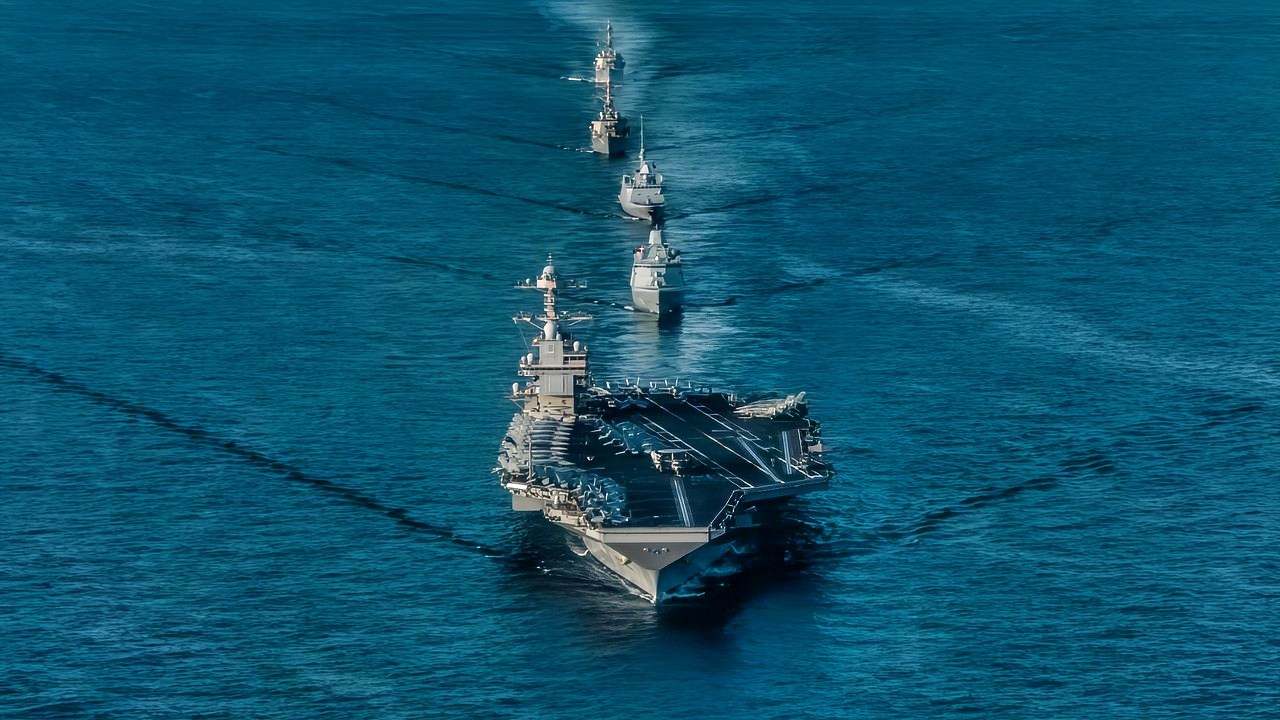
USS Gerald R. Ford Aircraft Carrier Training. Image Credit: U.S. Navy.
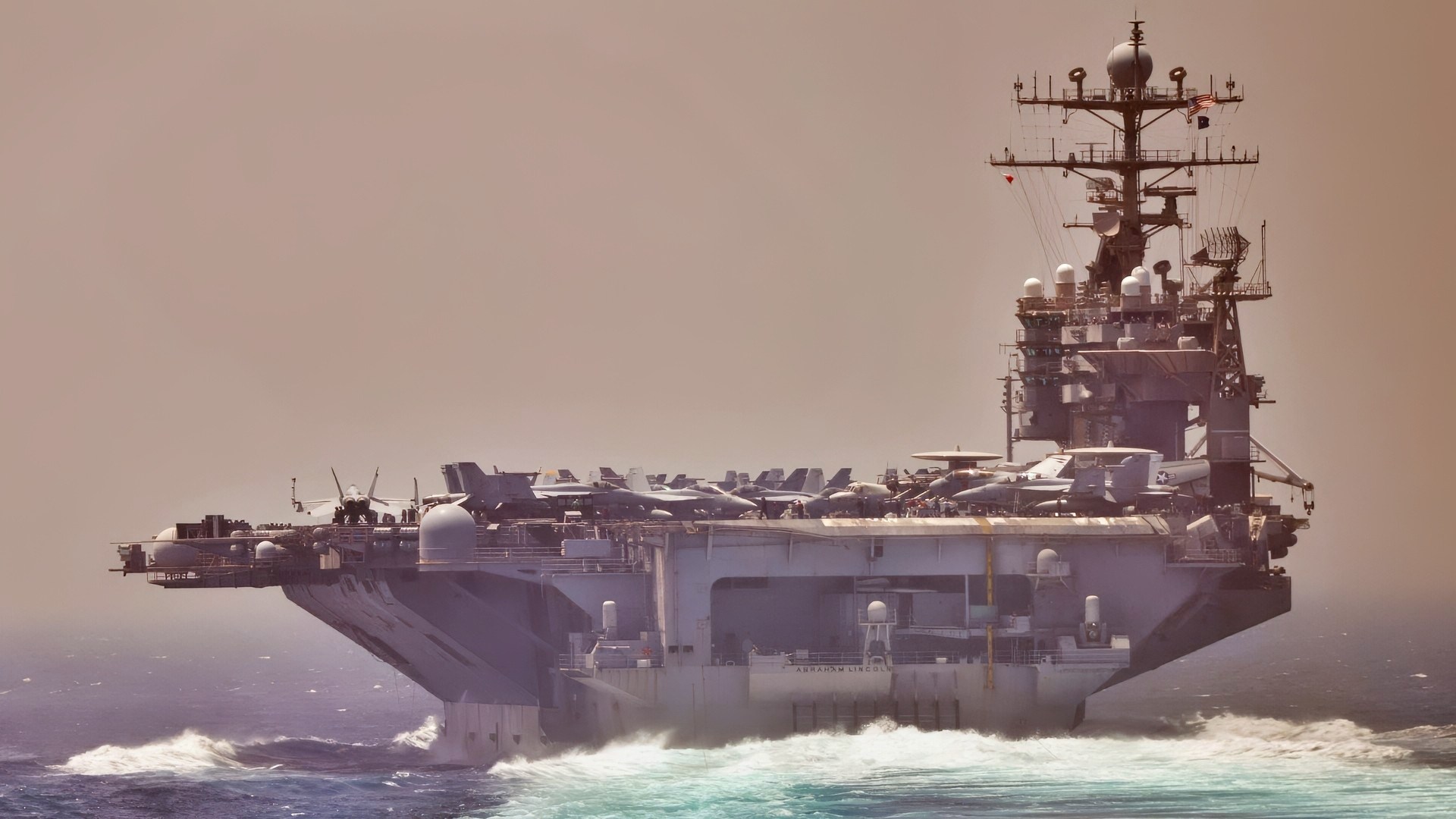
STRAIT OF HORMUZ (May 1, 2012) The aircraft carrier USS Abraham Lincoln (CVN 72), left, and the guided-missile cruiser USS Cape St. George (CG 71) transit the Strait of Hormuz. Abraham Lincoln and Cape St. George are deployed to the U.S. 5th Fleet area of responsibility conducting maritime security operations, theater security cooperation efforts and support missions as part of Operation Enduring Freedom. (U.S. Navy photo by Mass Communication Specialist 3rd Class Alex R. Forster/Released)
Drones provide continuous surveillance, can relay targeting data, and, when operated in large numbers, can potentially overwhelm defensive systems. In a future conflict, a swarm of relatively inexpensive unmanned drones could help guide long-range missiles toward high-value naval targets and distract defensive systems long enough for the carriers to be hit.
Submarines are also another serious concern. Quiet diesel-electric submarines operating on battery power can be extremely difficult to detect in coastal waters, while advanced nuclear submarines continue to improve in stealth and weapon range. Historically, submarines have been among the most dangerous threats to large surface ships, and advances in underwater warfare technology could further increase that risk.
These developments are leading many analysts to question whether carriers are becoming obsolete or can survive by changing tactics.
For now, the war with Iran shows that aircraft carriers remain formidable tools of American power against smaller opponents. America’s supercarriers have been safe dealing with Iran, but they may not be safe in a larger fight in the Indo-Pacific against a much larger and more capable adversary.
About the Author: Jack Buckby
Jack Buckby is a British researcher and analyst specialising in defence and national security, based in New York. His work focuses on military capability, procurement, and strategic competition, producing and editing analysis for policy and defence audiences. He brings extensive editorial experience, with a career output spanning over 1,000 articles at 19FortyFive and National Security Journal, and has previously authored books and papers on extremism and deradicalisation.


