

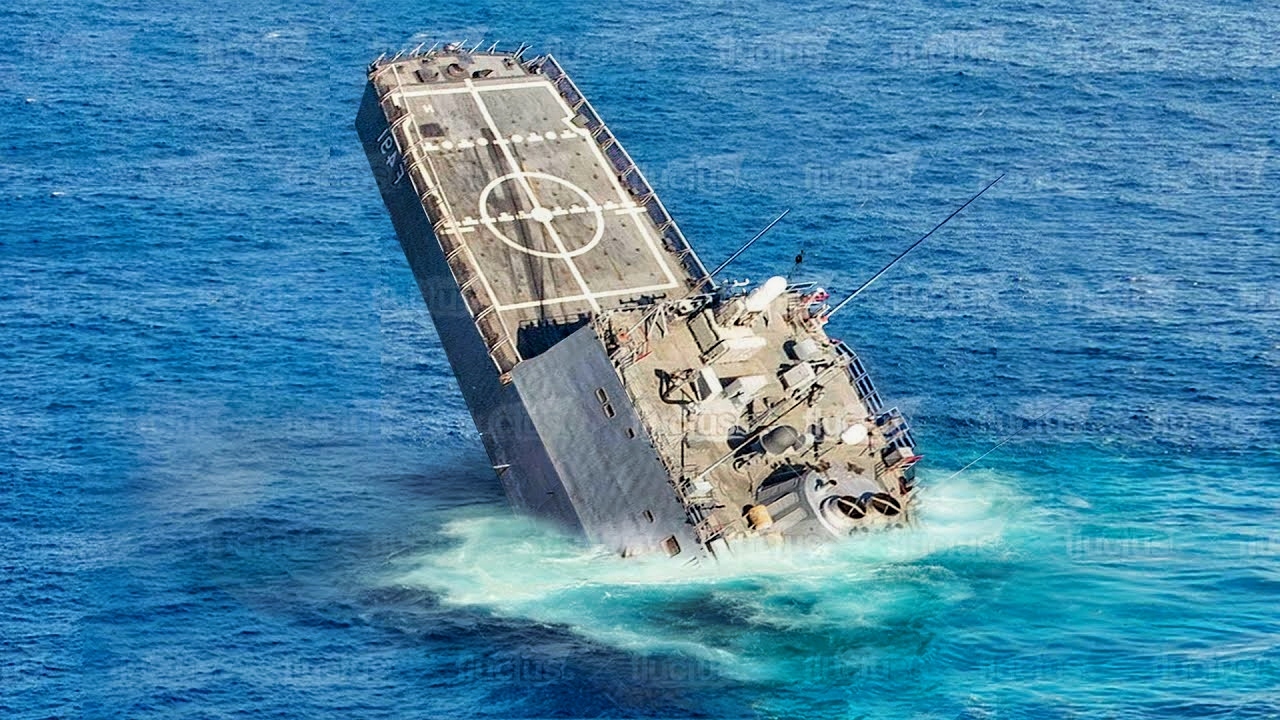
Key Points and Summary: Following recent US and Israeli strikes, Iran has threatened to close the Strait of Hormuz, a critical chokepoint for 20% of the world’s oil supply.
-While Iran’s parliament has reportedly approved a measure to do so, the final decision rests with its Supreme National Security Council.
Why Iran Won’t Close Hormuz – A full closure is considered an “economic self-inflicted wound” for Iran and would alienate key partners like China.
-However, Iran could still disrupt shipping through harassment tactics like seizing tankers or laying mines, as it has done in the past.
-These actions have caused oil prices to surge and shipping insurance rates to double.
Could Iran Close the Straits of Hormuz? Yes, It Would Hurt Iran
Before both Israel and the US conducted significant airstrikes on Iranian nuclear weapons development and military facilities, there was no end to forecasts as to how Iran could engage in acts of reprisal.
One of the nightmare scenarios thrown up was the Islamic Republic closing the Strait of Hormuz and consequently blocking a significant percentage of the world’s oil supply from reaching its intended customers.
The question is how realistic it is for Iran to try to take that step. On Sunday Iran’s parliament approved a measure to close the Strait, according to Iran’s Press TV. However, any such measure would require the approval of the Supreme National Security Council.
One of the members of parliament’s National Security Commission, Esmail Kosari, was quoted in Iranian media as saying: “For now, [the parliament has] come to the conclusion we should close the Strait of Hormuz, but the final decision in this regard is the responsibility of the Supreme National Security Council.”
The attractiveness of this option to Iran’s clerical leadership is clear.
Some 20 per cent of the world’s oil passes through the Strait. The idea of the resulting jump in oil prices and the pain that would cause to the Great Satan (the US) and others is almost too much for Tehran to resist. Oil prices have already jumped following the US attack on Iranian nuclear sites, causing the price of the benchmark Brent crude to climb to its highest level in five months.
The Beijing Factor and U-Turns
But then there is another issue.
The world’s biggest purchaser of Iranian oil is Tehran’s long-time friend and ally, the People’s Republic of China (PRC).
This prompted the US Secretary of State, Marco Rubio, to make a public appeal to Beijing to restrain their Iranian friends.
Iran has threatened to close the Strait in the past but in the end it has never done so. But there may be a different set of calculations at work this time. Both the US and Israel have never struck Iran and its nuclear sites to the level that they have these past few days.
“I encourage the Chinese government in Beijing to call them [Iran] about that, because they heavily depend on the Straits of Hormuz for their oil,” Rubio said Sunday morning in an interview with Fox News.
“If they [close the Strait]…it will be economic s***** for them. And we retain options to deal with that, but other countries should be looking at that as well. It would hurt other countries’ economies a lot worse than ours.”
According to a 23 June detailed report on Reuters, at least two supertankers made U-turns near the Strait of Hormuz following US military strikes on Iran, according to available ship-tracking data.
The week’s series of airstrikes and missile bombardments has caused these tankers and other vessels to speed up, pause, slow down, or otherwise alter their course.
The threat that Iran could close the Strait has generated the usual predictions of oil prices rising to $100 a barrel due to the risks created by the conflict in Iran.
Part of what drives those prices is increased shipping rates for supertankers.
The tankers can carry 2 million barrels of oil, and have seen their shipping rates double within a week to over $60,000 a day, according to freight brokering services.
Mechanisms for Closing the Strait
The obvious party to any closing down of this waterway would be the Iranian military.
Specifically, it would likely be the Islamic Revolutionary Guard Corps (IRGC).
It is the entity that the Iranian state usually calls upon when some disruptive act or terrorist incident needs to be carried out.
The likely action would be to either fire upon or board and seize vessels moving through the Persian Gulf.
This is a method that has been employed in past periods of international tensions centered on the Middle East.
During the 1980s Iran-Iraq war, both sides engaged in what was called the “Tanker Wars”.
Iraq targeted Iranian ships, and then Iran attacked commercial ships, including Saudi and Kuwaiti oil tankers and even some US Navy ships.
Conflict erupted again at the end of 2007 in a series of confrontations between the Iranian and US Navies.
In one incident, Iranian speedboats approached US warships, though no shots were fired.
In April 2023, Iranian troops seized the Advantage Sweet crude tanker, which was chartered by Chevron, in the Gulf of Oman. The vessel was released more than a year later.
Iran Seems Likely Not to Threaten the Strait…For Now
Any of these types of occurrences and dozens of other similar attacks on shipping would be the most likely outcome if Iran’s secular rulers decide that this is the best or only method left to retaliate against the US and its allies.
The question is at what point does the damage this would do to their Chinese allies and their own economy become immaterial to the mullahs? And, of course, there is a ceasefire that Iran may want to see hold, at least for now.
About the Author: Reuben F. Johnson
Reuben F. Johnson is a survivor of the February 2022 Russian invasion of Ukraine and is an Expert on Foreign Military Affairs with the Fundacja im. Kazimierza Pułaskiego in Warsaw. He has been a consultant to the Pentagon, several NATO governments and the Australian government in the fields of defense technology and weapon systems design. Over the past 30 years he has resided in and reported from Russia, Ukraine, Poland, Brazil, the People’s Republic of China and Australia.
Aircraft Carrier Drama
The Navy’s Ford-Class Aircraft Carrier Is Obsolete


Pingback: 'Drone' Aircraft Carrier and 'Black Hole' Submarines: Iran's Navy Is a Threat - National Security Journal