

Iran Rial Hits Record Low: Iran’s rial fell to a record low on Tuesday, trading at more than 2.5 million to the dollar in Tehran after seven months of war, sanctions, and restrictions on Iranian oil exports weighed on the currency.
The currency reached a record low of 2.2 million to the dollar in Tehran on Sept. 2, according to the Associated Press, and 27 days later, Iran International reported that the dollar was changing hands for 2.418 million rials on Monday, before sharply rising more than 80,000 rials, or over 3 percent, in less than 24 hours.
Devaluation
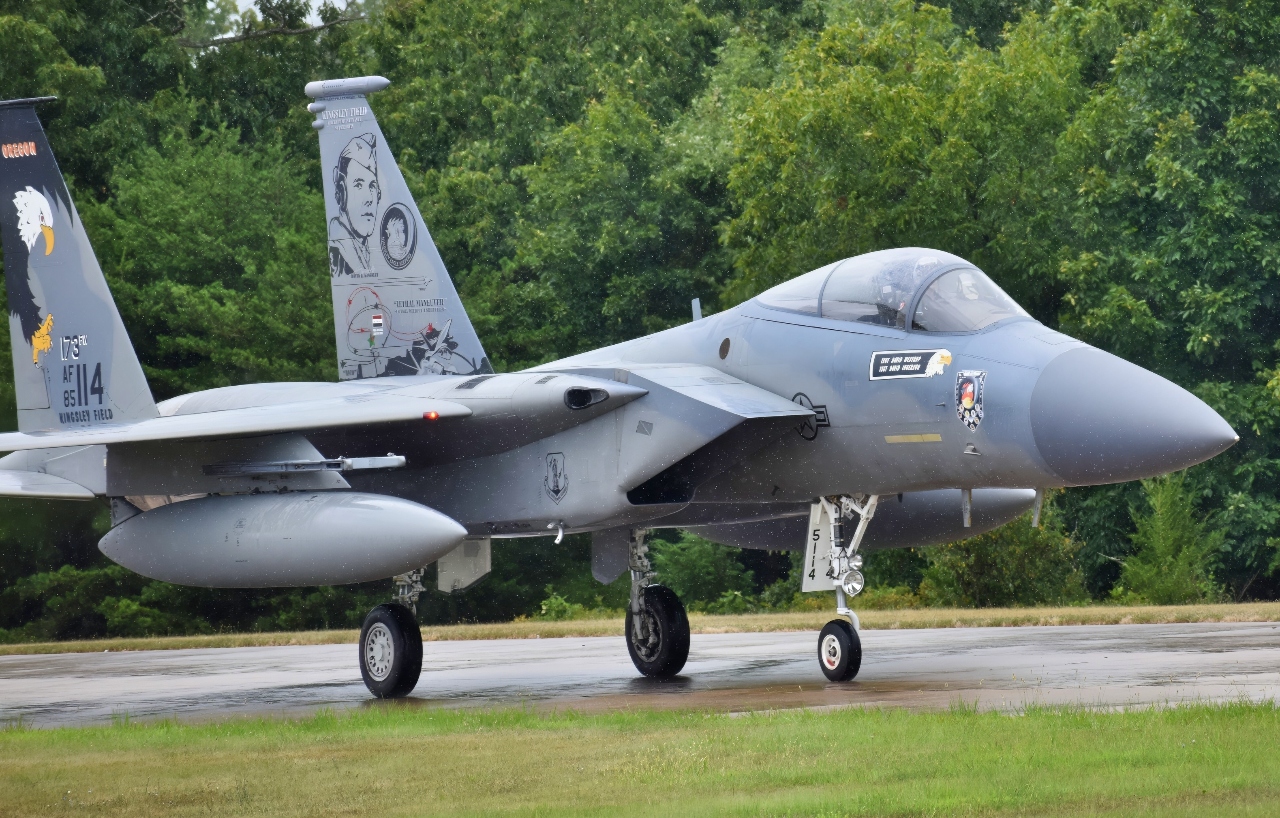
F-15C Fighter on the Tarmac. Image Credit: National Security Journal. Taken on August 13, 2025.
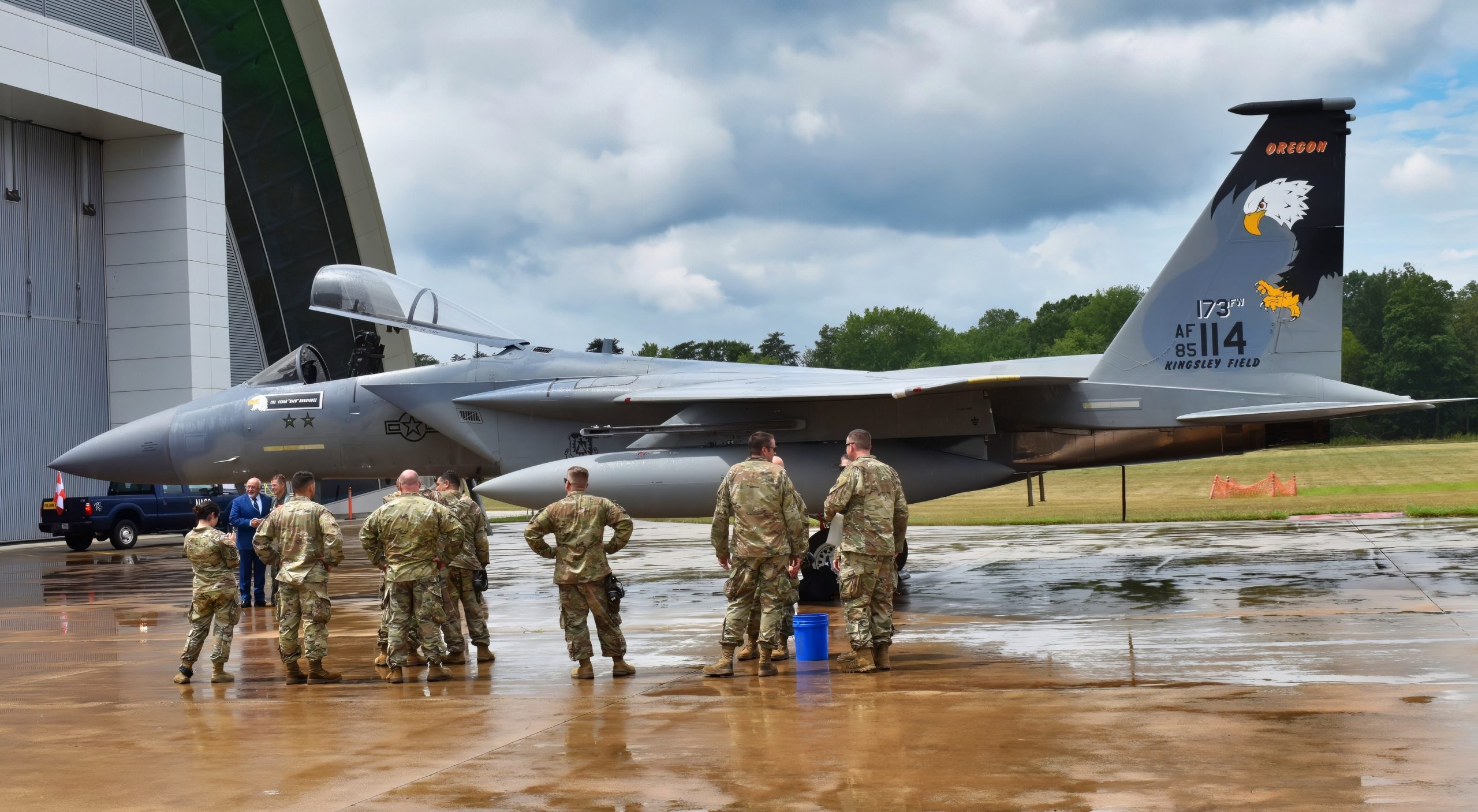
F-15C Fighter with Flight Crew. Image Credit: National Security Journal.
The devaluation figures mask just how severe the impact has been on ordinary Iranians, who are feeling the strain of both the country’s dire economic situation and the war.
Reuters spoke with Iranians who had left Tehran because they could no longer afford the rent, reduced their medicine purchases, and spent their savings. One former engineer and his wife moved to the “half slum” outside the Iranian capital. A grocery store owner said that customers who once bought five or 10 of something were now only buying two. The same went for restaurants, said Behnam Riazi, a restaurant owner, who said that raising prices was not an option when his customers were also struggling.
“I’m forced to sell my items with a very small and negligible profit,” Behnam Riazi said, adding that closing the restaurant would leave him unemployed.
Will Pressure Win Out On Iran?
Washington is betting that the pressure on Iran’s economy will be a winning formula.
Secretary of State Marco Rubio said during a Monday interview with Fox News that Iran was “heading there fast to a cataclysm,” before adding that “their economy now is a cataclysm.” He argued that not only have the U.S. sanctions and blockade constrained the Iranian economy, but also its spending on its terror proxies across the region, such as Hezbollah and Hamas.
However, the downside to the economic pressure is that both sides have seen oil prices remain far above where they would have been without the conflict.
Crude
According to Reuters, Brent crude dropped 1.86% to $103.32 a barrel at 1306 GMT Tuesday, while West Texas Intermediate fell 2.11% to $90.65. However, Brent was set to rise by some 14% in September, while WTI was expected to climb by some 5.6%. Preliminary Kpler data showed that crude exports from major Middle East producers touched 12.8 million barrels per day in September, the highest since February.
Meanwhile, there are signs that Tehran and Washington are continuing to hold back-channel talks, despite the crisis.
What Iran Says
Iranian Foreign Minister Abbas Araghchi has said exchanges through Qatari and Pakistani intermediaries have become more serious since Iran submitted its proposal.
“At present, the only issue is the Strait of Hormuz. Iran’s conditions are entirely fair and reasonable. If the Americans say they want an agreement or a peaceful solution, we have presented that solution,” he claimed, also noting that the regime was awaiting a response from the U.S. via mediators.
According to Reuters, further negotiations are expected to focus on a modified version of Iran’s seven-day proposal. Iran has called for an end to the hostilities in Iran and Lebanon, the unfreezing of Iran’s assets, along with the lifting of sanctions on its oil, and the end of the U.S. blockade of its ports. In return, Iran says it would allow the reopening of the Strait of Hormuz and re-establish nuclear talks with the United States.
Trump Rejects Proposal
While President Donald Trump rejected the original proposal on Saturday, he left the door open for further negotiations. “I expect more talks with Iran [this week],” Trump said on Sunday during an interview with Axios, adding that he thought Iranians had “overplayed their hand.” When asked if another attack on Iran was an option, he said, “I am always thinking about it.”
U.S. Ambassador to the U.N. Mike Waltz described the objections in more detail on “State of the Union” on CNN. “They were asking for everything up front,” Waltz said, noting that Iran wants sanctions lifted and assets unfrozen before negotiations on Iran’s nuclear program can even begin.
Meanwhile, Trump reiterated on Monday that Washington had held talks with intermediaries and predicted a rapid resolution to the crisis. “We’re going to win,” he said to reporters in the Oval Office. “It’s going to go pretty quickly.”
About the Author: Georgia Gilholy
Georgia Gilholy is a journalist based in the United Kingdom who has been published in Newsweek, The Times of Israel, and the Spectator. Gilholy writes about international politics, culture, and education. You can follow her on X: @llggeorgia.


