

There are a lot of reasons to think that the Iran War will represent bad news for President Donald Trump and the Republican Party in the midterm elections in November.
The war is historically very unpopular and has been for a long time.
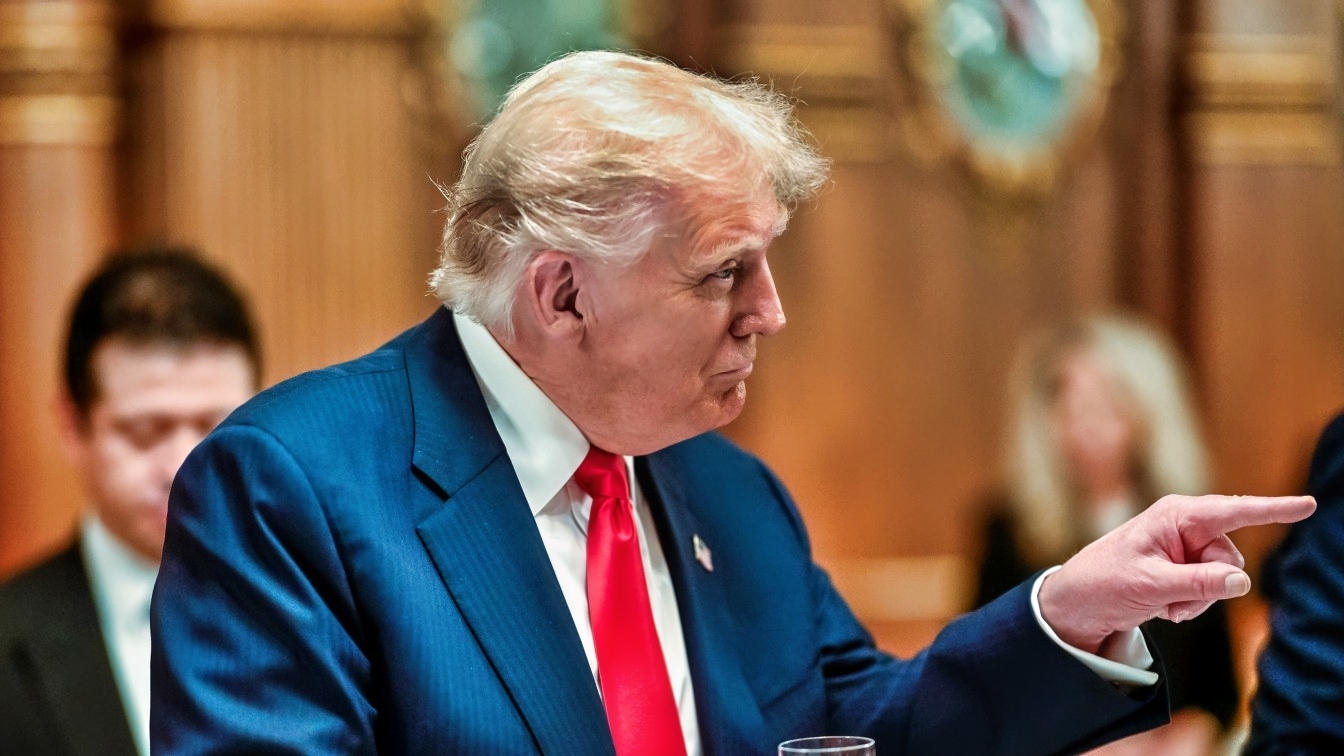
President Donald Trump participates in a working lunch meeting with Japanese Prime Minister Sanae Takaichi, Tuesday, October 28, 2025, at Akasaka Palace in Tokyo, Japan. (Official White House Photo by Daniel Torok)
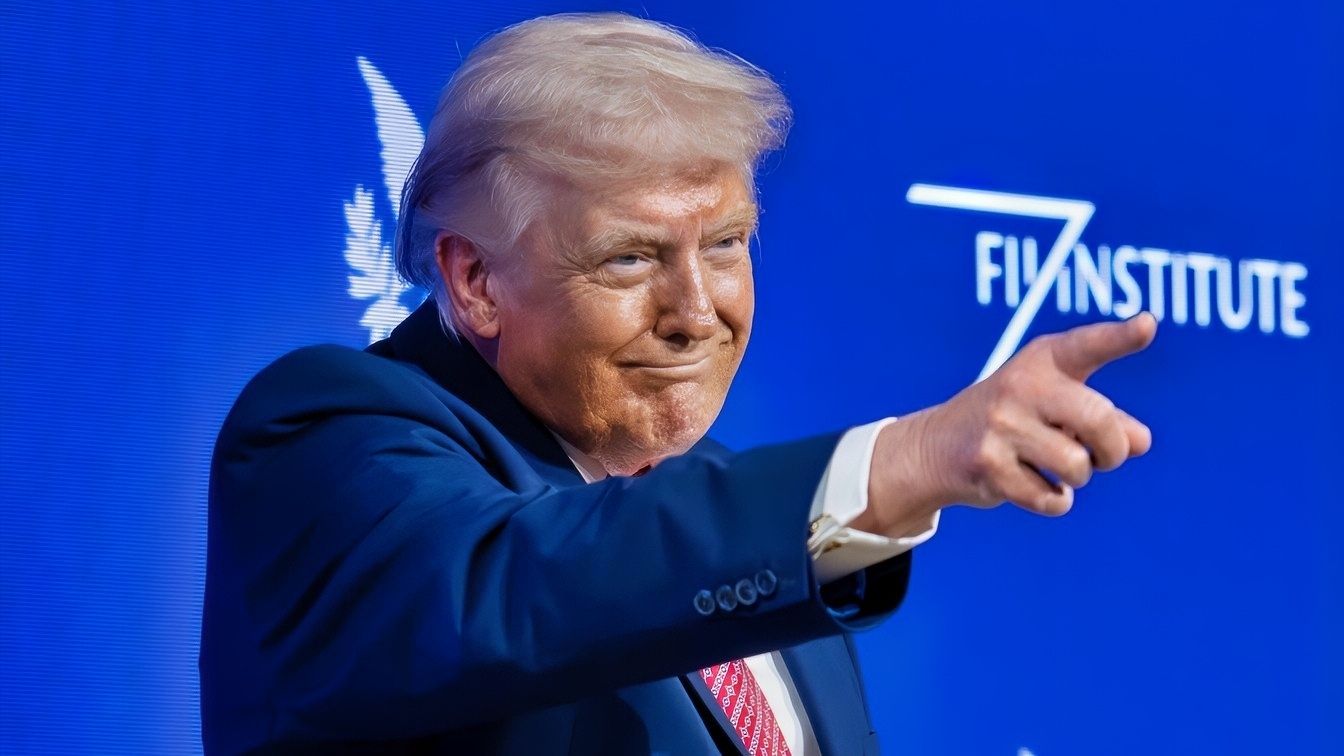
President Donald J. Trump delivers remarks at the F11 PRIORITY Summit at the Faena Forum in Miami, Florida on Friday, March 27, 2026.(Official White House Photo by Molly Riley)
It has continued much longer than Trump indicated, and by dragging on past the six-month mark, it has highlighted what many see as Trump’s mismanagement.
Beyond that, the war and the sharp spikes in energy prices have undermined two of the strongest cases Trump made for his 2024 election: that he would keep the country out of protracted foreign wars and that he would deal with inflation and keep prices down.
Trump, for his part, has claimed that any pain at the pump, and second-order effects that have made other goods more expensive, are worth it in the long term if Iran is kept from obtaining a nuclear weapon. But there’s little indication that this argument is winning over many people, especially given that the cost of the war has so far exceeded $38 billion.
And with the midterm elections less than six weeks away and all indications that the war will not be over before America votes, the hour is getting late for the president and his coalition.
Now, a New York Times op-ed is pointing to what it calls the biggest mistake Trump made in this process. In short, it’s about the cost of living.
The Big Error
Writing in the Times Thursday, David Wallace-Wells points out that the war, like Trump’s tariffs, has not brought about any major economic catastrophe.
However, the politics of the matter are another story, because the war is so unpopular.
It’s something, in Wallace-Wells’ words, that “hangs like perhaps the most obvious albatross among many around Trump’s neck.”
The war is approved by about one-third of Americans. But even worse than that for the president, eight in ten Americans say the war has raised their cost of living.
As Wallace-Wells notes, this has led to dire polling forecasts for the president.
Conventional wisdom all year has been that Republicans will probably lose control of their small House majority, but the party’s control of the Senate now looks tenuous, too.
The author notes that while Trump has various major voting vulnerabilities, from corruption scandals to a lack of legislative achievements, it is the Iran war, and the cost-of-living surge it has exacerbated, that are hurting the president most in the polls.
Wallace-Wells also points to a dynamic familiar from the Biden presidency: While baseline economic numbers such as the stock market, growth, and unemployment are strong, the cost of living is so high that voters don’t see the economy as strong, miss the positives, and blame the president.
And there are indications that the oil and gas price picture, with diesel at $6 per gallon, could worsen in the coming months.
That’s because oil reserves are nearing depletion, while uncertainty remains in Saudi routes through the Red Sea, in addition to the established blockade and closure of the Strait of Hormuz.
On Thursday afternoon, Brent Crude traded above $107, up 23 percent over the same period a month earlier and 56.6 percent over the same period a year earlier.
Trouble With the Base
Polling, Wallace-Wells notes, shows that Trump is hurting with demographics that he did well with in 2024, starting with Hispanics.
But he also notes that Trump is struggling with his base.
The author cites Times polling showing that while 72 percent of Republican voters said in January that they think the economy has strengthened over the previous year, just 29 percent of Republicans say so now.
The Hill, in sharing a Reuters polling analysis earlier this week, said Trump’s approval rating has fallen to 32 percent, the lowest of his decade-long political career, which covers his two presidencies and his time as a candidate.
Axios also pointed to polling from a month ago showing Trump was starting to lose some support among his Republican base.
RealClearPolling’s average now puts Trump 20 points underwater, with every poll listed placing him underwater by double digits.
Trump has only avoided that being the worst average of his presidency because it had touched -21 the day before.
About the Author: Stephen Silver
Stephen Silver is an award-winning journalist, essayist, and film critic, and contributor to the Philadelphia Inquirer, the Jewish Telegraphic Agency, Broad Street Review, and Splice Today. The co-founder of the Philadelphia Film Critics Circle, Stephen lives in suburban Philadelphia with his wife and two sons. For over a decade, Stephen has authored thousands of articles that focus on politics, national security, technology, and the economy. Follow him on X (formerly Twitter) at @StephenSilver, and subscribe to his Substack newsletter.


