


Key Points and Summary – China’s unveiling of its J-36 and J-50 sixth-generation fighter prototypes is more than a flex—it’s a window into how Beijing believes it can out-build and out-pace the United States.
-Drawing on rare public comments from senior Chengdu designer Yang Shuifeng, this piece explains how China’s tightly integrated, “spring-loaded” aerospace ecosystem lets it move from concept to prototype at startling speed, bypassing the proposal and subcontracting churn that slows Western programs.
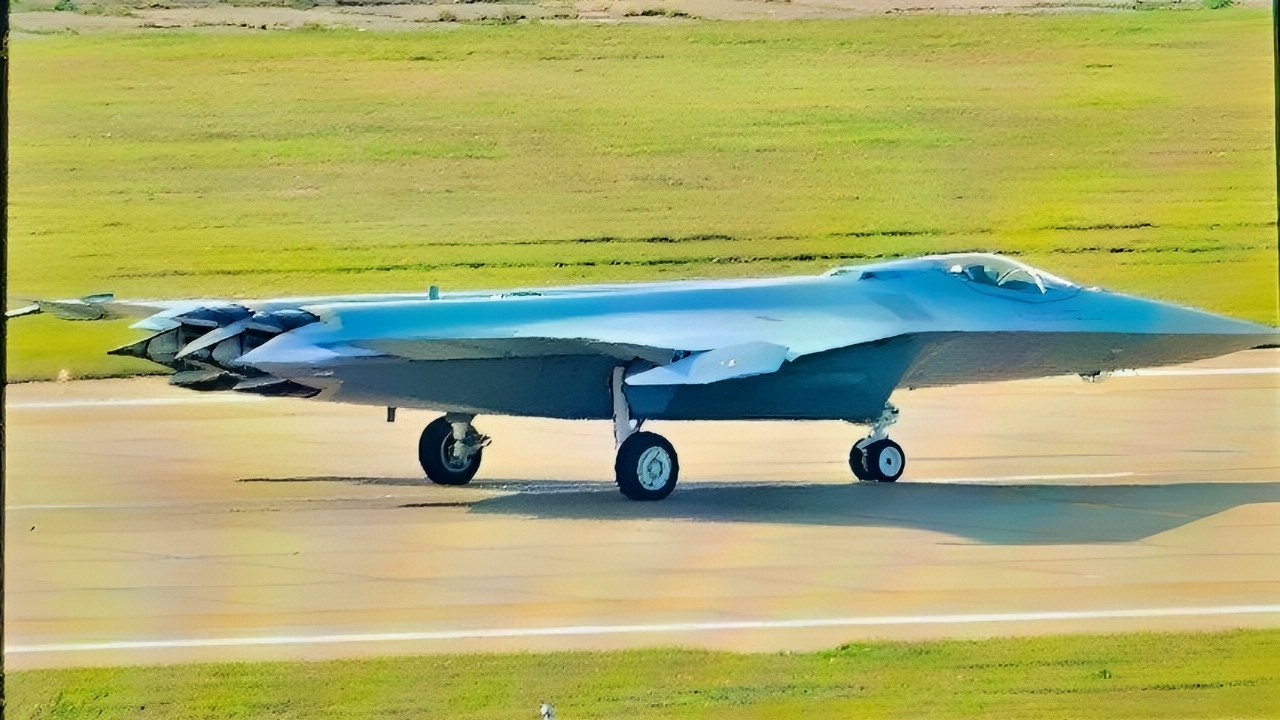
J-50 Fighter Image from X
-It also explores the quiet rivalry between Chengdu and Shenyang, and asks whether U.S. choices on NGAD and the F-47 are handing China exactly the “strategic gift” Yang hints at.
Inside China’s J-36 Fighter Program the U.S. Should Watch Out For
Fort Lauderdale, Florida, USA – Within the People’s Republic of China (PRC) defense industrial sector, two contests are being played out in an uncharacteristically public manner.
Uncharacteristic in that Chinese military enterprises are just about the most publicity-adverse, closed, and pathologically secretive that the world has ever seen – so this is a very real break with tradition.
The first is the contest that the PRC military aircraft industry has been engaged in since 24 December 2024, almost a year ago to the day.
On that date, both of the country’s 6th-generation fighter aircraft prototypes – the Chengdu J-36 and the Shenyang J-50/XDS – were revealed in the form of video clips of their test flights, posted on non-government aviation enthusiast websites.
These two PRC design teams are thus announcing they see themselves in a race with the US to see who can develop a real 6th-generation fighter aircraft first.
Those videos were Beijing’s way of telegraphing “we are way ahead of your NGAD and F/A-XX programs there in the US.”
It should be noted that, in the tried-and-true “rain dance” the PRC engages in when a new aircraft first emerges, these flights were not officially released by either of the two fighter design centers, nor were the actual dates when the flights were captured on video revealed.
Even “J-36” and “J-50” are not confirmed by the People’s Liberation Army Air Force (PLAAF) or Navy (PLAN) as the actual designations for these aircraft.
The other contest is more nuanced.
This is the two major fighter aircraft design centers in the PRC, the Chengdu Aircraft Design Institute (CADI) in Sichuan Province and the Shenyang Aerospace Corporation (SAC) in Dongbei’s northern Liaoning Province, trying to prove that one is more clever than the other.
In past months, the two organizations have seen their products and chief designers profiled in more than one PRC English-language publication, such as the Global Times or China Daily, with a level of detail rarely revealed before.
Experience and Working at Speed
The latest of these “tell-all” features is an article with numerous quotes from Yang Shuifeng, the senior engineer and director of the performance research division at CADI’s advanced design department.
“The experience and capability of the research and development team cannot start from zero,” he said in describing the challenges of designing one of these aircraft.
These and other comments are based on a paper he and others published on 28 November in a peer-reviewed PRC scientific publication, the Journal of Systems Engineering and Electronics.
The article is titled “Aviation equipment R&D management method based on rapid capability generation.”
It is the first detailed public revelation of how the PRC fast-tracked the development of the J-36, and, in his estimation, it explains how the US is years behind the PRC in the sixth-generation fighter race and why.

J-36 Fighter from X Screenshot. Image Credit: X Screenshot.
According to Yang and the co-authors of the article, “force multipliers” involved in the J-36 design history facilitated the rapid progress of its development.
In their estimation, these were PRC aerospace and military institutions with established “design capability, development infrastructure, and production facilities.” Those same institutions also possessed a deep familiarity with the most critical building blocks of industrial ecosystems.
Some of those building blocks are modern microchips, advanced materials, aviation components, and a standardized system of parts.
When managed effectively, this combination supports scientific planning, the management of design and production processes, performance evaluation, and the oversight required to “rapidly mobilize human, material and financial resources.”
A Strategic Gift
This synergism in the PRC, according to Yang, supports the driving programmes’ progress at speed.
It is an example, said one of the former and retired Russian aircraft designers who spoke to National Security Journal, of “how the Chinese have taken the old Soviet model for weapons development and streamlined it to a point where it is more efficient and can achieve results in a shorter time frame.”
“There is this basic advantage that the Chinese have,” he continued. “All of these institutions and companies are suppliers of either components or materials or services and they are essentially ‘spring-loaded’ and at the ready.”
“It is not like the process in the West where every major supplier must submit a proposal to become a subcontractor, produce cost estimates, present a final offer, etc. Then if they win they say ‘oh my, now we have to execute’ and then they have to find and hire more personnel. That all consumes a good deal of time that the Chinese are never bothered with.”
Yang’s observations and other details about the work taking place at CADI were covered in a lengthy article published on 12 December in another English-language outlet, the Hong Kong-based South China Morning Post (SCMP).

J-36 Fighter X Screenshot Image.
The paper is one of the oldest of its kind in the PRC and was originally the main newspaper for the expatriate community when Hong Kong was still a Crown Colony of the United Kingdom.
One of his other conclusions, when it comes to how CADI developed the J-36 in record time, is that the design center’s enormous volume of experience is at the core of what makes building next-generation stealth jets possible.
From his point of view, this experience accounts for the rapid development of concepts, reliability, and combat readiness of any design. And then he said something rather interesting.
He and his authors view awarding the contract for a critical job such as this one to a company with no stealth-fighter experience as “could significantly delay progress and hand competitors a strategic gift.”
The question is: what, or who, was he referring to specifically?
Was this a dig at his competitors at SAC, as they have no experience in this area and their new J-35A/B models are their first attempt at a stealth design?
Was he saying, “[W]e wrote the book on stealthy aircraft when we first flew the J-20 15 years ago?”
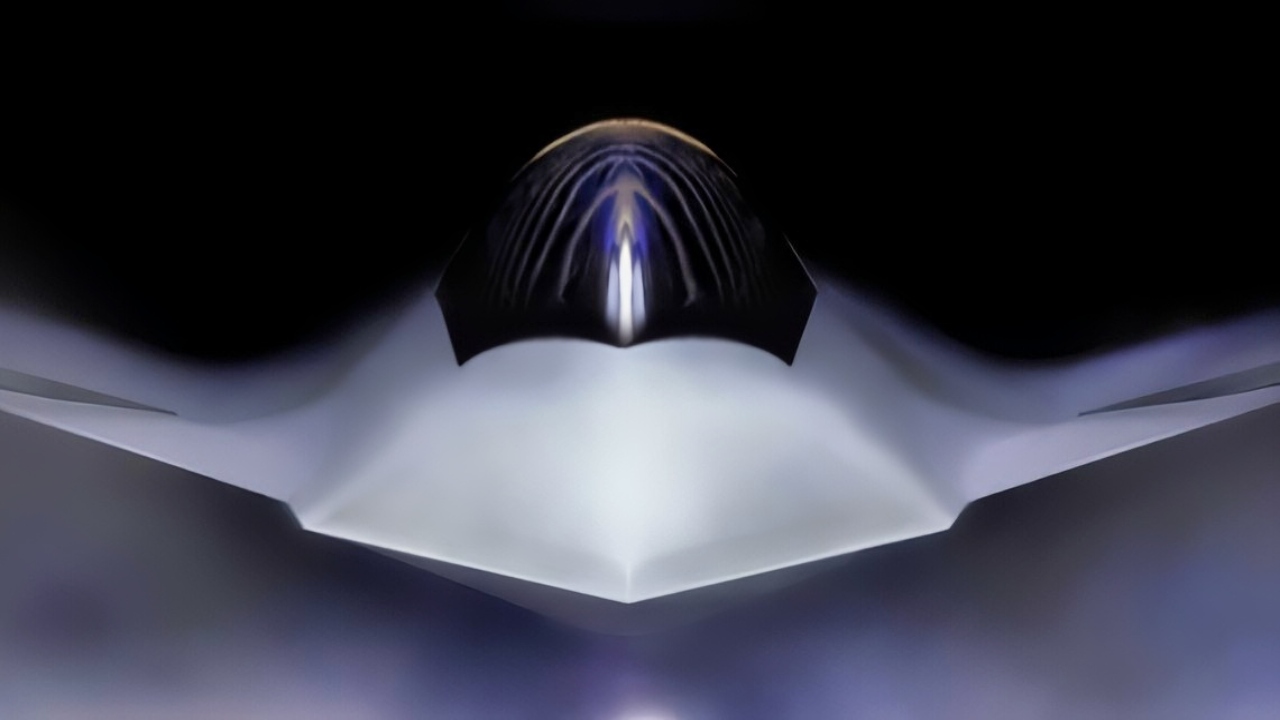
Shown is a graphical artist rendering of the Next Generation Air Dominance (NGAD) Platform. The rendering highlights the Air Force’s sixth generation fighter, the F-47. The NGAD Platform will bring lethal, next-generation technologies to ensure air superiority for the Joint Force in any conflict. (U.S. Air Force graphic)
Or was this calling out the US selecting Boeing to build the F-47 for the US Air Force and passing over Lockheed Martin, which has decades of designing low-observable aircraft dating back to the old U-2 and SR-71, as some sort of reckless folly?
Given that the PRC always operates under the Napoleonic principle of “never interrupt your enemy when he is making a mistake,” and never wanting to say too much about anything, we will probably never know what he was referring to.
About the Author: Reuben F. Johnson
Reuben F. Johnson has thirty-six years of experience analyzing and reporting on foreign weapons systems, defense technologies, and international arms export policy. Johnson is the Director of Research at the Casimir Pulaski Foundation. He is also a survivor of the Russian invasion of Ukraine in February 2022. He worked for years in the American defense industry as a foreign technology analyst and later as a consultant for the U.S. Department of Defense, the Departments of the Navy and Air Force, and the governments of the United Kingdom and Australia. In 2022-2023, he won two awards in a row for his defense reporting. He holds a bachelor’s degree from DePauw University and a master’s degree from Miami University in Ohio, specializing in Soviet and Russian studies. He lives in Warsaw.


