


In March, an Israeli F-35I Adir shot down an Iranian Yak-130 over Tehran — the first time an F-35 stealth fighter ever destroyed another crewed aircraft in combat. Days later, a U.S. F-35 was hit by enemy fire and damaged for the first time, though the pilot landed safely. Now Lockheed Martin has won an $11.4 million Israeli-funded contract to upgrade the F-35I Adir’s software through 2030.
The F-35I Adir Is Getting Better

F-35I Adir. Image Credit: Creative Commons.
During the war with Iran, Israel and the United States flew F-35s side-by-side. With the war possibly concluded, the Pentagon has approved a software upgrade for Israel’s version of the jet early last month.
According to Defence Blog, the Navy awarded Lockheed Martin an $11.4 million contract modification to “develop additional software for Israel’s F-35 Joint Strike Fighter fleet.”
The work, according to the report, is “fully funded through Foreign Military Sales customer funds—meaning Israel, not the U.S. taxpayer, is financing the effort—and the entire amount will be obligated at the time of award with no portion set to expire at the end of the current fiscal year.”
It will be administered at Naval Air Systems Command at Patuxent River, in Maryland.
The work will entail “three additional software data loads” as part of Israel’s System Development and Design Phase II effort. It is expected to be finished by 2030.
According to the F-35 program office, Israel became the first country to select the F-35 through the Foreign Military Sales process in 2010. The local variant of the F-35 is known in Israel as “Adir,” meaning “Mighty One.” The first was delivered in 2016 and declared operationally capable in 2017.
Israel has 48 of the jets.
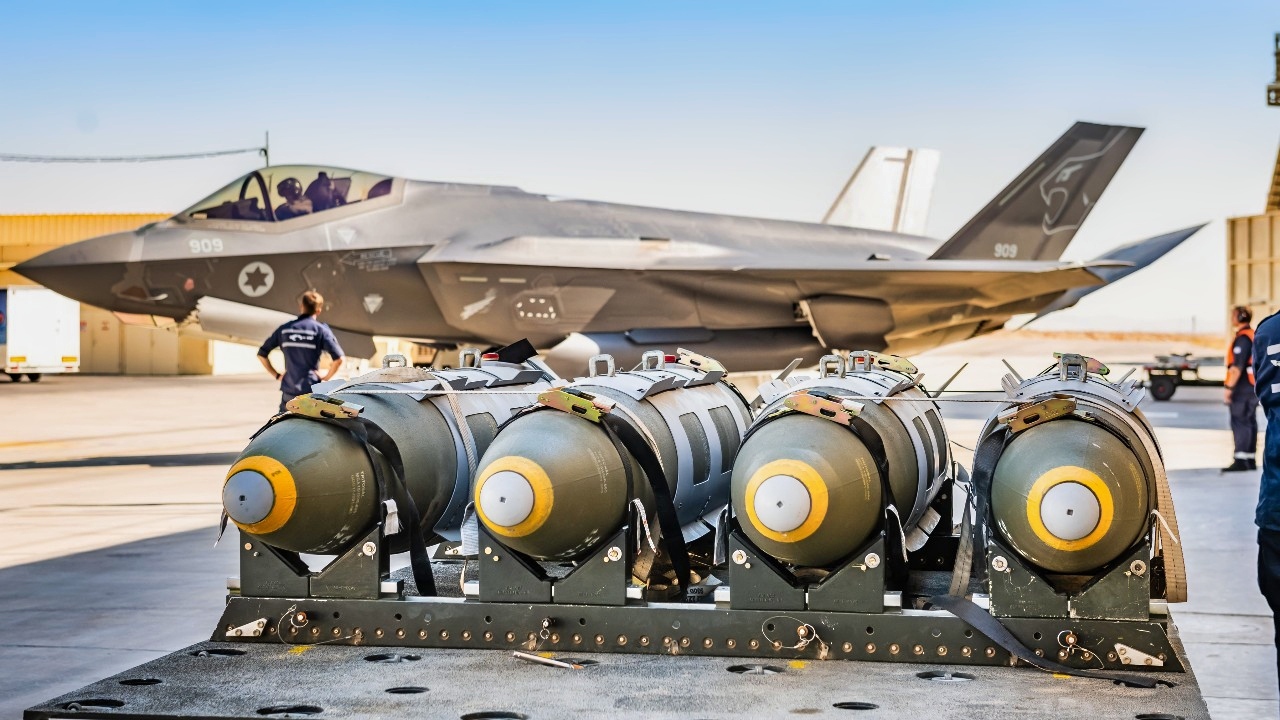
Israel F-35I Adir Stealth Fighter. Image Credit: IAF.
Different in Israel
As noted by Defence Blog, the F-35 program in Israel works a bit differently than in most countries that use the jets.
“Israel has negotiated a degree of national customization for its jets, integrating Israeli-developed systems and software alongside Lockheed Martin’s baseline architecture,” the report said. “That integration requires dedicated engineering work to ensure Israeli-specific capabilities remain compatible with ongoing updates to the broader F-35 software enterprise, which is continuously evolving as new capabilities are added and existing ones refined.”
Israel’s unique software for F-35s came up last year, when the United States agreed to make F-35s available to Saudi Arabia, which would be the first Middle Eastern country other than Israel to gain access to the jets. The Biden administration first proposed making the jets available as part of a normalization deal between Israel and the Saudis, but that deal never materialized.
Israel’s unique software capabilities would allow the country to maintain its “qualitative military edge,” even if the Saudis receive the jets. Such a procurement, though, is likely several years away.
“The System Development and Design Phase II effort referenced in this contract is the formal program structure through which Israeli-specific engineering is conducted, contracted, and overseen by the U.S. government as the responsible foreign military sales case manager,” Defence Blog reported.

An Israeli Air Force pilot walks to an F-35I Adir prior to a Red Flag-Nellis 23-2 mission at Nellis Air Force Base, Nevada, March 15, 2023. Red Flag is an opportunity to build on the success of JUNIPER OAK 23-2, JUNIPER FALCON, and additional combined exercises to enhance interoperability with Israel, strengthen bilateral cooperation, and improve capabilities in ways that enhance and promote regional stability and reinforce the United States’ enduring commitment to Israel’s security. (U.S. Air Force photo by Airman 1st Class Trevor Bell)
The F-35s in Iran
F-35 service during Operation Epic Fury was very eventful, both for better and for worse.
In early March, Israel’s Air Force pulled off the F-35’s first-ever shootdown of a crewed aircraft in combat. Per The War Zone, “an Israeli Air Force (IAF) F-35I Adir brought down an Iranian Yak-130 Mitten combat trainer over Tehran.”
That encounter also marked the first time since the 1980s that an Israeli Air Force jet had engaged in air-to-air combat with a manned jet. Defense News described the engagement as lasting only a few seconds. And while the United Kingdom did not participate in the military operation directly, the Royal Air Force’s F-35B jets “intercepted Iranian drones above Jordan as part of a defensive mission,” marking a first for Britain’s F-35B fleet.
Also in March, and in another first, a U.S. F-35 was damaged by enemy fire, although the pilot was able to make an emergency landing at a ba “The aircraft landed safely, and the pilot is in stable condition,” Captain Tim Hawkins, a spokesperson for U.S. Central Command, said at the time. “This incident is under investigation.”
It was believed to be the first time a U.S. F-35 had ever been struck in combat—the jet has still never been shot down. Two planes shot down later on in the war were not F-35s, but rather an F-15E and an A-10.
An Israeli Air Commander Speaks
Ynet News, in early April, published an interview with the brigadier general who commands the Nevatim Airbase in Israel. The commander is known only as “D.”
“Aircraft flying 2,000 kilometers east face two primary dangers: enemy fire and operational accidents,” the Ynet story says. “A third risk must be added, the possibility of mass civilian casualties on the ground. These are real threats. U.S. forces have encountered all of them. As of Tuesday afternoon, the Israeli Air Force had completed its missions without casualties, an achievement D. views as significant and underreported.”
D expressed his pride in that. “Knock on wood,” he told the newspaper. “We are in the middle of a war. This is not the time to sum things up. We strive for air superiority, but we do not have absolute superiority. They are constantly learning and improving. Despite their difficult situation, they continue to fire anti-aircraft systems.”
D also talked about what Israel’s F-35s can do that other fighter jets can’t.
“All the expectations we had from this aircraft have been met,” the brigadier general said in the interview, which he acknowledged was the first he had ever given. “Even more. It delivers beyond what we expected compared to fourth-generation aircraft like the F-15 and F-16. It sees the battlefield better and knows how to share that information.”
He added that the F-35 has bolstered the effectiveness of the war effort, and he strongly endorsed Israel’s acquisition of the fleet.
“I think the decision to acquire it was very correct,” he said.
About the Author: Stephen Silver
Stephen Silver is an award-winning journalist, essayist, and film critic, and contributor to the Philadelphia Inquirer, the Jewish Telegraphic Agency, Broad Street Review, and Splice Today. The co-founder of the Philadelphia Film Critics Circle, Stephen lives in suburban Philadelphia with his wife and two sons. For over a decade, Stephen has authored thousands of articles that focus on politics, national security, technology, and the economy. Follow him on X (formerly Twitter) at @StephenSilver, and subscribe to his Substack newsletter.


