


Key Points and Summary – NASA’s X-43A, an unmanned scramjet testbed, set the world record for an air-breathing aircraft by hitting Mach 9.6 in 2004.
-Launched from a B-52 and boosted by a Pegasus rocket, the scramjet fired for about 10 seconds, proving the technology.
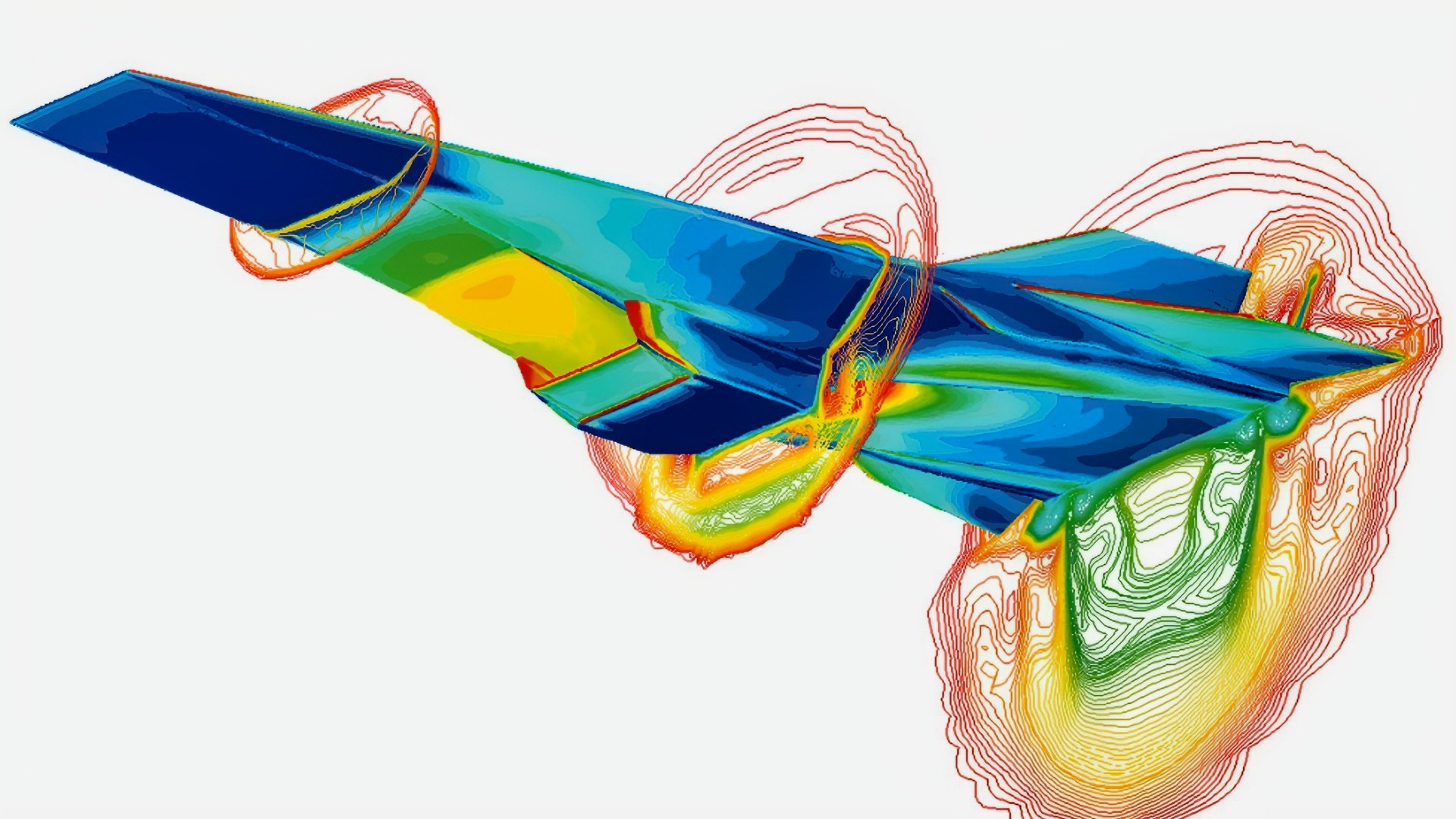
X-43A Test Image. Image Credit: Creative Commons.
-Though the program was short-lived, it paved the way for the X-51 and highlighted the “finicky” and “fragile” nature of hypersonic flight.
-Significant technical and policy challenges—such as thermal management, accuracy against moving targets, and “nuclear ambiguity”—remain for the first generation of U.S. hypersonic weapons.
The X-43A Broke All the Records
NASA’s X-43A is a rather ungainly-looking aircraft. With a square, steeply sloped nosecone and a boxy air intake, it is unlike any aircraft currently in service with the United States military.
Though no longer in use — the project ended after just three flights — the X-43A was an experimental, unmanned research aircraft designed to glean information on peculiarities of hypersonic flight.
The X-43A aircraft’s unusual physics required an unusual launch platform.
Dropped from a B-52 Stratofortress bomber at altitude, the X-43A was accelerated by the Pegasus rocket it was mated to, then separated and engaged its scramjet engine, reaching hypersonic speeds.
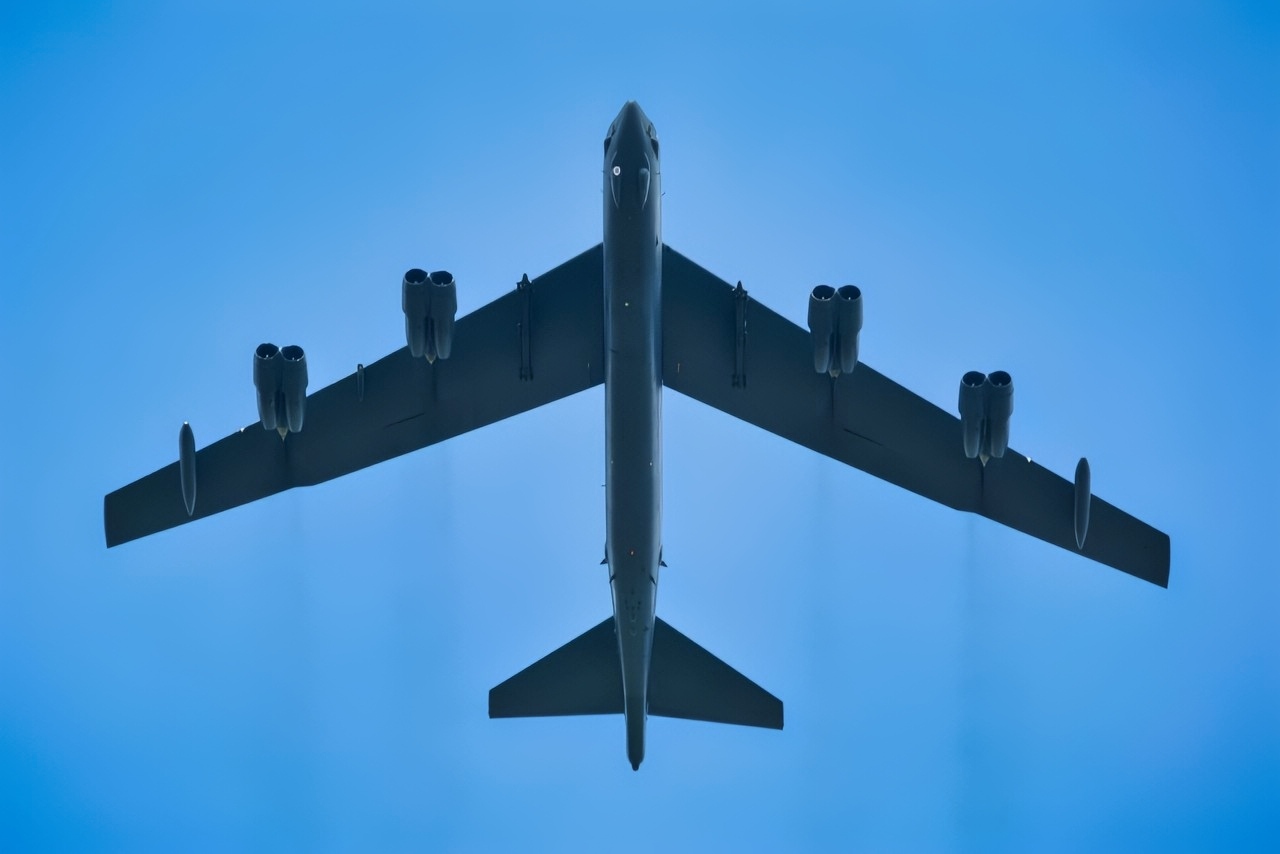
Military service members, veterans, and citizens of Guam gathered for the Memorial Day Commemoration at the Guam Veterans Cemetery. The Ceremony consisted of a fly over from a B-52H Stratofortress, a musical performance from the Guam Territorial Band & Cantate, guest speaking from the honorable Eddie Baza Calvo, a Fallen Soldier Gravesite Tribute, and the playing of Taps. (U.S. Marine Corps photo by Lance Cpl. Jacob Snouffer/Released)
The X-43A was brief but paved the way for the other hypersonic platforms that followed.
A fascinating, publicly available paper covering the last X-43A flight explains in depth and very granular detail the technical aspects of that flight, which brushed up against the Mach 10 boundary.

A U.S. Air Force B-52H Stratofortress assigned to the 2nd Bomb Wing prepares to depart for a Bomber Task Force mission at Barksdale Air Force Base, La., May 18, 2025. These bomber missions are representative of the U.S. commitment to our allies and enhancing regional security. (U.S. Air Force photo by Airman 1st Class Jaiyah Lewis)
“As with any major project some unforeseen events occurred in the preparation phase, these were handled well and lessons were learned from them,” NASA notes in the paper. “Although the primary objectives to demonstrate and validate the technology, the experimental techniques, and the design tools were met, some anomalous events occurred during the flight, which demonstrated the necessity for flight research.”
The project, despite its modest number of flights — just two in total — was record-setting.
The second X-43A flight in 2004 achieved Mach 6.83 for around 10 seconds and marked the first time a scramjet engine produced positive thrust and sustained powered control at hypersonic speeds.
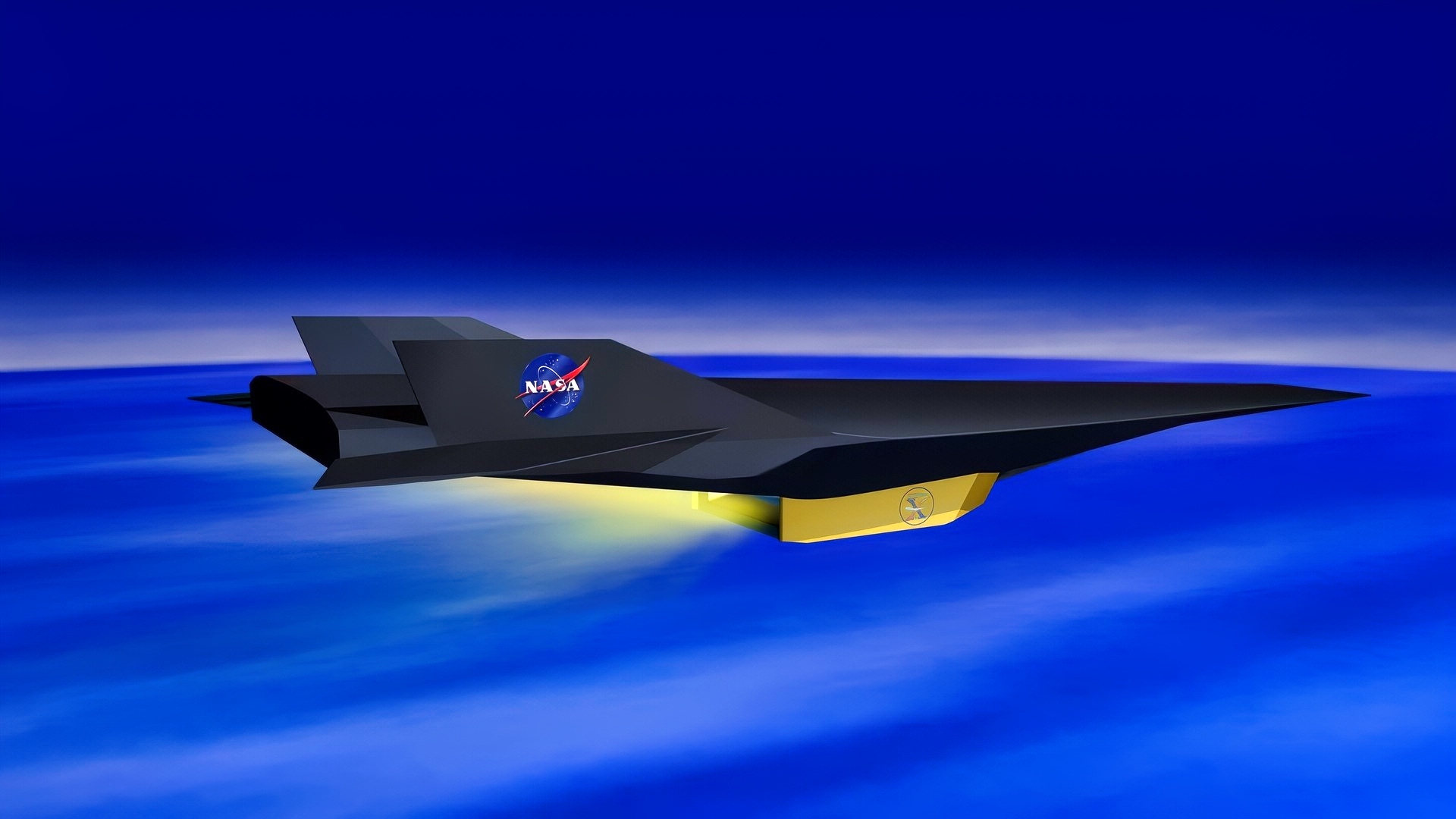
X-43A from NASA. Image Credit: Creative Commons.
Another X-43A later that year reached Mach 9.6 for around 10 seconds, marking the fastest speed ever recorded for an air-breathing aircraft.
The first X-43A was unsuccessful.
As another NASA publication that provides an overview of the program notes, “Guinness World Records recognized both the Mach 6.8 and Mach 9.6 accomplishments and listed the flights on their website and in the 2006 edition of their book of records. Prior to the 2004 X-43A flights, the previous record had been held by a ramjet-powered missile that achieved slightly over Mach 5. The highest speed attained by a rocket-powered airplane, NASA’s X-15 aircraft, was Mach 6.7. The fastest air-breathing, crewed vehicle, the SR-71, achieved slightly over Mach 3. The X-43A more than doubled the top speed of the jet-powered SR-71.
Into the Future
Despite the program’s achievements, the last of NASA’s three X-43 prototypes made its last flight in 2004.
The project gave rise to the X-51 Waverider program, another experimental aircraft designed to research hypersonic flight powered by a scramjet engine.
The Waverider program, though it enjoyed some successes, also demonstrated the finicky, fragile nature of hypersonic flight, attributable in part to engineering mishaps and the advanced nature of scramjet engines.
Two X-51 flights in particular were unsuccessful: during one 2011 flight, the Waverider’s engine ignited as planned on auxiliary fuel, but failed to transition to JP-7 jet fuel.
Another flight the following year ended in disaster when the X-51 broke apart in flight after separating from the booster rocket that had accelerated it.
It would be incorrect to categorize those flights as total write-offs.
Though they did not achieve the sustained hypersonic flight they would have liked to, they did provide insight into managing the stresses, both thermal and mechanical, of hypersonic flight.
Still, significant challenges remain.
As the Congressional Budget Office notes, the first generation of hypersonic weapons in development by the U.S. Army, Navy, Air Force, and DARPA will likely lack some of the most desirable characteristics of hypersonic weapons, namely the long ranges enjoyed by their ballistic missile counterparts.
Thermal management remains an issue, one that will, in essence, cap the maximum speeds of the first-generation hypersonics as well as their terminal evasive maneuvers.
Furthermore, the CBO explained, “first-generation hypersonic missiles are not expected to have the accuracy or sensors needed to operate effectively in situations in which targets may be moving.”
What Happens Next?
Technological hurdles aside, the use of hypersonics raises policy concerns that are perhaps of equal, if not greater, importance: nuclear ambiguity.
As the CBO report on hypersonics notes, lawmakers canceled the United States Navy’s Conventional Trident Modification program in the early 2000s due to the concern that a conventionally-armed Trident missile launch would be virtually indistinguishable from that of a nuclear-tipped warhead.
Though the CBO does acknowledge that the United States has in the past had missiles in service that could be either congenitally or nuclear-armed, response times to an incoming hypersonic missile attack compress the response time of an adversary.
This fact could cause an adversary to make a response decision before the nature of an attack is known.
Significant engineering challenges and essential policy discussions about hypersonic missiles remain, and work on the first generation of hypersonics continues.
About the Author: Caleb Larson
Caleb Larson is an American multiformat journalist based in Berlin, Germany. His work covers the intersection of conflict and society, focusing on American foreign policy and European security. He has reported from Germany, Russia, and the United States. Most recently, he covered the war in Ukraine, reporting extensively on the war’s shifting battle lines from Donbas and writing on the war’s civilian and humanitarian toll. Previously, he worked as a Defense Reporter for POLITICO Europe. You can follow his latest work on X.
More Military
China’s H-20 Stealth Bomber Has a Message for the U.S. Air Force
China’s New J-35 Stealth Fighter Has a Message for the U.S. Air Force
China Is Studying the Ukraine War to Become a Drone Superpower
The Road to a China-America Nuclear War
China Could Fire Mach 6 Hypersonic Missiles from Bombers to Sink Navy Aircraft Carriers


