


Key Points and Summary – NASA’s X-43A wasn’t a paper study—it was a 12-foot, hydrogen-fueled experimental jet that proved an air-breathing engine could fly at nearly ten times the speed of sound.
-It built on decades of X-plane risk-taking and scramjet groundwork, broke the speed record for air-breathers (Mach 6.8, then Mach 9.6), and then…stopped.
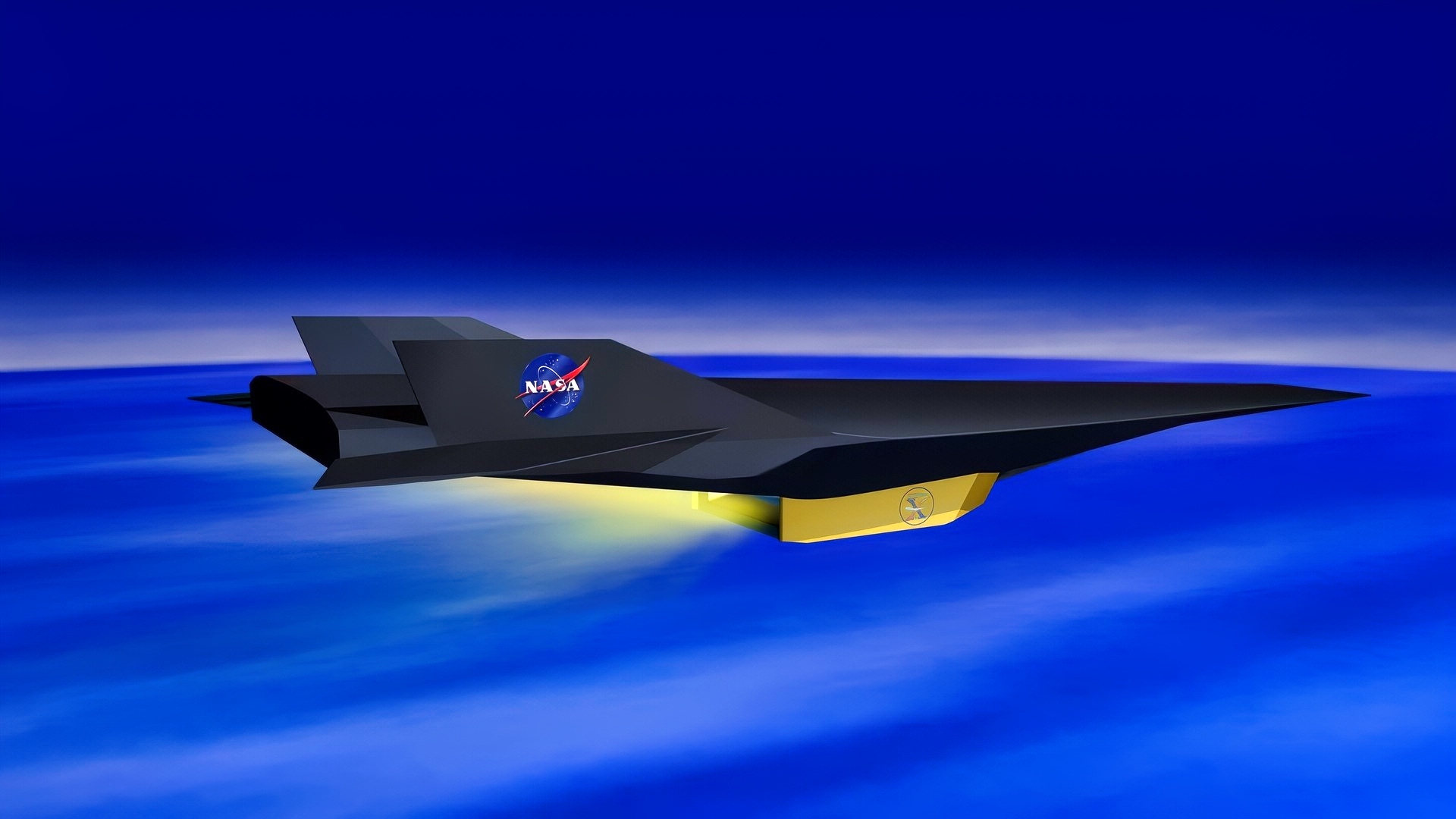
X-43A from NASA. Image Credit: Creative Commons.
-The cancellation wasn’t a scientific failure; it was timing, budgets, and shifting priorities toward space exploration and nearer-term military needs.
-Had it continued, the hydrocarbon-fueled X-43C could have chased “useful” hypersonics—cruise range, repeatability, and operable temperatures—bridging the gap between a stunning stunt and a fieldable capability.
X-43A, Before The Mach 9.6 Record: A Ladder Of Risk, Not A Leap
Programs like X-43A never appear out of nowhere; they sit on rungs built by earlier daredevils and engineers. The lineage stretches back to X-1 cracking the sound barrier, X-15 roaring to Mach 6.7 and 354,000 feet, and the 1960s–70s lifting-body experiments that taught how strange shapes fly at extreme speeds. In the 1980s and ’90s, the U.S. chased an ambitious single-stage-to-orbit concept under NASP/X-30 and funded early scramjet (supersonic combustion ramjet) research. Those efforts didn’t yield an operational vehicle, but they matured combustors, high-temperature materials, and diagnostics—the unglamorous scaffolding X-43A needed.
By the late 1990s, NASA’s Hyper-X program distilled a daring idea to something testable: strap a tiny, air-breathing research craft to a booster, ignite a scramjet at hypersonic speed, and collect hard data in free flight. No pilot, no promises—just physics in the wild.
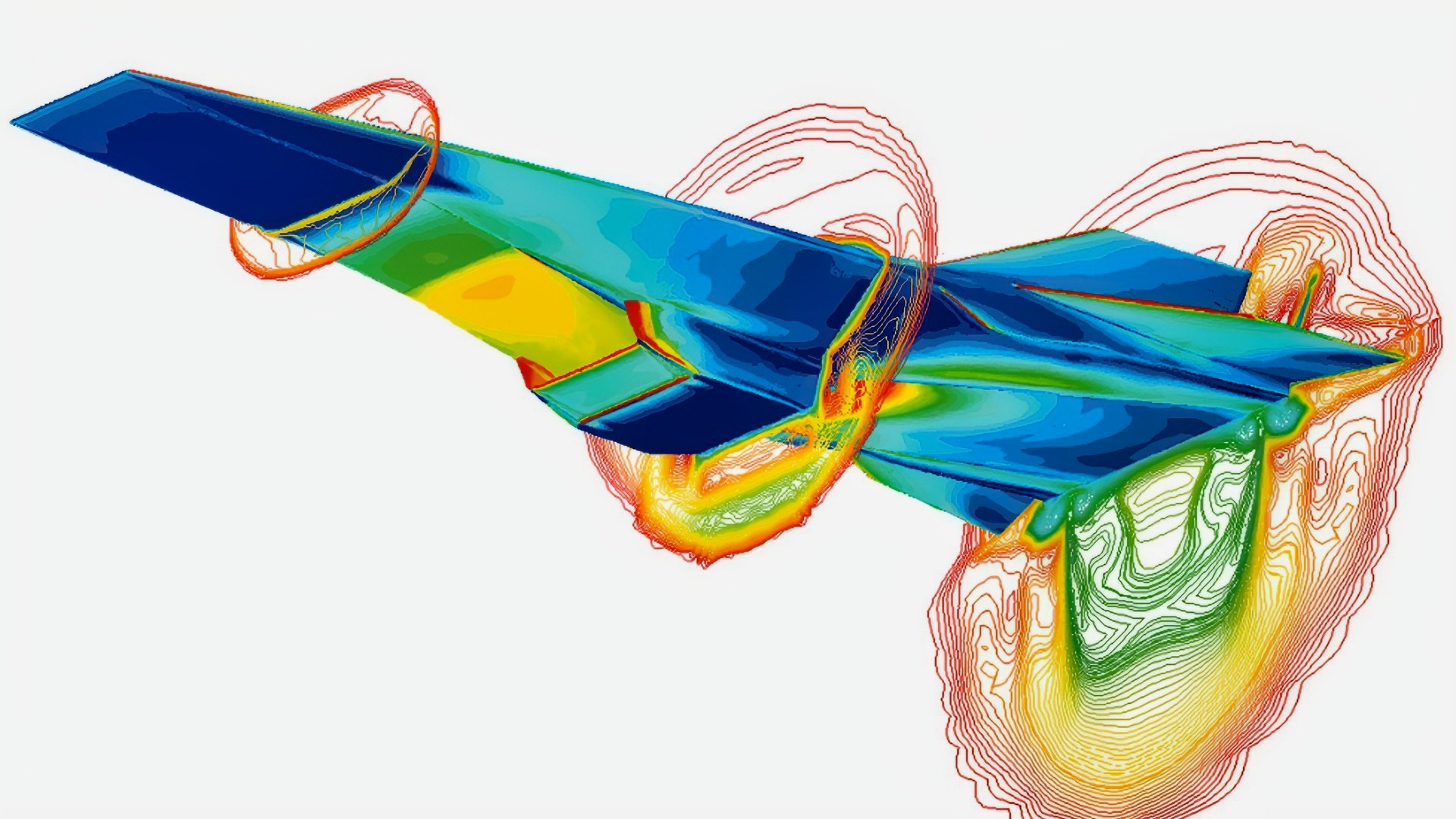
X-43A Test Image. Image Credit: Creative Commons.
What X-43A Actually Was
Picture a surfboard-sized wedge with a brain. The X-43A’s engine was its lower surface: a carefully sculpted inlet and duct that compressed incoming air by sheer speed; a short combustor where chilled hydrogen mixed and burned in milliseconds; and a nozzle that turned hot gases into thrust. Because a scramjet can’t operate from a standstill, each flight began with a Pegasus rocket booster that hurled the vehicle to the test window—roughly Mach 7–10 at around 100,000 feet. Then the booster dropped away, the scramjet gulped supersonic air, and the stopwatch began.
This was not a “plane” in the everyday sense. It was a flying wind tunnel, designed to give a few seconds of exquisitely instrumented truth about flameholding, mixing, and thermal loads where textbooks run out.
The Flights: Failure, Then History
The first attempt in 2001 ended badly when the booster lost control. Painful, but useful—the team rebuilt procedures and refined the separation and control logic. In March 2004, the second vehicle lit cleanly and accelerated to about Mach 6.8, sustaining scramjet combustion and validating the design. Eight months later, the third flight pushed to about Mach 9.6, setting a world speed record for air-breathing flight. The scramjet ran only for seconds, but in hypersonics those seconds are gold: real-world temperature, pressure, and thrust data that ground rigs can’t fully duplicate.
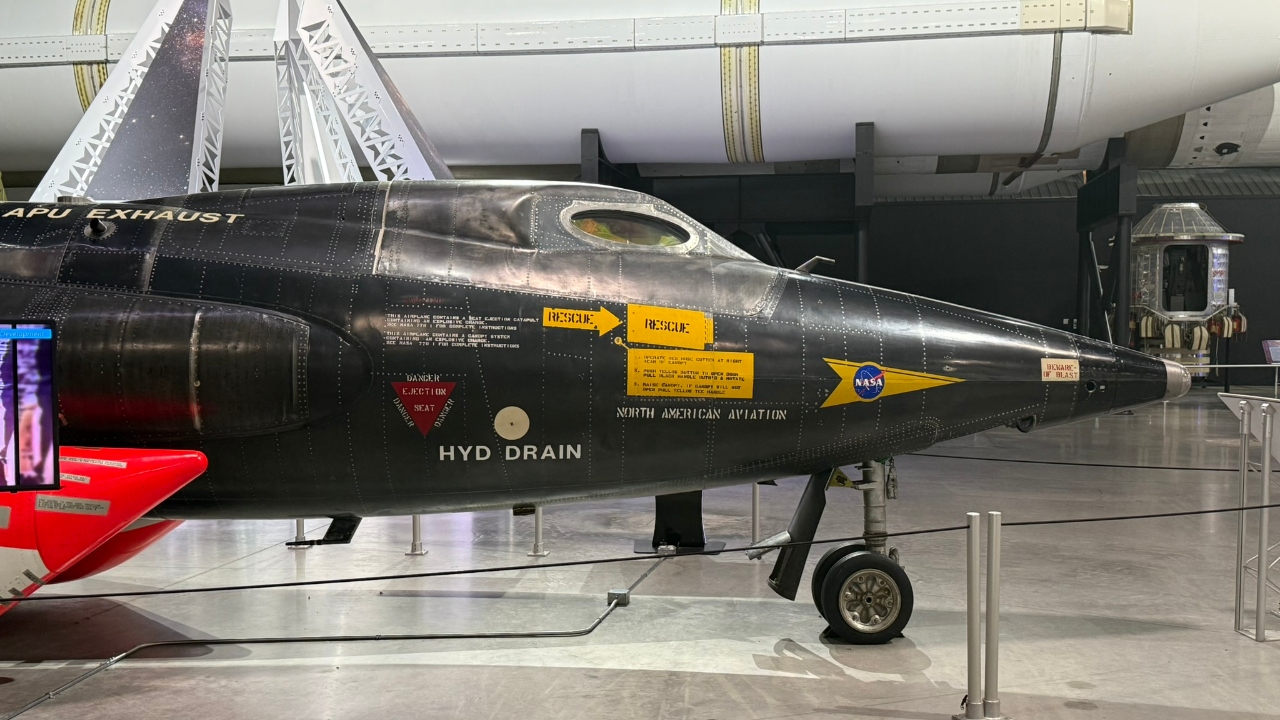
X-15 Harry J. Kazianis National Security Journal Photo.
The headline was speed; the real win was closure—the difference between models and reality shrank. That’s how revolutions start: not with a boast, but with a dataset.
So Why Cancel A Record-Setter?
It’s tempting to see a conspiracy in every cancellation. The truth here is messier and more mundane.
1) The program did what it said it would do. Hyper-X was scoped for three X-43A flights to answer specific scramjet questions. After Mach 9.6, the central objective was met. Continuing would have required a fresh appropriation, new vehicles, and a revised plan.
2) Budgets and priorities shifted. In the mid-2000s, NASA’s top line tilted hard toward a new human-spaceflight architecture. Aeronautics took cuts; near-term, lower-risk research won out. On the defense side, the appetite shifted to operational hypersonic paths—boost-glide weapons and practical cruise missile concepts—rather than a NASA hydrogen demonstrator that needed another decade to become “useful.”
3) Hydrogen is a great test fuel, not a field fuel. Cryogenic hydrogen keeps a combustor cool and mixes quickly at Mach 7–10—perfect for exploration. But it complicates tanks, plumbing, and logistics for any real-world aircraft or missile. To be deployable, the next step needed hydrocarbon fuel (think specialized jet fuel), a different thermal and chemical challenge. That was the point of X-43C (more on that in a moment), and also why the military leaned toward other programs.

X-15A from U.S. Air Force Museum. Image Credit: National Security Journal.
4) Operational payoff was still far away. Hypersonic flight is more than speed. You need range, restarts, turn-down ratios (throttleability), thermal management, and reliability. Getting from a seconds-long research run to a salable capability is a staircase, not an elevator.
In short: X-43A was a scientific home run in a season that suddenly changed coaches, budget, and playbook.
What Records Did X-43A Truly Break?
Strip away the lore and keep two clean claims:
Fastest air-breathing flight on record at the time—first around Mach 6.8, then about Mach 9.6—with measured, sustained scramjet thrust in free flight.
First convincing, flight-proven evidence that a scramjet can ingest supersonic air, burn fuel in it, and make net positive thrust at extreme speed.
Those are not trivia; they are foundation stones. Everything since—ground tests, simulations, and other flight programs—has been able to calibrate against those numbers.
What X-43A Built Upon—And What It Enabled
The “inputs” were the earlier X-planes and decades of scramjet lab work. The “outputs” included a sturdier bridge to the next wave:
-Materials and thermal management lessons from running hydrogen across hot structures at high dynamic pressure.
-Inlet/isolator/combustor data that sharpened design tools used later by military programs.
-Flight-test discipline for tiny, autonomous hypersonic craft separating from a booster at the edge of space.
If you’re looking for a clean line forward, it’s this: X-43A made scramjet reality less mysterious. That made it easier for defense programs to argue they could turn “hypersonics” into something commanders might actually use.
The X-43C That Never Flew
The “C” in X-43C stood for changes that matter to the field: a shift to hydrocarbon fuels (akin to high-temperature jet fuel) and a speed window nearer Mach 5–7, where materials and heating are less brutal and the mission space opens wider. Think practical cruise missiles and aircraft that don’t need cryogenic tanks or a space-age service bay.
Where X-43A was NASA-led and hydrogen-fueled, X-43C leaned toward Air Force Research Laboratory priorities: operability, repeatability, and fueling reality. It likely would have proven:
-Ignition and flameholding with heavy hydrocarbons at true hypersonic conditions (far trickier than with hydrogen).
-Thermal management schemes compatible with deployed systems—using the fuel as a heat sink, managing carbon deposits, and keeping temperatures in family with available alloys and composites.
-Longer engine run times and multiple test points per flight, pushing from “we lit it” to “we can operate it.”
-Had those flights succeeded, the U.S. might have reached today’s practical hypersonic cruise weapons a few years sooner, with a more confident design space. Instead, the baton passed to other efforts.
If The Program Was Cancelled, Did Hypersonics Stall?
Not at all. The story simply branched.
The Air Force and DARPA pursued boost-glide vehicles (skip the air-breathing engine; ride a rocket, then glide fast and far) and air-breathing cruise concepts in parallel.
A later demonstrator, X-51A, ran a hydrocarbon-fueled scramjet for minutes at roughly Mach 5—exactly the “useful” part of the ladder X-43C was meant to climb.
Navy and Air Force efforts converged on operational hypersonics that meet warfighter demands: survivable ranges, practical fuels, and production-minded materials.
In that sense, X-43A did its job: de-risk a crucial physics problem so follow-on programs could sprint where it walked.
Why Speed Alone Wasn’t Enough
It’s natural to fixate on Mach numbers. But hypersonics lives or dies on systems. A weapon or aircraft must:
Launch and arrive affordably. Exotic fuels, cryogenic handling, or bespoke rockets can turn a lab success into a logistical dead end.
Survive the heat. Past Mach 5, air molecules start breaking apart; parts char, creep, and crack; sensors and seals suffer. A test that lasts seconds doesn’t prove you can last minutes under stress.
Navigate and communicate. Plasma and shock layers complicate GPS reception, data links, and even basic sensing.
Be built and maintained at scale. If a design can’t be produced without boutique materials and artisan assembly, it won’t leave the prototype barn.
X-43A answered the propulsion question brilliantly and honestly exposed how many questions were still left.
What We Lost—And What We Kept
Ending X-43A when it was hot will always sting a bit. We lost momentum, continuity of a skilled team, and a chance for the X-43C to compress time to fieldable hydrocarbon scramjets. But we kept the datasets, the methods, and the confidence to say “scramjets work out there, not just in here.” Those are the kinds of assets that survive program names and budget cycles.
Why The Story Matters
For all the acronyms, X-43A is a reminder that progress is a relay. One group fights for funds, another group fights for seconds of data, and a third—years later—turns those seconds into something the public recognizes. When people say, “We touched Mach 9.6 and then quit,” they miss the deeper truth: we touched Mach 9.6 so that somebody else, later, could stay at Mach 5–7 long enough to matter.
The cancellation wasn’t a moral failure. It was a choice in a moment. The record, and what it unlocked, lasted.
Bottom Line on the X-43A
X-43A was proof, not product. It proved that a scramjet could breathe supersonic air and make thrust at Mach 7–10, shattered an air-breathing speed record, and narrowed the gap between theory and flight.
It was canceled because its narrow mission was complete, budgets shifted, hydrogen wasn’t the road to fielded systems, and the defense world needed nearer-term answers. If it had continued, X-43C’s hydrocarbon runs could have accelerated “useful hypersonics.”
Even so, the path it opened—toward practical, air-breathing hypersonic flight—didn’t close when the program did.
About the Author: Harry J. Kazianis
Harry J. Kazianis (@Grecianformula) is Editor-In-Chief and President of National Security Journal. He was the former Senior Director of National Security Affairs at the Center for the National Interest (CFTNI), a foreign policy think tank founded by Richard Nixon based in Washington, DC. Harry has over a decade of experience in think tanks and national security publishing. His ideas have been published in the NY Times, The Washington Post, The Wall Street Journal, CNN, and many other outlets worldwide. He has held positions at CSIS, the Heritage Foundation, the University of Nottingham, and several other institutions related to national security research and studies. He is the former Executive Editor of the National Interest and the Diplomat. He holds a Master’s degree focusing on international affairs from Harvard University.
More Military
The ‘Super’ B-52J Stratofortress Bomber Is Coming
The Air Force’s ‘New’ B-1B Lancer Super Bomber Is Coming Soon
‘Flying Dorito’: The A-12 Avenger II Stealth Bomber Summed Up in 1 Word
Never Finished: USS Illinois Is the U.S. Navy’s ‘Scrapped’ Iowa-class Battleship


Michael W Winslow
October 26, 2025 at 6:25 pm
my wit has a message for your headline – lazy writer
Barney Winthers
October 27, 2025 at 3:32 am
AI generated much?
Malcolm Wasson
October 26, 2025 at 7:16 pm
Thank You Sir for the history Facts And Truth
Krystal cane
October 26, 2025 at 8:11 pm
Is the message I can only fly this way for about 10 seconds before I burn up?
Paully
October 26, 2025 at 9:18 pm
Cool..
A real Thunderbird 1..