


Summary and Key Points: Built under Project 661 “Anchar,” the K-222 (Papa-class) remains the fastest submarine in history, hitting a record 44.7 knots submerged.
-Designed as a “carrier killer” to counter U.S. naval aviation, it was the first submarine to feature a titanium hull, offering exceptional strength and a low magnetic signature.

Mike-Class Submarine from Russia. Image Credit: Creative Commons.
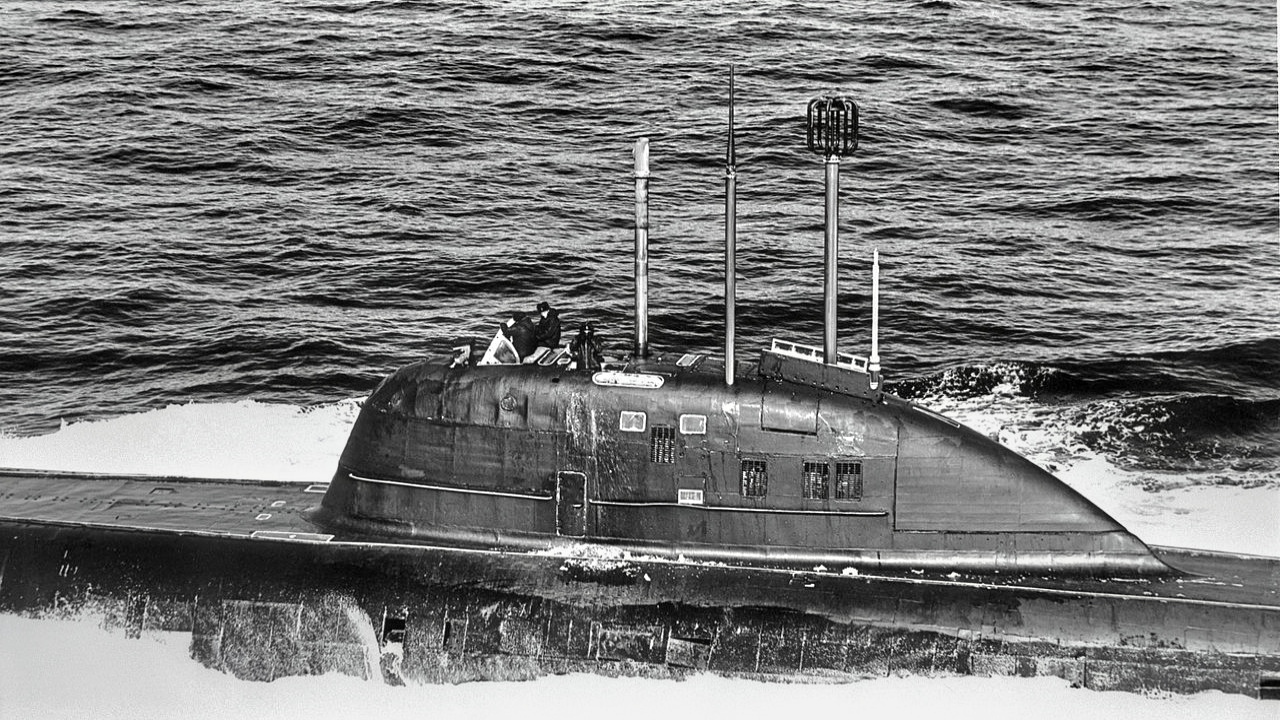
K-278 Komsomolets Mike-Class. Image Credit: Creative Commons.
-However, its speed came at a cost: the hydrodynamic noise was so intense that it was likened to a jet engine, making it readily detectable.
-Ultimately, the $2 billion “Goldfish”—so named for its astronomical cost—was deemed too expensive and complex for serial production, serving as a high-speed experimental bridge to future Soviet designs.
44 Knots Under the Sea: Why the Soviet K-222 is Still the World’s Fastest Submarine
K-222 was an experimental submarine built by the Soviet Union during the Cold War. Constructed under Project 661 “Anchar,” (NATO designation: Papa-class) K-222 was an ambitious project to build an improved nuclear attack submarine in response to the U.S. Navy. It was the fastest attack submarine ever built, reaching speeds of 44 knots when submerged.
Despite its performance, the project was deemed too expensive and more importantly, too complex to continue. K-222 remained in service from 1970 to 1988, after which it was decommissioned and scrapped.
In the late 1950s, the Soviet Navy faced the growing realization that its earlier nuclear cruise-missile submarines, especially the Echo-class designs, possessed critical operational shortcomings.
The Echo-class submarines were required to surface in order to launch their SS-N-3 Shaddock missiles, a practice that exposed them to American carrier-borne aircraft and anti-submarine forces. Soviet leadership considered this deficiency unacceptable, especially during a period when U.S. naval aviation rapidly expanded its strike and reconnaissance capabilities.

Victor III-Class Submarine. Image Credit: Creative Commons.
In response to these challenges, the Council of Ministers issued a directive on 28 August 1958, ordering the development of a radically improved submarine design that would push the boundaries of speed, diving depth, propulsion compactness, missile capability, and material science.
The Soviet Navy demanded a vessel capable of operating at roughly twice the speed of existing platforms, diving deeper, launching new long-range missiles from beneath the surface, and incorporating highly automated systems.
Importantly, the project mandated the use of new materials, most notably titanium, which presented both unprecedented opportunities and formidable engineering obstacles. TsKB-16, a leading Soviet submarine design bureau, was tasked with realizing this ambitious blueprint.
Design Philosophy and Titanium Hull Construction
At the heart of Project 661’s design was its groundbreaking titanium alloy hull. Titanium offers an exceptional combination of strength, corrosion resistance, and low magnetic signature, making it well-suited for a submarine intended to achieve high underwater speeds.
However, titanium is notoriously difficult to fabricate on the scale required for a large submarine. The Soviet Union had to develop entirely new argon-shielded welding techniques and specialized machining technologies simply to begin construction. This process introduced delays and inflated the project’s cost. Construction ultimately began in 1963 at the Sevmash shipyard, where engineers faced persistent challenges in welding, hull plate shaping, and structural consistency.
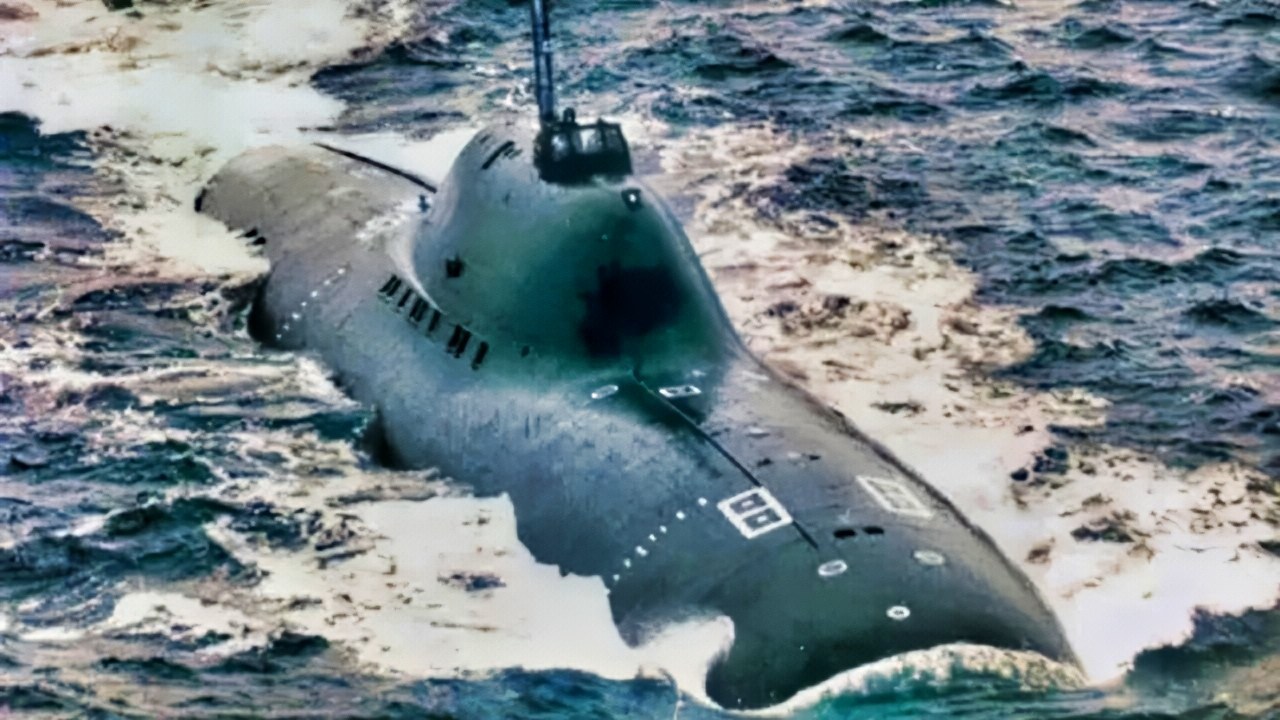
Alfa-Class Submarine Creative Commons Image.
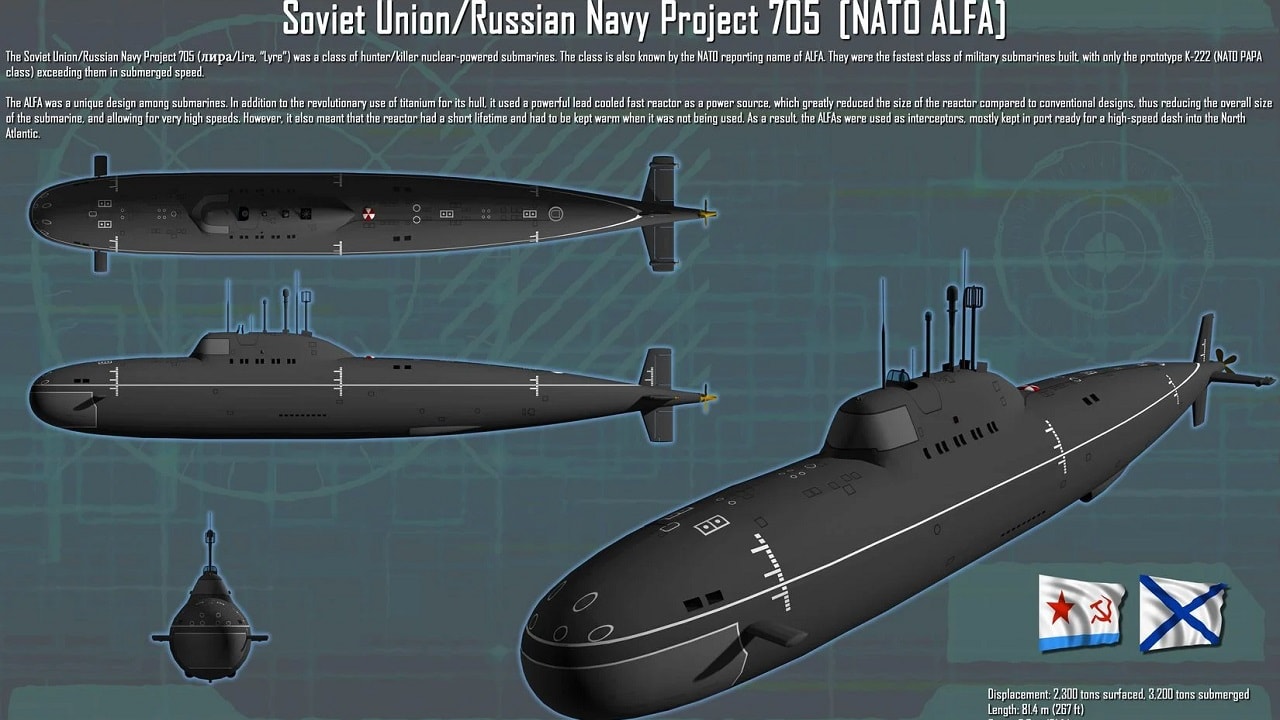
Alfa-Class Submarine. Image Credit: Creative Commons.
The submarine featured a double-hull architecture, with a pressure hull divided into nine watertight compartments.
The forward section was notably unique, designed in a figure-8 configuration to improve hydrodynamic flow and accommodate both torpedo systems and sonar equipment within a constrained space.
This layout exemplified the experimental nature of Project 661, as Soviet designers pursued every means of optimizing internal space and structural strength while minimizing drag. Despite its sophistication, the titanium hull’s production difficulties persisted beyond construction. Cracks were later discovered in the hull material, necessitating extensive repairs. These long delays contributed heavily to the decision not to pursue the design beyond the prototype K-222.
Propulsion and Record-Breaking Speed
The propulsion system of K-222 was one of its most defining features. The submarine was powered by twin VM-5/VM-5M pressurized-water nuclear reactors that supplied steam to high-output turbines, each driving one of the submarine’s two propeller shafts.
The combined output of this machinery was approximately 80,000 PS (59,000 kW), providing the submarine with unparalleled acceleration and speed. During trials, K-222 achieved a submerged speed of 44 knots (81 km/h), a record that remains unmatched by any manned submarine to this day.
Its surface speed, though less dramatic, still reached about 25 knots. The titanium hull’s lightweight strength contributed significantly to this extraordinary performance.
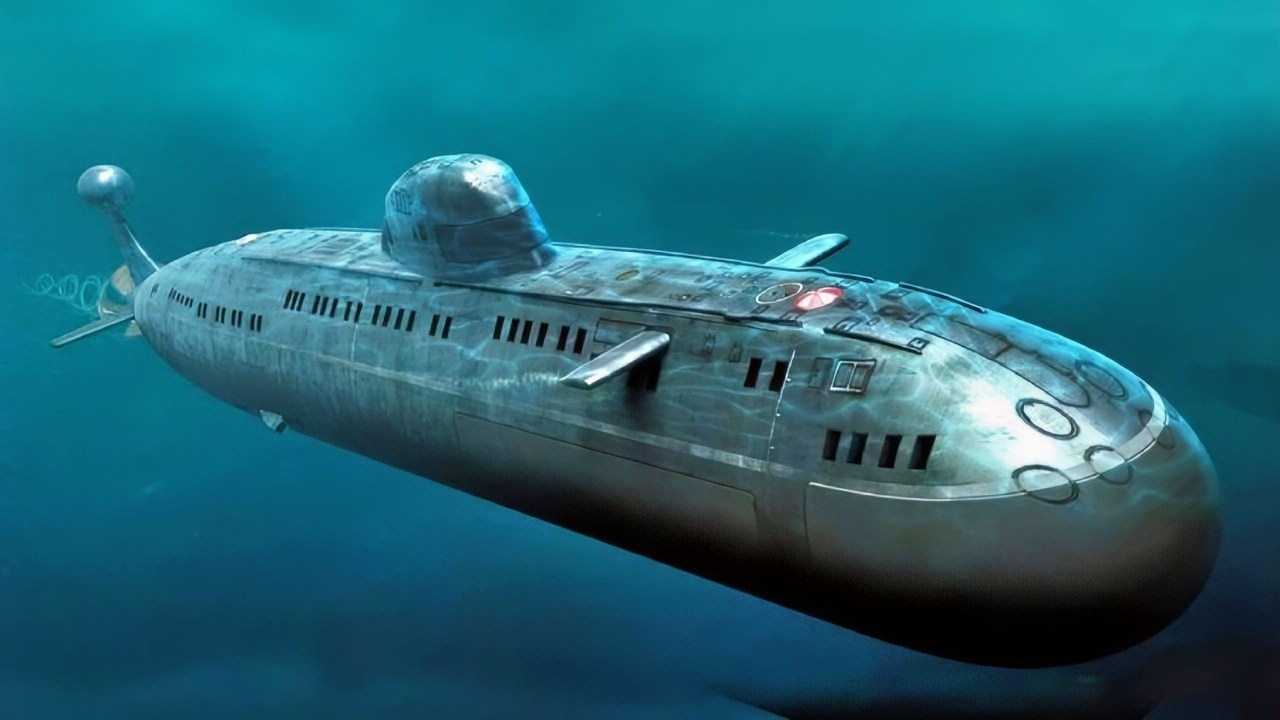
Sierra-Class Titanium Submarine. Image Credit: Creative Commons.

Sierra II-Class Submarine. Image Credit: Creative Commons.

Sierra-Class-Submarine. Image Credit: Creative Commons.
This breathtaking speed came with a severe drawback. The submarine’s hydrodynamic forces and hull rigidity generated extreme noise at high velocity. Soviet reports likened the acoustic output to that of a jet aircraft, which not only made the submarine easily detectable by enemy sonar but also interfered with its own onboard sensor systems.
This problem significantly limited the submarine’s tactical viability and played a central role in the Soviet Navy’s decision against proceeding with serial production.
Armament and Combat Systems
K-222 was conceived primarily as a high-speed carrier-killer submarine. It carried ten SS-N-7 “Starbright” (P-70) anti-ship cruise missiles, which could be fitted with either conventional or nuclear warheads.
These missiles were housed in individual launch tubes situated between the submarine’s inner and outer hulls and angled upward to enable submerged launch—eliminating the Echo-class’s need to surface. This capability represented a major step forward in Soviet missile-submarine doctrine.
In addition to its missile armament, K-222 possessed four 533 mm torpedo tubes in the bow. These torpedoes provided both defensive capability and an additional offensive option, supplementing the submarine’s primary missile mission. Its sensor suite included the Rubin MGK-300 sonar system and the Albatros RLK-101 radar, both designed to support high-speed attack operations and long-range detection.
Construction, Commissioning, and Service Life
K-222’s construction began on 28 December 1963, the submarine was launched on 21 December 1968, and completed on 31 December 1969, entering service shortly afterward in 1970 with the Red Banner Northern Fleet. Its name changed multiple times: originally designated K-18, it was renamed K-162 during construction and finally redesignated K-222 in 1978.
Early in its service life, K-222 demonstrated its exceptional underwater speed during a 1971 deployment in the North Atlantic, reportedly shadowing a U.S. aircraft carrier battle group at high speed. This event attracted considerable attention from Western naval intelligence and confirmed that the Soviet Union had indeed built the world’s fastest submarine.
However, Soviet leadership was overall unimpressed with K-222. Persistent structural concerns soon forced an extended overhaul between 1972 and 1975, during which cracks in the titanium hull were repaired. Not long afterward, in 1980, the submarine experienced a serious reactor accident during refueling. Improper procedures led to overheating of the nuclear core and the release of radioactive steam into the machinery compartment.
The vessel eventually returned to limited service but conducted only one more patrol in 1981. By 1988, K-222 was officially removed from service. After spending years laid up, it was ultimately scrapped in 2010, marking the end of its historically significant yet short career.
About the Author: Isaac Seitz
Isaac Seitz, a Defense Columnist, graduated from Patrick Henry College’s Strategic Intelligence and National Security program. He has also studied Russian at Middlebury Language Schools and has worked as an intelligence Analyst in the private sector.


