

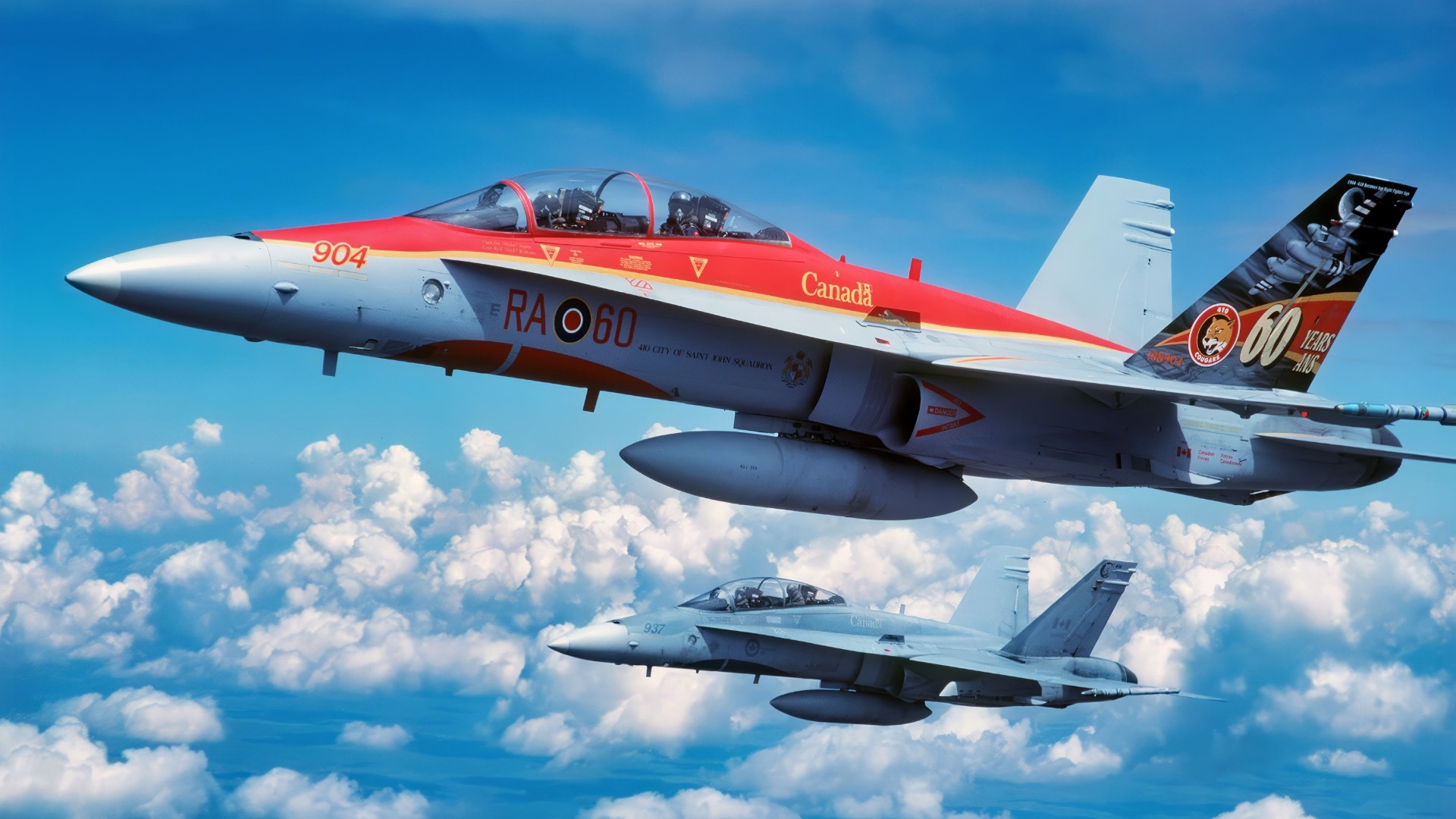
Canada’s aging CF-18 fleet is on the up, it seems, with the Royal Canadian Air Force finally moving to bolster its legacy fighters with the AIM-120D-3 AMRAAM. Back in February, Canadian CF-18 Hornets carried out successful live-fire testing of the AIM-120D-3 at Florida’s Tyndall Air Force Base.
The exercise included aircraft from 425 Tactical Fighter Squadron and appears to mark the first publicly documented launch of the D-3 variant from a non-U.S. military jet.
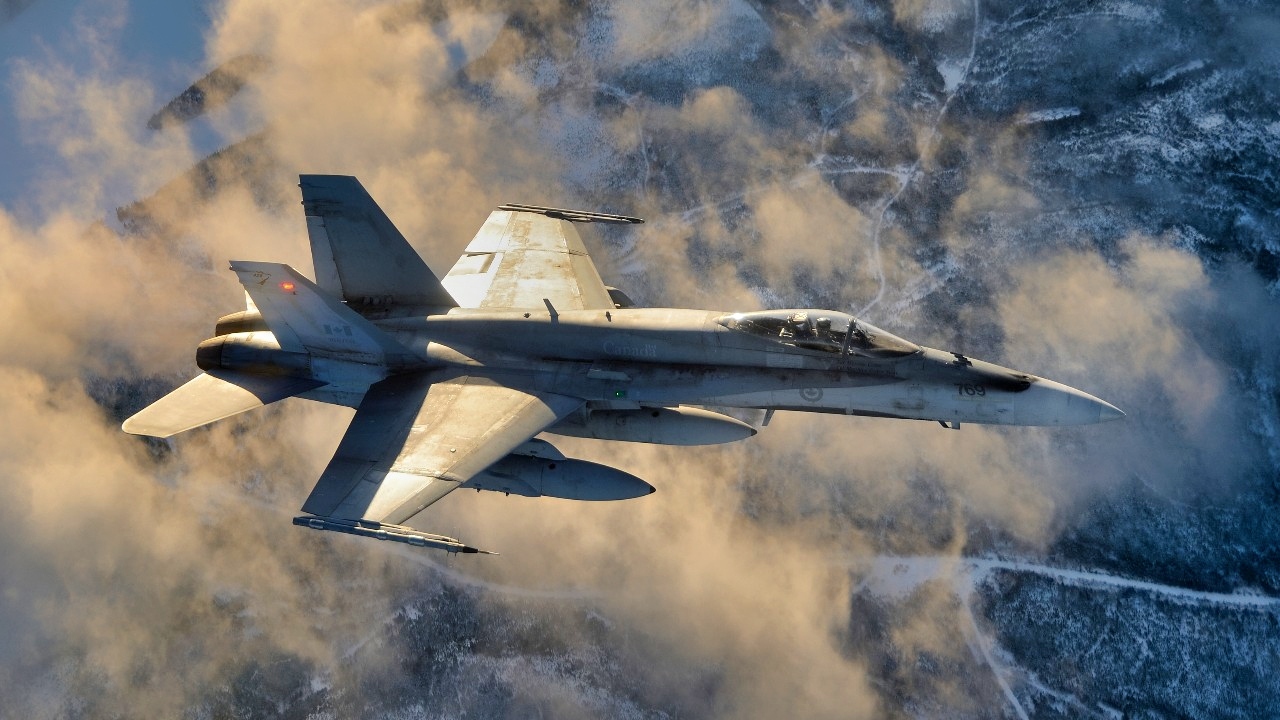
Canada Air Force CF-18. Image Credit: Creative Commons.
Canada’s Assistant Deputy Minister has explained that the new missile “enhances the CF-18’s ability to engage threats at a long range and strengthens Canada’s readiness for NORAD and NATO missions, including the defence of Canada and the Arctic.”
That is a notable upgrade for a fleet that first entered Canadian service in the early 1980s and is being asked to remain credible well into the next decade.
The AMRAAM is not exactly the new kid on the block, but the D-3 is one of its sleekest and most up-to-date iterations. On its website, Raytheon’s parent company RTX outlines just how special AMRAAM is as a feature. This is not just a new missile design, but a combat-proven beyond-visual-range weapon now in use by 40-plus nation-state militaries.
A Deadly Missile
The missile is used on a range of Western fighter jets, including the F-15, F-16, F/A-18, Eurofighter Typhoon, Gripen, and, not to mention, the highly coveted F-35.
The highly advanced missile relies on sophisticated recency, including inertial guidance, midcourse updates, and active radar homing, and remains the only radar-guided air-to-air missile cleared for use across all of the shiny new F-35 variants.

U.S. Air Force Maj. Melanie “Mach” Kluesner, pilot of the F-35A Demonstration Team, performs aerial maneuvers at the Sun ‘n Fun Airshow in Lakeland, Florida, April 1, 2025. The team travels across the country to demonstrate the unmatched capabilities of the F-35A Lightning II and highlight the skill of U.S. Air Force pilots. (U.S. Air Force photo by Senior Airman Nicholas Rupiper)
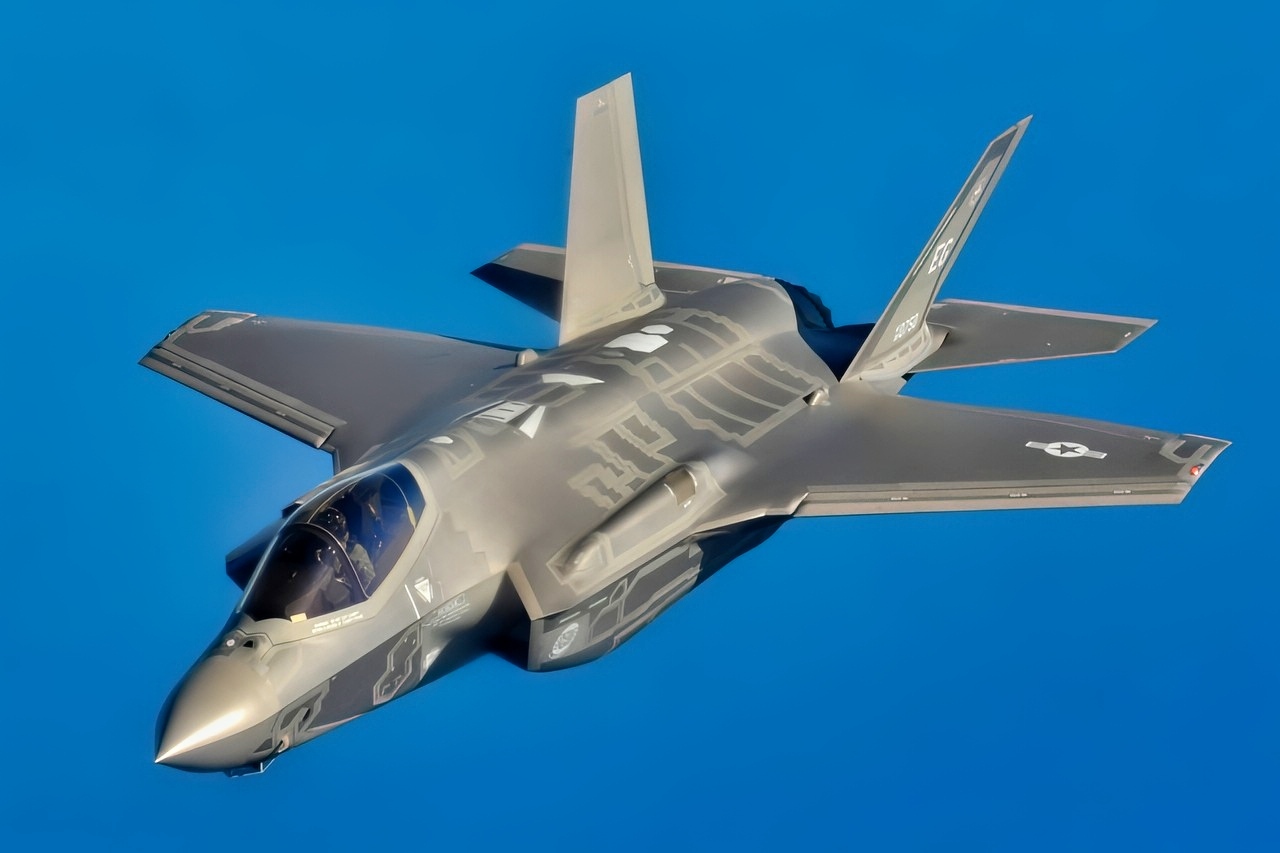
U.S. Air Force F-35A Lightning II Joint Strike Fighters from the 58th Fighter Squadron, 33rd Fighter Wing, Eglin AFB, Fla. perform an aerial refueling mission with a KC-135 Stratotanker from the 336th Air Refueling Squadron from March ARB, Calif., May 14, 2013 off the coast of Northwest Florida. The 33rd Fighter Wing is a joint graduate flying and maintenance training wing that trains Air Force, Marine, Navy and international partner operators and maintainers of the F-35 Lightning II. (U.S. Air Force photo by Master Sgt. Donald R. Allen/Released)
That matters because Canada is trying to bridge an awkward gap between an increasingly tired fourth-generation fleet and an uncertain transition to the F-35.
The Hornet Extension Project has already delivered radar and avionics upgrades to part of the CF-18 force, and Skies Magazine reports that the next phase includes expanded missile options such as the AIM-120D-3 and the AIM-9X Block II Sidewinder.
New Weapons Before New Fighters
For Ottawa, upgrading missiles is one of the cheaper and quickest ways to preserve at least some combat credibility.
This does not mean the CF-18 is an actual new aircraft, but it does offer the RCAF a sharper long-range punch in a time of increasing global conflict. Just last week, Iran fired a pair of intermediate-range ballistic missiles toward Diego Garcia, a US-UK base in the Indian Ocean.
As a North Atlantic Treaty Organization (NATO) member, Canada ought to be deeply concerned with any attacks on US or UK territories, as an attack on any member of the defence pact can trigger a wholesale response under Article 5 of its treaty.
That is especially the case as the F-35 debate remains chaotic. Canada has already financially pledged to purchase 30 F-35As- lower than its original 88-but the wider programme is uncertain. Last September, U.S. officials warned of “serious consequences” if Canada were to ditch the deal, while also noting that Ottawa had been reviewing whether to fully proceed.
Naturally, this has kept Saab’s Gripen E in the conversation long after Canada officially chose the F-35 back in 2022.
While the Swedish fighter is potentially better suited to more scattered Arctic operations and might provide Canada with more industrial input, switching at this stage would create delays and ramp up a new dependency on U.S.-controlled export components.
The reality, though, is that the Gripen simply does not possess the stealth of the F-35s, nor do the Nordic states possess anything like the U.S. military complex.

JAS 39 Gripen E Fighter. Image Credit: Creative Commons.
CF-18: The Bottomline
The CF-18 missile upgrade is part of a push to secure the situation while politicians continue to fight over a potential replacement. Canada’s geography hardly makes this easier, with its vast northern air approaches requiring aircraft that are available, armed, and interoperable with the United States via NORAD.
While Canada is debating whether it is too reliant on the American defense sector, it is still leaning on an American missile to keep its existing U.S.-built fighters up to scratch. As it stands, the integration of the AIM-120D-3 offers is helping to buy Canada time.
Still, the longer Ottawa delays concluding its “reviews,” the more complications seem to arise.
About the Author: Georgia Gilholy
Georgia Gilholy is a journalist based in the United Kingdom who has been published in Newsweek, The Times of Israel, and The Spectator. Gilholy writes about international politics, culture, and education. You can follow her on X: @llggeorgia.


