


Israeli Prime Minister Benjamin Netanyahu, back in February, reportedly pushed President Donald Trump to join Israel in striking and killing Iran’s Supreme Leader, leading to what has become known as the Iran War.
During his long tenure as Israel’s leader, the Jerusalem Post quoted former Secretary of State John Kerry as saying Netanyahu had asked at least three previous U.S. presidents to attack Iran, including George W. Bush, Barack Obama, and Joseph Biden, but that Trump was the first American leader to say yes.

Crew Chief Senior Airman Mike Parks talks through his headset with the crew of a U.S. Air Force B-1B Lancer bomber as they go through the pre-flight checklist at an air base in the Persian Gulf region on Dec. 10, 1998. The Lancer, deployed from Dyess Air Force Base, Texas, is a multi-role, long range, heavy bomber.
(DoD photo by Senior Airman Sean M. White, U.S. Air Force. (Released))

9th Expeditionary Bomb Squadron aircrew step out to the B-1B Lancer during Bomber Task Force 25-2 at Misawa Air Base, Japan, May 9, 2025. BTF 25-2 demonstrates Allied strength by forging strong alliances, showcasing our resolve, and deterring aggression, while also supporting global stability and security and strengthening military capabilities. (U.S. Air Force photo by Airman 1st Class Mattison Cole)
Now, nine months after that attack, the Israeli prime minister reportedly made another request of his U.S. counterpart, although this time Trump said no.
According to The Guardian, Netanyahu, on the eve of Israel’s elections this week and the United States’ own vote next week, pushed both the Israeli military and Trump to take new action in the war with Iran.
Bibi’s Requests
According to the newspaper, the Israeli leader has “resorted to increasingly alarmist rhetoric,” including posting a social media video, generated with AI, of mushroom clouds destroying Tel Aviv, and stating that voters should consider the possibility of that before voting for his opponents.
Per Israel’s News 12, the prime minister’s election closing argument also included Netanyahu giving the IDF chief, Lt Gen Eyal Zamir, a directive that could “potentially spark an immediate conflagration with Iran at a very sensitive juncture.” According to the report, Zamir asked for the directive in writing, although the prime minister denied it.
And then, according to CNN, Netanyahu also had a request for President Donald Trump in recent weeks: He wants to carry out more joint attacks on Iran, although Trump remained steadfast in not wanting to attack Iran again until after next week’s elections in the U.S.
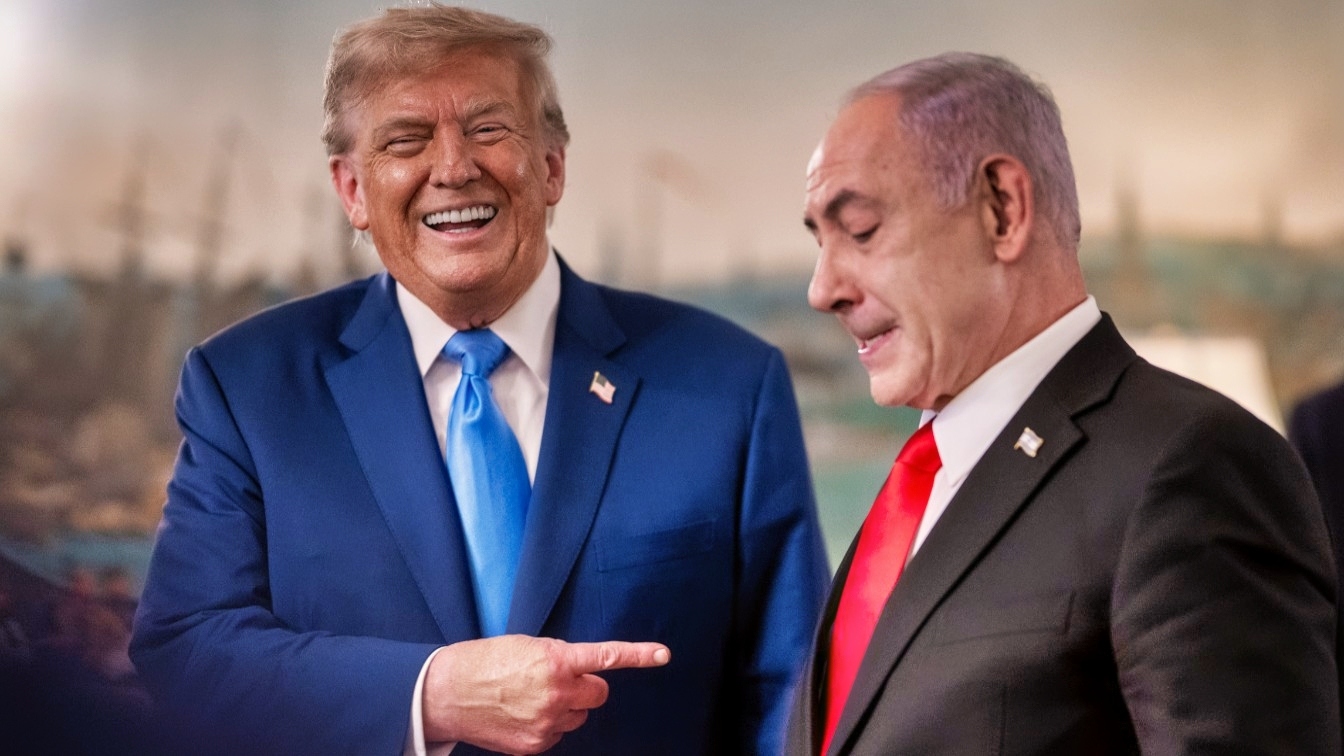
President Donald Trump and Israeli Prime Minister Benjamin Netanyahu speak privately in the Vermeil Room before a dinner, Monday, July 7, 2025, at the White House. (Official White House Photo by Daniel Torok)
“Netanyahu really wanted and tried to convince Trump for a joint attack in Iran before the elections, and Trump did not give a green light,” an Israeli security source told CNN.
CNN also reported that Zamir told Gen. Dan Caine, chairman of the Joint Chiefs, that a joint attack before Israelis voted would put the elections themselves in jeopardy, and possibly cause their postponement.
Another source told the network that Trump has indicated to Israel that the two countries will launch joint operations in Iran once the two elections are over.
If Netanyahu’s bloc loses the election, it’s unclear what that would mean for those plans.
CNN reported one additional thing: US intelligence assessments have found that Netanyahu and his allies in Israel are without “a clear strategic objective beyond demonstrating some sort of ‘progress’ and continuing to degrade the Iranian regime.”
What’s Happened in the Election
According to a New York Times report, the Israeli election, the first the country has held since the October 7, 2023 attacks, is seeing record-high turnout.
Israel has a parliamentary system with dozens of parties in the Knesset.
No one party is large enough to win a majority on its own, so parties must form coalitions and blocs to govern.
Israel’s last several elections have essentially been contested between pro-Netanyahu and anti-Netanyahu blocs.
In 2021, an anti-Netanyahu bloc from across the political spectrum defeated the prime minister, leading to the brief premiership of Naftali Bennett, who is running again this year.
A year later, that government fell, and Netanyahu’s bloc returned to power in the next election, leading the country’s most far-right government.
Gadi Eisenkot, a former military chief of staff whose son was killed in the Gaza war, is the primary opposition leader and the most likely next prime minister, should Netanyahu’s bloc lose the vote.
Major issues in the election include the role of religion in the country, Israel’s image internationally, and whether Netanyahu should be held accountable for failing to prevent the October 2023 attacks.
Polls show the race is close.
It could also take weeks to know the next government, since it must be determined which side gets the mandate to form a government and, if they do, whether they can cobble together a coalition that could earn a majority in the Knesset.
And once they do, keeping that coalition together is an entirely separate feat.
About the Author: Stephen Silver
Stephen Silver is an award-winning journalist, essayist, and film critic, and contributor to the Philadelphia Inquirer, the Jewish Telegraphic Agency, Broad Street Review, and Splice Today. The co-founder of the Philadelphia Film Critics Circle, Stephen lives in suburban Philadelphia with his wife and two sons. For over a decade, Stephen has written thousands of articles on politics, national security, technology, and the economy. Follow him on X (formerly Twitter) at @StephenSilver, and subscribe to his Substack newsletter.


