

Key Points and Summary – Russia’s MiG-41 (PAK DP) is promoted as a revolutionary sixth-generation interceptor, designed to replace the MiG-31 and counter hypersonic threats with Mach 4+ speeds.
-However, the program, officially announced in 2021, remains largely conceptual, lacking a prototype.

MiG-41 Fighter. Image Credit: Artist Rendition/Creative Commons.
-Crippled by sanctions, budget constraints, and industrial limitations (evident in Su-57 production failures), its projected first flight has slipped to the mid-2030s at the earliest.
-Currently, the MiG-41 serves primarily as a “signaling asset” – a symbol of Russian ambition rather than a reflection of its near-term capabilities, highlighting the gap between Moscow’s goals and industrial reality.
MiG-41: Russia’s “Sixth-Generation” Interceptor
On 24 January 2021, Rostec officially announced that the development phase for the MiG-41 (also known under its project name PAK DP, Prospective Air Complex for Long-Range Interception) had formally entered the research and development stage.
The aircraft is billed by Russian defense sources as the successor to the aging MiG-31 Foxhound, and has been promoted as a “sixth-generation” interceptor capable of extreme speeds, near-space operations, and missile defense roles.

MiG-31 Flying High Russian Air Force. Image Credit: Creative Commons.
Despite the bold claims, the MiG-41 remains a concept, lacking a prototype or planned production pipeline.
Origins, Purpose, and Design
Russia’s air-defense posture has long focused on its unique need to cover vast Arctic and northern airspace zones with high-speed interceptors.
Russia’s large land mass, covering huge sections of the northern hemisphere, requires an air force fleet designed to handle long-distance flights – and since the 1980s, the MiG-31 has been a key asset for the Russian military.
However, the platform is aging and increasingly viewed as approaching obsolescence.
The PAK DP/MiG-41 program is the answer to that problem, theoretically providing Russia with a platform capable of intercepting advanced threats like hypersonic missiles, reconnaissance aircraft, and long-range bombers operating at high altitudes and speeds.
The MiG-41 is expected to replace the MiG-31 by the mid-2030s.
The logic for Russia is clear: if adversaries can deliver hypersonic or high-altitude threats over Russian airspace, then Russia needs an interceptor that can either match or exceed those altitudes and speeds.
Publicly, the MiG-41 is said to be able to hit Mach 4+ speeds, possibly up to Mach 4.3 or even Mach 5, while operating at high altitudes.
The aircraft can carry long-range missiles and possibly anti-satellite or directed-energy weapons. Russia has floated concepts of optional unmanned aircraft variants with a heavy emphasis on stealth and interception.
Industrial and Political Realities
While the concept is bold, it’s not unrealistic; China is following a similar strategy, creating optional unmanned variants of next-generation aircraft focusing on stealth.
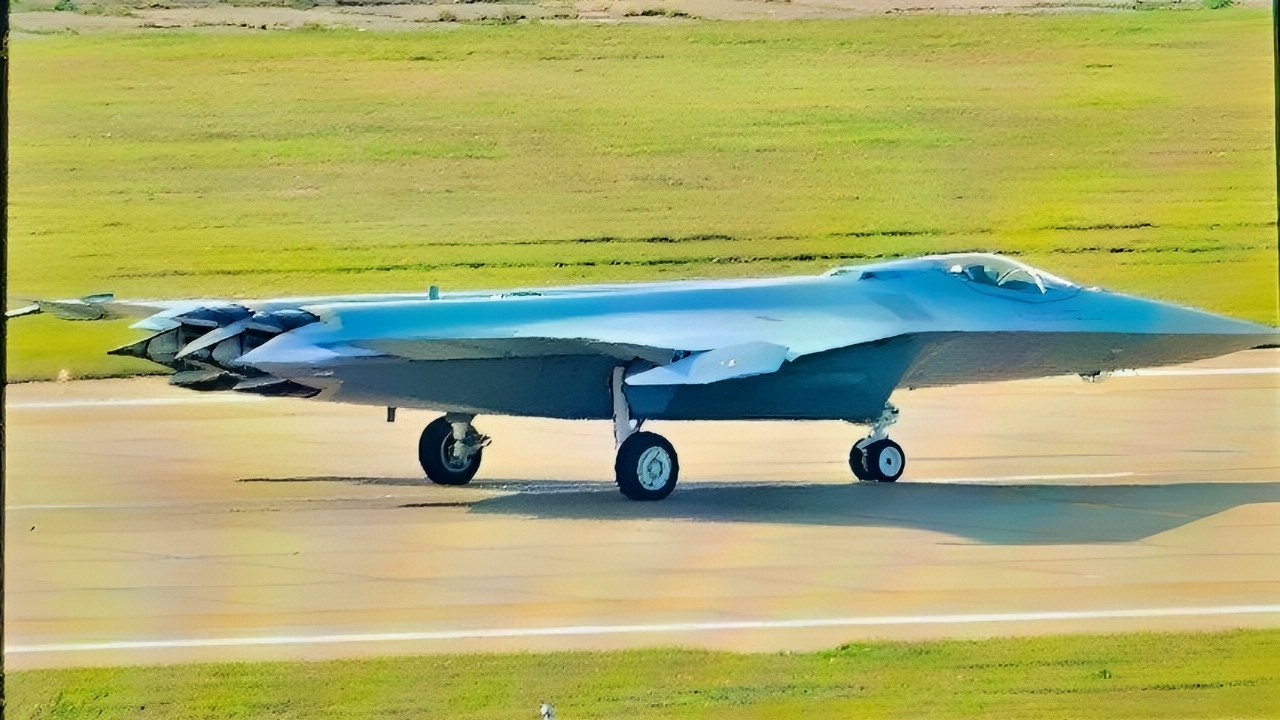
J-50 Fighter Image from X
However, industrial and political realities for Russia are likely to get in the way of developing and fielding an aircraft like this.
Russia’s military-industrial base is facing significant headwinds, with a combination of sanctions, supply-chain constraints, and intense demand for its current war effort in Ukraine putting considerable strain on the system.
For example, the production of the fifth-generation Su-57 has been beset by delays for some time now, along with low production numbers, raising doubts that Russia can move forward with an inarguably enormous jump to sixth-generation capabilities.

Su-57 Felon Artist Image> Image Credit: Screenshot.
The MiG-41, rather than being a near-term deployable platform, might ultimately prove to be a prestige project; it is a campaign designed to “prove” that Russia can design advanced aircraft.
Ultimately, it could be some time before it is fully developed and manufactured in sufficient numbers.
Timelines for delivering the aircraft have repeatedly slipped, with early projections of a first flight in 2025 now being obviously unrealistic, with that date having been shifted into the mid-2030s for a prototype to be delivered and the first aircraft entering service.
Additionally, the designation “sixth-generation” is already contested – and the platform isn’t even ready yet.
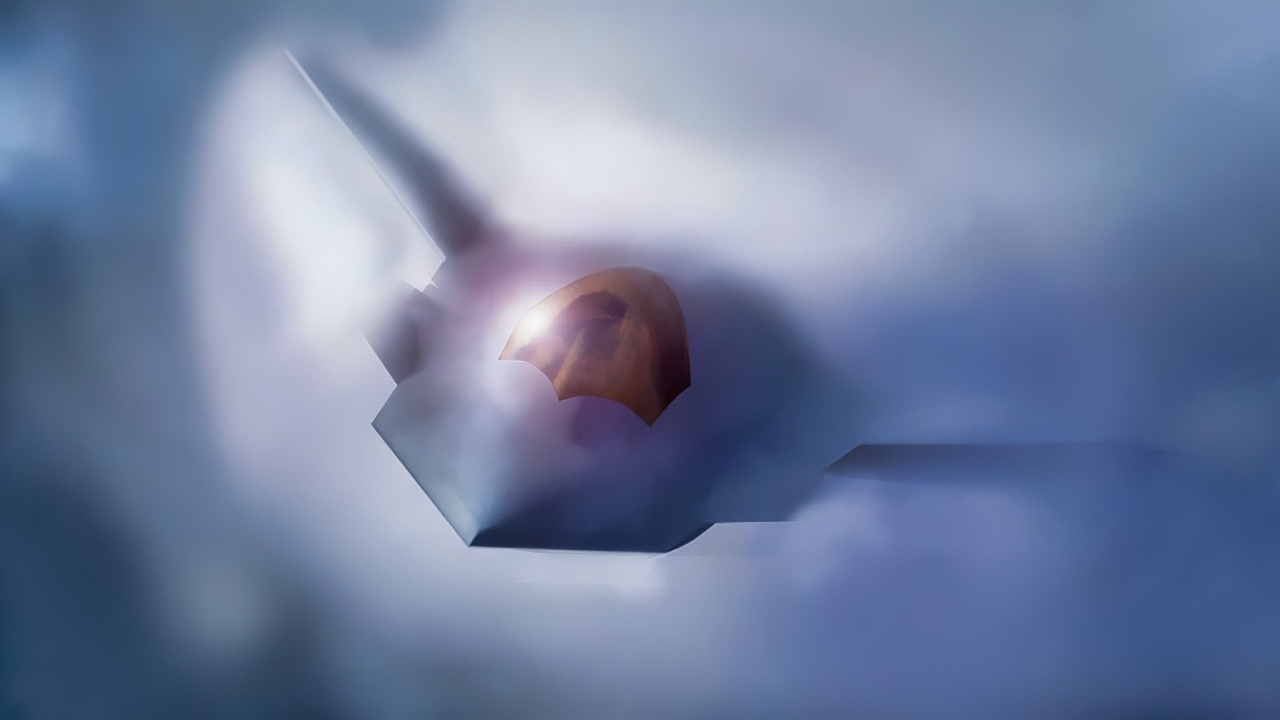
Shown is a graphical artist rendering of the Next Generation Air Dominance (NGAD) Platform. The rendering highlights the Air Force’s sixth generation fighter, the F-47. The NGAD Platform will bring lethal, next-generation technologies to ensure air superiority for the Joint Force in any conflict. (U.S. Air Force graphic)
Russian sources have shifted between calling the aircraft a “fifth-gen plus” and “sixth generation” platform, fuelled partly by competition with the United States and platforms like NGAD.
The Future and Why It Matters
Despite the delays, the MiG-41 still matters for Russia and the West. If fully realized, the MiG-41 would alter Russia’s long-range air-defense posture, offering an interceptor with high speed and altitude abilities, capable of engaging airborne and near-space threats.
However, the reality is much more nuanced than that. The MiG-41 is years away from being developed, and its ongoing war in Ukraine preoccupies Russia.
Today, the MiG-41 is a signaling asset more than anything else, meaning that it is promoted by Russia to prove technological parity and deter adversaries. The aircraft is a symbol of Russia’s ambition, but not a reflection of its current capabilities.
However, that offers the West – and analysts everywhere – a window into Russia’s strategic priorities.
The MiG-41 illustrated two things: one, the enduring focus Russia continues to place on high-altitude, long-range interceptors rather than close air-support or multirole dominance, and two, the gap between its aspirations and industrial capacity in the aerospace sector.
The MiG-41, under the PAK DP program, is being positioned by Moscow as the next big leap in interceptor aviation – but slipped dates for slip even further, and a prototype may not emerge until the mid-2030s if delays continue.
About the Author:
Jack Buckby is a British author, counter-extremism researcher, and journalist based in New York. Reporting on the U.K., Europe, and the U.S., he works to analyze and understand left-wing and right-wing radicalization, and reports on Western governments’ approaches to the pressing issues of today. His books and research papers explore these themes and propose pragmatic solutions to our increasingly polarized society. His latest book is The Truth Teller: RFK Jr. and the Case for a Post-Partisan Presidency.
More Military
No Fix’: China’s J-20 Stealth Fighter Has 1 Problem With No Solution
The Army’s ‘Super’ MBT-70 Tank Summed Up in 1 Word
Shinano: Japan’s ‘Super’ Aircraft Carrier Was the Biggest Warship Ever Sunk by A Submarine
Russia’s ‘New’ Tu-160M Blackjack Bomber Has A Mach 2 Message for the U.S. Air Force


