


Key Points and Summary – As Russia awaits its delayed PAK DA stealth bomber, it is heavily upgrading its Tu-160 “Blackjack,” a non-stealthy bomber analogous to the U.S. B-1B Lancer .
-This modernized Tu-160M variant is receiving new engines, a digital cockpit, and advanced radar.
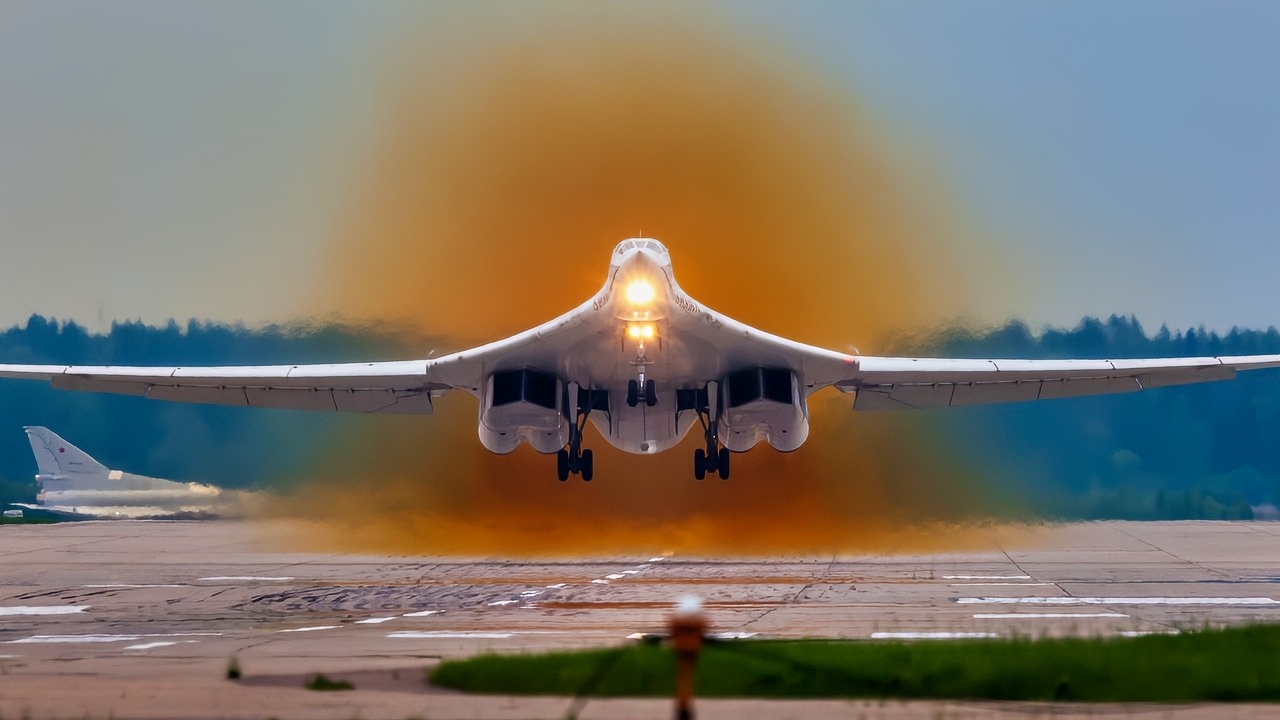
Tu-160 Bomber from Russia. Image Credit: Creative Commons.
-Its strategy is to compensate for its lack of stealth by arming it with long-range standoff weapons, most notably the Kinzhal hypersonic missile.
-While this keeps the legacy bomber relevant, the upgrade program highlights Russia’s industrial struggles, forcing it to rely on modernizing Cold War-era platforms instead of producing new-generation aircraft.
Russia’s Tu-160 Mach 2 Bomber Keeps Getting More Upgrades
As Russian weapons developers await the uncertain arrival of its PAK DA stealth bomber designed to rival the US B-21, the country’s military is surging with extensive “bridge” upgrades to its Tu-160 “M” long-range bomber. While emerging in the 80s as a non-stealthy bombing platform, the Russian Tu-160 could be seen as somewhat analogous to the US B-1B Lancer or maybe even B-52H.

A B-52H Stratofortress sit parked on the flight line at Minot Air Force Base, North Dakota, Aug. 8, 2022. The B-52 is capable of dropping or launching gravity bombs, cluster bombs, precision-guided missiles and joint direct attack munitions. (U.S. Air Force photo by Airman Alysa Knott)
Both airframes have been substantially upgraded for continued service life and are intended for more permissive environments due to their size and vulnerability to fighter jets and advanced air defenses.
Nonetheless, Russia’s Tu-160M upgraded bomber variant has been given a new navigation system as well as next-generation autopilot technologies.
Much like the US B-52, upgrades to the Tu-160M, NATO reporting name “Blackjack,” are indeed extensive. They include work on a Tu-160M2 variant, which includes an upgraded NK-32 engine, jamming equipment, digital cockpit, and NVI 70 radar.
Russian “Blackjack” Bomber
The Blackjack is also armed with as many as six Kh-55SM ground-attack cruise missiles, each capable of carrying a nuclear or conventional warhead, according to an interesting essay from Kyle Mizokami in Popular Mechanics.
As described in the article, the warheads can either be a 200-kiloton thermonuclear warhead or a conventional high-explosive fragmentation warhead. Russia’s Rostec plans to produce roughly two new Tu-160Ms per year to reach 10 aircraft prior to 2027.
Unlike the Vietnam-era classic B-52, the Tupolev Tu-160 first entered service in the Soviet era during the 1980s.
Russia’s Tupolev resembles the large, elongated B-1B Lancer bomber, which can carry a massive payload, increasing the max take-off weight to 300 tons.
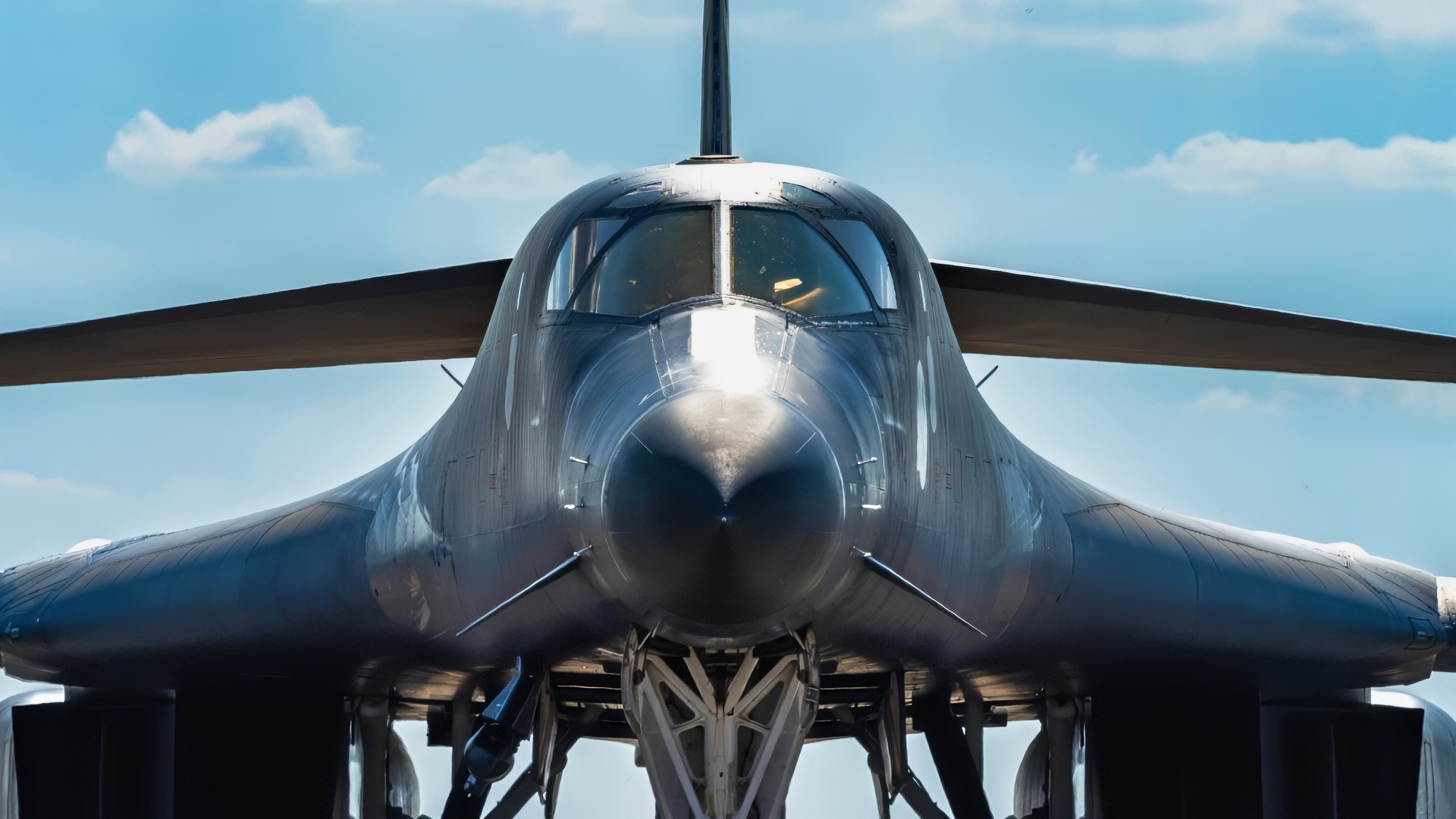
A U.S. Air Force B-1B Lancer assigned to the 345th Expeditionary Bomb Squadron is photographed after landing at Dyess Air Force Base, Texas, Aug. 22, 2025. Three bombers deployed for Bomber Task Force Europe with a total force integration team composed of roughly 30% active-duty and 70% reserve Airmen from the 7th Bomb Wing and 489th Bomb Group. (U.S. Air Force photo by Senior Airman Jade M. Caldwell)
Russia seeks to maintain an active and capable bomber fleet, yet the Tu-160M bomber suffers from many of the same challenges likely to be encountered by the B-1B and B-52.
Simply put, Russia’s legacy bomber does not have the stealth required for today’s environment. The Tu-160M’s fuselage does bear some resemblance to the B-1B bomber with its narrow, elongated nose and rounded front section.
Tu-160 vs US B-52
While the “M” does suffer from a lack of stealth, the US experience has shown that decades-old airframes can remain relevant and viable for decades beyond their intended service life with some maintenance and structural support.
This has been the case with the US B-52 bomber, which may fly for close to 100 years.
The 1950s and 1960s-era B-52 has become an almost entirely different aircraft due to massive upgrades. Over the course of recent decades, the B-52 has received a new engine, a digital cockpit, a reworked internal weapons bay, updated communications technology, and new weapons systems.
The US Air Force’s modern B-52J operates with a massively larger bomb capacity and, moving forward, may likely launch drones, hypersonic missiles, and even lasers.
These innovations could potentially be integrated into the Tu-160M, adaptations that could make the bomber quite relevant in the context of modern great power warfare.

Tu-160 bomber. Image Credit: Creative Commons.
If longer-range sensors and weapons can target air defenses and enemy ground targets from much greater stand-off distances, the Tu-160 M’s attack range could compensate for its lack of stealth.
Hypersonic Tu-160M
There is also the question of hypersonic weapons, which Russia is known to operate.
The integration of air-launched hypersonic weapons and long-range anti-ship cruise missiles could enable the Tu-160M to hold previously unreachable targets at great risk.
Configuring the Tu-160M2 for hypersonics is entirely realistic, if not already underway, as Russia intends to arm the bomber with the Kh-47M2 Kinzhal hypersonic missile.
The Kinzhal is quite significant, as it was used with success in Ukraine in 2022 to attack weapons storage facilities and ammunition depots.
However, while the Kinzhal is cited to be capable of reaching speeds of Mach 10, it is not considered “fully” hypersonic because it follows a standard ballistic missile trajectory and does not maneuver in flight the way a hypersonic weapon traveling at this speed is typically able to do.
This air-launched ballistic missile trajectory is likely a main reason why Ukraine was able to successfully destroy a Kinzhal using a Patriot missile air-defense weapon.
About the Author: Kris Osborn
Kris Osborn is the President of Warrior Maven – Center for Military Modernization. Osborn previously served at the Pentagon as a highly qualified expert in the Office of the Assistant Secretary of the Army—Acquisition, Logistics & Technology. Osborn has also worked as an anchor and on-air military specialist at national TV networks. He has appeared as a guest military expert on Fox News, MSNBC, The Military Channel, and The History Channel. He also has a Masters Degree in Comparative Literature from Columbia University.
More Military
Russia’s ‘Black Hole’ Kilo-Class Submarine Has a Message for the U.S. Navy
How a Russian Pilot Defected With A Mach 2 MiG-29 Fulcrum Fighter
The F-4 Phantom II Has a Message for Any Air Force on Earth
The F-16 Fighting Falcon Fighter Has a Message For Any Air Force on Earth


