

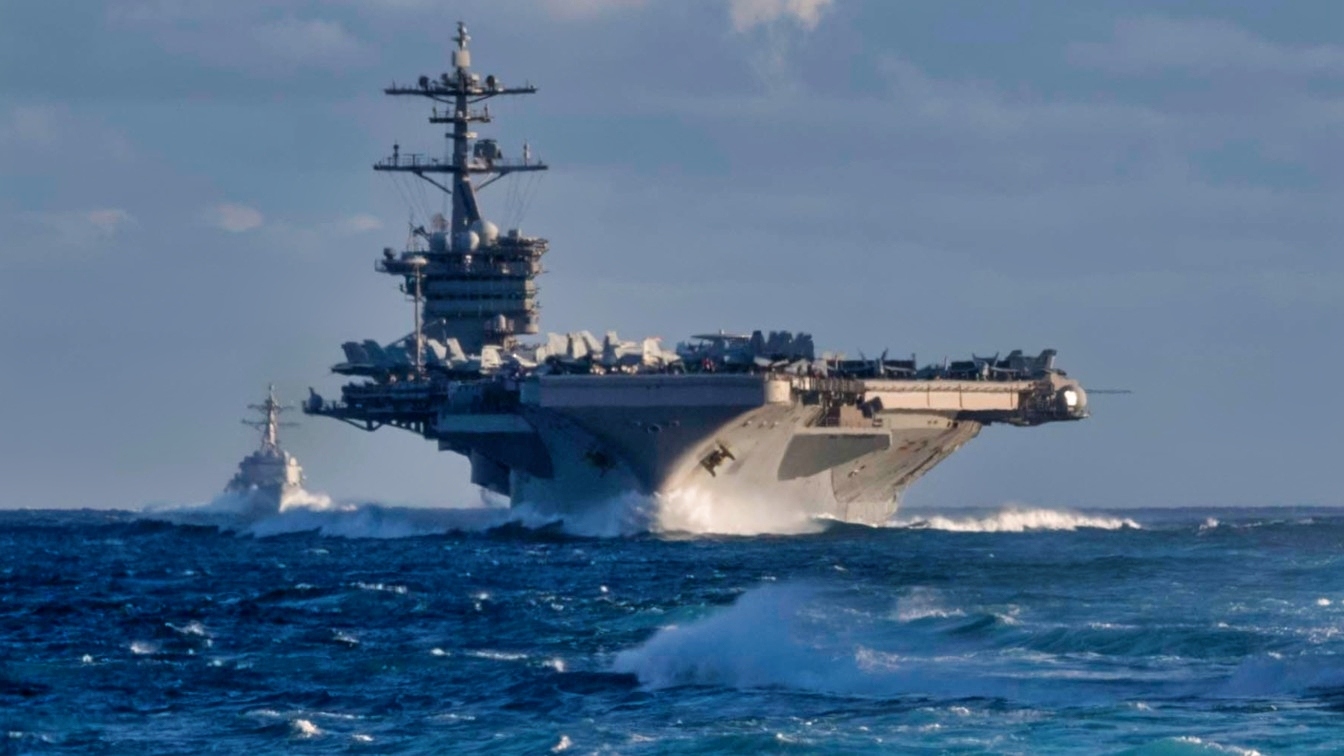
Eight months into the conflict with Iran, the debate in Washington centers on carriers, the blockade, and whether President Trump resumes strikes after the midterms.
However, the water itself has become a casualty.
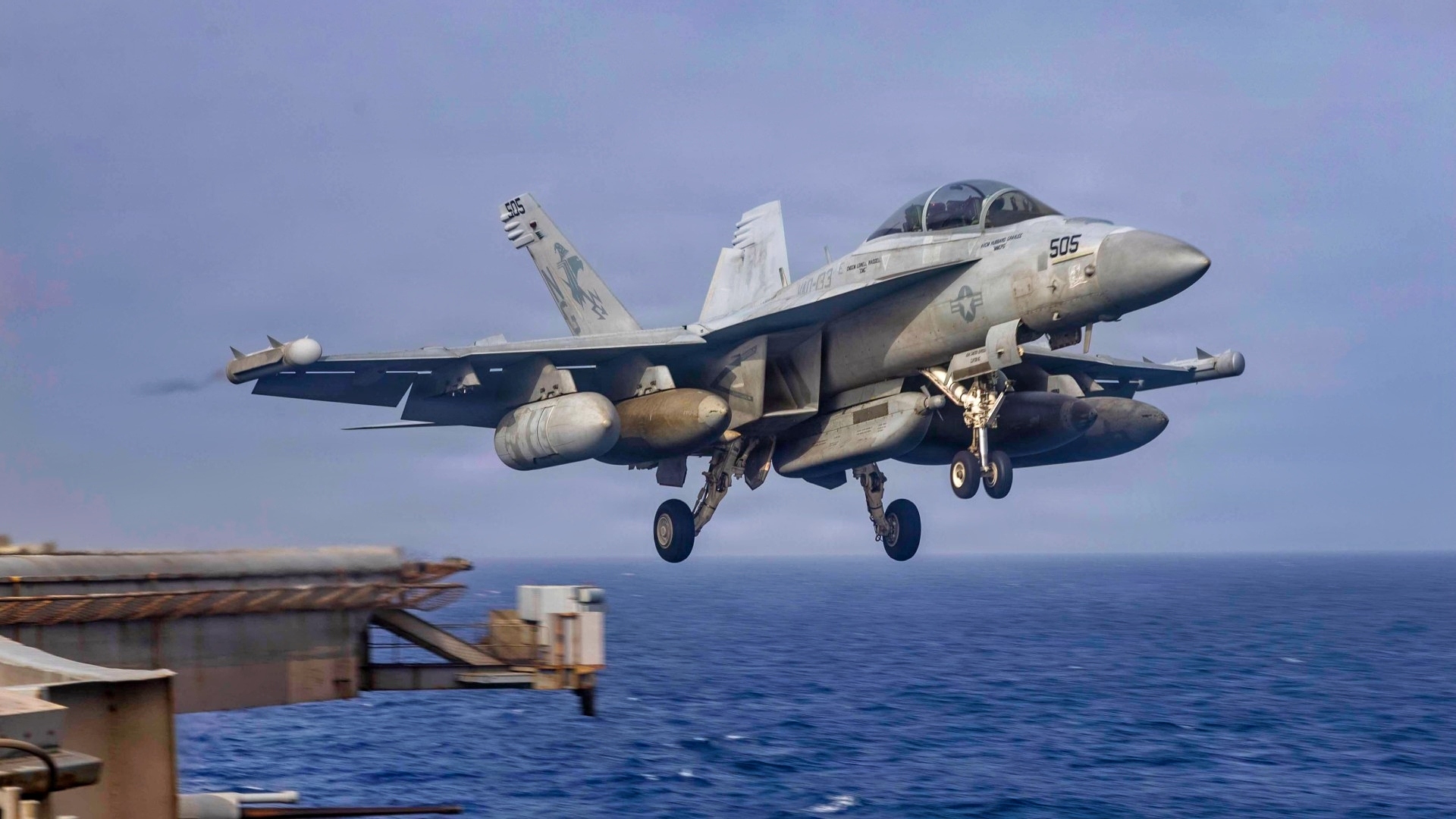
An EA-18G Growler, attached to Electronic Attack Squadron (VAQ) 133, takes off from the flight deck of Nimitz-class aircraft carrier USS Abraham Lincoln (CVN 72), May 21, 2026. Abraham Lincoln is deployed to the U.S. 5th Fleet area of operations to support maritime security and stability in the Middle East. (U.S. Navy photo)

A U.S. Navy EA-18G Growler prepares to refuel from a U.S. Air Force KC-135 Stratotanker over the U.S. Central Command area of responsibility, March 29, 2025. The Growlers are assigned to the Harry S. Truman Carrier Strike Group supporting maritime security operations in the CENTCOM AOR. (U.S. Air Force photo by Staff Sgt. Gerald R. Willis)
Satellite oceanographers at the University of South Florida found that oil spills in the Gulf covered roughly four times as much area in March 2026 as they did a year earlier.
CNN’s reporting this week describes the conflict as yet another US war leaving a toxic legacy behind.
But it is a two-way street.
While CNN blames the pollution squarely on the US and Israeli airstrikes, it glosses over the Iranian attacks on tankers in the Gulf.
However, the Persian Gulf has had a large pollution problem for decades. Now, thanks to the conflict with Iran, the surface oil pollution has doubled.
Burning Tankers Don’t Clean Up After Themselves
For months, tankers and cargo ships have been targeted in and around the Strait of Hormuz, and the oil has to go somewhere.
Satellite imagery from April 7 showed a spill stretching more than five miles near Iran’s Qeshm Island.
Wim Zwijnenburg of the Dutch peace group PAX labeled a strike on Lavan Island a major environmental emergency, per CNN.
By August, slicks had reached the Hara mangrove forests on Qeshm, according to The Conversation. Meanwhile, oil from the grounded tanker Caroline Bezengi fouled Oman’s coastline, The National reported.
The oil slick on Qeshm was described as a “self-inflicted wound by Iran.”
“Several vessels have been hit in that same spot by the Iranians when vessels use the Omani route,” Samir Madani, co-founder of maritime intelligence company TankerTrackers.com, told BBC Verify.
Unfortunately, the International Oil Pollution Compensation Funds explicitly exclude damage caused by acts of war, Euronews noted.
The insurance premiums will not pay to clean up this toxic mess.
The Water Is The Real Vulnerability
Oil on a beach is more than just ugly.
Oil spills threaten fragile coral reefs, mangrove forests, fish and shrimp nurseries, and vital nesting grounds for sea turtles, dolphins, and dugongs.
But oil in a seawater intake is a major crisis. In most Persian Gulf countries, 70 to 90 percent of people depend on desalination for drinking water, per Scientific American.
Fortune reported that just 56 plants produce more than 90 percent of the Gulf’s desalinated water.
Those plants need a constant flow of clean seawater, and an oil slick can foul the intakes without a single missile hitting them, as Circle of Blue points out.
Bahrain says it has about four days of water in reserve if its plants go down. Qatar claims roughly a four-month supply, according to the Arab Center in Washington, D.C.
This could affect every country if pollution takes out desalination plants.
The Smoke Leaves A Long Tail
The damage isn’t confined to the water.
In March, strikes on fuel depots around Tehran mixed soot and toxic chemicals with rain clouds, dropping oily, acidic “black rain” on the capital, and the World Health Organization warned about the air, per the Carnegie Endowment.
Tehran’s fine particulate levels were already more than 17 times the WHO limit before the first missile flew, the Center for American Progress noted.
Cancers tied to smoke exposure can take years or decades to show up in the statistics.
A similar situation unfolded in Moscow after a Ukrainian drone attack on an oil refinery.
The Conflict and Environment Observatory had logged more than 400 environmentally concerning incidents tied to the war as early as March, Euronews reported.
The Gulf’s coral reefs, mangroves and seagrass were already stressed by heat and shipping traffic.
They still carry scars from the oil dumped during the 1991 Gulf War.
Scientists are now urging Gulf states to form an “ecological union” to coordinate restoration. That’s a good idea. However, it requires the fighting to stop first.
The Persian Gulf is very polluted, and it isn’t getting any better. Sooner or later, someone will have to clean up the mess before it threatens the water supply.
About the Author: Steve Balestrieri
Steve Balestrieri is a National Security Columnist. He served as a US Army Special Forces NCO and Warrant Officer. In addition to writing on defense, he covers the NFL for PatsFans.com and is a member of the Pro Football Writers of America (PFWA). His work was regularly featured in many military publications.


