


Donald Trump’s health has long been a topic of discussion, ever since he entered politics. He has tended to brag about his health, including claims that he “aced” cognitive tests, and his personal doctors, including the late Dr. Harold Bornstein, have often issued over-the-top statements about how great and perfect the president’s health is.
Another former White House physician known for his glowing reports about Trump’s health, Dr. Ronny Jackson, later became a bomb-throwing Republican member of Congress.

Donald Trump Rally in 2024 Election. Creative Commons Photo.
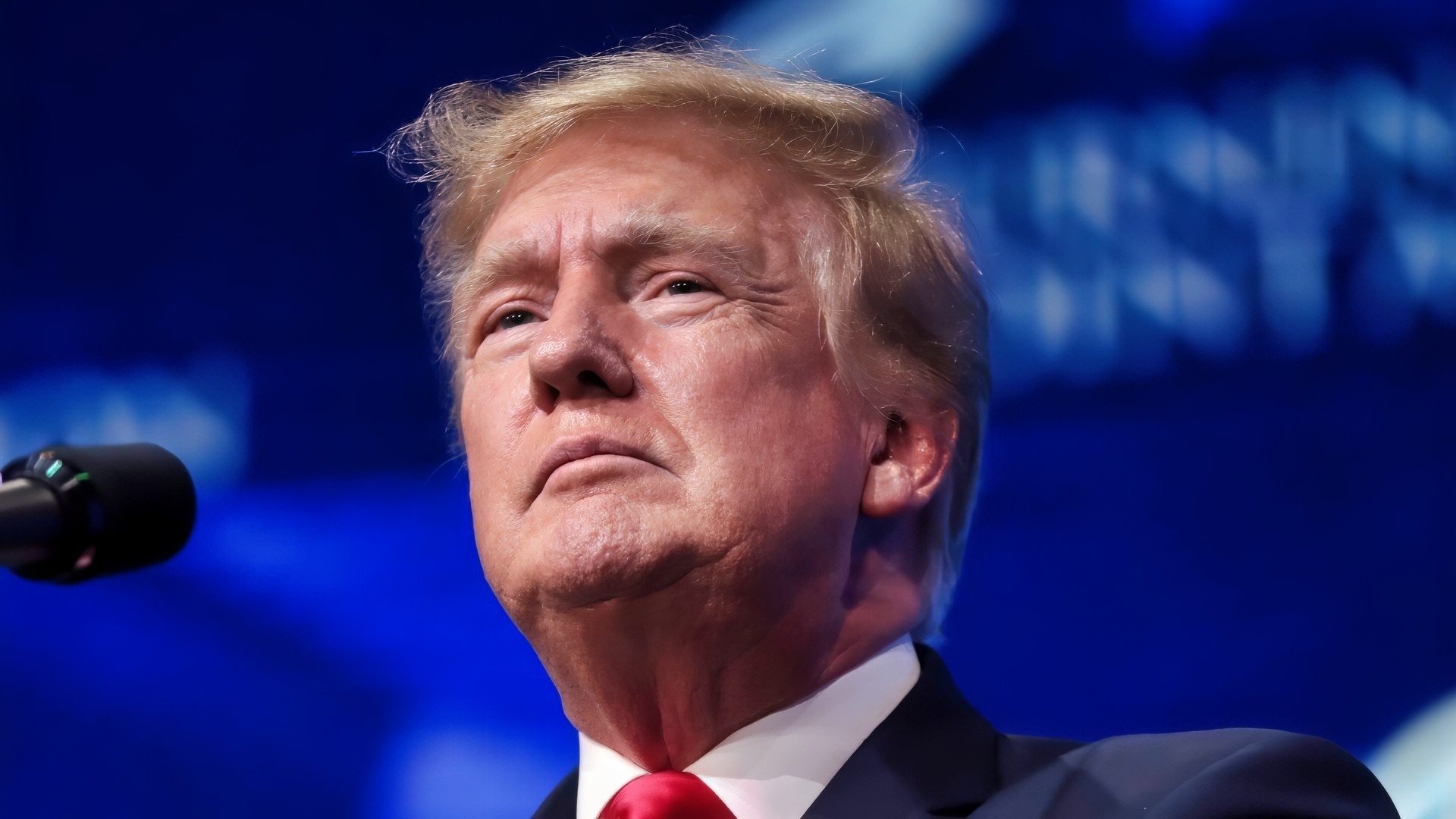
Donald Trump at Rally Creative Commons Photo
At the same time, Trump has unquestionably faced some health challenges. The 80-year-old Trump is the oldest president ever elected and the oldest ever to serve. Trump was hospitalized with coronavirus in October of 2020, and has also been diagnosed with chronic venous insufficiency (CVI), while bruising has frequently been spotted on the president’s hands.
Trump has admitted publicly that he takes four times the amount of aspirin that is recommended.
He has also survived multiple assassination attempts, including the one in 2024 when he was shot in the ear.
Who is responsible for caring for Trump’s medical needs? The Wall Street Journal profiled Rear Admiral Sean Patrick Barbabella this week, the president’s current primary physician, although Barbabella did not agree to be interviewed.
The report said Barbabella, or another doctor if Barbabella is not on duty, is tasked with staying within three minutes of Trump.
He is also, the newspaper reported, one of the only people with “complete knowledge of Trump’s health,” and one of the only ones responsible for public disclosures about his health.
Meet the Doctor
The 56-year-old Barbabella has been the president’s physician since last year and is part of the White House Medical Unit.
A Navy captain, Barbabella deployed to Afghanistan, cared for soldiers on the front line, and helped develop the Mobile Trauma Bay.
Rep. Ronny Jackson, a former White House physician, was among those who recommended Barbarella.
According to the Journal, Barbabella’s service to Trump involves caring for a high-profile patient who “doesn’t always listen to doctors’ advice.” And that includes the president’s admitted use of larger-than-recommended doses of aspirin.
“They said, ‘Sir, you don’t need that,’” Trump said at an Ohio rally before the midterm elections, although he had told the aspirin story at rallies before.
“I said, ‘Do me a favor, I’ve been doing OK for 35 years, leave me alone,’” Trump added in reference to the aspirin.
“I’ll switch to that tiny little thing, and then something bad will happen, and I’ll say: ‘You son-of-a-b—doctor.’”
The Journal described the doctor’s demeanor with the president as “low-key and direct,” and added that staffers usually leave the room when Trump confers with him, which is rare in the Trump White House.
Missing Details
In May, the Journal reported that details are sometimes omitted from Trump’s publicly released physical examinations.
After Trump underwent a three-hour physical that month at Walter Reed National Military Medical Center, Barbabella released a report stating that Trump “remains in excellent health, demonstrating strong cardiac, pulmonary, neurological and overall physical function.”
However, the Journal said the report wasn’t as detailed as it could have been.
“If I were creating a report to send to another physician, I would have mentioned a little bit more about the carotid ultrasound,” Dr. William Shutze, a vascular surgeon, told the Journal after Trump’s physical was released.
Details not included in the May physical, the report said, included a calcium score, a description of any plaque in the arteries, and a CAD-RADS (Coronary Artery Disease–Reporting and Data System) score.
The Biden Precedent

President Joe Biden talks on the phone with Chinese President Xi Jinping, Thursday, September 9, 2021, in the Treaty Room of the White House. (Official White House Photo by Adam Schultz).
The Journal story also notes that more eyes are on presidential health after the presidency of Joseph Biden, who, before Trump, was the oldest president in history.
Biden faced questions about his age, health, and fitness for office throughout his time in the White House, leading up to his abandoned re-election bid.
After he left office, it was announced that the 46th president had been diagnosed with stage four cancer.
About the Author: Stephen Silver
Stephen Silver is an award-winning journalist, essayist, and film critic, and contributor to the Philadelphia Inquirer, the Jewish Telegraphic Agency, Broad Street Review, and Splice Today. The co-founder of the Philadelphia Film Critics Circle, Stephen lives in suburban Philadelphia with his wife and two sons. For over a decade, Stephen has written thousands of articles on politics, national security, technology, and the economy. Follow him on X (formerly Twitter) at @StephenSilver, and subscribe to his Substack newsletter.


