

Two oil refineries in Russia have reportedly been targeted as part of ongoing Ukrainian attacks on energy infrastructure.
Explosions and subsequent fires reportedly occurred at a pair of refineries in Russia’s southern Krasnodar region –Ilsky and Afipsky – in the Seversky district. The specific locations of the fires are yet to be independently verified.
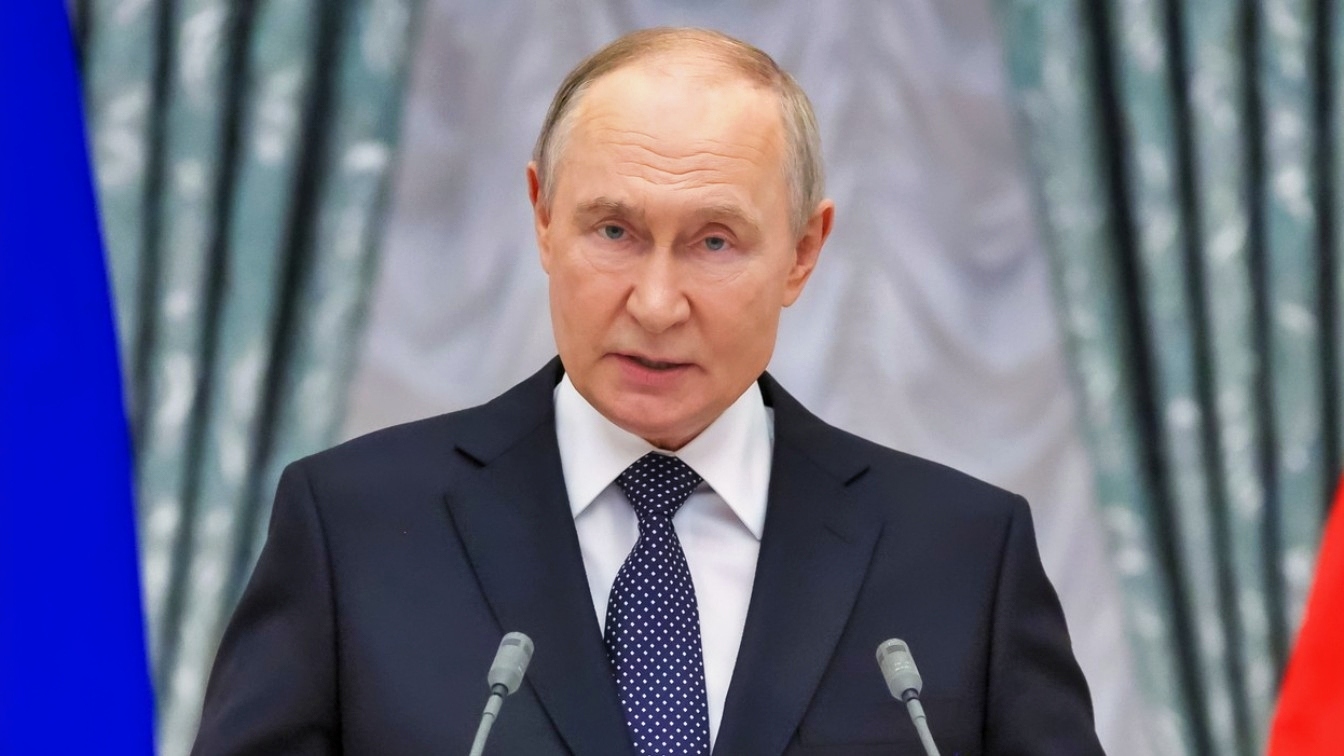
Putin in May of 2026. Image Credit_ Creative Commons

Putin On June 1 2026 Creative Commons Image
Russian authorities have confirmed that fires broke out at two different industrial facilities, with four injuries subsequently reported. They have not named the facilities, however, and the extent of any damage remains unclear.
Drone Debris Sparks Fires
“Falling drone debris sparked fires at two facilities,” the Krasnodar region’s emergency center said.
Local independent outlet Astra said residents heard explosions around 4:40 a.m. local time. Air defense activity also occurred.
One resident told the outlet that “two plants are on fire, most likely the Afipsky and the Ilsky.”
The attacks on the oil refineries have also been shared by Ukrainian monitoring channels Exilenova+ and Supernova+.
Drone debris was found at nine locations in the area, according to Hromadske. Russia’s Defense Ministry claimed that 183 drones were shot down in the overnight attacks. This has not been independently confirmed.
The attack on the Ilsky refinery comes after Ukraine targeted it on November 16. Ukraine’s General Staff claimed that three main processing facilities and a gasoline production facility were hit.
The Ilsky refinery processes around 6.6 million metric tons of crude oil per year. As it is located in southern Russia, it is very valuable to Russian forces fighting in occupied Crimea and southern Ukraine.
A neighboring plant was also reportedly targeted on November 6, with local authorities confirming that a fire had broken out at an unnamed industrial facility.
On November 16, Russia claimed to have shot down 1,336 drones in one night. This is the highest number of Ukrainian drones reportedly shot down since the start of the full-scale invasion.
Ukraine Targeting Russian Oil Profits
Ukrainian President Volodymyr Zelenskyy said on November 15 that Kyiv was “achieving results practically every day” with long-range attacks.
He also alleged that Ukrainian attacks had knocked out more than 55 percent of Russia’s oil refining capacity.
Two industry sources told Reuters that renewed Ukrainian attacks had reduced Russia’s oil refining capacity by approximately 30 percent.
Zelenskyy called the attacks a “fitting response to Russia’s refusal to de-escalate.” The economic value of the Ilsky refinery has not gone unnoticed by Europe.
The firm that operates the refinery was added to the European Union’s sanctions list on November 16. The European Union has referred to Russia’s oil sector as “a substantial source of revenue” for the government.
The attacks on this string of oil refineries will no doubt continue to affect fuel supplies, but Russia is still looking to export fuel.
“All the diesel will find its buyers,” Kremlin spokesperson Dmitry Peskov told Reuters on November 5.
Washington’s Doubts
As the war continues with no realistic peace deal yet on the table, so do public rows between Washington and Kyiv over the latter’s strikes within Russia.
Elbridge Colby, the U.S. Undersecretary of Defense, said that deep strikes “have not been effective in driving an end to the war,” when speaking at NATO headquarters on November 17.
He did state that Ukrainian forces had been “very effective” when carrying out attacks along its front line with Russia.
German Defense Minister Boris Pistorius hit back, framing Colby’s critiques as “quite stupid.”
Pistorius said it was more important to focus on Russia conducting “terroristic strikes every night and every day” on Ukrainian infrastructure.
British Defense Secretary Wes Streeting also disagreed. “It’s not for us to tell Ukraine how to fight their war,” he said.
Streeting added that long-range strikes were “buying time and saving lives” by reducing Russian combat capabilities.
Kyiv Pledges Further Attacks
Ukraine’s Defense Minister Yevhenii Khmara defended the attacks at the same meeting in Brussels.
Khmara warned that Ukraine would respond more forcefully to Russian attacks, adding that “we have the right to defend ourselves.”
Khmara added that Ukraine is planning to more than triple its deep-strike capabilities next year.
About the Author: Georgia Gilholy
Georgia Gilholy is a journalist based in the United Kingdom who has been published in Newsweek, The Times of Israel, and the Spectator. Gilholy writes about international politics, culture, and education.


