

Britain has said it will give Kyiv access to confidential missile technology. On a visit to Kyiv for Ukrainian Independence Day on Monday, August 24, British Prime Minister Andy Burnham announced the new plans.
The catch: the proposals are unlikely to bear much fruit until 2027 at the earliest, and what Ukraine requires right now is existing missile stockpiles with projectiles capable of intercepting Russian ballistic attacks.
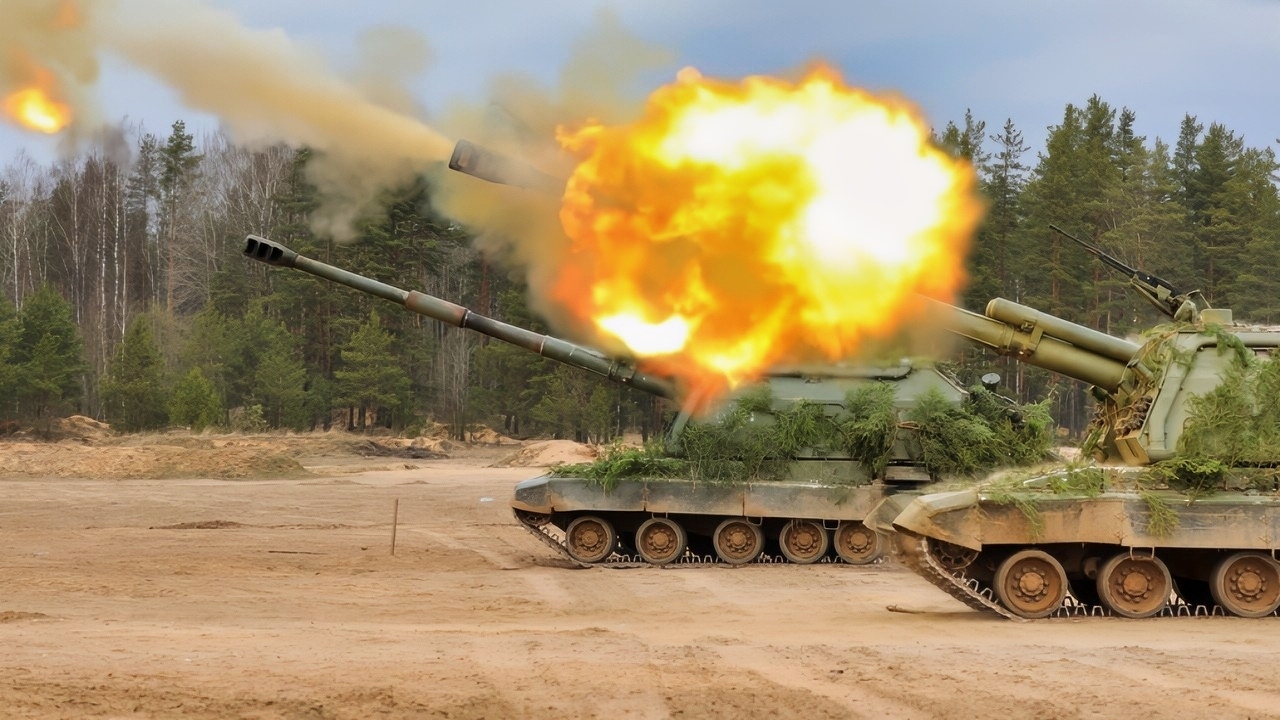
MSTA Artillery Firing Creative Commons Image
Defense manufacturer MBDA has received Downing Street’s green light to provide classified information about UK-made components used in the French SCALP missile, closely related to Britain’s Storm Shadow.
The blueprints will support Ukraine’s long-term plans to assemble the weapons.
Ambassador Sarah MacIntosh, UK Permanent Representative to the United Nations, told yesterday’s UN Security Council meeting on Ukraine that the UK “is behind you today and for as long as it takes.”
In 2023, the United Kingdom was the first country to supply Ukraine with long-range strike weapons, providing Storm Shadow missiles.
Last year, London and Paris pledged to order further missiles and expand existing manufacturing lines at MBDA.
Storm Shadow and SCALP are air-launched, precision cruise missiles. The weapons can penetrate air defenses and strike fixed, hardened targets like command bunkers and sensitive military infrastructure.
The Associated Press said that SCALP can travel up to 155 miles, while the Center for Strategic and International Studies told CNN its maximum range is around 342 miles. The Shadow’s warhead weighs in at a whopping 880 pounds.
Two Years Before Ukraine Likely to Be Building Storm Shadows at Home
Justin Bronk, a senior research fellow at the Royal United Services Institute (RUSI), told CNN Storm Shadow was unlikely to be in production in Ukraine “for a couple of years.” He said Ukraine could speed up the deal’s benefits if of used Storm Shadow components in existing weapons.
He said this could make existing Ukrainian missiles “more accurate, potentially more survivable,” and better able to respond to Russian attacks.
Matthew Savill, RUSI’s director of military sciences, told the AP that SCALP’s sophisticated warhead and velocity allow it to penetrate hardened or buried targets in ways slower drones currently cannot.
Kyiv Needs More Interceptors, Now
The more immediate problem for Kyiv, however, is the ongoing barrage of Russian ballistic missiles that shows no sign of slowing down.
Writing for the Telegraph newspaper on Monday, former Royal Navy officer Lewis Page argued that the UK’s recent handover of missile technology was simply “political theatre designed to pressure the US into sharing its prized Patriot interceptor capabilities.”
“What Ukraine needs is protection from Russian ballistic missile attacks,” King’s College London researcher Arun Dawson told the AP.
CNN recently visited a Ukrainian Patriot battery that was effectively out of action because it had no interceptor missiles.
President Volodymyr Zelenskyy said that if Washington “sells us 5%” of its Patriot stockpile, Ukraine “will go through the winter and save people’s lives. If they can sell us 10%, we will destroy all the Russians’ ballistic missiles. I have 1%.”
The U.S. conflict with Iran has strained supplies, with Patriot interceptors being used to tackle hundreds of Iranian missile and drone attacks in the Gulf Region.
Back in July, U.S. President Donald Trump appeared to propose a major fix for Ukraine, reportedly telling Zelenskyy: “We’re going to give a license to you to make Patriots.” He later walked back the idea.
The interceptors were initially developed by U.S. defense contractor Raytheon. Lockheed Martin is currently the prime contractor for PAC-3 interceptors used by the Patriot systems. In the days after reports of this update, Trump signaled uncertainty, stressing that the U.S. had to be “very careful” about licensing the technology.
Russia: Britain ‘Adding Fuel to the Fire’
Kremlin spokesman Dmitry Peskov said last week that “Britain is participating in this war,” and that London has been “adding fuel to the fire.” His remarks followed a report from The Sunday Times that drones manufactured in the UK were being used in Ukraine’s attacks deep inside Russian territory.
Before this, multiple reports had already described Storm Shadow missiles being used against Russian targets.
He also said Russian forces were working to identify sites producing missiles and other military equipment in Ukraine in order to destroy them.
Discussing the issue on Monday, Burnham noted: “Who started the fire? That’s the question, isn’t it?”
About the Author: Georgia Gilholy
Georgia Gilholy is a journalist based in the United Kingdom who has been published in Newsweek, The Times of Israel, and the Spectator. Gilholy writes about international politics, culture, and education.


