

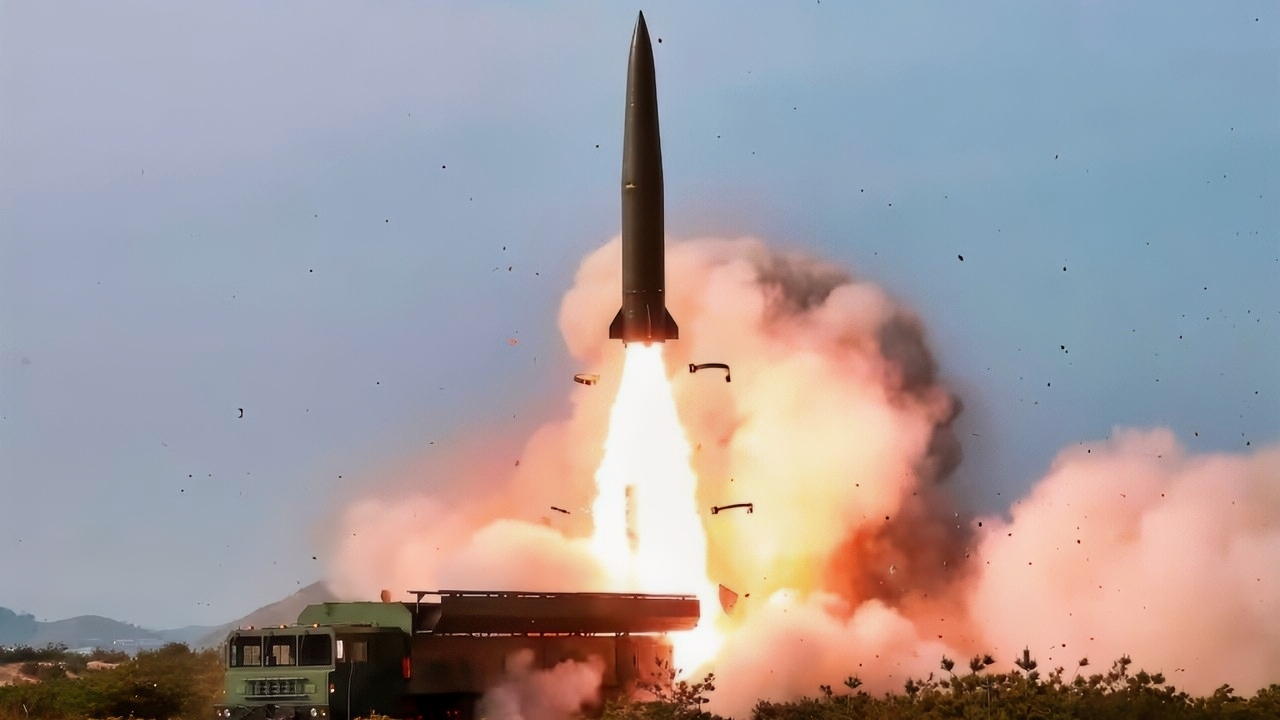
Ukrainian President Volodymyr Zelenskyy has said initial technical findings show Russia used North Korean-made ballistic missiles to strike a critical energy facility.
Speaking on Saturday, he announced that “preliminary findings” by Ukraine show Russia had recently used ballistic missiles supplied by Pyongyang.
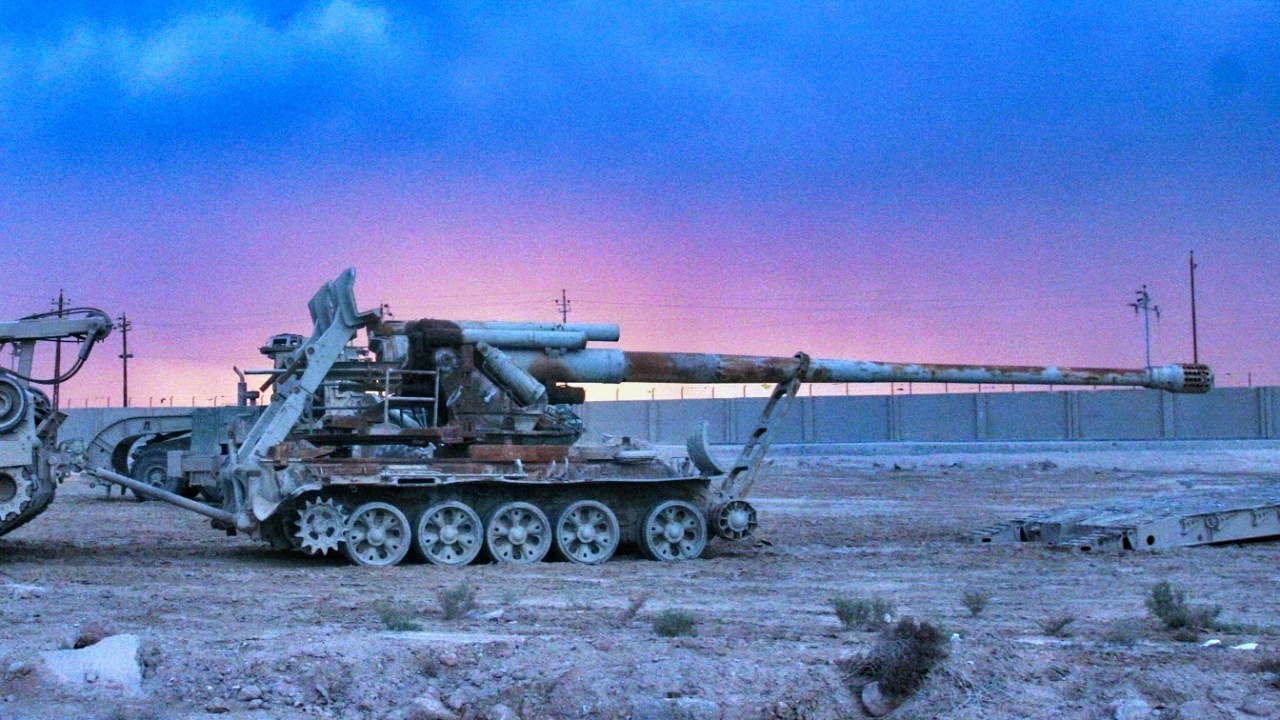
North Korea Artillery. Image Credit: Creative Commons.

North Korea Soldiers. Image Credit: KCNA/North Korean State Media.
Just 4 of the 36 missiles fired at Ukraine late on Friday night and early into Saturday morning were intercepted by Kyiv.
Missile Source Subject to Probe
Following the worrying barrage, Zelenskyy said that technical assessments were “ongoing at the sites hit by ballistic missiles.”
Ukraine’s Air Force said 172 drones were fired by Russia, including 137 jet-propelled ones, as well as Iskander-M, Zircon, KN-23 and S-400 missiles. 149 drones were destroyed or suppressed.
“Only four missiles were taken down…There is still a significant shortage of interceptors for Patriot systems,” Zelenskyy said.
The KN-23 is a short-range ballistic missile developed by North Korea, which has already provided a slew of weapons and soldiers to back Russia’s full-scale invasion.
The highly repressive communist dictatorship has also sent more than 10,000 troops to fight against Ukraine, well over 2,000 of whom are thought to have been killed.
Ukraine has reported Russian use of the KN-23 missile since as early as December 2023. The White House said in January 2024 that Russia had recently used the weapon against Ukraine.
Power Grid Suffers Damage
Zelenskyy claimed the strikes damaged an electricity substation in Kyiv Oblast linking the Rivne and Khmelnytskyi nuclear power plants to Kyiv and central Ukraine. Substations in five other regions were also damaged.
“Moscow is deliberately seeking to leave millions of Ukrainians without electricity,” Foreign Minister Andrii Sybiha stated in the aftermath of the attack.
The missile attacks also damaged the Northern Bridge over the Dnipro River, Kyiv’s mayor Vitali Klitschko said.
There was also a danger of explosions. A 64-year-old woman, Kateryna Korniichuk, told the Associated Press that she and her granddaughter were thrown against their hallway walls after an explosion.
“No sleep, no peace – nothing,” Korniichuk told the outlet, continuing: “I’m old, I can handle it, but what have the children done wrong?
Vast Aerial Attacks Continue
Attacks continued on November 9 with Ukraine’s Air Force saying 317 Russian drones had been launched toward its airspace.
Moscow said it had attacked four electrical substations in different regions of Ukraine.
This could not be independently confirmed.
The European Union agreed to activate an emergency mechanism to speed up funding for grid repairs, Zelenskyy said. The regional governor said drones hit the KINEF oil refinery near St. Petersburg.
Zelenskyy accused Russia of trying to use attacks to gain leverage, noting: “Russia has a very particular view of diplomacy – as a subtype of aggression.”
Trump’s Security Deal Idea Prompts Concerns
President Trump suggested after meeting Russian envoy Kirill Dmitriev last week that he was working on a deal for European security. Trump said there may be a “big, beautiful agreement” forthcoming on Ukraine which “might involve all of Europe”.
Trump’s envoy and son-in-law Jared Kushner argued for a deal to create a European security framework with de-escalation measures.
But Zelenskyy wrote to X: “The idea of discussing European-Russian security infrastructure is not simple, and it can be dangerous.”
“We don’t want to have ‘Yalta 2.0.’ We don’t want to be divided by Russia,” he said in an interview published separately.
Major Roadblocks to Peace Remain
Last Friday, a European Commission spokesperson said there was “a very long way to go” before negotiations with Moscow could be fruitful.
U.S., Russian, and Ukrainian representatives will hold their first trilateral meeting since February during talks on November 10-11.
However, Moscow’s demands of Ukraine include large territorial and military concessions. Kyiv refuses to give up any land and wants clear security guarantees.
“What matters is that it’s clear on paper,” Zelenskyy said in a televised interview on November 5.
Trump said in a “60 Minutes” interview broadcast on Sunday that both sides were “very close” to a deal.
Russia continues to insist Ukraine should give up the so-called “fortress belt” of towns and cities in Donbas, most of which sits on high ground and is key to Ukraine’s industrial and military strategy.
Kyiv also has a constitutional ban on giving up land without the approval of a referendum.
Such a vote, which would be vastly unpopular in any case, could not take place while the country remains under martial law due to Russia’s invasion.
Uncertainty also surrounds the role of specific European delegations. “No one is going to invite them to the negotiating table,” Kremlin adviser Yuri Ushakov said.
France has confirmed that European officials will attend the talks in Abu Dhabi, but Russia claims the official talks are three-way.
About the Author: Georgia Gilholy
Georgia Gilholy is a journalist based in the United Kingdom who has been published in Newsweek, The Times of Israel, and the Spectator. Gilholy writes about international politics, culture, and education.


