
Ukraine Launches Massive Overnight Moscow Assault: Ukraine launched one of its most intense long-range drone attacks of the war overnight into Tuesday, July 28, with Russian authorities claiming that almost 400 drones targeted the Moscow region. Additional strikes were reported throughout western Russia and occupied Crimea.
Russian authorities claim that most of the drones were intercepted before they could reach the capital, but a number of strikes were reported in towns south of the capital city, with damage reported to an apartment building, warehouses, and some industrial facilities. The attacks form part of Kyiv’s ongoing long-range strike campaign that continues to cause major disruption in daily Russian life.
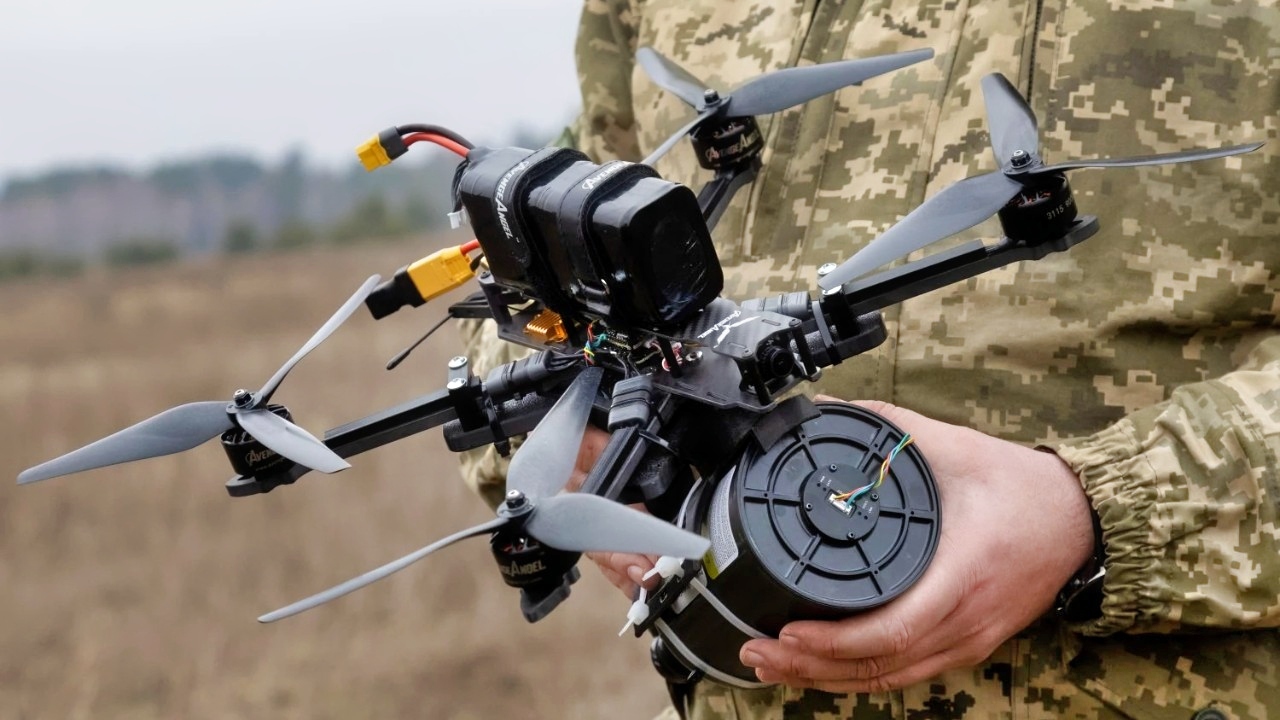
Ukraine Drone. Image Credit: Creative Commons.
Apartment Building Damaged South of Moscow
In a statement published on Telegram, Moscow Mayor Sergey Sobyanin said that more than 390 drones were launched at the nation’s capital city overnight, claiming that most were intercepted.
“Between 8:30 PM and 6:30 AM, more than 390 drones headed toward the Moscow region. The majority were neutralized by air defense forces at long range. 81 enemy UAVs were destroyed as they approached Moscow,” Sobyanin wrote.
Moscow regional Governor Andrey Vorobyov also said a drone struck a residential apartment building in the city of Chekhov, roughly 30 miles south of Moscow. Photographs released by the governor showed blown-out windows and thick, black smoke rising from the top floors of the building.
Chekhov Mayor Mikhail Sobakin later confirmed that there were no casualties, although two apartments were reportedly damaged. Vorobyov also reported that drone debris had caused a tire fire at the Chekhov Regeneration Plant, a facility that recycles used tires.
Additional damage was also reported in nearby communities, with a private home catching fire in the village of Vaulovo, and another house damaged in the village of Dubna, with no injuries reported. Russian air defenses were also reportedly activated in Podolsk, Domodedovo, and Kolomna.
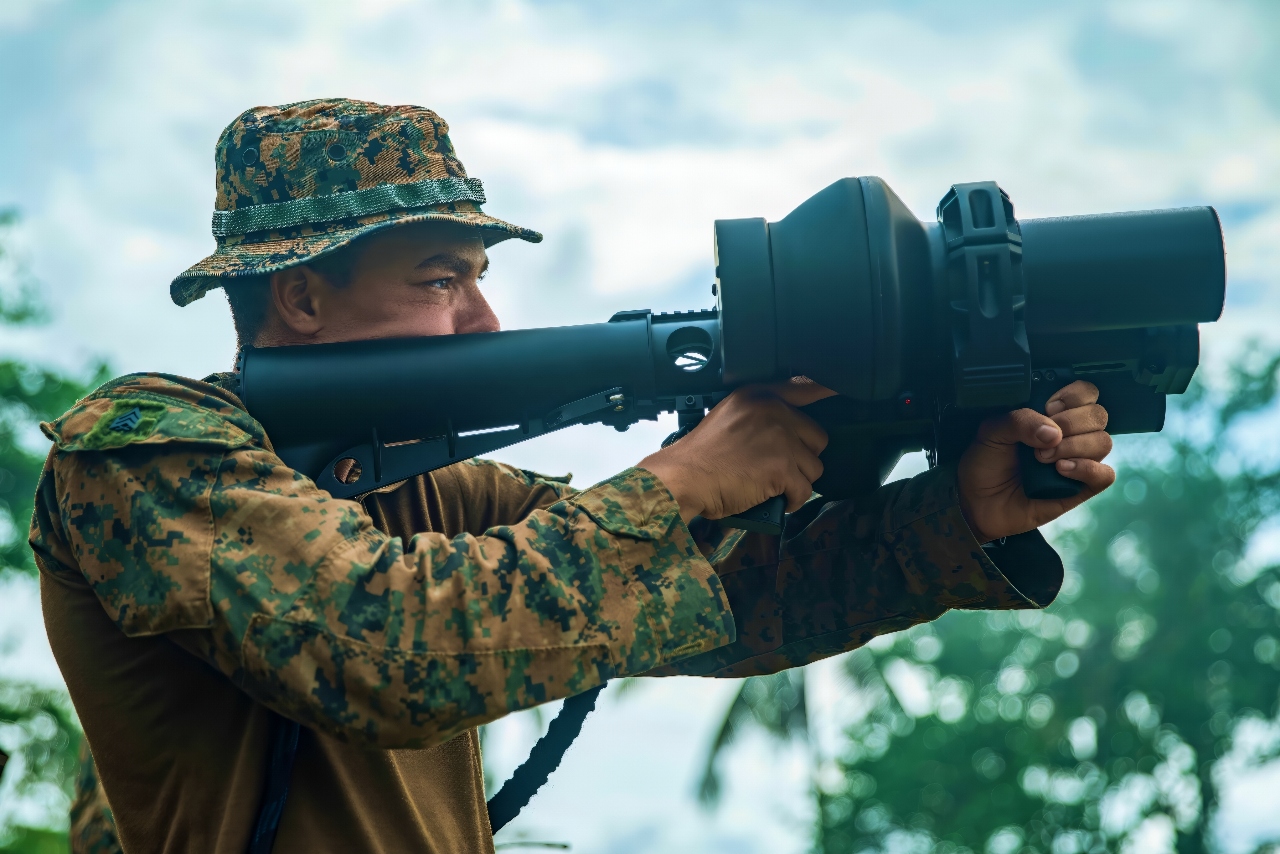
U.S. Marine Corps Sgt. Colin Clark, a mortarman assigned to Bravo Company, Battalion Landing Team 1/5, 15th Marine Expeditionary Unit, and a native of Texas, engages a target with a NightFighter S counter-unmanned aerial vehicle system during a demonstration for Philippine Marines assigned to Intelligence Company, 3rd Marine Brigade, as part of exercise KAMANDAG 8 at Tarumpitao Point, Palawan Province, Philippines, Oct. 17, 2024. KAMANDAG is an annual Philippine Marine Corps and U.S. Marine Corps-led exercise aimed at enhancing the Armed Forces of the Philippines’ defense and humanitarian capabilities by providing valuable training in combined operations with foreign militaries in the advancement of a Free and Open Indo-Pacific. This year marks the eighth iteration of this exercise and includes participants from the French Armed Forces, Royal Thai Marine Corps, and Indonesian Marine Corps; including continued participation from the Australian Defense Force, British Armed Forces, Japan Ground Self-Defense Force, and Republic of Korea Marine Corps. (U.S. Marine Corps photo by Sgt. Amelia Kang)
Warehouses and Industrial Sites Hit
Reports indicate that Ukrainian drones largely targeted logistics and industrial facilities south of Moscow, with independent Russian outlet Meduza reporting that a warehouse belonging to a third-party logistics company known as 3PL caught fire in the village of Koledino near Podolsk. The company provides distribution and storage services for major Russian retailers Magnit, Familia, Detsky Mir, and others.
Nearby, Russia’s largest online retailer, Wildberries, survived the strikes. The company said that its own logistics center had not been struck and was operating normally despite a fire.
The Kyiv Independent, citing local monitoring channels, claimed that Ukrainian drones had struck the Hydrostalkonstruktsiya steel fabrication plant in Chekhov during the overnight strikes.
According to the Russian Ministry of Defense, 356 drones were intercepted across the country overnight, including in occupied Crimea and the Sea of Azov.
Belgorod and Crimea Under Attack
The overnight strikes extended far beyond the Moscow region. In Belgorod, acting Governor Alexander Shuvayev said that 19 passengers were injured when a Ukrainian drone struck an intercity bus in the border town of Shebekino on Tuesday morning. A man was killed during a separate drone attack on the city of Belgorod the previous evening.
Further to the south, there were also reports of strikes in occupied Crimea, which is still enduring blackouts and fuel shortages. According to the Kyiv Independent, an electrical substation in Feodosia was hit overnight, causing yet more power outages in the city.
Ukraine’s General Staff also said that Ukrainian forces had struck a logistics depot and a fuel and lubricants storage facility located near the village of Ichki in Crimea.
Ukraine Continues Campaign Against Wildberries
The strikes on Russian logistics and industrial facilities come as Ukraine continues its long-range campaign targeting everything from oil refineries to Wildberries logistics centers. Russia’s largest online retailer has come under intense strain in recent weeks, with the company’s warehouses and logistics facilities being hit by Ukrainian drones and missiles in Moscow, Tambov, Krasnodar, Stavropol Krai, Leningrad, St. Petersburg, Voronezh, and occupied Crimea.
Since Ukraine began targeting Wildberries earlier in July, Ukrainian President Volodymyr Zelenskyy has insisted that the facilities are legitimate military targets and not purely civilian warehouses. Following strikes against the company’s logistics centers near St. Petersburg on July 24, the Ukrainian Ministry of Defense said that one warehouse contained around $16 million worth of military supplies, including components for Shahed-136 drones, tactical first aid kits, military uniforms, helmets, and body armor.
Wildberries was founded in 2004 by Tatyana Kim and has grown into Russia’s largest online retailer, often compared to Amazon. The company processes millions of orders and serves hundreds of thousands of independent sellers. Following the most recent attacks, the company insisted its logistics centers continued operating and rejected Ukrainian allegations that they support Russia’s military.
The company’s founder has claimed that Ukrainian strikes are targeting “regular people” and described the warehouses as “civilian sites” with no military connection.
About the Author: Jack Buckby
Jack Buckby is a British researcher and analyst specializing in defense and national security, based in New York. His work focuses on military capability, procurement, and strategic competition, producing and editing analysis for policy and defense audiences. He brings extensive editorial experience, with a career output spanning over 1,000 articles at 19FortyFive and National Security Journal, and has previously authored books and papers on extremism and deradicalization.


