

Ukraine Hit Russia’s Amazon for the Fifth Time in a Week, and on Friday the Smoke Was Over St. Petersburg: Drones struck Wildberries logistics centers near Russia’s second city, in Tver, and in occupied Crimea overnight. Three people were hurt, and the country’s largest online retailer has now lost close to a tenth of its warehouse capacity in seven days.
Residents of St. Petersburg woke on Friday morning to two columns of black smoke rising over the city’s eastern outskirts. The source was a Wildberries logistics complex in the village of Novosaratovka, in the Leningrad region’s Vsevolozhsky district, and it was burning after an overnight drone attack.
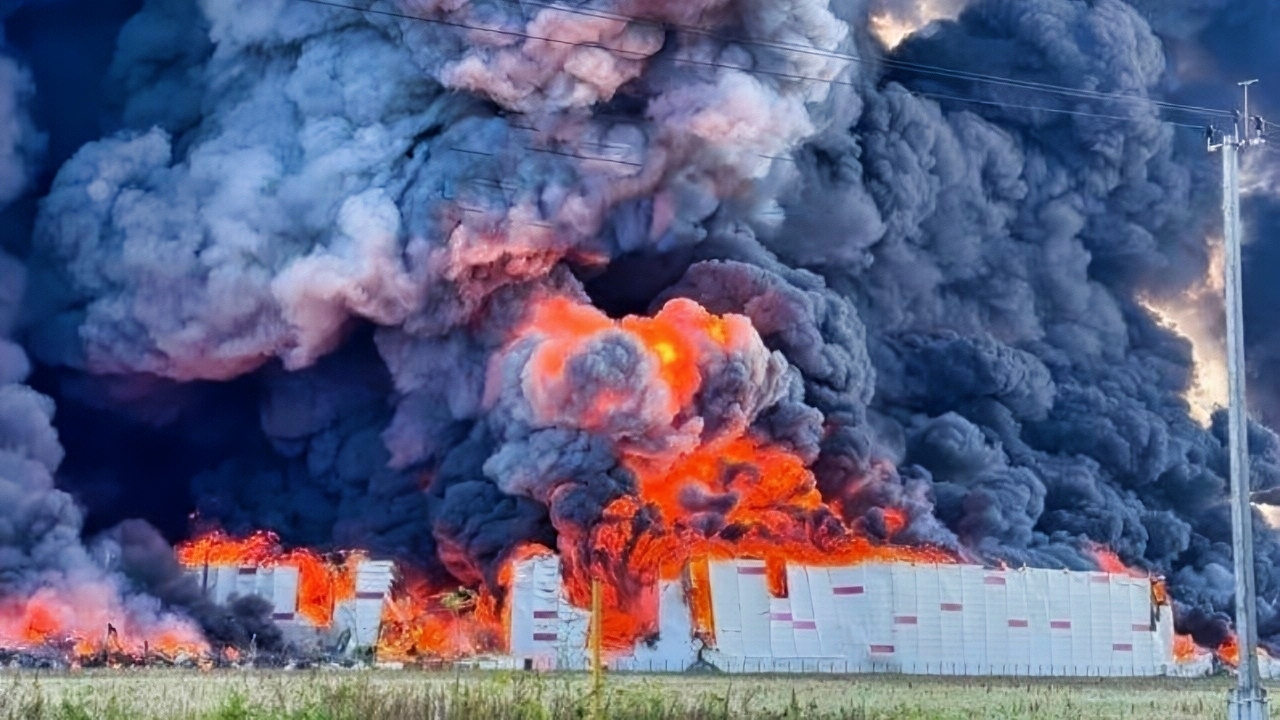
Moscow Warehouse Fire X Screenshot
Leningrad region governor Alexander Drozdenko confirmed the fire and said three people were injured, adding that air defenses had shot down eleven drones by four in the morning and that the engagement was still underway.
In the city proper, governor Alexander Beglov said a drone had hit what he described as a civilian infrastructure site.
The strikes were not confined to the north. Drones also hit a Wildberries sorting center in Simferopol, the main distribution hub for Russian-occupied Crimea, and residents reported a fire at another company facility in Tver. Wildberries said it had suspended operations at two sites in the Leningrad region and evacuated its Crimean staff as a precaution. Co-founder Tatyana Kim, Russia’s wealthiest woman, said portions of the warehouses had been saved and reported no injuries among employees. Ukraine has not publicly claimed the attack.
Seven Days, Five Warehouses
Friday’s raid completed a week without precedent for a Russian civilian company.
It began on July 18, when drones struck logistics hubs at Elektrostal outside Moscow and Kotovsk in the Tambov region. Eight night-shift workers were killed and dozens more injured, and the Elektrostal complex burned to its foundations. Two days later, drones reached a sorting center at Koledino and an oil depot in the Moscow region. On July 22, two southern facilities went up, a 100,000-square-meter complex in Krasnodar and a 90,000-square-meter site at Nevinnomyssk in Stavropol Krai, with fifteen people hurt and regional authorities declaring a local emergency. A distribution center in the Voronezh region was hit the following night.
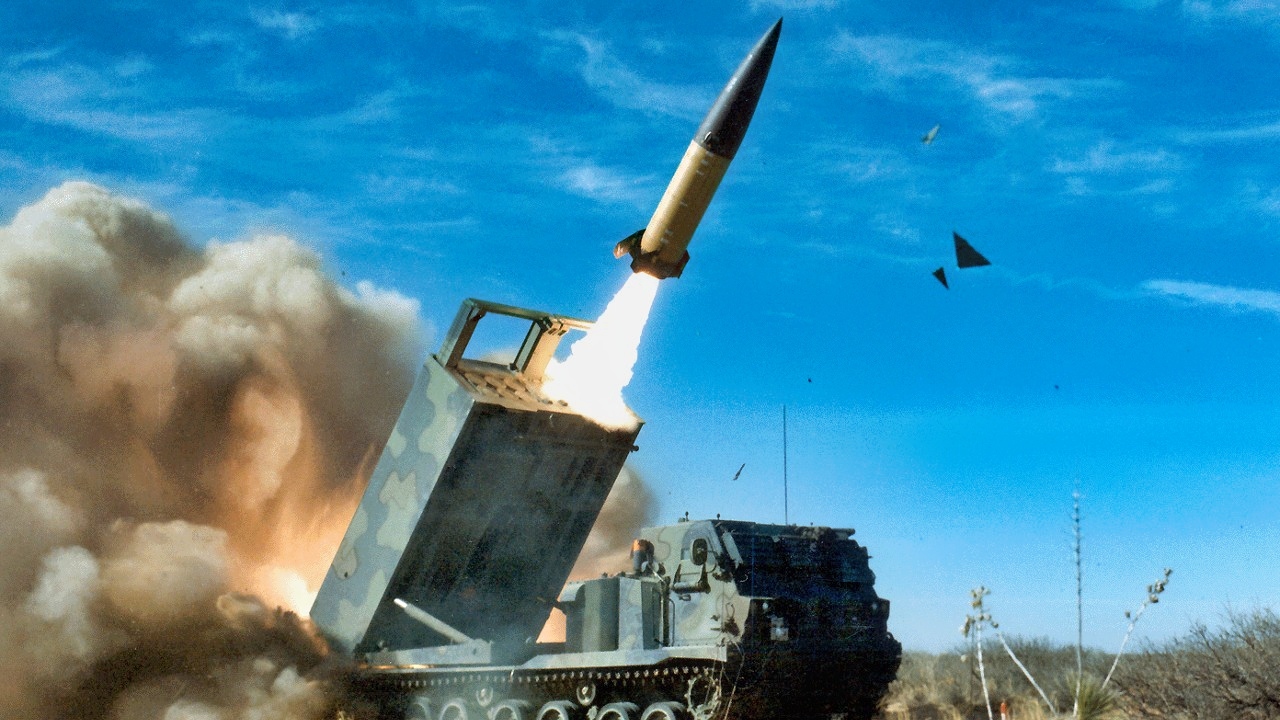
An ATACMS missile being launched from an M270 MLRS.
The buildings themselves are part of why the campaign works. As Forbes analyst David Hambling has noted, these are enormous, densely packed, highly flammable structures that a small incendiary warhead can turn into a total loss. Russian crews have needed firefighting helicopters at more than one site.
Why a Retailer
Ukraine’s stated reasoning is that Wildberries is not merely a shopping platform. President Volodymyr Zelensky said after an earlier strike that the company’s hubs helped supply sanctioned components for drone production and navigation equipment. Moscow rejects that characterization and calls the attacks terrorism against civilians.
There is also reciprocity at work. Since the beginning of this year, Russian missiles and drones have systematically dismantled Nova Poshta, Ukraine’s dominant private courier, killing employees and wrecking terminals in Kharkiv, Lutsk, Dnipro, and Kyiv. Ukrainian officials have described the Wildberries campaign in explicitly matching terms.
The Bill
The damage is now measurable against a national economy. Estimates published by the Russian business daily Kommersant and cited in Ukrainian reporting put the share of Wildberries warehouse capacity already knocked out of use at roughly eight percent, with the five facilities attacked since July 18 accounting for something closer to a tenth of the company’s total logistics capacity. Industry figures suggest replacing a single comparable warehouse would cost around 35.5 billion rubles, close to $455 million, before any equipment goes inside it.
Scale explains why this reaches past one company’s balance sheet. Wildberries and its rival Ozon together handle goods and services equivalent to about 8.5 percent of Russian GDP and employ some four million people, more than five percent of the workforce. Hundreds of thousands of independent sellers list their products through Wildberries, and their inventory burned alongside the buildings.
What Moscow Can Actually Do
Russia’s options are narrower than the rhetoric suggests.
Retaliation in kind is already saturated. Russian forces have been striking Ukrainian logistics, ports, and energy infrastructure at maximum tempo for months, which is what triggered this campaign in the first place. There is no reserve of unused pressure waiting to be released.
Defending the warehouses is a zero-sum problem. Wildberries operates across nine time zones, and every air defense battery moved to cover a distribution center uncovers something else, at a moment when Russian coverage is already stretched across refineries, airfields, and shipyards.
That leaves absorption, which is what is happening. The response so far has come from the company rather than the state, with Kim promising compensation to sellers whose goods were destroyed. Five burned warehouses in seven days, two of them within sight of major cities, is the kind of week a government can neither prevent nor avenge.
About the Author: Harry J. Kazianis
Harry J. Kazianis (@Grecianformula) was the former Senior Director of National Security Affairs at the Center for the National Interest (CFTNI), a foreign policy think tank founded by Richard Nixon based in Washington, DC. Harry has over a decade of experience in think tanks and national security publishing. His ideas have been published in the NY Times, The Washington Post, The Wall Street Journal, CNN, and many other outlets worldwide. He has held positions at CSIS, the Heritage Foundation, the University of Nottingham, and several other institutions related to national security research and studies. He is the former Executive Editor of the National Interest and the Diplomat. He holds a Master’s degree focusing on international affairs from Harvard University.


