

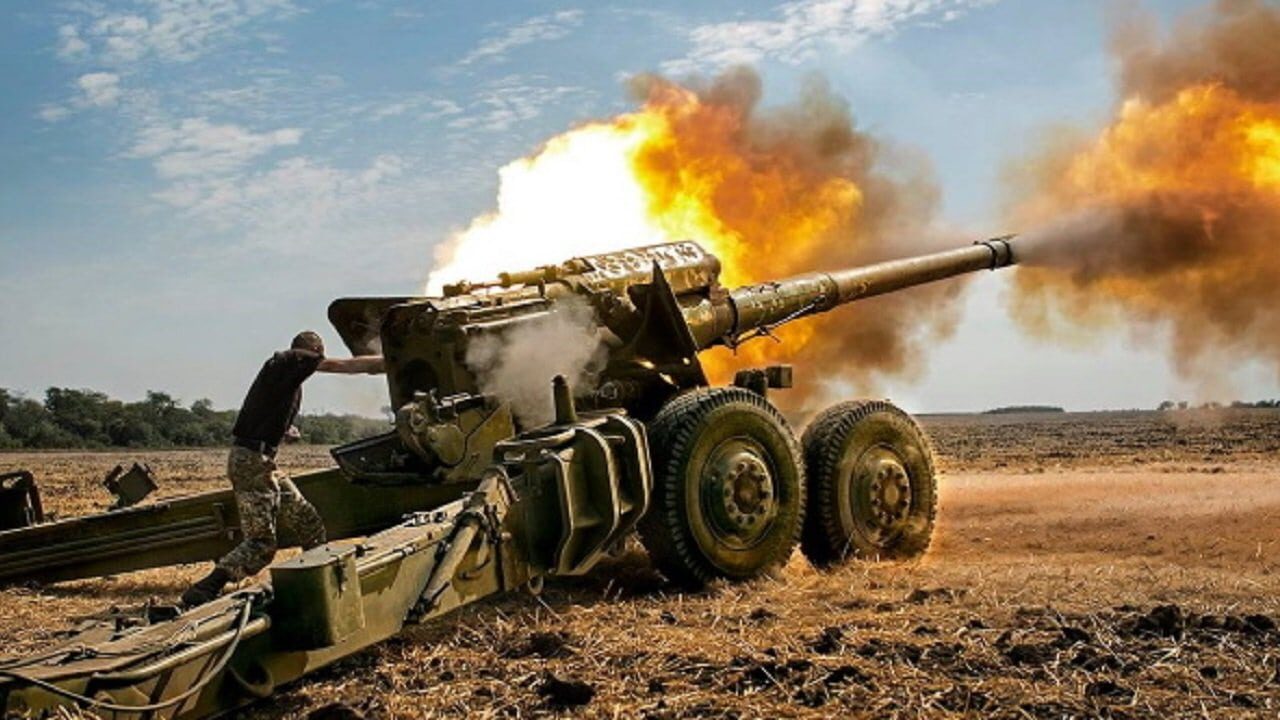
Ukraine was hit with barrages of ballistic missiles from Russia this week, and on one night this week, at least 17 people in Ukraine were killed. Perhaps most alarmingly, every single ballistic missile was able to get through Ukraine’s defenses.
The “enemy is once again massively attacking the Kyiv region,” head of Kyiv’s military administration, Timur Tkachenko, said in response, per The BBC. Kyiv Mayor Vitali Klitschko said that there were fears that some people in Kyiv could be trapped under rubble.
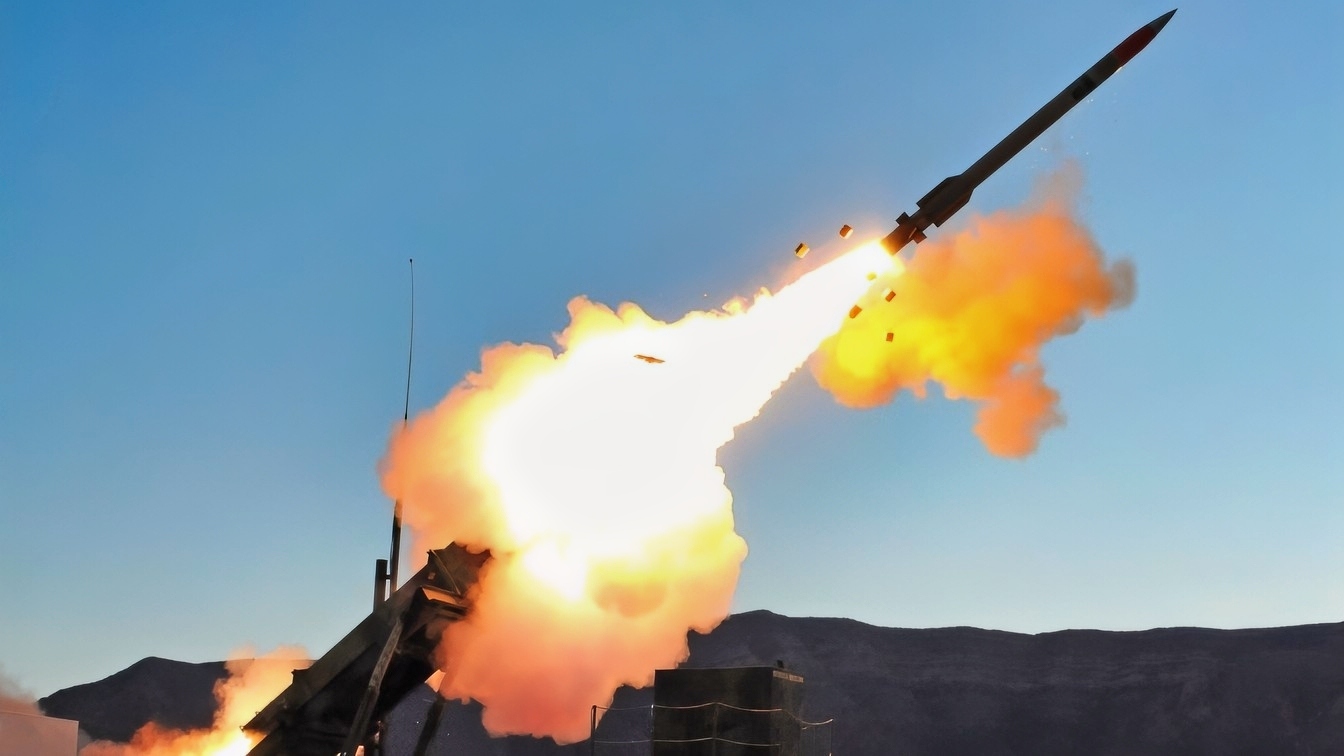
The Army test fires a Patriot missile in a recent test. The Patriot missile system is a ground-based, mobile missile defense interceptor deployed by the United States to detect, track and engage unmanned aerial vehicles, cruise missiles, and short-range and tactical ballistic missiles. Patriot, along with other missile defense systems, are included in the Army Air and Missile Defense 2028, which provides the Army’s overarching vision for the AMD force, describes how the AMD force is postured to support the Army and joint forces, and articulates what must be accomplished to achieve the 2028 desired end state of preventing and defeating adversary air and missile attacks through a combination of deterrence, active and passive defense, and support to attack operations. (U.S. Army photo)
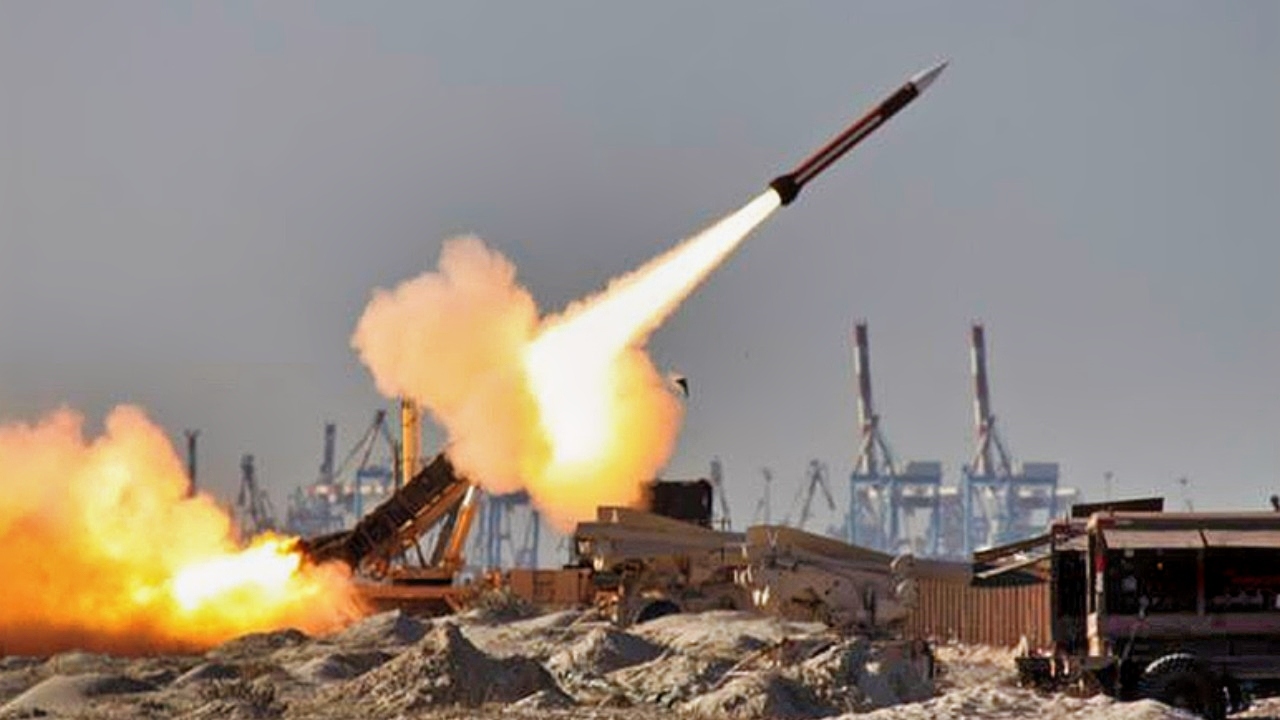
Patriot Missile Interceptor Test. Image Credit: Creative Commons.
Russia is said to have launched 126 ballistic missiles at Ukraine in the month of July alone, the most in any month since the initial Russian invasion in 2022.
How exactly are the missiles getting through Ukraine’s defenses? A CNN analysis looked at that question this week.
“A Key Ukrainian Vulnerability”
CNN’s Nathan Hodge wrote that while Ukraine has succeeded of late in knocking Russia on its “back foot” with drone attacks on its energy infrastructure, as well as its largest retailer, Russia has managed to expose a Ukrainian vulnerability in its lack of missile interceptors.
And they’ve done it, Hodge writes, with “terrifying, high-speed missile attacks on Ukrainian cities combined with other long-range strikes that have claimed hundreds of civilian lives.”
He pointed to one Russian attack, on June 30, that featured a wide variety of different weaponry — four anti-ship missiles, nine ballistic missiles, 61 cruise missiles, and close to 300 strike drones.
Russia has also, on some occasions during the war, used the intermediate-range hypersonic Oreshnik missile, while even using some missiles, of late, from North Korea.
The lack of remaining missile interceptors has led Ukrainian President Volodymyr Zelensky to urgently ask Ukraine’s allies for more. President Donald Trump, meanwhile, has gone back and forth in recent weeks about whether or not he will make Patriot missile licenses available to Ukraine.
He had said he would do so at the NATO summit in Turkey last month, before equivocating more recently, especially amid headlines that the U.S., amid the continuing Iran war, is running low on its own munition stockpiles. Reuters reported this week that talks are ongoing.
Is Help On the Way?
The Guardian reported on Thursday that NATO is “urgently” working to provide Ukraine with the necessary air defenses. This week, Zelensky met with NATO Secretary General Mark Rutte.
“We are working as hard as possible with all partners who can assist with the supply of interceptor missiles to protect against such insane Russian strikes targeting life, people, and civilian facilities,” the Ukrainian leader said of his meeting with Rutte.
Zelensky also spoke of the need to “cut through all red tape and make the necessary political decisions.”
NATO has said that Europe’s first Patriot missile production facility will open next month in Germany.
But Would It Help?
Also on Thursday, Mykola Bielieskov of the Atlantic Council wrote an op-ed arguing that Ukraine cannot defeat the blitz of Russian ballistic missiles “by defensive measures alone.”
Bielieskov paints a bleak picture, pointing out that while only the Patriot system would effectively stop Russia’s ballistic missiles, the U.S. does not have enough existing ones to spare, and current efforts to boost output are “not expected to result in any major increases until 2030.”
Zelensky has said that Ukraine needs 300 interceptors to get through the winter, but “at present, this goal looks unachievable.”
There is one other potential solution, albeit a long-term one: The Freyja project, described by Bielieskov as “a coalition of European countries working to develop an anti-ballistic air defense system.” However, the first test of that system isn’t expected until next year, and it won’t be operational for years after that.
What’s the solution? Offense, rather than defense. “Shoot the archer, not the arrow,” to use an idiom.
This would involve either hunting ballistic missile launchers or possibly even Ukraine developing its own ballistic missile capabilities.
There is one more thing Ukraine’s allies can do, Bielieskov writes.
“They can support Ukraine’s offensive efforts by providing the intelligence needed to locate launch sites and supplying the weapons needed to strike deep inside Russia.”
Another analyst, Dara Massicot of the Carnegie Endowment, described ballistic missile defense on X as “a difficult problem,” and urged Ukraine to “consider Plan B and Plan C about how to undercut Russian launch potential.”
About the Author: Stephen Silver
Stephen Silver is an award-winning journalist, essayist, and film critic, and contributor to the Philadelphia Inquirer, the Jewish Telegraphic Agency, Broad Street Review, and Splice Today. The co-founder of the Philadelphia Film Critics Circle, Stephen, lives in suburban Philadelphia with his wife and two sons. For over a decade, Stephen has authored thousands of articles that focus on politics, national security, technology, and the economy. Follow him on X (formerly Twitter) at @StephenSilver, and subscribe to his Substack newsletter.


