

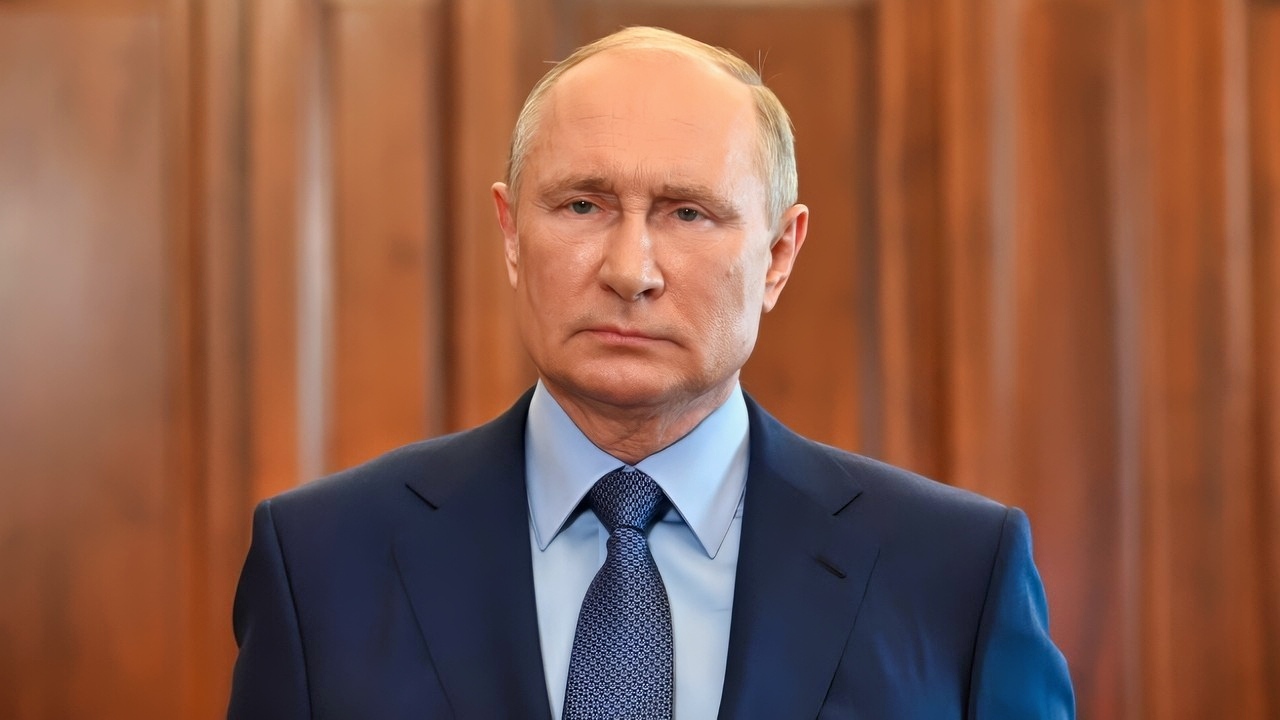
Key Points and Summary – German Chancellor Friedrich Merz used a party congress in Bavaria to issue his starkest warning yet on Russia, likening Vladimir Putin’s territorial ambitions to Adolf Hitler’s prewar expansion and invoking the 1938 Munich Pact as a cautionary tale against appeasement.
-His remarks come as Germany, France, and the UK coordinate with Washington on a U.S.-backed 20-point Ukraine peace plan that may involve contested territorial concessions in Donbas.
-The Berlin talks unfold against fractious “European unity,” with Hungary’s Viktor Orbán openly undermining sanctions and asset freezes, highlighting how internal EU rifts could weaken any settlement with Moscow.
Is Germany About to Sign Its Own Munich 2.0 on Ukraine?
Speaking at a party conference on Saturday evening in Germany’s southernmost province of Bavaria, Federal Chancellor Friedrich Merz compared Russian President Vladimir Putin’s goals of territorial conquest to those of Adolf Hitler. His speech contained the starkest warning yet, telling those present that the Kremlin leader’s ambitions will not stop at Ukraine.
“Just as the Sudetenland was not enough in 1938, Putin will not stop,” Merz said, referring to the German-speaking region of Czechoslovakia that the Allied leaders handed over to the Nazi leader with an agreement known as the Munich Pact.
Hitler continued his expansion into Europe after the agreement, later moving in to occupy the rest of what was then Czechoslovakia. This fateful 1938 agreement has gone down in history as one of the worst mistakes made by the Allies before the outbreak of World War II.
Rather than bringing “peace in our time,” as the UK Prime Minister Neville Chamberlain proclaimed, the agreement instead paved the way to a total, global war that began a year later.
The words “Munich” and “appeasement” are still used today as shorthand for what not to do when dealing with dictators bent on expanding their territory.
“If Ukraine falls, he won’t stop there,” Merz said, referring to Putin, a former KGB Lt. Col. known for his untrustworthiness. “This is a Russian aggressive war against Ukraine — and against Europe.” Putin’s aim is “a fundamental change to the borders in Europe, the restoration of the old Soviet Union within its borders,” the German chancellor warned his audience.
About the Author: Reuben F. Johsnon
Reuben F. Johnson has thirty-six years of experience analyzing and reporting on foreign weapons systems, defense technologies, and international arms export policy. Johnson is the Director of Research at the Casimir Pulaski Foundation. He is also a survivor of the Russian invasion of Ukraine in February 2022. He worked for years in the American defense industry as a foreign technology analyst and later as a consultant for the U.S. Department of Defense, the Departments of the Navy and Air Force, and the governments of the United Kingdom and Australia. In 2022-2023, he won two awards in a row for his defense reporting. He holds a bachelor’s degree from DePauw University and a master’s degree from Miami University in Ohio, specializing in Soviet and Russian studies. He lives in Warsaw.


