

In recent weeks and months, Russia and Ukraine have been striking each other’s energy infrastructure, which has affected global energy markets to the point where President Donald Trump has been pushing the two countries to agree to a ceasefire in such attacks.
And now, Russia’s attacks have hit another essential part of Ukraine’s economy.

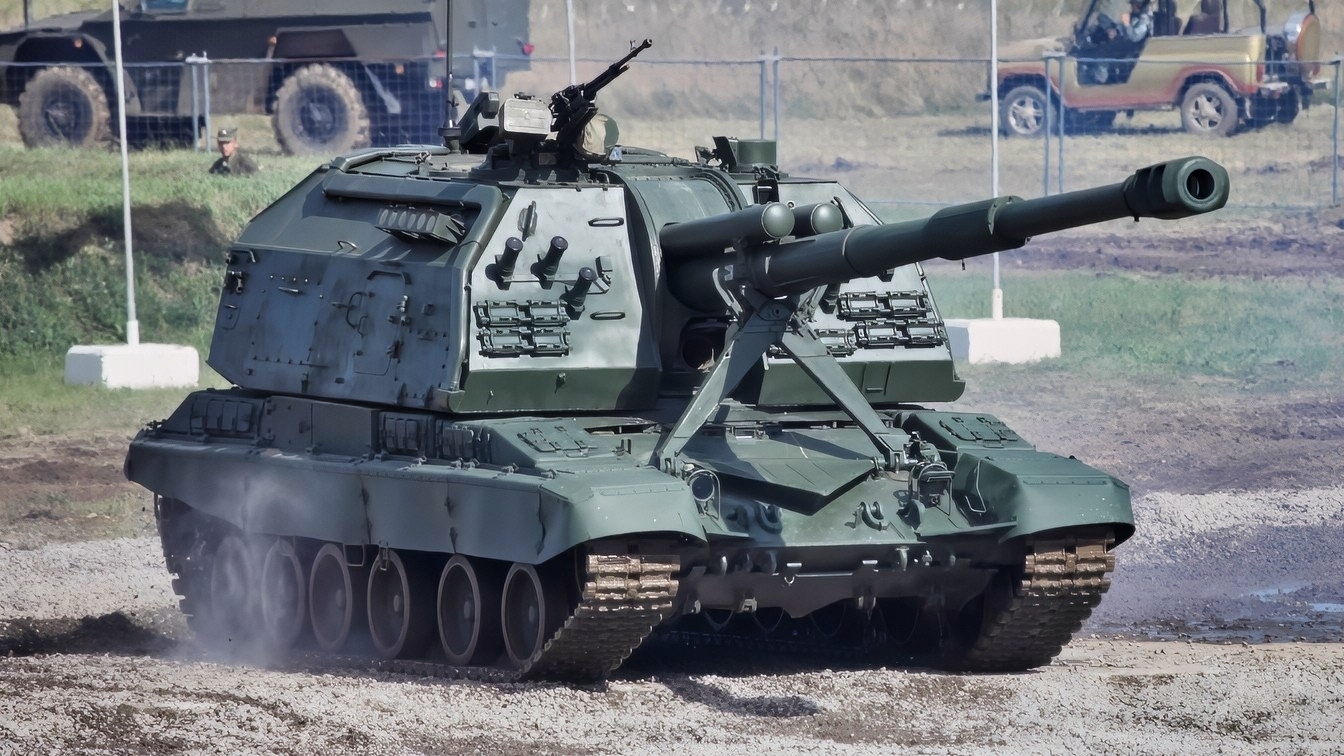
MSTA-S Russian Army. Image Credit: Creative Commons.

Msta-S Russian Army. Image Credit: Creative Commons.
The Financial Times reported this week that Russia has been specifically hitting Ukraine’s data centers, which has succeeded in knocking out Internet access in the Kyiv region for multiple days.
This was as part of the attacks on Kyiv in which two people were killed, and 43 were injured.
Companies affected by the strikes include Internet service providers Pavutyna, Etherlink, Crazy Network and Utels, and hosting companies Cityhost and MiroHost.
One of the data centers that was hit was part of the same complex that served as President Volodymyr Zelensky’s campaign headquarters in 2019.
Ukraine’s foreign minister, Andriy Sybiha, accused Russia on X this week of actively seeking to “disrupt the flow of information.” The Financial Times quoted government officials and business leaders as stating that they believe Russia is seeking to hurt Ukraine’s economy, including its banking and payment processing systems, in addition to its military capabilities.
Sybiha also said the attacks had affected Ukraine’s ability to send rapid alerts about incoming missile attacks. A portion of the damaged infrastructure was later restored, the Financial Times reported.
The Kyiv Independent had more on the attacks, including that Ukraine’s Digital Transformation Ministry has said that 100,000 households were affected by the Internet outages.
Also, the Ministry says that they believe that while attacking Ukrainian Internet infrastructure is not new, Russia has certainly been stepping up these attacks recently.
Russia’s View
Russia’s defense ministry, per FT, said on Thursday that it struck the Kyivstar and Parkovy data centers in the Ukrainian capital, and that the centers housed “communication services and computing power.”
Russia also claimed to have hit a logistics center, also in Kyiv, that it claimed is used by Ukraine to store drones.
A Starlink Strike?
The BBC reported Thursday that a fire broke out at a Starlink ground station in Poland, operated by Polish state-owned telecoms group Exatel.
Starlink provides Internet services to Ukraine and Europe.
While Polish Prime Minister Donald Tusk told state media he could not confirm whether it was sabotage or an accident, He added it “looks bad.” Poland’s digital affairs minister Krzysztof Gawkowski hinted that the fire was an attempt to disrupt Internet services in Ukraine, and represents “an element of hybrid warfare and sabotage warfare” on behalf of the Russians.
The report said the station remains operational.
The Kremlin has not commented on the incident in Poland, the BBC said.
An attack by Russia on a NATO nation would have Article 5 implications, although the BBC report noted that it could have been carried out by a proxy, which would allow Russia to deny involvement.
A Danish Warning
Also this week, The Kyiv Independent pointed out that the Danish Defense Intelligence Service has released a warning that Russia has “intensified its use of sabotage [and] destructive cyber attacks.” This includes the airport drone attack in August that the German government has said it blames on Russia.
Russia, the Danish assessment said, has shown a greater willingness of late to take actions against NATO countries.
These include the incident earlier this week in which a Russian frigate fired flares at a Danish military helicopter in Gedser, as well as various incidents in which Russian drones have approached or breached the airspace of NATO countries.
According to the Danish assessment, Russia is under pressure due to continuing Ukrainian attacks deep inside Russia, growing economic strain, and Russian concerns that Europe will develop an “autonomous military capability” by 2030.
Therefore, Russia is choosing to take action against the NATO countries that have assisted Ukraine throughout the war through hybrid attacks and other methods, which, among other things, would seek to encourage division within NATO.
And while the DDIS does not believe that Russia is planning to launch a full-on invasion of NATO countries, that isn’t something that can entirely be ruled out.
About the Author: Stephen Silver
Stephen Silver is an award-winning journalist, essayist, and film critic, and contributor to the Philadelphia Inquirer, the Jewish Telegraphic Agency, Broad Street Review, and Splice Today. The co-founder of the Philadelphia Film Critics Circle, Stephen lives in suburban Philadelphia with his wife and two sons. For over a decade, Stephen has authored thousands of articles that focus on politics, national security, technology, and the economy. Follow him on X (formerly Twitter) at @StephenSilver, and subscribe to his Substack newsletter.


