
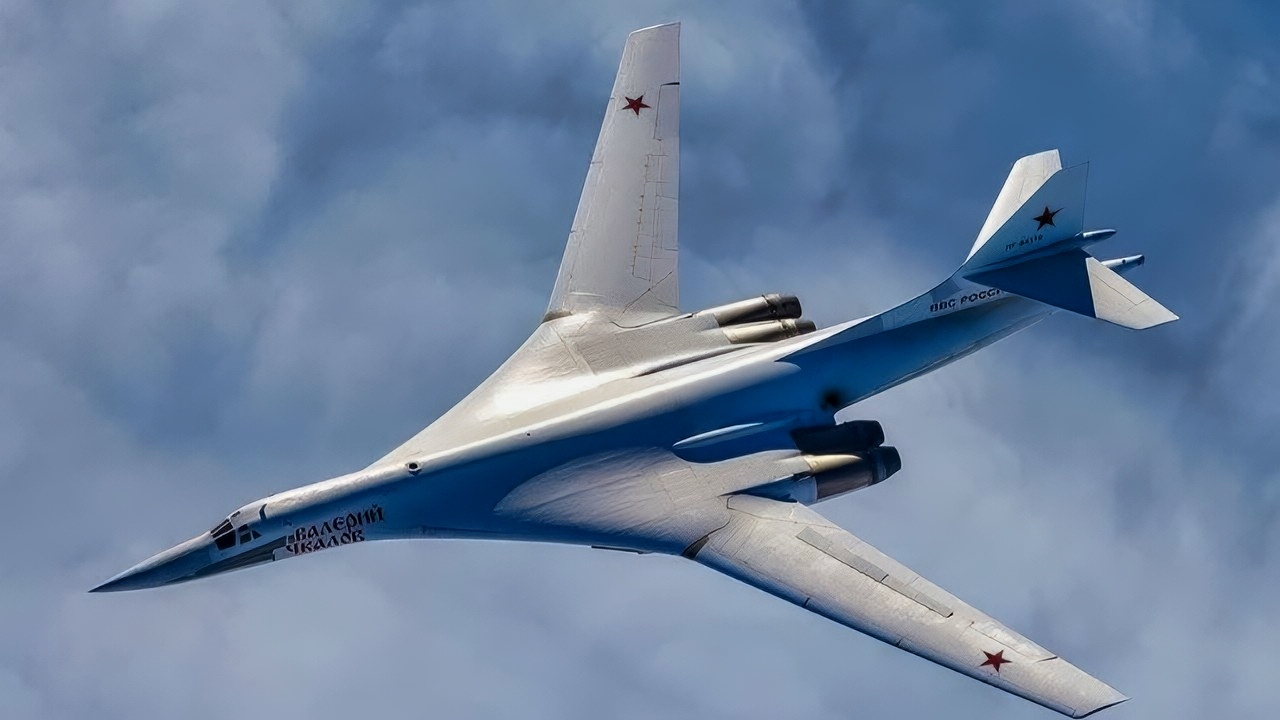
According to a new analysis, the Russian Aerospace Forces currently operate 18 Tu-160 strategic bombers, but only seven are being used for combat missions in Ukraine.
Russia’s most powerful strategic bomber fleet looks smaller in practice than it really is on paper, and analysts are now asking why.

Tu-160M Bomber from Russia. Image Credit: Russian Military/Creative Commons.
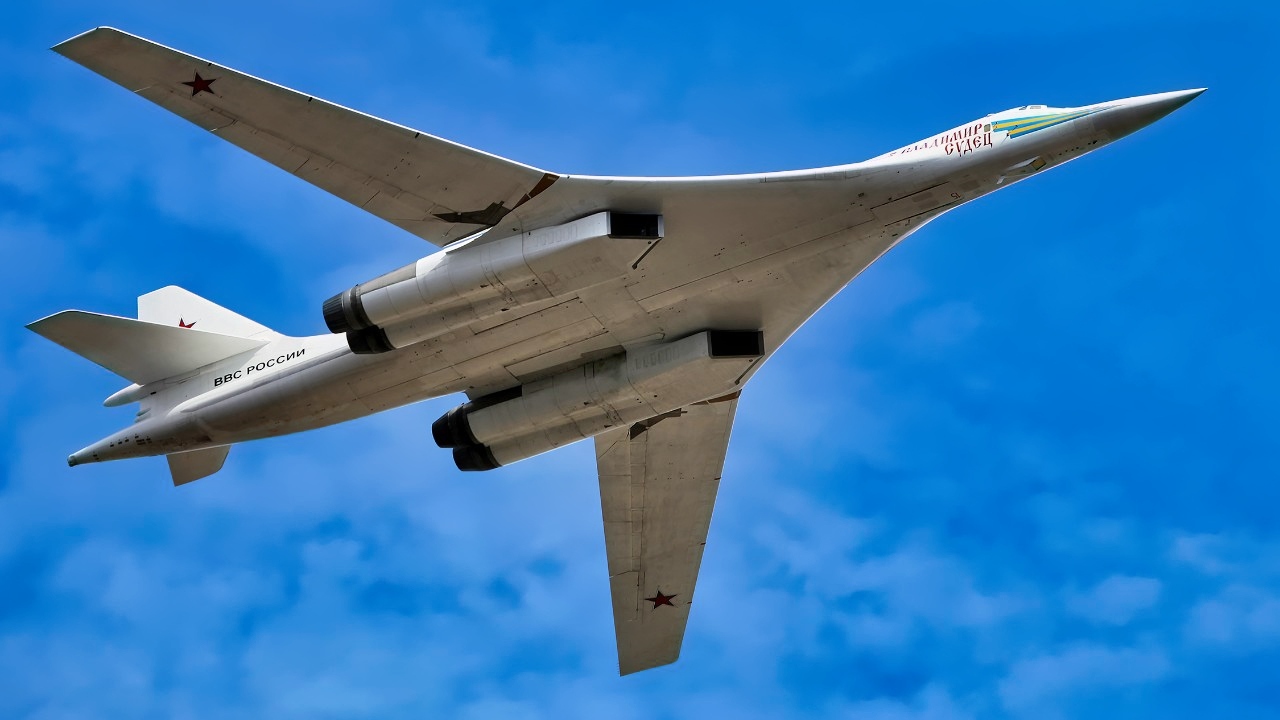
Tu-160 Bomber from Russia. Image Credit: Creative Commons
The analysts at AviVector, in an April 17 report published by Militarnyi, suggest that roughly two-thirds of Russia’s Tu-160M fleet are tied up in testing, training, or modernization work.
The aircraft operate primarily from Ukrainka Air Base in Russia’s Amur region, and sometimes from Engels-2 Air Base in Saratov, where they are loaded with cruise missiles before launching attacks.
Why, then, has Moscow found itself in this position more than four years into the war?
Tu-160: Russia’s Most Powerful Bomber
The Tu-160 is known to NATO as the “Blackjack.” To the Russians, it is the “White Swan.” The aircraft is the largest and fastest strategic bomber still in service, not just in Russia, but anywhere in the world.

Russian Air Force Bomber Tu-160. Image Credit: Creative Commons.

Tu-160 bomber. Image Credit: Creative Commons.

Tu-160. Image Credit: Creative Commons.
Designed by Tupolev during the Cold War, the Tu-160 entered service with the Soviets in 1987. It features variable-sweep wings, houses a crew of four, and is powered by four Kuznetsov NK-32 afterburning turbofan engines.
The Tu-160M is an upgraded version of that aircraft; it can fly around 7,500 miles without refueling and reaches speeds above Mach 2. It can carry 12 cruise missiles.
It’s that last point that is particularly relevant to what’s happening in Ukraine today.
The Tu-160 does not need to fly anywhere near Ukrainian air defenses to make an impact, and can instead launch Kh-101 conventional cruise missiles from deep inside Russian airspace, where it is far less likely to be hit by opposing forces.
The Kh-101 has a reported range of 2,500 to 2,800 kilometers, while Russia claims a maximum range of 4,500 kilometers.
Only Seven In Use Against Ukraine
According to AviVector’s research, which includes an analysis of open-source intelligence on Russia’s current aircraft inventories, there are 18 Tu-160 aircraft in total, and only seven are currently used for strike missions.
Militarnyi reported that the rest of the aircraft appear to be tied up in testing, training, maintenance, modernization, storage, or under construction.

Russia Tu-160 Bomber. Image Credit: Creative Commons.
Engels-2, one of the bases from which the bombers are known to operate, has long been one of the most important Russian strategic bomber bases.
However, it has also become one of the most repeatedly targeted sites by Ukrainian forces. On March 20, 2025, Ukrainian forces targeted the Engels base using drones.
The attack in the Saratov region of Russia triggered a large explosion, and Russia’s Defense Ministry claimed to have downed 54 drones over the area during the attack.
Roman Busargin, the governor of the Saratov region, said that Engels has “suffered the most massive UAV attack of all time.”
The Tu-160 is therefore technically vulnerable
Ukraine Forced Russia to Move Its Bombers
When the invasion of Ukraine began, Russia could safely assume that its long-range bomber bases were safely beyond Ukraine’s reach.
Western leaders at the time refused to provide long-range weapons to Ukraine and would certainly not authorize their use for strikes into Russia.
But today, Ukraine doesn’t need Western weapons to strike deep into Russia, and Western leaders are far less interested in preventing deep strikes. Ukraine now has long-range drones.
In June 2025, Ukraine changed the game when it launched Operation Spider’s Web, a drone attack against Russian airfields that destroyed high-value Russian aircraft.
Ukrainian President Volodymyr Zelenskyy said at the time of the strike that the operation had been planned for 18 months, and Ukrainian security sources said that 117 drones were used to target air bases across a number of Russian regions.
The attack reportedly took out Tu-95 and Tu-22M3 bombers.

Tu-95 Bomber Russian Air Force. Image Credit: Creative Commons.

Tu-95 Bear Bomber. Image Credit: Creative Commons.

Tu-95 Bomber from Russia. Image Credit: Creative Commons.
According to Militarnyi’s April 2026 report, Tu-160Ms began operating from Ukrainka after Ukraine’s strike on Belaya Air Base in June 2025.
The reason was simple: the base was a greater distance from populated areas and highways, making it harder for future Ukrainian strikes in the same vein as Spider’s Web.
Ukrainka is, in fact, thousands of miles away from Ukraine in Russia’s far east.
Moving bombers there may protect them, but it also complicates operations, meaning aircraft may need to fly west, load weapons elsewhere, perhaps at Engels-2, and then launch missiles and return to the safe base.
Russia Is Building More, Slowly
Russia is still trying to expand and modernize its fleet of Tu-160 bombers, but the program is slow and expensive. It has also been hit by sanctions.
In January 2018, Russian President Vladimir Putin visited the Kazan Aircraft Plant and signed a contract for 10 modernized Tu-160M bombers. The deal was reportedly worth 15 billion rubles per aircraft, and the aircraft were scheduled for delivery by 2027.
In February 2024, Putin visited the same plant and inspected three overhauled Tu-160M bombers.
The Kremlin said that he reviewed the modernization program. The program, though, is behind schedule. Restarting production of a Soviet-era strategic bomber is not simple, and it’s particularly difficult under sanctions that make obtaining critical parts and components difficult.
About the Author: Jack Buckby
Jack Buckby is a British researcher and analyst specializing in defense and national security, based in New York. His work focuses on military capability, procurement, and strategic competition, producing and editing analysis for policy and defense audiences. He brings extensive editorial experience, with a career output spanning over 1,000 articles at 19FortyFive and National Security Journal, and has previously authored books and papers on extremism and deradicalization.


