

Vladimir Putin is learning that his country is not safe from Ukraine. Just when he thinks his military has achieved some level of battlefield progress, in comes a flight of enemy drones that ruins his day. That is what happened on June 8 when Ukraine sent a bevy of one-way kamikaze craft to attack Russian energy infrastructure that is sure to infuriate the Russian dictator.
The latest incident happened in the Moscow region. Russia claimed it shot down 310 enemy drones overnight. The massive barrage from Ukraine also hit “western and southwestern Russia, Russian-occupied Crimea and the Black and Azov seas,” the Associated Press reported.
Attacks on Russian Energy Installations Are Taking a Toll
The Ukrainian military was particularly focused on Krasnodar Krai, where it sought to make the Russians pay dearly. Loitering munitions hit the Grushovaya oil transshipment base near Novorossiysk. This facility is one of the most important energy sites in the country. There was a massive fire at the location that even Russia admitted was highly damaging.

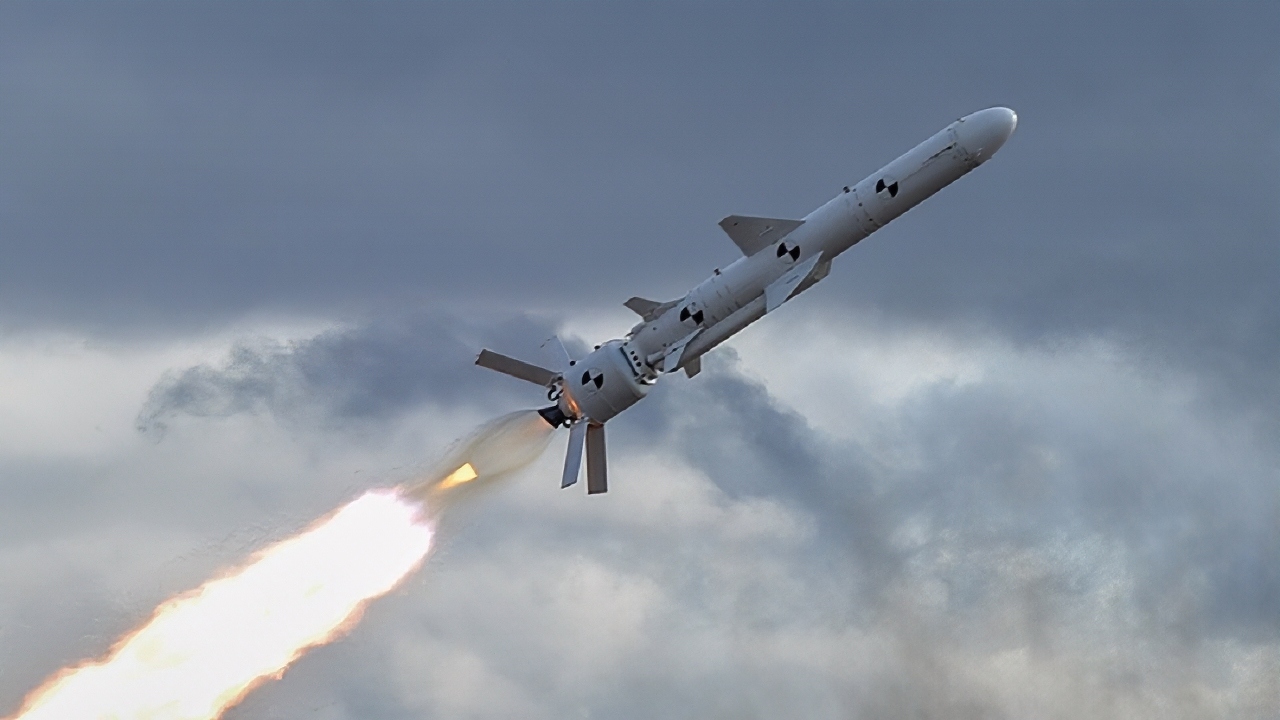
Ukraine War TOS-2. Image Credit: X Screenshot.
An estimated 130 first responders fought the blaze and rescued workers. Moscow said that no one was killed or injured, but the damage will affect the supply of petroleum products to a country that has been facing shortages because of Ukrainian attacks on energy infrastructure.
Russia Admits There Are ‘Problems’
The Russians are being stoic about the extent of the Ukrainian drone attacks. Putin does not want to admit publicly that the strikes are taking a toll on the country’s energy system.
Kremlin spokesman Dmitry Peskov said the Energy Ministry is dealing with the various fuel shortages, especially in Crimea.
“There are indeed certain problems at the moment,” Peskov said. “Measures are being taken.”
Russia Cannot Protect Its Energy Infrastructure
This is a stunning admission from Russian leadership that often refuses to admit that anything in the war is going poorly. The Kremlin is likely to order more air defense systems to protect energy facilities, but the country is also being forced to shield Moscow and St. Petersburg from drone attacks. There are only so many defensive interceptors to go around. Many oil and gas terminals are unprotected.
The Russian Military Is Facing Fuel Shortages

A soldier from the Idaho Army National Guard, Charlie Company, 2-116th Combined Arms Battalion, 116th Cavalry Brigade Combat Team makes Idaho National Guard history with the first firing of a Javelin anti-tank missile.
In a historic moment of training for the Idaho Army National Guard, soldiers from Charlie Company, 2-116th Combined Arms Battalion, 116th Cavalry Brigade Combat Team, fired the FGM – Javelin portable anti-tank missile on Sunday while conducting a series of field training exercises scheduled for the week on the Orchard Combat Training Center ranges.
One area that the Ukrainians have discovered that really hurts Russia is using strikes on oil storage installations that are used to supply its military. Explosions engulfed Semykolodezkaya oil base in the Russian-occupied Crimean Peninsula on June 7, the Associated Press wrote.
Ukrainian Civilians Are Not Safe from Russian Drones
Russia has responded to these attacks with massive drone strikes of its own against Ukrainian civilians. A flight of one-way unmanned craft recently passed over a residential area in the central Zaporizhzhia region. This killed four children and wounded another 18 people. An additional strike murdered a middle-aged woman in Nikopol. Other Ukrainians were injured in Odesa and the Dnipropetrovsk region.
Not to be outdone, the Ukrainians used more one-way drones to target a Russian passenger train in Crimea. This strike killed the driver and his assistant.
Can the War Be One With Drones?
This stage of the war is becoming difficult for civilians, and the Russians and Ukrainians continue to raise the stakes using tit for tat strikes against non-military targets.
Both sides hope that more unmanned kamikaze craft can break each other’s will to fight. The attacks are creating massive fear in the populace as strikes seem to happen anywhere at any time.

Su-34 Fullback. Creator: Vitaly V. Kuzmin. Credit: Vitaly V. Kuzmin
A New Player to Carry Diplomatic Messages Back and Forth
A new development in the struggling peace process is noteworthy. Volodymyr Zelensky and Putin are attempting to use Roman Abramovich, the former owner of a Premier League soccer team, as a go-between message courier. Abramovich communicated a statement from Putin to Zelensky. The Ukrainian leader said that the Russians “want to understand what we are ready to do” regarding peace talks.
‘E3’ Group Is On a Quest for Peace
Meanwhile, European countries are trying to instigate their own peace plan. The United Kingdom, France, and Germany (E3) have some ideas to end the fighting. The leadership from the three nations calls for direct talks between Putin and Zelensky, a ceasefire and territorial freeze along current battle lines, and security guarantees from the United States and European allies.
Putin had earlier rejected a face-to-face meeting with Zelensky.
Which Side is Winning?
One of the problems with a ceasefire and in-person negotiations is that each side feels that it has won the war. Russia wants to keep the territory it has won, while Ukraine requires Moscow to move its forces off the ground it controls in the Donbas region.
This is why any peace deal will be difficult to forge unless there is a stand-down in the civilian attacks. Both sides are also aware that a ceasefire will allow each country to strengthen its military positions in preparation for further strikes and ground assaults.
No Peace Process Coming Soon
The warring parties are simply not ready to stop fighting as they jockey for more battlefield gains and seek to kill civilians. The United States must take on more leadership, but President Donald Trump is caught in a stalemate with Iran that is sucking all the life out of global diplomatic efforts outside of the Middle East.
Look for little chance of negotiations this week. The two sides are still far apart on strategic goals and objectives.
The Europeans have their hearts in the right place, but until America can join the E3 coalition of the willing for peace, Russia and Ukraine are likely to continue fighting.
About the Author. Brent M. Eastwood, PhD
Author of now over 3,500 articles on defense issues, Brent M. Eastwood, PhD, is the author of Don’t Turn Your Back On the World: A Conservative Foreign Policy and Humans, Machines, and Data: Future Trends in Warfare, plus two other books. Brent was the founder and CEO of a tech firm that predicted world events using artificial intelligence. He served as a legislative fellow for US Senator Tim Scott and advised the senator on defense and foreign policy issues. He has taught at American University, George Washington University, and George Mason University. Brent is a former US Army Infantry officer. He can be followed on X @BMEastwood.


