


Russia Upgrading Its Defenses Around Moscow Due To Drone Attacks: The Russian military has erected about two dozen new towers around Moscow in recent months to mount Pantsir air defense systems, expanding the capital’s protective ring and reinforcing coverage over key strategic sites.
This was done in response to the devastating drone swarm attacks conducted by Ukraine recently, which have caused significant damage to oil and gas refineries and to logistical warehouses around Moscow.

Iskander-M. Image Credit: Creative Commons.
The construction was documented by open-source researcher jembob, who cataloged the new Russian air defense towers in a post on X on July 26.
Despite the three rings of air defenses around Moscow, the Russian capital has proven to still be vulnerable against these drone swarms the Ukrainians have unleashed on it.
Ukraine’s Drone Swarm Strategy Has Caused Heavy Damage
Ukraine has launched massive swarms of hundreds of drones to overwhelm and map out Moscow’s air defense networks. This is part of President Zelenskyy’s 40-day influence operation, an aggressive campaign which aims to exhaust Russia’s expensive missile stockpiles, expose gaps in radar coverage, adversely affect Moscow’s economy, and force Russian President Putin to stop the war and sign a peace deal.
Ukraine’s drone swarm strategy relies on overloading Russian defenses rather than relying on single, stealthy strikes. Ukrainian Unmanned Forces launch high volumes of drones—frequently exceeding 300 to 500 in a single wave—to flood Russian radar screens.
In a tactic to fool Russian air defenses, inexpensive, unarmed decoy drones are mixed in with actual strike weapons. Russian defenses can’t differentiate between targets and decoys and frequently target decoys, allowing some armed drones to get through.
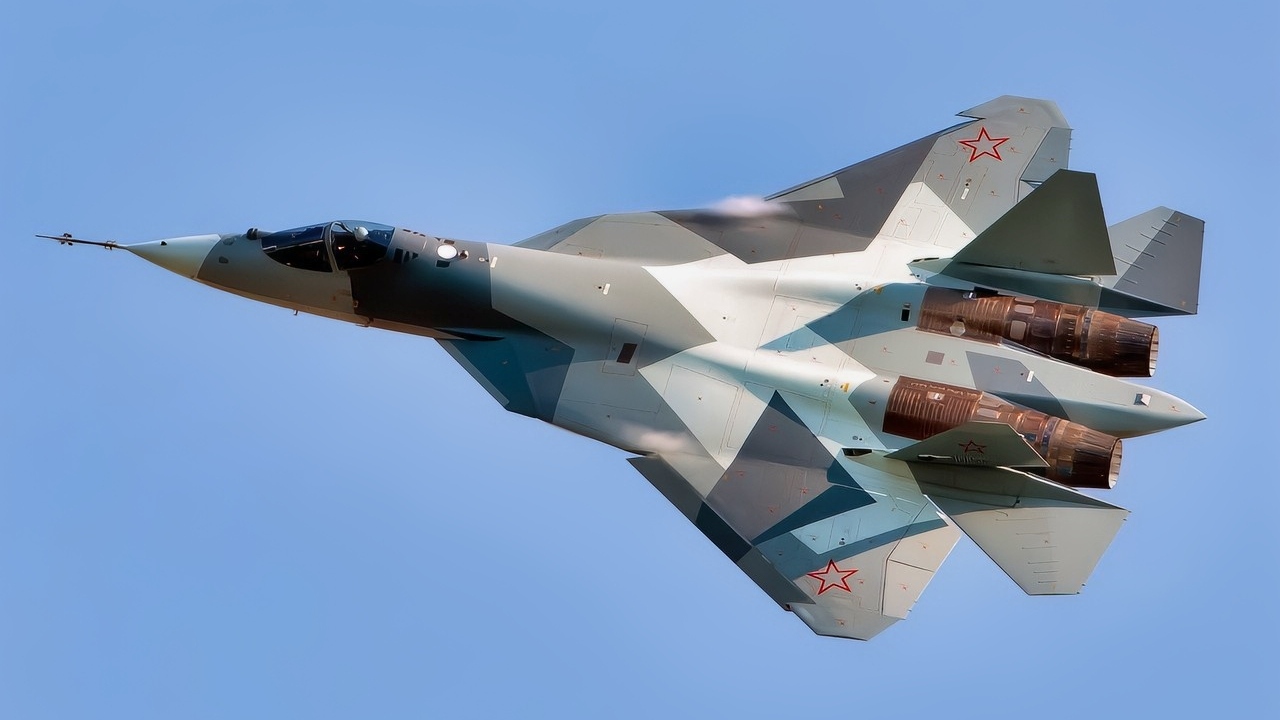
Su-57 Felon Fighter from Russia. Image Credit: Creative Commons.
By repeating the attacks several days in a row, Ukrainian drone operators learn how Russian defenses are deployed, exposing gaps in air defense coverage.
Russia Pulling Air Defenses Off The Battlefield To Protect Moscow
Russia began heavily reinforcing air defenses around Moscow and high-priority sites such as Putin’s Valdai presidential residence late last month.
This shift follows a recent surge in long-range Ukrainian drone strikes hitting Russian oil refineries, military infrastructure, and disrupting Russian airspace and airports. Consequently, units are being pulled from regional areas and front lines, leaving other domestic zones more exposed.
Analysts say Russia’s antiquated air defense network, which was designed to protect it against aircraft and ballistic missiles, has struggled to adapt to Ukraine’s tactics of using swarms of long-range drones.
“There are many difficulties (for Russia), all because Putin refuses to end his war and to hear our proposals for a meeting, genuine negotiations, and a dignified peace,” Zelenskyy said.
“In the Moscow region alone, they have amassed hundreds of launchers” for air defense missiles, Zelenskyy added. “Nearly 90 launchers have been redeployed to Valdai from other regions of Russia.”
Russia has massively increased launcher numbers and anti-aircraft systems around Moscow, placing mobile systems like Pantsir on towers and rooftops near vital facilities.
According to statements from Ukrainian leadership and military analysts, air defense assets have been relocated from remote regions (such as the Arctic) and frontline sectors to shore up central Russia.
Retired LTC Robert Macginnis wrote that, “Russia’s problem is no longer merely stopping attacks. It is deciding which targets matter most, and selected Arctic sites keep losing that argument.”
Extra batteries are concentrated on Moscow, the Valdai presidential residence area, and key logistics links like the Kerch Bridge.
The recurring drone swarms and subsequent air defense activations have repeatedly forced temporary closures at major Moscow airports and caused localized economic and operational disruptions.
Ukraine War Problem: Russia Beefing Up Air Defenses Around Key Installations
Jembob’s analysis suggested that several of the newest towers were constructed beyond the 50-kilometer mark and positioned near major electrical substations.
The Pantsir air defense system is a family of mobile, short- to medium-range Russian hybrid air defense systems combining surface-to-air missiles and automatic cannons, best known for variants like the Pantsir-S1, Pantsir-S1M, and the drone-focused Pantsir-SMD-E.
It is designed to protect military, industrial, and administrative assets from aircraft, helicopters, precision munitions, and drones.
Most models feature twin 30 mm automatic cannons (2A38M) firing up to 2,500 rounds per minute per gun with an effective range of 4 km for close-in defense.
Standard variants use up to twelve two-stage command-guided missiles (such as the 57E6/57E6E) with a range up to 20–30 km and altitudes up to 15–18 km. Newer anti-drone configurations like the SMD-E can pack up to 48 compact TKB-1055 mini-missiles for swarm interception.
The newer SMD-E variant removes the 30mm cannons to focus entirely on specialized missile cells.
Russia had concentrated nearly 100 Pantsir positions and around 25 S-300 and S-400 batteries around Moscow; however, Ukrainian drone attacks have still been able to hammer targets around the capital.
And military analysts have stated that placing air defense weapons on the roofs of civilian buildings as well as the towers adjacent to civilian buildings constitutes a direct violation of international humanitarian law.
By integrating towers in the capital’s air defense grid, the military, for better or worse, has transformed all of those buildings into legitimate military targets.
About the Author: Steve Balestrieri
Steve Balestrieri is a National Security Columnist. He served as a US Army Special Forces NCO and Warrant Officer. In addition to writing on defense, he covers the NFL for PatsFans.com and is a member of the Pro Football Writers of America (PFWA). His work was regularly featured in many military publications


