

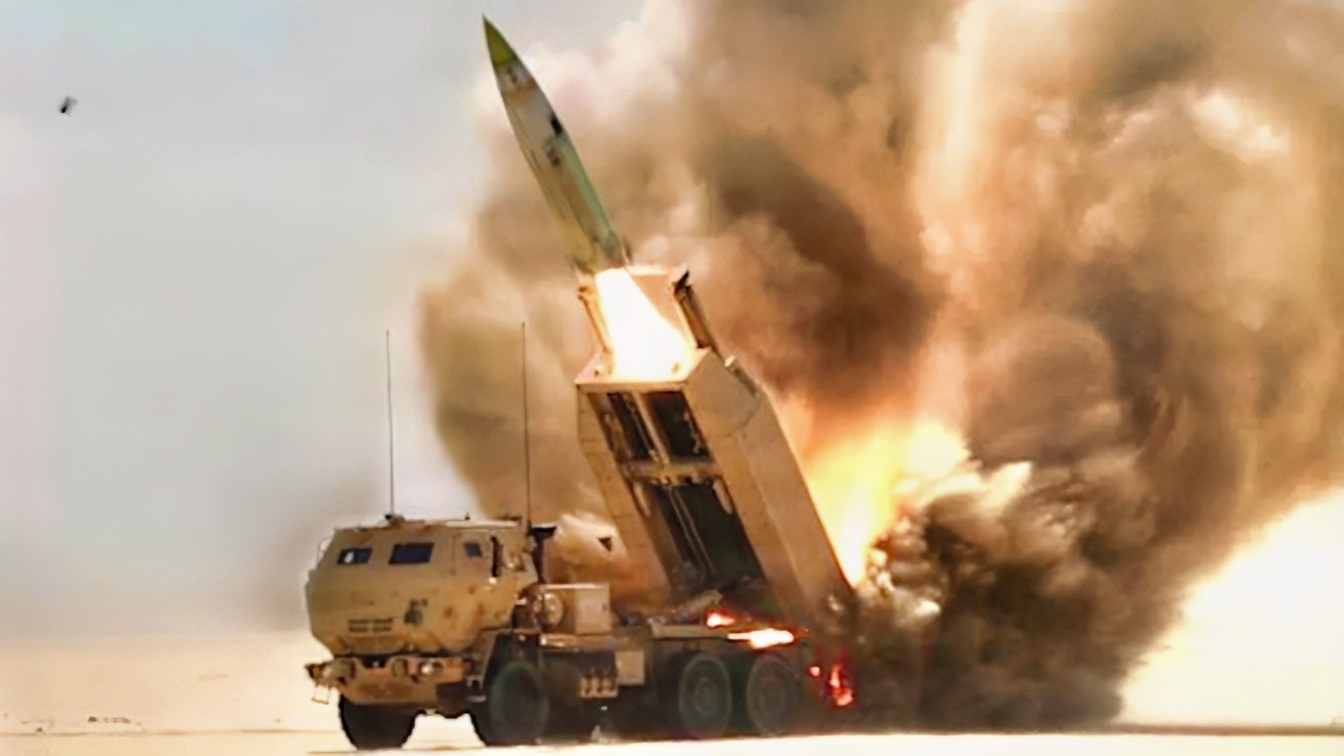
Russia’s long-range drone campaign against Ukraine has generally depended on relatively slow, propeller-driven Shahed-type attack drones. Their low cost and long range make them useful for mass attacks, yet slow speeds allow Ukrainian defenses time to detect and intercept them. Now, however, Russia is sending jet-powered Shaheds deep into western Ukraine. For example, early on September 29, Ukrainian authorities reported a jet-powered UAV approaching Ternopil, far from the front lines. The Ukrainian Air Force tracked the drone moving south of Horodok in Khmelnytskyi region toward Ternopil.
Regional officials warned residents as the drone changed course toward the regional center.
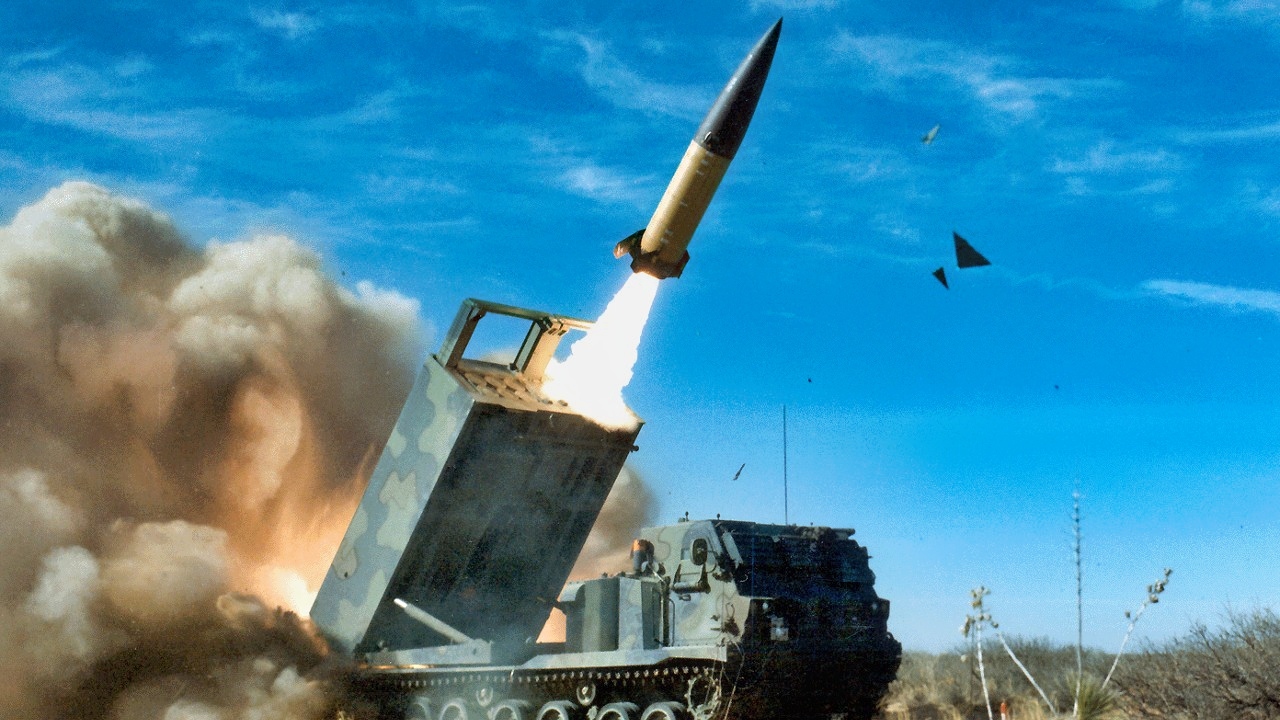
An ATACMS missile being launched from an M270 MLRS.
According to officials, the drone was then hit, with debris landing on an industrial facility. No casualties were reported. From a tactical perspective, the exchange wasn’t especially noteworthy. But the emergence of a jet-powered Shahed is more significant, as Russia appears to be experimenting with a faster version of the war’s most important weapon system.
Not the First
The Ternopil incident was not the first featuring a jet-powered Shahed flight into western Ukrainian airspace. So Ternopil is looking less like an isolated incident and more like an emerging trend. The evolution makes sense, though the basic Shahed concept has traditionally prioritized cheap production and simple construction over airspeed. The concept previously emphasized overwhelming air defense systems with mass and persistence rather than speed.
But propeller-powered drones are quite slow, giving defenders much more warning—especially as Ukraine’s defensive response systems have improved over the course of the war.
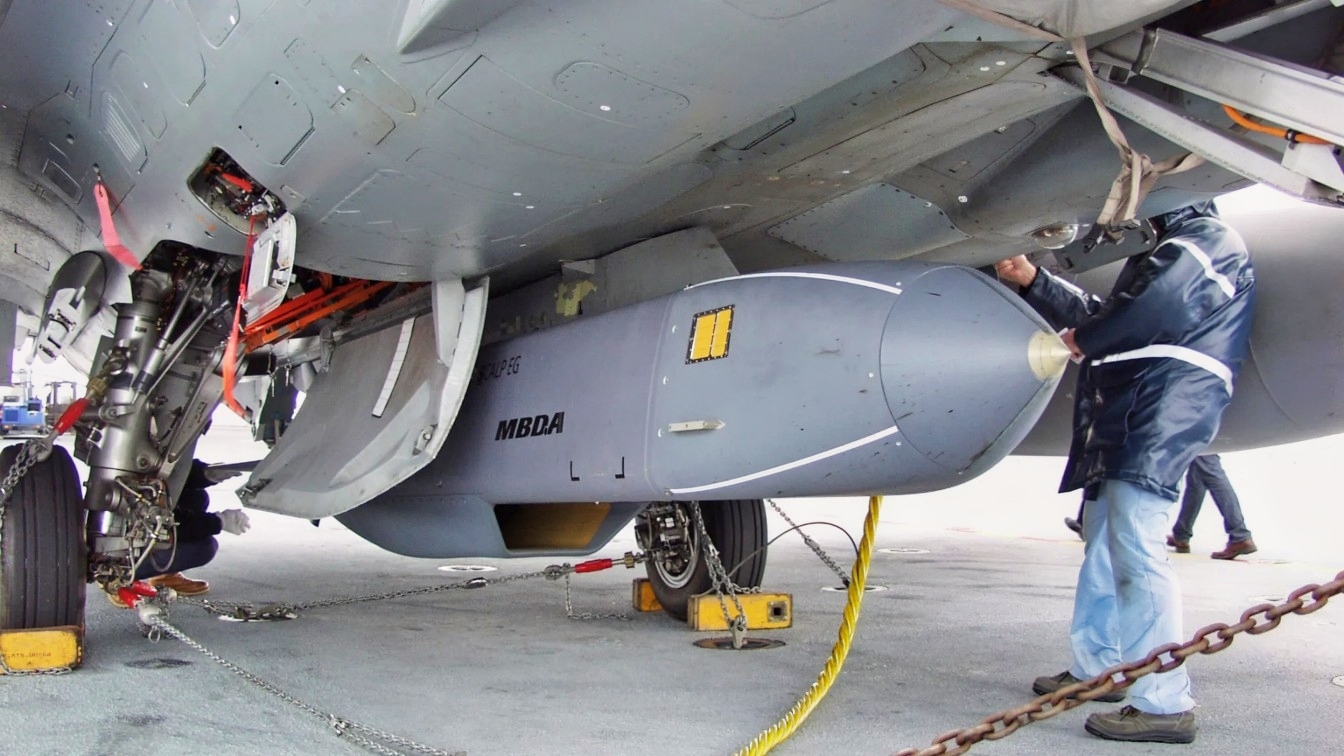
SCALP Missile Ukraine Military Photo
Specifically, Ukraine has developed mobile gun teams, machine guns and autocannons, electronic warfare, interceptor drones, SAMs, and fighter jets—an entire ecosystem built in response to Russia’s drone attacks. But if Russia begins launching drones faster, it compresses the timeframe in which Ukraine can act defensively. Air-defense crews have less time to identify the drone’s track, position interceptors, engage, and if needed, attempt a second interception.
The Other Shoe
But fielding a jet-powered Shahed is not universally a “better” Shahed; there are trade-offs to jet power. For example, jet propulsion typically means higher speeds and different flight characteristics, but it also means greater fuel consumption, higher costs, and likely reduced endurance and range, depending on the configuration. Jet propulsion partially negates the Shahed’s original advantage, which is largely about economics.
Cheap drones can force a defender to expend expensive interceptors, creating a cost asymmetry that becomes difficult to sustain over time. If a jet version of the drone becomes significantly more expensive, then some of the initial advantage erodes. So jet propulsion does not represent a full-on strategic upgrade.
Deeper Reach
That Russia is now targeting Ternopil, all the way in western Ukraine, hundreds of miles from the main front, shows Russia’s ability to send long-range drones and demonstrates how vulnerable rear areas are. Russia can use drones to target distant logistics routes, industry, energy infrastructure, transportation networks, and population centers. Long-range UAVs effectively extend the battlefield across the entire country.
And if Russia’s drone force is interspersed with, or replaced by, faster drones, then air defense becomes more difficult.
Ternopil wasn’t attacked in isolation, either; on September 28th and 29th, there were also attacks in the Zhytomyr region. Regional authorities reported roughly ten attacks on civilian infrastructure. Four cities were targeted, including Zhytomyr, Korosten, Zviahel, and Ovruch. Targets reportedly included transportation and fuel infrastructure, while commercial and civilian facilities were also damaged. No deaths or injuries were initially reported.
Mass Attacks
Russia doesn’t need every Shahed to penetrate effectively. The drone campaign can impose costs even when the UAVs are destroyed. Ukraine must maintain surveillance and defenses across huge territory.
Every incoming track demands detection, classification, warning, and an interception decision. And an expensive SAM against a comparatively inexpensive drone is a bad exchange.
Hence, Ukraine’s emphasis on cheaper interception methods. A jet-powered drone, however, potentially complicates that approach, with faster targets narrowing opportunities for mobile gun teams and other low-cost defenses.
The broader lesson here is that Ukraine has been a laboratory for rapid adaptation. Drones and drone tactics don’t remain static.
Both sides are constantly modifying navigation, comms, EW resistance, warheads, range, speed, and launch methods. Jet propulsion is merely the latest innovation.
About the Author: Harrison Kass
Harrison Kass is a writer and attorney focused on national security, technology, and political culture. His work has appeared in Tablet, City Journal, The Hill, The Spectator, and The Cipher Brief. He holds a JD from the University of Oregon and a master’s in Global & Joint Program Studies from NYU. More at harrisonkass.com.


