

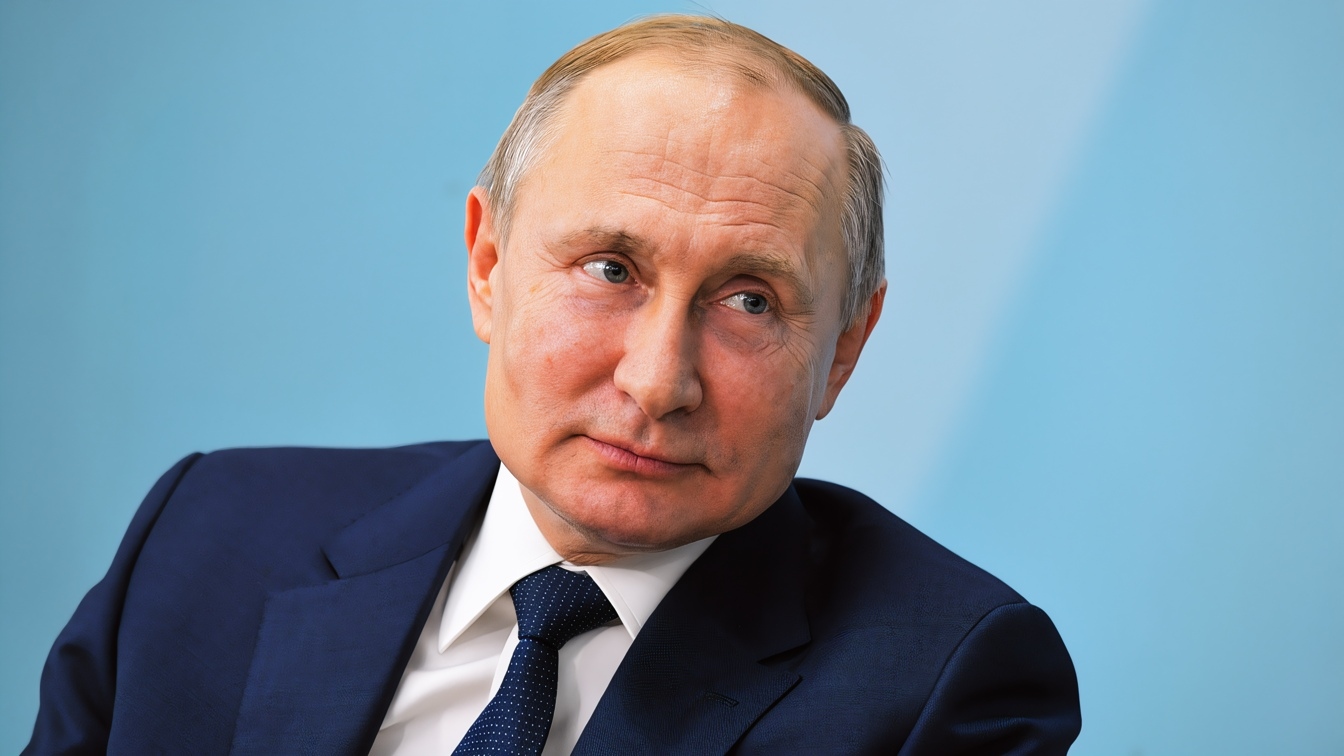
Two “peace plans” to settle the Russo-Ukrainian War have recently made headlines. According to David Ignatius of The Washington Post, American and European diplomats developed a plan aimed at a comprehensive peace settlement. In contrast, Ukrainian policymaker Oleksii Honcharenko developed a piecemeal plan.
Neither will work for a simple reason. Russia’s illegitimate president, Vladimir Putin, does not want peace, whether achieved in a comprehensive or piecemeal fashion. Putin wants Ukraine’s defeat at a minimum and its wholesale destruction at a maximum. Rational calls for compromise, as both plans are, cannot work with an ideologically driven dictator who sees some nation as an existential threat. Such an approach couldn’t work with Adolf Hitler. It won’t work with Putin.
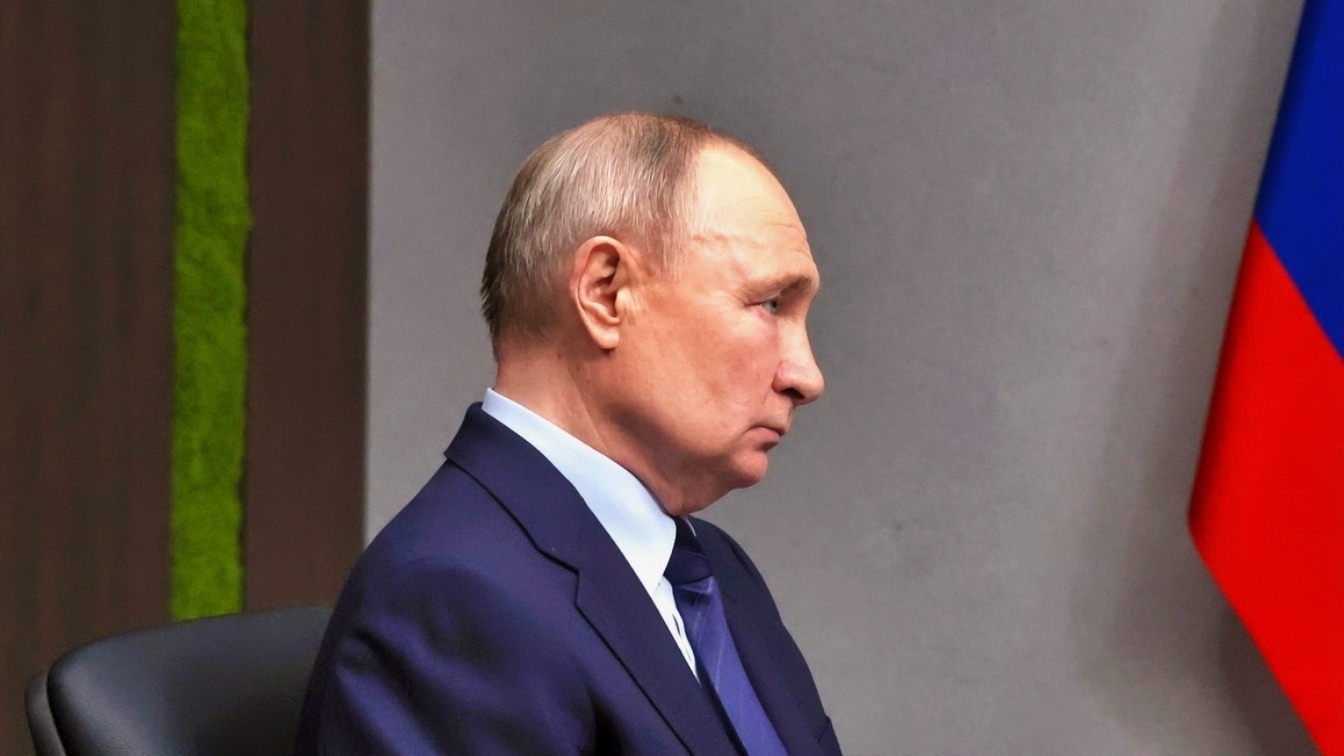
Putin Meeting with Staff Russian Federation Creation Commons Photo
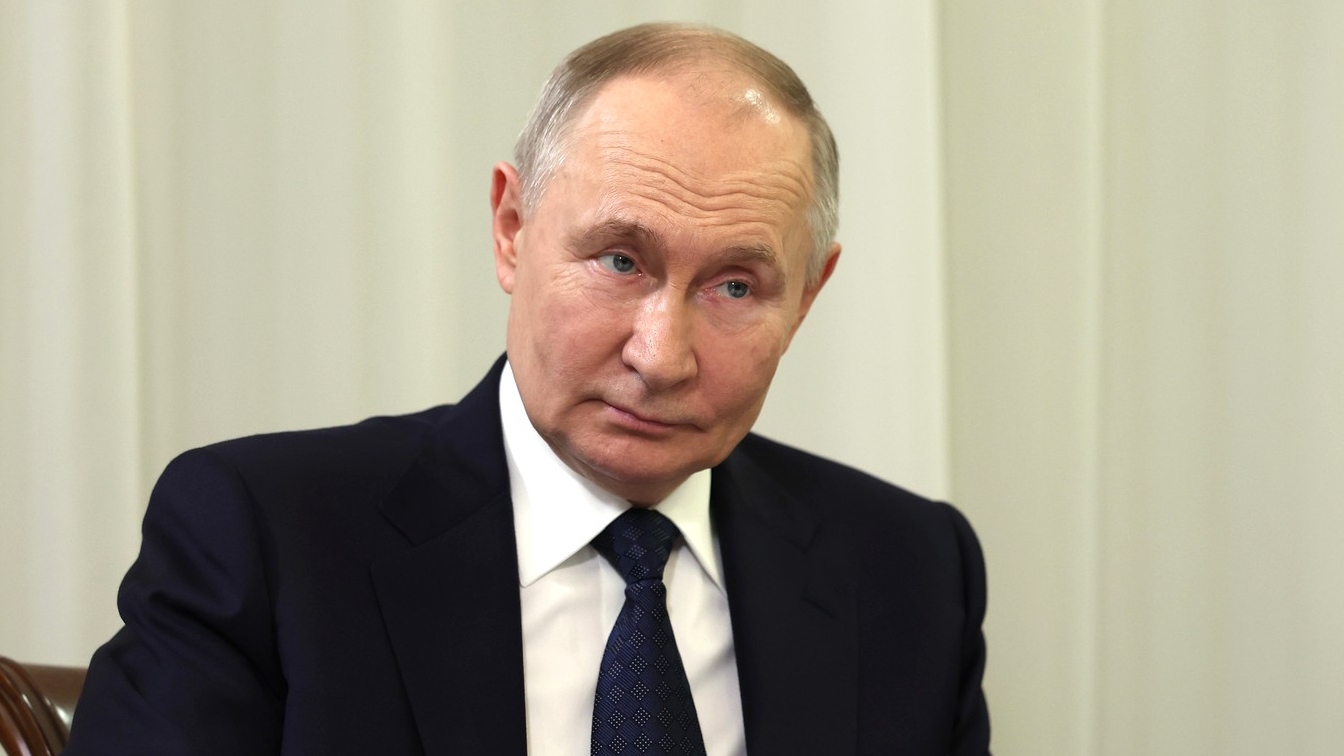
Putin In Meeting Creative Commons Image
The Euro-American plan consists of four “pillars,” writes Ignatius:
“Ukraine’s reconstruction would be the first pillar… Security guarantees would be the second essential component… A third pillar would be economic integration of Russia, Ukraine and Europe… The final piece of the deal would be the most unpalatable. Russia, which began the war hoping to conquer all of Ukraine, would agree to a ceasefire along the existing front line, or ‘line of control,’ as negotiators describe it. For Ukraine, that would mean allowing Russia to control the territory it occupies—including the bitterly contested area known as Donbas.”
Putin has no interest in Ukraine’s reconstruction. He opposes security guarantees. And he would never agree to a ceasefire along the existing front line. For one thing, he formally annexed the four Ukrainian provinces through which the front line passes. For another, agreeing to such a ceasefire would be tantamount to political suicide for Putin. Finally, the four pillars would guarantee Ukraine’s continued existence as a nation and as a state. And that’s unacceptable.
The bottom line is that Putin, the “humanitarian,” as Steve Witkoff calls him, is in no mood for compromise. As Kremlin spokesman Dmitry Peskov just said, Ukraine’s “position is getting worse with every day. If they don’t make the necessary decisions immediately, their position will get even worse with time.”
The necessary decision,e of course, is Ukraine’s capitulation.
Honcharenko adopts a different approach. Rather than solving everything with one fell swoop, he believes Ukraine should start small and, together with outside parties with an interest in some issue, focus on practical areas where agreement with Russia is conceivable:
“Why has nothing worked so far?” he asks. “Because every attempt has sought to secure a grand, ‘lasting’ peace all at once: a single document that would resolve everything: territory, security, sanctions, prisoners and guarantees…. Yet our inability to agree on everything does not mean that we cannot agree on anything. If one comprehensive agreement is impossible, we must conclude a series of smaller ones.”
Here’s an example: “Take infrastructure. An immediate agreement to halt all strikes is unrealistic today. But an agreement to stop attacks on schools is possible. I believe it could even be relatively straightforward. Hospitals would come next. Then bridges. Then railways and residential buildings. Step by step, we would work towards a complete halt to attacks on infrastructure.”
All of this sounds perfectly reasonable. Except for one catch: Putin wants to destroy Ukrainian schools, hospitals, bridges, railways, and residential buildings. And he doesn’t care if his policies result in large numbers of Russian deaths.
Neither approach, whether the Euro-American one or Honcharenko’s, is new. Ukrainian policymakers have been willing to settle for a comprehensive peace with Russia since the Soviet Union collapsed in 1991. They’ve been willing to accept a front-line ceasefire since 2022. And they’ve refrained from bombing Russian civilian targets from day one of the war. In both cases, the obstacle isn’t the approach, but Putin.
There will, alas, be no peace for as long as Putin remains in power or as long as Ukraine and the West do not compel Putin to sue for peace. Putin could end the war tomorrow, if he were willing to let the damned Little Russians survive and drive him to perdition. The West could end the war the day after tomorrow if it were willing to do all it takes to let the Ukrainians survive and drive Putin to perdition.
Meanwhile, unrealistic peace plans should be pursued: after all, miracles do happen.
About the Author: Dr. Alexander Motyl, Rutgers University
Dr. Alexander Motyl is a professor of political science at Rutgers-Newark. A specialist on Ukraine, Russia, and the USSR, and on nationalism, revolutions, empires, and theory, he is the author of 10 books of nonfiction, including Pidsumky imperii (2009); Puti imperii (2004); Imperial Ends: The Decay, Collapse, and Revival of Empires (2001); Revolutions, Nations, Empires: Conceptual Limits and Theoretical Possibilities (1999); Dilemmas of Independence: Ukraine after Totalitarianism (1993); and The Turn to the Right: The Ideological Origins and Development of Ukrainian Nationalism, 1919–1929 (1980); the editor of 15 volumes, including The Encyclopedia of Nationalism (2000) and The Holodomor Reader (2012); and a contributor of dozens of articles to academic and policy journals, newspaper op-ed pages, and magazines. He also has a weekly blog, “Ukraine’s Orange Blues.”


