


Russia launched a large missile and drone attack against the Ukrainian capital city, Kyiv, as well as its suburban environs overnight on Wednesday, managing to land more than a dozen strikes on Ukrainian sites. The hits ignited several blazes throughout the city at a time when Ukraine is facing an acute shortage of missile defense interceptors — a fact that the Kremlin is seemingly keen to leverage.
Ukraine Has a Missile Problem
“Ballistic missile interceptors could have saved the lives of those killed today,” Ukrainian President Volodymyr Zelensky wrote in a post on X. “It is very important that our partners understand that delays in supplying them, or an unwillingness to provide anti-ballistic systems, lead directly to such horrific casualties and destruction,” the president added. “Partners who are not yet ready to play a more active role in supplying interceptors can help by implementing new sanctions.”
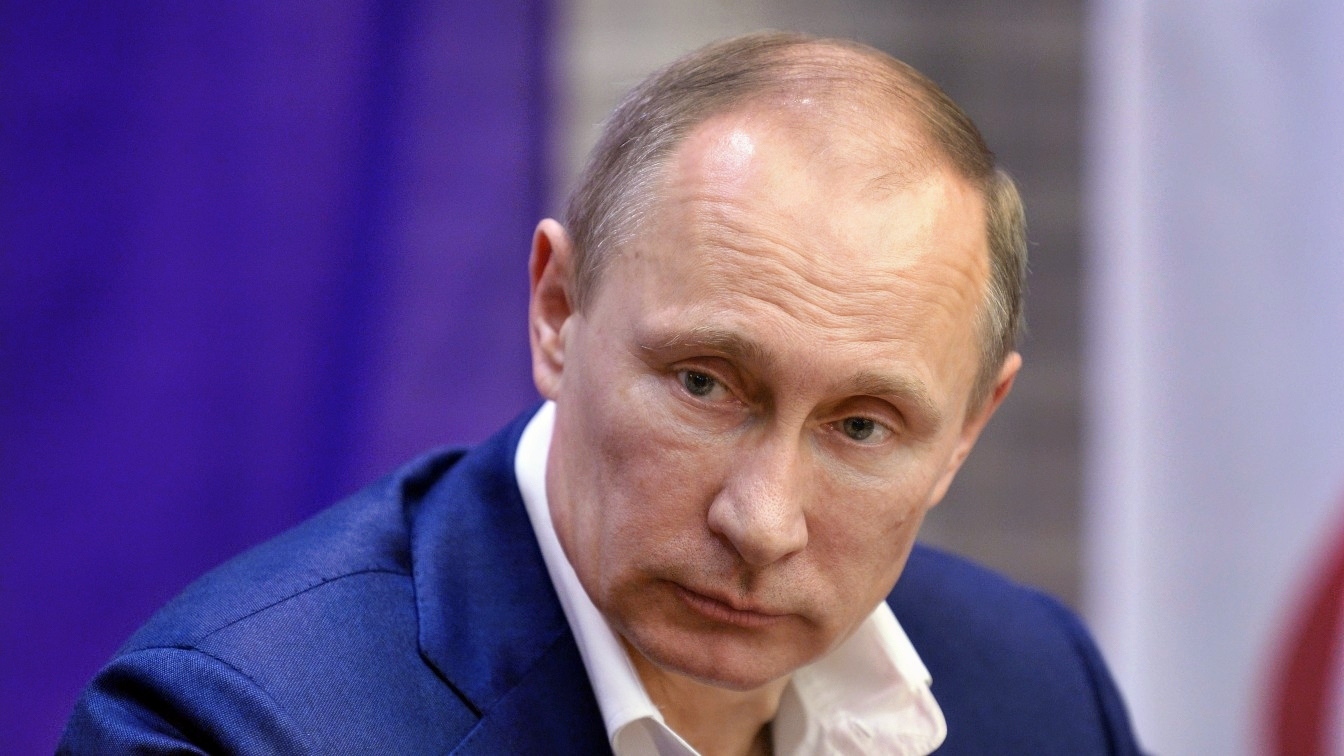
Putin Back in 2014 Image Credit Russian Federation
The Ukrainian Air Force, often tasked with downing incoming Russian drones and missiles, explained that it had not intercepted any of the four hypersonic missiles, nor any of the 24 ballistic missiles that Russia had fired at Ukraine. While Kyiv’s flying branch did note that they had managed to shoot down 98 drones, 17 explosions occurred, munitions that had not been intercepted.
Initial reports on the aftermath of the strikes indicate that at least 17 people were killed in the strikes, with an additional 44 people injured to varying degrees.
In a post on their Telegram channel, Ukrzaliznytsia, the state-run railway operator known in English as Ukrainian Railways, explained that “work and restoration efforts are underway in the Brovary district” and that updates on disrupted train services would be provided at a later time.
According to initial reports, “there are fatalities who were found on the railway platform near the attacked logistics centers,” Ukrzaliznytsia added in its statement.

German soldiers assigned to Surface Air and Missile Defense Wing 1 fire the Patriot weapons system at the NATO Missile Firing Installation (NAMFI) during Artemis Strike Nov. 7 in Chania, Greece. Artemis Strike is a German-led multinational air defense exercise. German soldiers Over 200 U.S. soldiers and approximately 650 German airmen will be participating in the realistic training within a combined construct, exercise the rigors associated with force projection and educate operators on their air missile defense systems. (Photo By Officer Candidate Sebastian Apel, Air Defence Missile Group 24)
Ukrainian Attacks Inside Russia
Ukraine has managed to land strikes on Russia as well. Although Kyiv’s attacks typically target Russian gas and oil infrastructure — a campaign that President Zelensky has previously dubbed his country’s “long-range sanctions” regime, that ongoing effort to drain the Kremlin’s main source of revenue — the sale of energy abroad — has in recent days expanded to include warehouses and logistics facilities associated with Wildberries, the Russian online retailer.
In the last three weeks, an estimated 14 Wildberries facilities are believed to have erupted into smoke and flames as a consequence of the Ukrainian strikes.
Although Wildberries’ annual turnover is vastly smaller than that of its American counterpart, Amazon, the retailer is Russia’s largest and one of the top taxpayers by a single entity. Its contributions to the Russian state budget alone have certainly made it an attractive target for Kyiv’s increasingly long-range strikes against Russia, but the retailer also works directly with the military.
A Civilian-Military Partnership in Kyiv’s Crosshairs
A recent investigation of Wildberries by Meduza, a Russian opposition media outlet, revealed that the retailer sells a number of items and components that are either explicitly military in nature or could be considered dual-use goods with both civilian and military applications. While Wildberries explicitly bans the sale of explosives, ammunition, firearms, and other dangerous goods, they do sell other items, including radios, drones, and drone components.
Some of the items sold on the Wildberries platform tout their proximity to the Russian military, explaining that they are “tested in the SVO” or “chosen by SVO fighters.” In Russia, SVO is the abbreviation typically used to refer to Russia’s ongoing war in Ukraine, and one section of the website is titled “Everything for the SVO.”
Interestingly, the Meduza investigation also found that another online retailer and Wildberries competitor, Ozon, may be more reliable for purchasing certain components, including drone parts, than Wildberries. Ozon facilities have thus far escaped targeting by Ukrainian drones or missiles.
Defenses Strained by Two Simultaneous Wars
Strained by wars in the Middle East and Europe, the global stockpile of missile interceptors is believed to be dangerously low. One survey by the Center for International and Strategic Studies, a think tank, collated Patriot and THAAD interceptors and concluded that stockpiles are “diminished” to a dangerous degree.
The exact number of interceptor missiles that remain is concerning, and the United States Department of Defense is scrambling to ramp up production of the valuable missiles. On Tuesday, the department signed a framework agreement with Northrop Grumman and Lockheed Martin to expand both defense primes’ capacity to build missile components.
“These historic agreements are critical to ensuring long-term demand signals flow to key suppliers, allowing Patriot Advanced Capability-3 (PAC-3) and Terminal High Altitude Area Defense (THAAD) production to triple and quadruple, respectively,” the Department of Defense explained.
MORE – China Fears Ukraine’s Drone Playbook for Good Reason
About the Author: Caleb Larson
Caleb Larson is an American multiformat journalist based in Berlin, Germany. His work covers the intersection of conflict and society, focusing on American foreign policy and European security. He has reported from Germany, Russia, and the United States. Most recently, he covered the war in Ukraine, reporting extensively on the war’s shifting battle lines from Donbas and writing on the war’s civilian and humanitarian toll. Previously, he worked as a Defense Reporter for POLITICO Europe. You can follow his latest work on X.


