


Russia’s state-run United Aircraft Corporation announced that construction of the first physical Su-75 Checkmate fifth-generation flight prototype is actively underway at the Komsomolsk-on-Amur Aviation Plant (KnAAZ), according to the corporation’s CEO Vadim Badekha.
Badekha confirmed the ongoing assembly, with industry estimates targeting the Checkmate Maiden Flight for 2027, several years behind schedule.

Su-75 Checkmate Stealth Fighter Russia. Image Credit: Creative Commons.
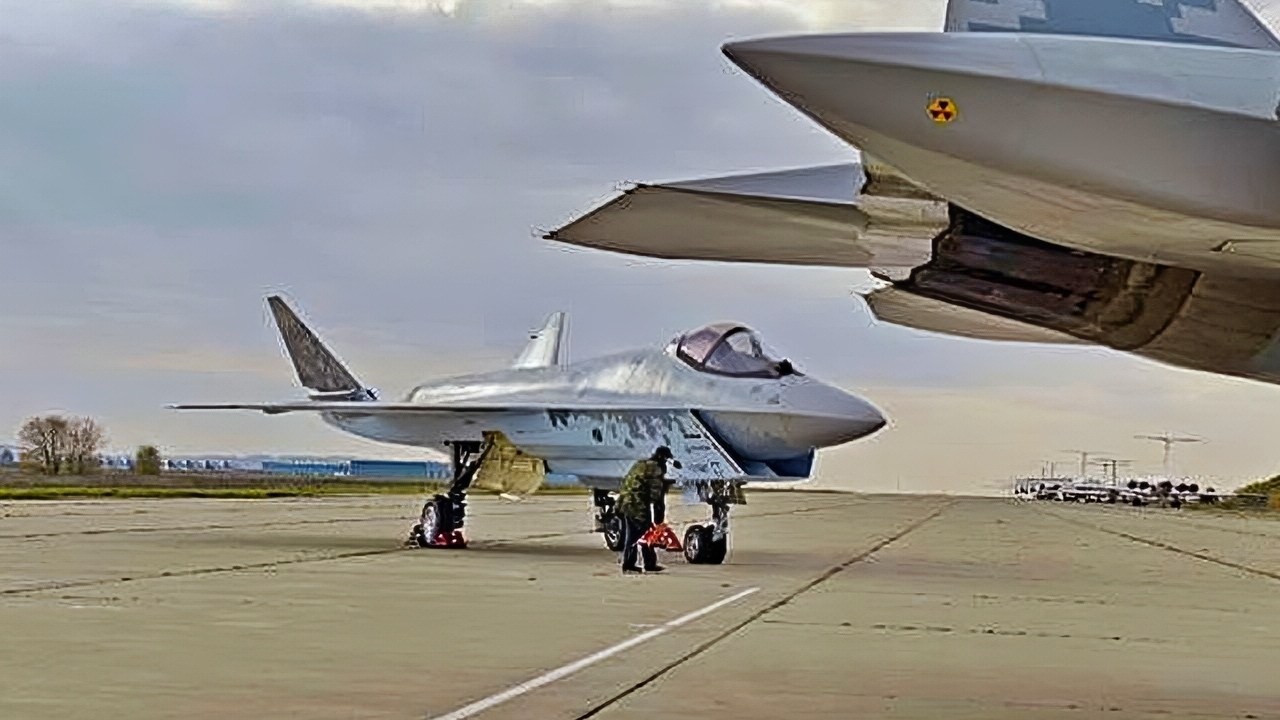
Su-75 Checkmate Fighter X Screenshot. Image Credit: X.
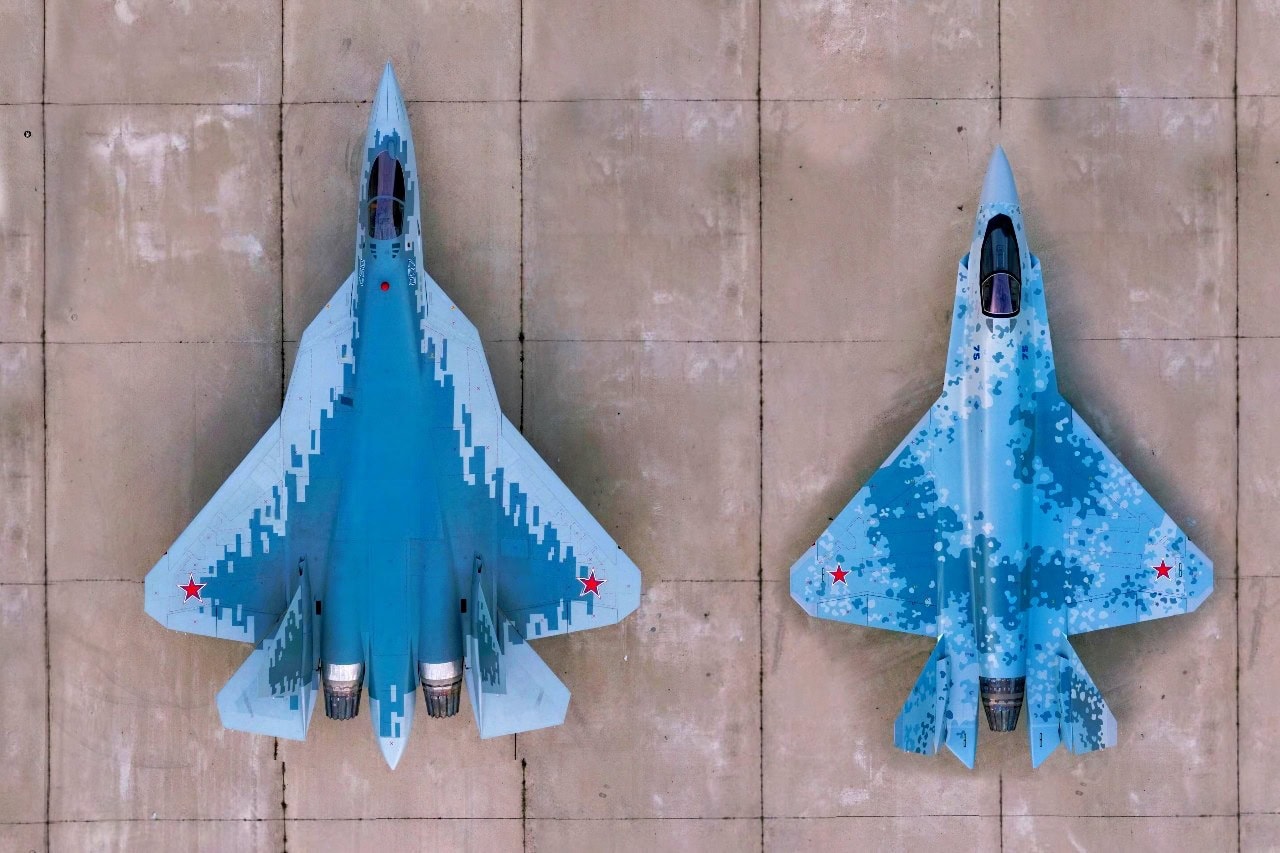
Su-57 and Su-75. Image Credit: Artist Rendering/Creative Commons.
Russia unveiled the Su-75 “Checkmate” aircraft in 2021 at the Dubai Air Show. Billed as a $30 million, cheaper alternative to the U.S.-made F-35 stealth aircraft, another mockup of the Su-75 appeared at the Moscow Air Show soon after.
Russia unveiled the company-funded, low-observable (LO), supermaneuverable, optionally manned, single-engine, lightweight (18-ton), Mach 2 fighter at MAKS 2021 at the Gromov Flight Research Institute airfield in Zhukovsky, outside Moscow.
Timelines for the Su-75 Checkmate
However, at the Dubai Air Show in 2023, the company announced it had completed the redesign and wouldn’t be making its first flight that year as planned.
The redesign, Rostec said, “has significantly increased the competitiveness and commercial attractiveness of the domestic single-engine aircraft and reduced the technical risks of its development.”
Russia’s defense industry is well-known for overpromising and underdelivering, despite President Putin’s usual bombast about new defense weaponry coming to the fore.
In 2024, Rostec said it was collecting feedback from potential buyers and was working on “technical solutions.”In 2025, the company said it was building two prototypes, one for static testing and one for flight testing.
At the Dubai Airshow 2025, Sukhoi unveiled models of an unmanned fighter variant and a manned variant. The unmanned variant featured a reworked wing and a revised rear fuselage.

Su-75 Checkmate. Image Credit: Creative Commons.

Su-75 Checkmate and Su-57. Image Credit: Creative Commons.
Russia’s Penchant For Exaggeration
Alex Hollings from Sandboxx and Air Power wrote, “Russia has a long and illustrious history of exaggeration when it comes to unveiling new defense technologies, from the Uran-9 infantry robot that garnered global headlines despite secretly not working at all, to the Checkmate’s older sibling, the Su-57, which is considered the least stealth of its fighter generation and currently exists only in token numbers.”
It gets even worse, Hollings writes, because “Even successful designs like the T-14 Armata main battle tank are smothered under a lack of funding, with Russia unable to produce or field them in any reasonable numbers.”
What Is Envisioned For the Su-75?
Built by Russia’s Sukhoi, the Su-75 is intended to support the Russian Air Force and serve as a lower-cost stealth fighter. Russia plans to offer the fighter to the international market. It is a single-engine, multi-role fighter designed for single-, two-, or unmanned-crew configurations.
Sukhoi stated that the intention is to build a 5th-generation stealth aircraft at a significantly lower cost of $30 million than most fighters in its class, achieved in part by using parts and technologies from the Su-57.
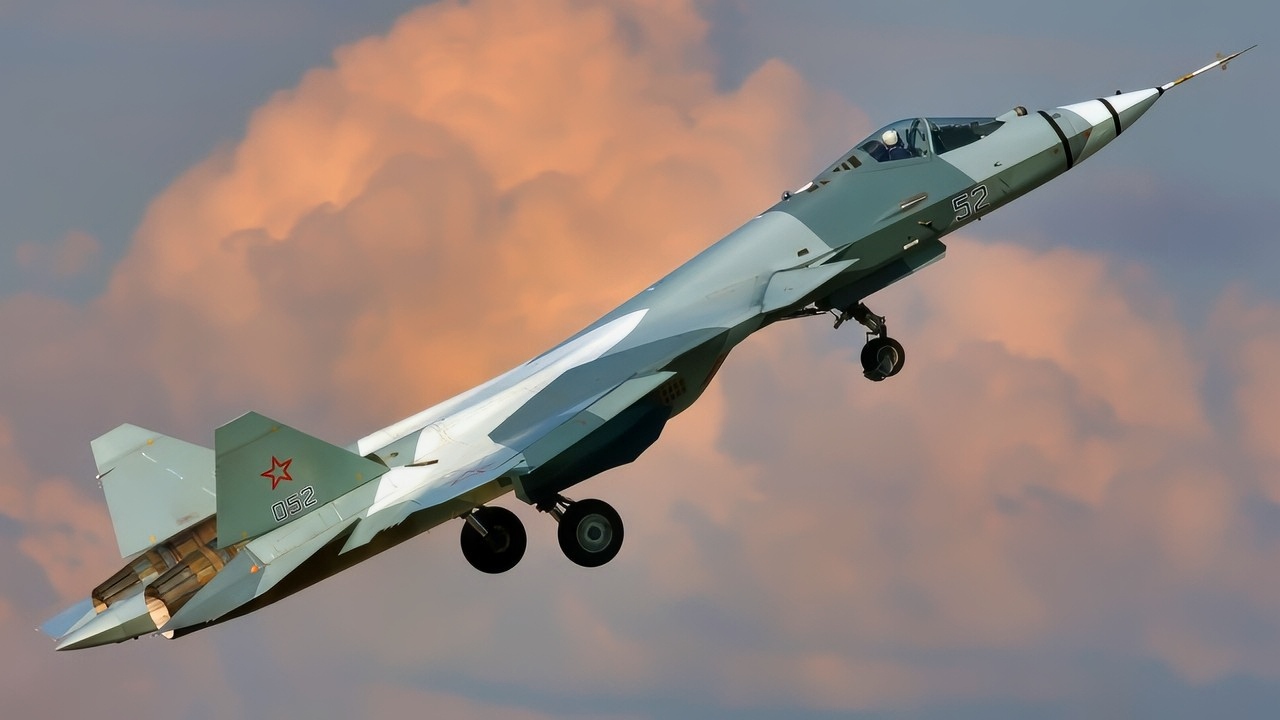
Su-57 Felon Stealth Fighter in the Sky. Image Credit: Creative Commons.
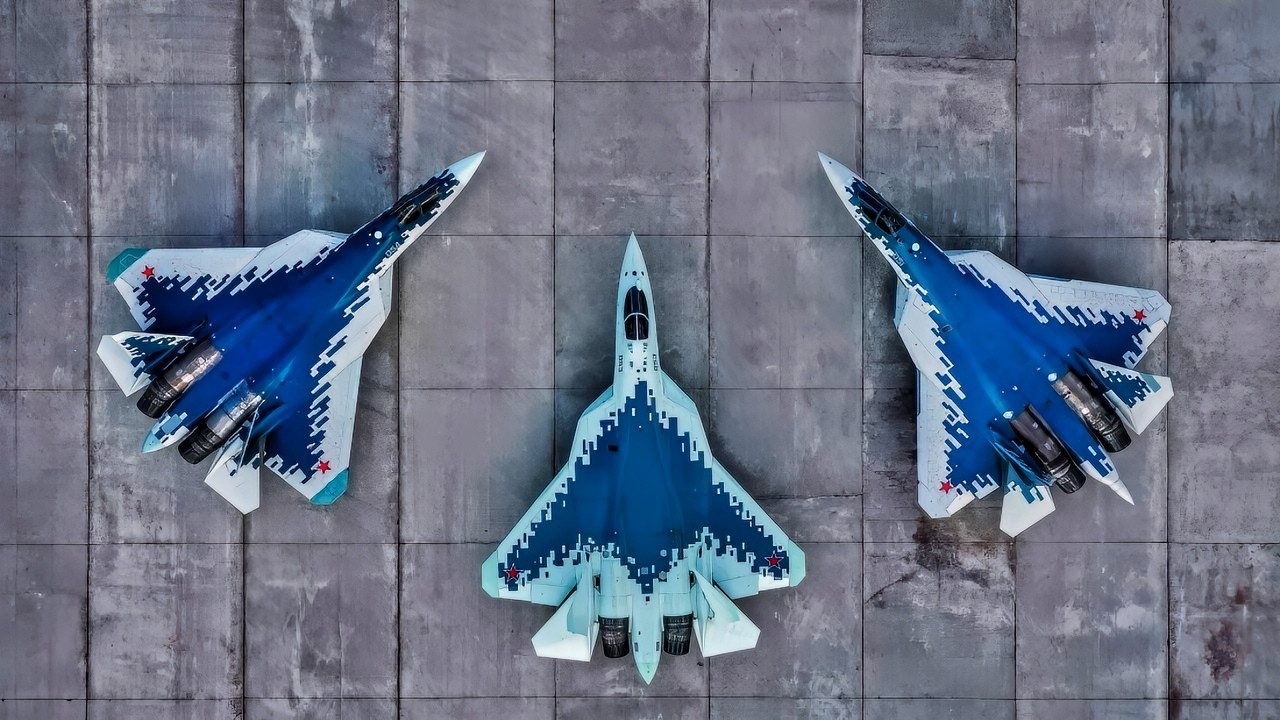
Su-57 Felon Screengrab from Russia. Image Credit: X Screengrab.

Su-57 Felon Stealth Fighter Taking Off. Image Credit: Creative Commons.
The idea is to develop and sell a lower-cost 5th-generation aircraft to countries that are less able to afford more expensive 5th-generation aircraft, such as the F-35, which sells for more than $80 million.
Ambitious and super-weapon pronouncements aside, Russia will never be able to produce an “F-35 equivalent” for $30 million. Their economy is in shambles, and they lack the dedicated engineers to design, develop, or produce the materials needed to build such an aircraft.
The UAE was reportedly interested in co-producing the Su-75 with Rostec, thus ending the Emirati attempt to get the F-35 from the United States. Moscow and the UAE were working toward co-producing a new fifth-generation fighter based on the MiG-29 back in 2017, but that project never got off the ground.
However, Moscow is reportedly set to begin talks on the possible co-production of the Su-75 with Belarusian manufacturers, as the former Soviet satellite state has long been considered a leading potential client for the aircraft.
Lots Of Promises, But Unrealistic
According to Sergey Chemezov, the head of Rostec, the Su-75 will have a range of roughly 1,800 miles without external fuel tanks, and a maximum combat load of more than 16,500 pounds.
Chemezov has also claimed that the aircraft will carry a group of drones on board and engage up to six targets simultaneously. But the main selling point in Dubai is that the per-hour cost of flying the Su-75 is claimed to be 7 times lower than that of the U.S. F-35 Lightning II.
But before countries in Africa, Latin America, and the Middle East open their checkbooks to order the new and cheaper prototype, history would like a word of counsel.
It Wasn’t Just the Perfume That Smelled In Dubai
Rostec even rolled out a limited-edition perfume at the Dubai Air Show to hype the Su-75. It will have to do more than that to convince countries to invest in this aircraft. Fifth-generation? Not so much.
The Su-75 may not be a stealth aircraft at all. A carefully worded statement by Rostec in November said, “Importantly, the aircraft is capable of accomplishing any tasks outside the area of the operation of air defense weapons, thus saving the pilot’s life.”
Nothing about that sounds like a confident description of a stealthy, fifth-generation aircraft. The post on IndiaMasterminds wrote that the aircraft will have “stealth characteristics.”
The 2027 Timeframe Will Bear Watching
Initial reports said the aircraft was slated for flight in 2025, but after meeting with Russian President Vladimir Putin on May 18, Rostec announced that production wouldn’t begin until 2027.
“Work is in progress on the design documentation for the light fighter,” Rostec said. “We borrowed the onboard equipment and engine from the fifth-generation Su-57, but reconfigured them,” Chemezov added.
Outwardly, the mockup the Russians unveiled at the Dubai Air Show resembled an F-35. However, as we’ve seen with the Su-57, which still numbers only in the dozens, manufacturing a stealth aircraft requires much more than just a rounded design.
Developing 5th-Generation Aircraft Is Not Easy
The Russians have yet to prove that they’ve mastered the art of developing radar-absorbent materials and thermal management, or heat-signature reduction, which also determines stealth.
The Su-57 “Felon” faced significant mockery by Chinese media and aviation analysts at the Zhuhai Airshow in China. While its aerial maneuvers wowed crowds, close-up inspections by attendees exposed crude manufacturing, notably poorly aligned panel joints and exposed, mismatched fasteners that contradict modern stealth standards.
What determines air superiority in a stealth fighter jet is likely less visible characteristics such as computing, sensing, fire control synergy, avionics, and weapons applications. And those aren’t cheap.
On its maiden flight, the Su-57 crashed soon after takeoff. When it finally becomes operational, the Su-57 will be powered by the Saturn AL-41F1 low-bypass turbofan combat engine. It is designed to reach Mach 1.8-2.0 with afterburners and is capable of supersonic cruising without them.
This engine is from the 1980s. Due to economic sanctions, the Su-57 isn’t expected to get a new engine until late this decade. There can be little doubt that the much-hyped Su-75 will face challenges of its own. Of course, Russia is claiming the AL-41F1 has now been vastly improved.
Will Russia Sell The Su-75 To Build An Export Market?
It is doubtful that the Russians will produce the Checkmate in sufficient numbers to export it. The poor state of the economy won’t allow the company to mass-produce aircraft for its own air force, let alone a foreign customer looking to buy a fleet of “fifth-generation stealth aircraft.”
The Russians are, right now, trying to build as many drones and missiles as possible as they launch hundreds, if not thousands, each night at Ukraine. Fighter aircraft for export are a far distant second.
About the Author: Steve Balestrieri
Steve Balestrieri is a National Security Columnist. He served as a US Army Special Forces NCO and Warrant Officer. In addition to writing on defense, he covers the NFL for PatsFans.com and is a member of the Pro Football Writers of America (PFWA). His work was regularly featured in many military publications.


D3F1ANT
June 6, 2026 at 9:40 am
Russian planes are cheaper because they are of inferior quality.