

Russia’s most advanced combat aircraft, the Su-57, appears to be back in action in Ukraine after a period of prolonged reduced activity earlier in the year. In recent weeks, Ukrainian air raid monitoring channels have recorded more than ten separate Su-57 cruise missile launch incidents across multiple parts of the front, with the aircraft reportedly detected over the Kursk border region and over the Azov Sea. The aircraft has also been spotted over occupied Crimea, launching Kh-59 and Kh-69 missiles from positions well inside Russian-controlled airspace.
The reported increase in activity, as outlined by eRadar and Monitor intelligence groups, comes weeks after a Ukrainian drone strike targeted Shagol Air Base deep inside Russia – an attack that seemed to precede a temporary reduction in Su-57 activity. Now, though, the aircraft appears to have returned to the skies.

Su-57 Felon. Image Credit: Creative Commons.

Su-57. Image Credit: Creative Commons.

Su-75 Checkmate and Su-57. Image Credit: Creative Commons.
Ukrainian Monitors Report Frequent Su-57 Activity
According to eRadar and Monitor, Su-57 aircraft have been detected conducting missile launches throughout May across the Kursk-Sumy border region, over the Azov Sea near Mariupol, and across Crimea. Reports suggested that the missile launches were directed toward targets in the Dnipro region of Ukraine, and elsewhere.
Importantly, the new intelligence suggests that the aircraft are being deliberately protected against Ukrainian defenses, operating primarily inside Russian or Russian-occupied airspace. Unlike other Russian strike aircraft, which are typically seen closer to the front lines, the highly valuable Su-57 is conducting attacks from farther away, sometimes hundreds of kilometers from the battlefield. The logic there is obvious: the Su-57 is a more valuable aircraft, and losing one would be more damaging to Russia than losing an older aircraft operating on the front lines.
Of course, individual reports from monitoring groups like these cannot always be verified independently and in real time – but the volume and consistency of the alerts suggest that there has been a notable increase in Su-57 activity compared to the weeks following Ukraine’s April drone strike campaign.
The Su-57 As A Missile Carrier
The recent operations also seem to reinforce analysts’ suggestions that the Su-57 is primarily being used as a missile carrier.
Rather than penetrating Ukrainian airspace, it is being used as a standoff strike platform that launches long-range precision weapons from largely safe positions. The Su-57’s weapons are impressive, too.
The Kh-69, for example, is believed to have a range of roughly 400 kilometers and was designed to have a reduced radar signature compared with earlier Russian cruise missiles. It can also fly at a very low altitude, making it difficult to detect and intercept.
It means Russia can use its most advanced aircraft (and one of its highest-value targets) while minimizing its exposure to Ukrainian Patriot and NASAMS systems. It also reduces the risk posed by Ukraine’s own fighter aircraft, which would have to operate deep inside Russian-controlled airspace if they were to even attempt to intercept an Su-57.
Supporting Export Ambitions
Whether or not the Su-57 is being used for this purpose, the news is good for Russia as it attempts to market the aircraft internationally, particularly to India. The Su-57 is often praised by Russian officials and industry figures, citing its combat experience. If the Su-57 stays out of the fight for too long, selling it to potential customers becomes more difficult.
In December 2025, Rostec CEO Sergey Chemezov publicly praised the aircraft’s performance in Ukraine, claiming that it was successfully operating against enemy electronic warfare systems and radar.
“At least our military is satisfied. The aircraft evades all kinds of obstacles very well, I mean radars and electronic warfare systems,” Chemezov said at the time.
Combat records play a major role in fighter aircraft sales, and should the Su-57 secure international buyers, it will be cheaper for Russia to manufacture in meaningful numbers. That’s why the news is important – though it’s not the full story. The F-16, Rafale, and F-35 have all benefitted from years of operational experience and have demonstrated their capabilities to potential customers – and as a result, manufacturers have been able to produce them in large numbers thanks to the economies of scale that come with increased orders.
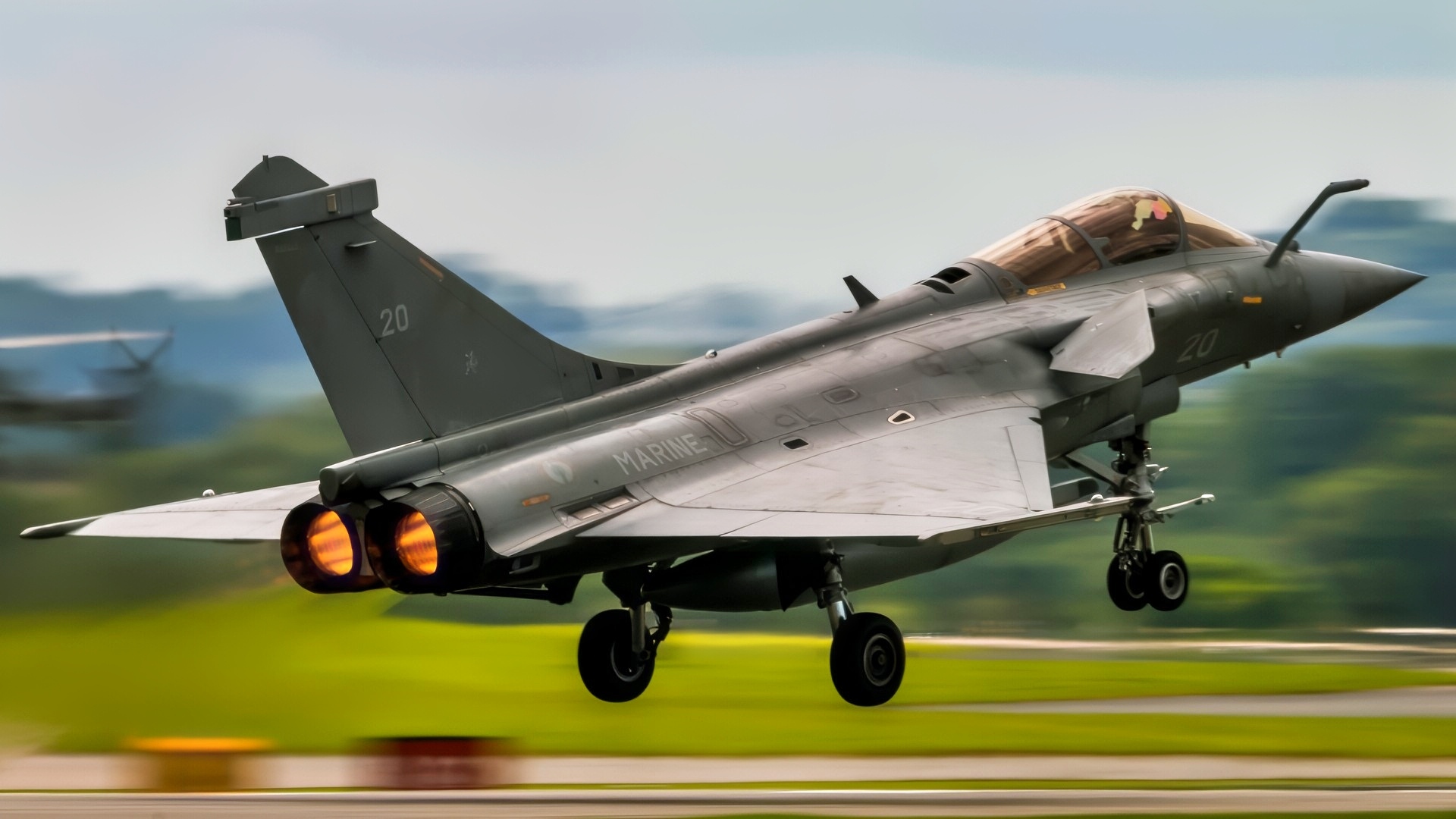
Dassault Rafale. Image Credit: Creative Commons.
The Su-57 Really Matters
The Su-57 is a unique aircraft in Russia’s fleet. Known to NATO as the Felon, it was developed as Russia’s answer to Western fifth-generation fighters such as the F-22 and F-35. It combines stealth features and advanced electronic warfare capabilities and is suited to both air-to-air and air-to-ground combat roles.
However, production of the aircraft has progressed very slowly, largely due to international sanctions.
While precise numbers made so far are unclear, most estimates suggest Russia has only a few dozen operational Su-57s. That is a tiny fleet compared with the hundreds of Chinese J-20 fighters and the more than 1,100 F-35s produced by the United States for its own air force and its allies.
And, because of those limited numbers, every reported deployment attracts attention. The latest reports may not be fully confirmed, but they certainly seem to suggest that Russia is increasingly returning the Su-57 to regular use, either out of operational necessity or as a show of strength.
About the Author: Jack Buckby
Jack Buckby is a British researcher and analyst specializing in defense and national security, based in New York. His work focuses on military capability, procurement, and strategic competition, producing and editing analysis for policy and defense audiences. He brings extensive editorial experience, with a career output spanning over 1,000 articles at 19FortyFive and National Security Journal, and has previously authored books and papers on extremism and deradicalization.


rosy dawn
June 1, 2026 at 9:08 pm
Russia’s dumb leader is using the su-57 to little avail and wasting its usability.
What the dumb leader must do is to use the s-70 okhotnik UAV to launch burevestik missiles at western Ukraine and central Ukraine.
Not the su-57. Which is pointless.
Hurling air-launched burevestnik missiles against the Nazis will bring an immediate stop to the bloody Ukraine conflict.
And send shivers of great horrible horrible fear down the backs of the stubborn eurofascists in London, Paris, Berlin and rome.