

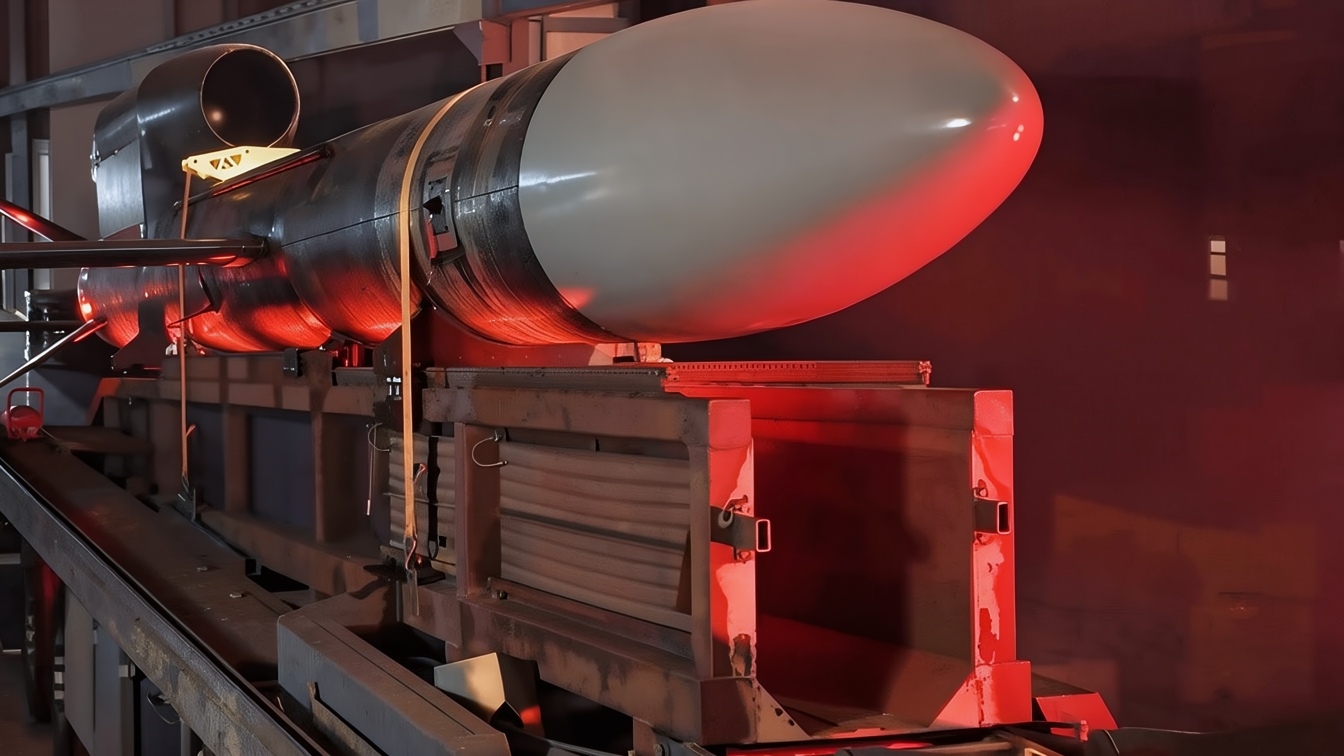
Ukraine Vows to Fight On As Russia Scales Up Electronic Warfare: A NATO fighter jet shot down a drone over eastern Latvia last week.
The incident comes amid the news that Ukraine has stepped up long-range attacks on Russian refineries and logistics infrastructure in an effort to undermine Moscow’s war effort.

Putin New Year’s Message. Image Credit: Russian Government.
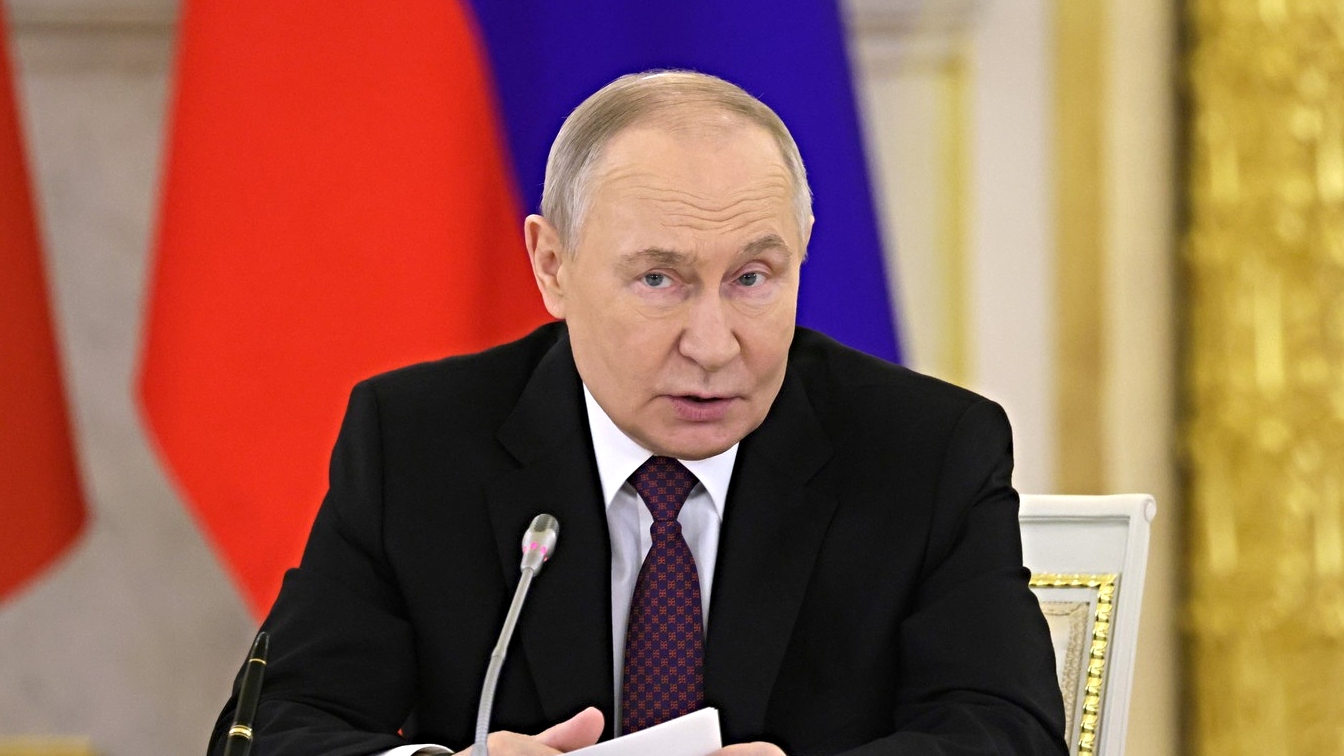
Putin Back on 2_2026 State Media Photo
Speaking on Ukrainian Independence Day on Monday, Ukrainian President Volodymyr Zelenskyy said in a clip posted to social media: “Ukraine absolutely wants peace, but it is not ready to simply surrender.”
Indeed, Ukraine is hardly scaling down its self-defense. On Monday, four logistics hubs belonging to Russian online retailer Ozon were hit by Ukrainian drones.
Russia’s Electronic Warfare
Russia knows Kyiv is not about to surrender, and it is therefore more than willing to scale up its skulduggery. Last week, the Latvian armed forces said the unmanned aircraft shot down by an Italian Eurofighter close to Rugaji, some 20 miles from its border with Russia, had been launched from Ukraine. However, the drone had entered Latvian airspace via Belarus, and Latvian officials now believe the drone could have been redirected by Russian electronic warfare.
At least a dozen Ukrainian strike drones have entered the airspace of Latvia, Lithuania, Estonia, and Finland since March as Kyiv has increased long-range attacks on Russian targets around St. Petersburg and the Baltic Sea, The Times reported Sunday.
Russia Could Be Falsifying Signals
Back in May, Lithuania’s communications regulator said that Russian equipment in its Kaliningrad exclave on the Baltic Sea coast was now advanced enough to falsify GPS signals up to 280 miles from the city.
Officials also claimed Moscow had significantly expanded the strength of its antenna systems there.
Jamming signals are dangerous, but spoofing is much more so. This tactic can feed false locations to GPS systems, and could well be behind some Ukrainian weaponry winding up in the wrong place.
As it stands, neither Latvia nor its neighbors have proven that every single recent incursion was a deliberate ploy by Moscow.
Back in May, a pair of stray Ukrainian drones exploded at an oil storage facility in Latvia.
Anti-drone Plans Afoot
An inexpensive drone moving within NATO borders can cause member states to scramble fighter jets, ground civilian flights, and prompt armed forces to search far and wide for dangerous wreckage. In May, Lithuania temporarily halted flights and train traffic around its capital city Vilnius, while politicians and schoolchildren were forced to take shelter.
Anti-drone teams, including interceptors, have been set up across Latvia’s 250-mile frontier with Russia and Belarus. Still, Latvian officers have admitted that sharing radar information quickly enough to identify and destroy small targets remains difficult.
Eva Sula, an expert on Estonian defense policy, told The Times that no single technological ‘wall’ could safeguard NATO’s eastern frontier.
Politico reported back in June that the Baltic states, Poland, Romania, and Finland were the most eager to bring the program forward, as they thought they were most at risk from Russian drones.
The European Parliament has said that Estonia, Latvia, and Lithuania are jointly developing the “Baltic Defense Line,” a fortified line along their borders with Russia and Belarus to delay and disrupt incursions while enabling NATO reinforcements to deploy. Poland is also building an East Shield, which it aims to coordinate with the Baltic initiative.
Critical infrastructure is now receiving a more deliberate layer of protection in Poland and across the Baltic states.
Earlier in August, Reuters reported that these governments were ramping up security around dams, power plants, gas facilities, and other key sites. It came after intelligence found that Russia might well stage a false-flag attack using captured or reconstructed Ukrainian drones. Naturally, Moscow rejects such claims.
On August 12, NATO announced that the latest spate of airspace violations revealed Russia’s “increasing tolerance for risk” and showed how integrated air and missile defenses needed to be scaled up all the way from the Baltic to the Black Sea.
Romania Already Under Fire
Russian drones have violated Romanian airspace at least 23 times so far in 2026, according to Romanian Defense Ministry data reported by ABC News. Just 18 incursions were reported between Russia’s February 2022 invasion of Ukraine and the end of 2025.
Izmail, one of Ukraine’s key Danube River ports, sits directly across the river from Romania, with parts of the waterway forming the international border.
Earlier this month, a civilian Togo-flagged vessel sustained damage near the port, and four people were injured in the attack.
About the Georgia Gilholy
Georgia Gilholy is a journalist based in the United Kingdom who has been published in Newsweek, The Times of Israel, and the Spectator. Gilholy writes about international politics, culture, and education.


