

Ukraine Hits More Than 100 Ships in Eight Days: On 13 July, Ukraine’s drone forces announced that overnight they had struck 15 additional Russian vessels in the Sea of Azov. These successful attacks are part of an ongoing campaign that is targeting Moscow’s maritime logistics. The goal is to close off the Sea of Azov to any Russian shipping that can support either the war effort or the Moscow-installed administration in the occupied zones of Ukraine.
These attacks now bring the total number of vessels in the sea hit over the past eight days to 105. This is according to Robert Brovdi, Commander of the Ukrainian Unmanned Systems Forces, known by the callsign “Madyar.”
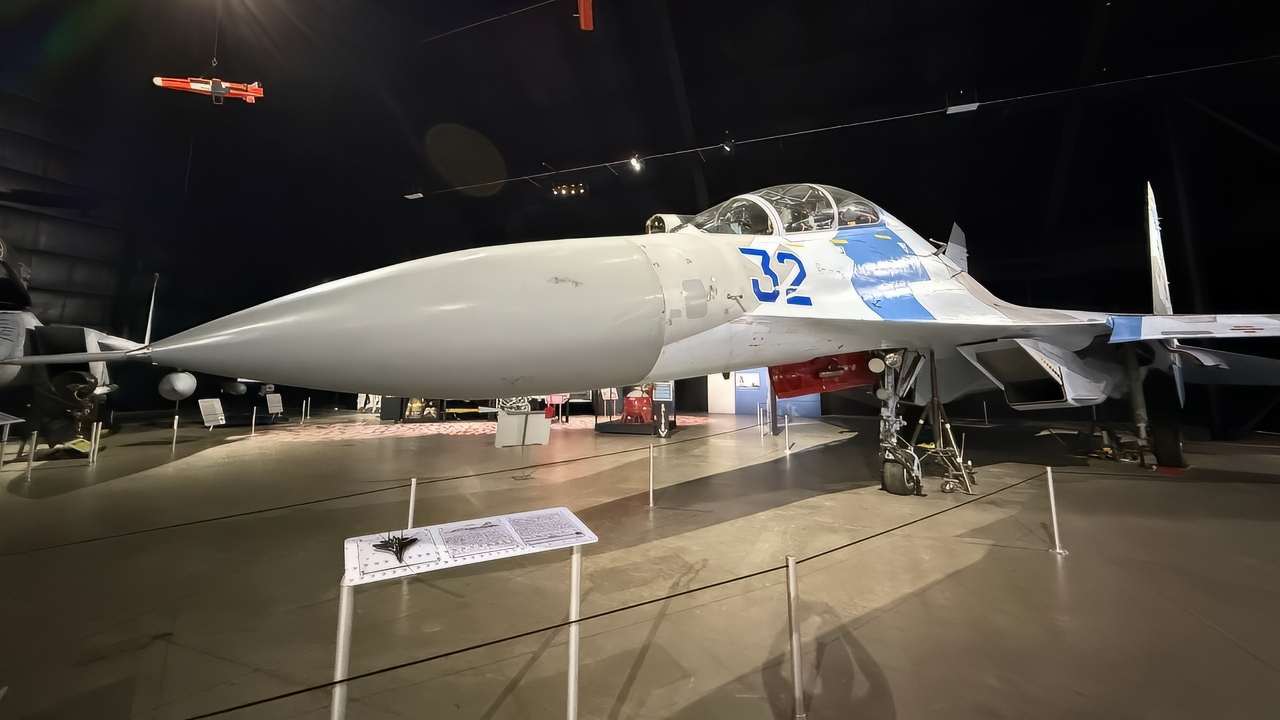
Su-27 Flanker Up Close. Image Credit: National Security Journal Taken on July 19, 2025.
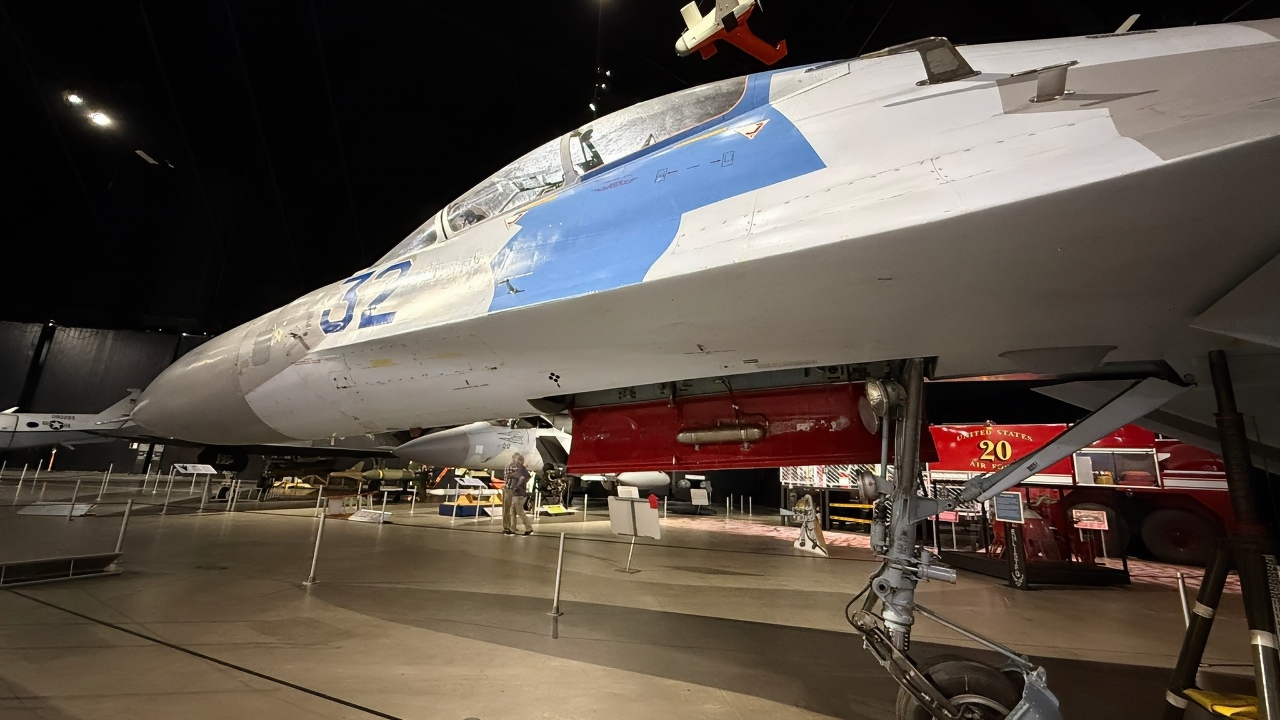
Russian Su-27 Flanker from USAF Museum. Image Credit: National Security Journal.
Over the weekend, the Drone Forces commander sat for an interview with the Irish-born journalist and documentary filmmaker, Caolan Robertson, who has been filing regular video reports from Ukraine since last year. In the interview, Brovdi discusses the success of his strike campaign to date not only in the Sea of Azov but also in Crimea.
Using some particularly coarse Ukrainian, which is translated in subtitles, Brovdi describes how his battle plan will eventually lead to all the Russians in the occupied Crimean region being forced to quit the peninsula.
According to the Ukrainian commander, the drone strikes overnight on Sunday had targeted seven tankers, five cargo ships, one ferry, and two tugboats. These latest attacks, he stated, now bring the total number of Russian vessels successfully hit between 6 and 13 July to 105.
Local Ukrainian media could not immediately confirm the numbers claimed by Brovdi and others, but sources within Ukraine’s defense industry say they appear to fall within the range of attacks seen thus far, given advances in drone design and the precision of targeting.
The War at Sea in the Ukraine War
Ukraine has decided to hit the Sea of Azov, as it is a strategically important center for maritime commerce and logistics. The sea is fed by the Don River, which itself is vital to the functioning of a large swath of Russian territory.
The Don is one of Russia’s most vital waterways, stretching 1,162 miles from the sea into the Central Russian Uplands. It connects the Caspian, Black, and Azov Seas via the 101-kilometer-long Volga–Don Canal. This makes it a critical corridor for cargo transport, geopolitical power, and inland navigation for river-sea vessels, as well as a key corridor for military logistics and exports of oil, grain, steel, and other goods to international markets.
These attacks are now forcing Russia to suspend all shipping operations in the Sea of Azov and have reduced the traffic to Crimea through the Kerch Straits to a trickle. Thus, the cumulative effects of the Ukraine attacks are well on their way to making Crimea untenable for both the Russian military and the Moscow-installed occupation administration.
“The peninsula’s transshipment infrastructure is being stung every night, traffic through the strait has stopped, and cargo unloading has been reduced to a minimum,” Brovdi wrote on his Telegram page, referring to the Kerch Strait and logistics infrastructure that supports the occupied peninsula.
Still Targeting Energy in Russia
In a set of separate attacks, Brovdi said that on 12-13 July, Ukrainian forces hit 11 energy infrastructure facilities across occupied Crimea and other Russian-occupied territories. According to the Drone Forces chief, these targets included nine electrical substations, the Kuban-Crimea electricity bridge transfer point that connects occupied Crimea with Russia’s power grid, and a gas pumping station.
Brovdi also claimed that Ukrainian forces destroyed five Russian air defense assets. These included an S-400 Triumf launcher, a Tor-M2 air defense system, a Pantsir-S1 air defense system, and two Nebo-U radar systems.
These latest announcements are now a regular series of daily reports by Brovdi, that concentrate on the details of strikes on Russian shipping. But these attacks are doing more than just degrading the Russian military’s capacity to remain in Crimea, and the impact is not isolated to this one region. The Russian nation as a whole is now feeling the pain.
After years of an artificially created economic boom fueled by wartime spending, the Russian economy is now in recession. Even with higher oil prices caused by the war in Iran and the easing of US sanctions on Russian oil exports, and despite having been a “gas station masquerading as a country”, Russia has become a net importer of refined petroleum products.
Using attacks on energy and logistics is proving to be a masterstroke by Ukraine, and Moscow seems to have no way of stopping them.
About the Author: Russia Expert
Reuben F. Johnson has thirty-six years of experience analyzing and reporting on foreign weapons systems, defense technologies, and international arms export policy. Johnson is the Director of Research at the Casimir Pulaski Foundation. He is also a survivor of the Russian invasion of Ukraine in February 2022. He worked for years in the American defense industry as a foreign technology analyst and later as a consultant for the U.S. Department of Defense, the Departments of the Navy and Air Force, and the governments of the United Kingdom and Australia. In 2022-2023, he won two awards in a row for his defense reporting. He holds a bachelor’s degree from DePauw University and a master’s degree from Miami University in Ohio, specializing in Soviet and Russian studies. He lives in Warsaw.


