

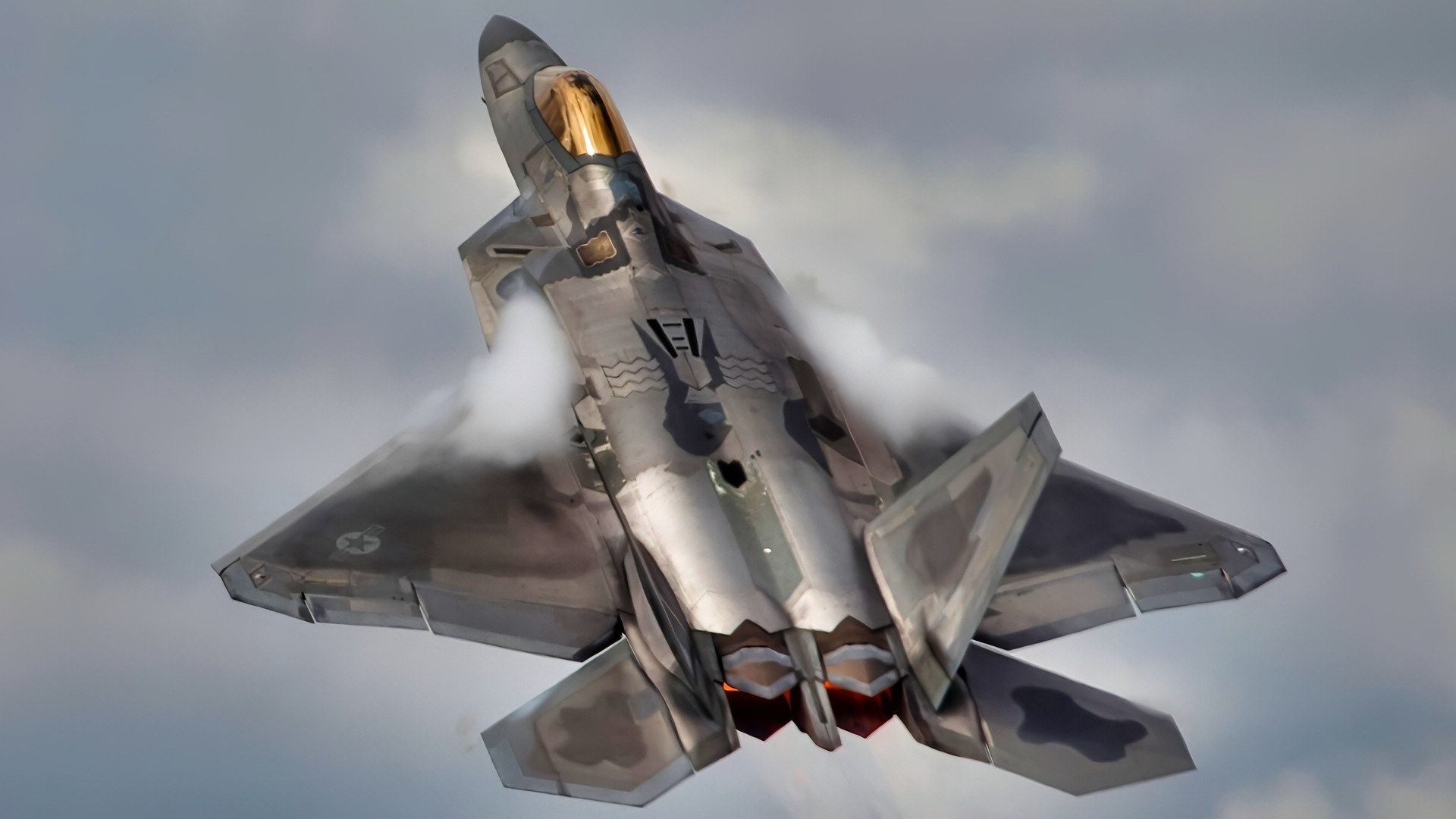
Key Points and Summary – The MiG 1.44 was the Soviet Union’s ambitious answer to the American F-22, a prototype 5th-generation fighter designed for supermaneuverability and stealth.
-However, the project was a victim of history. The collapse of the USSR and the ensuing economic crisis starved the program of funds, leading to massive delays.
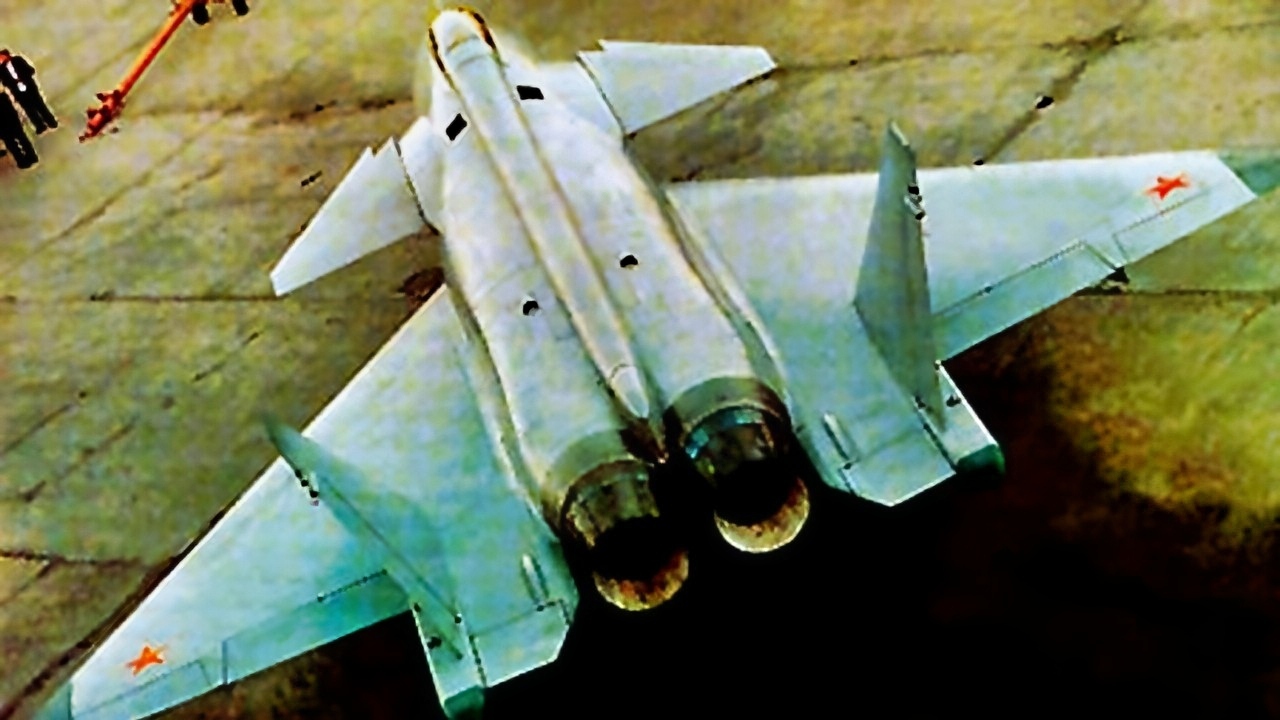
MiG 1.44 Russian State Media Picture
-The technology demonstrator only made its maiden flight in 2000, nearly a decade late, and flew only once more.
-Ultimately, the program was canceled, and a redesigned concept later lost out to Sukhoi’s proposal for the PAK FA program, which became the Su-57.
Russia’s Lost ‘F-22’ Stealth Fighter: The Story of the MiG 1.44
When the F-22 first took flight, the Soviet Union instantly knew that it was falling behind the United States in the realm of Aerospace technology.
As the Cold War came to an end, the Soviets invested in a fighter rival or even surpass its American counterpart, even as funds were beginning to run dry.
The task was taken up by the Mikoyan-Gurevich (MiG) design bureau. MiG produced a prototype fighter intended to be the USSR’s first fifth-generation stealth fighter.
Unfortunately for the project, the collapse of the Soviet Union left the newly formed Russian Federation without the necessary funds to complete it.
Design and Development
Work on the MiG 1.44 began in the 1980s, when the United States initiated its Advanced Tactical Fighter (ATF) program, which would later result in the development of the F-22 Raptor.
In response, the Soviet Union initiated its own effort to create a next-generation fighter under the I-90 program, short for “Fighter of the 1990s.”
The goal was to replace the Sukhoi Su-27 and counter the emerging American stealth fighters with a platform that could dominate both air-to-air and air-to-ground missions.
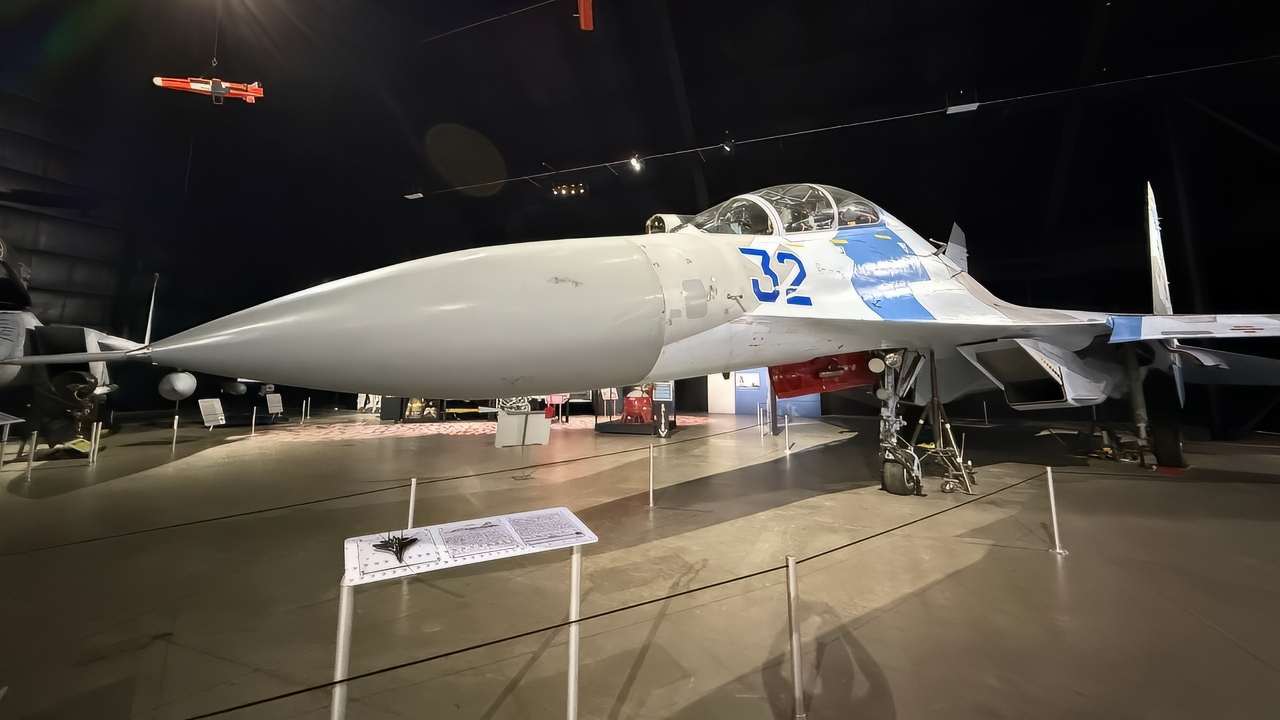
Su-27 Flanker Up Close. Image Credit: National Security Journal Taken on July 19, 2025.
Unlike the U.S. approach, which focused heavily on stealth and air superiority, the Soviet vision emphasized multifunctionality, supermaneuverability, and supercruise capabilities.
The Mikoyan Design Bureau was tasked with developing two aircraft under this program: the MFI (Multifunctional Frontline Fighter), a heavy multirole fighter, and the LFI (Light Frontline Fighter), a lighter tactical aircraft.
Mikoyan focused its efforts on the MFI, which evolved into Project 1.42 for the production version and Project 1.44 for the technology demonstrator.
The MiG 1.44 was designed to be a cutting-edge aircraft, incorporating advanced aerodynamics, thrust vectoring, and stealth features. Its layout featured a delta wing with canards, a configuration chosen to enhance lift and agility.

MiG 1.44 Fighter. Image Credit: Creative Commons.
The aircraft was statically unstable, relying on fly-by-wire controls to maintain stability while maximizing maneuverability.
The MiG 1.44 was powered by two Lyulka AL-41F afterburning turbofan engines, which were intended to provide both high thrust and supercruise capability.
The aircraft was projected to reach speeds of Mach 2.35 and sustain supersonic flight without afterburners at Mach 1.5. It had a planned range of 4,000 kilometers and a service ceiling of 17,000 meters.
Armament included a 30mm GSh-30-1 cannon and a mix of air-to-air missiles such as the R-77, R-73, and R-37. The cockpit was equipped with a glass interface and the N014 passive electronically scanned array radar, capable of tracking 40 targets and engaging 20 simultaneously.
Project 1.44 After the Fall of the USSR
Despite its promising design, the MiG 1.44 faced significant challenges. The collapse of the Soviet Union in 1991 led to a severe reduction in defense funding, which stalled construction and testing.
The aircraft was relocated to Zhukovsky Airfield in 1994; however, ground tests were delayed due to the absence of necessary components and a lack of resources.
The government blocked attempts to showcase the aircraft at airshows in 1995 and 1997, and the project remained shrouded in secrecy until 1998, when it was finally revealed to the public.
The MiG 1.44 made its maiden flight on February 29, 2000, nearly a decade behind schedule. The flight lasted 18 minutes and reached a speed of 600 kilometers per hour at an altitude of 1,000 meters.
A second flight occurred on April 27, 2000, but no further flights were reported, suggesting that technical or financial issues had curtailed further testing.
By this time, the project had already been effectively terminated. Official cancellation came in 2000, although production had ceased in 1997 due to the aircraft’s high unit cost and the economic instability of post-Soviet Russia.
No F-22 for Russia: Why the MiG 1.44 Never Went into Production
The MFI project showed considerable potential, but ultimately, the Russians opted to cancel it. Why is that? First and foremost was the economic collapse that followed the dissolution of the Soviet Union.
The Russian government was simply unable to sustain the massive investment required to bring the aircraft to operational status.
The MiG 1.44 was also technologically complex, demanding infrastructure and expertise that were difficult to maintain during a period of national upheaval. Additionally, the aircraft was expensive to produce and maintain, making it an unattractive option for a country struggling to fund even its existing military programs.
After the MFI program was canceled, Russia launched its PAK FA (Prospective Air Complex for Tactical Air Forces) program in another attempt to gain its first fifth-generation fighter.
This time, India briefly agreed to partner up with the program to make it a joint venture (India would later pull out of the program for various reasons). Mikoyan tried one last time to resurrect the MiG 1.44 by submitting an updated design concept for the fighter.
Unfortunately, the Russian Ministry of Defense decided to choose Sukhoi as its primary contractor, putting the final nail in the MiG 1.44’s coffin.
The PAK FA later evolved into the Su-57, which ultimately became the first fifth-generation stealth fighter for the Russian Federation.

Su-57 Felon Fighter Back in 2011. Image Credit: Creative Commons.
The Su-57 has had its own troubled history and is widely regarded as the least stealthy fifth-generation fighter in operation.
Unfortunately, with so few airframes ever produced, it is almost impossible to say whether or not the MiG 1.44 would have fared had bit been selected over Sukhoi.
Unless Mikoyan decides to release its concept for the PAK FA program, all we can do is speculate.
About the Author: Isaac Seitz
Isaac Seitz, a Defense Columnist, graduated from Patrick Henry College’s Strategic Intelligence and National Security program. He has also studied Russian at Middlebury Language Schools and has worked as an intelligence Analyst in the private sector.
More Military
Russia’s T-14 Armata Super Tank Mistake Still Stings
SR-72 Darkstar: The Mach 6 Mothership for the F-35 and F-47
China’s J-20 Mighty Dragon Fighter Can Be Summed Up In Just 4 Simple Words
The MBT-70 Tank Still Haunts the U.S. Army
Russia’s ‘New’ MiG-35 Fighter Is Officially ‘Circling the Drain’


