

Key Points and Summary – Russia’s Kilo-class diesel-electric submarines—especially the modernized Project 636.3/636.6 variants—remain central to Moscow’s naval posture because they are quiet, proven, and comparatively affordable. Yes, Ukraine has proven they can attack these subs, but they still matter.
-Their “Black Hole” reputation comes from noise-reduction design choices and coatings that make them difficult to track in coastal waters.

Kilo-Class Submarine. Image Credit: Creative Commons.

Kilo-Class Submarine. Image Credit: Creative Commons.
-Modern boats can also fire Kalibr cruise missiles from torpedo tubes, letting Russia strike land targets while keeping vulnerable surface ships out of harm’s way.
-But the class has real constraints: diesel-electric boats must periodically snorkel to recharge, exposing them to surveillance, and their endurance and submerged range remain limited versus nuclear submarines.
Russia’s “Black Hole” Submarine Isn’t Going Away: The Kilo Class Still Matters
In the early 1980s, the Soviet Navy commissioned its first diesel-electric attack submarines, which would become the Kilo class.
They were capable, quiet, and built explicitly for coastal and regional waters. Over four decades later, the latest generation of these boats remains central to Russia’s naval strategy.
In June 2025, the navy commissioned the final unit of the current class – and with conflict continuing to rage in Ukraine and Russia under heavy international pressure, the continued prominence of these submarines is interesting.
The use of an aging class of submarine ships reveals both the strengths of Russian designs, but also Moscow’s growing strategic vulnerabilities.
As a renewed emphasis on submarine warfare becomes an apparent reality for Moscow, the Kilo-class – and especially its modernized Project 636.3 variant – demonstrates how even a decades-old design can still shape contemporary maritime conflicts.

Russian Kilo-Class Submarine. Image Credit: Creative Commons.
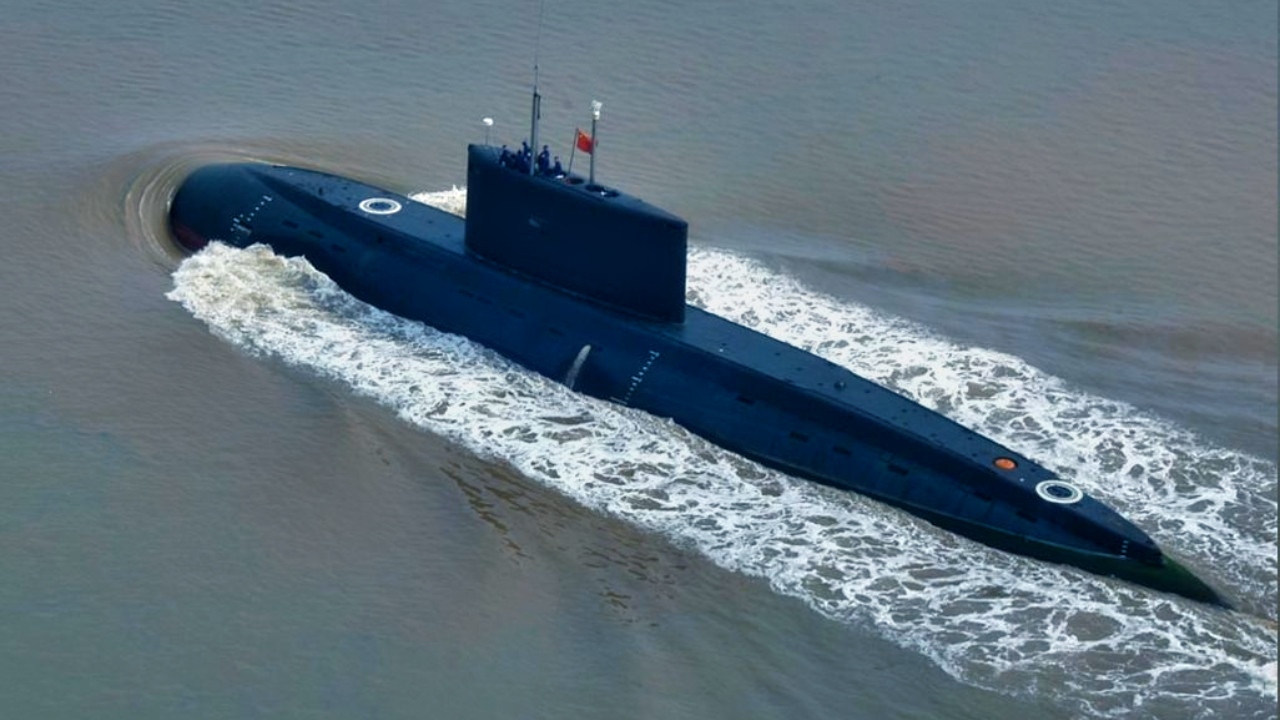
Kilo-Class Submarine. Image Credit: Creative Commons.
But it also reveals the limits of Russia’s current capabilities as it continues to rely on what has come to be known as a “black hole.”
What Makes the Kilo-Class a “Black Hole”
The Kilo-class is a diesel-electric attack submarine that was initially developed by the Soviet-era design bureau now known as the Rubin Design Bureau.
The basic Kilo (Project 877) entered service in the 1980s, and over the years, its design has continued to evolve.
In the 1990s, upgrades produced the Project 636 (Improved Kilo), and starting in the 2010s, further enhancements to the design led to Project 636.6, also known as the Improved Kilo II.
By June 2025, Russia had completed construction of the most recent batch of Project 636.6 Improved Kilo-class submarines with the commissioning of Yakutsk.
There are at least a couple of reasons Russia has continued to produce the submarines.
First is the most obvious: it’s safer to continue building submarines based on a proven design that has worked for decades.
Two: it’s cheaper.

Kilo-Class Submarine. Image Credit: Creative Commons.
But despite that, the Kilo class still has a pretty fearsome reputation, particularly in Western navies, because of its suite of acoustic stealth features that have made it very hard to detect in littoral and coastal waters.
The submarine has long been described as the quietest diesel-electric submarine of its generation – because it is.
That performance stems from its clever design and carefully engineered propulsion systems.
Between its quiet internal machinery, vibration- and noise-isolation systems, and its anti-acoustic rubber coating on the outer hull, the Kilo class remains exceptionally good at slipping past detection systems.
The Project 636.6 variant typically displaces around 2,350 tonnes while surfaced and around 3,100 tonnes submerged, has a hull that measures roughly 74 meters in length, and operates with a crew of about 52 men with an endurance of 45 days at sea.
Initially intended for anti-submarine and anti-ship operations, the Kilo’s mission set has expanded over time.
Modernized variants of the submarine can now launch long-range cruise missiles – including the Kalibr – from their torpedo tubes, while retaining capacity for torpedoes and mines. That capability allows submarines to strike land targets from afar, giving the Russian Navy flexible power projection even in contested waters.
It’s precisely that combination of stealth, mobility, and increasing strike reach that has earned the boats the “Black Hole” moniker, mainly from NATO and U.S. naval sources who have found them notoriously difficult to track during exercises.
Why They Still Matter – And Where They Fall Short
While aging, the Kilo-class remains a backbone of Russia’s conventional submarine force. Open-source tracking suggests that Russia currently fields dozens of units across its older and improved models – a testament to the longevity and strategic value of the vessels.
In this sense, the Soviet-era doctrine of building mass-produced, relatively inexpensive diesel-electric boats has outlasted many more ambitious submarine projects. It means Russia to this day has an extensive roster of deployable submarines even as its surface fleet endures heavy losses.
For Russia’s Pacific and possibly Northern Fleets, these boats remain a cost-effective way to project underwater strength, even as more advanced designs lag behind in terms of development or suffer budget-related delays.
Meanwhile, in the context of the ongoing war in Ukraine, the Kilos – especially those equipped with Kalibr missiles – provide Moscow a way to strike land targets while avoiding the overuse of surface ships, which are becoming increasingly vulnerable.
End of the Line for the Kilo-Class?
Still, there are some limitations, though the benefits of using the ships vastly outweigh them.
The Kilo is diesel-electric, meaning it must periodically raise a snorkel to run its diesel engines and recharge batteries – a phase of operation that reduces stealth and increases vulnerability, particularly in waters that enemies are surveilling.
Moreover, while the Kilo-class excels in quiet cruising, its endurance of around 45 days and its submerged range remain limited compared to modern nuclear-powered submarines.
In short, the Kilo remains a powerful tool – but its limitations will define how long Russia can continue to lean on it.
About the Author:
Jack Buckby is a British author, counter-extremism researcher, and journalist based in New York who writes frequently for National Security Journal. Reporting on the U.K., Europe, and the U.S., he works to analyze and understand left-wing and right-wing radicalization, and reports on Western governments’ approaches to the pressing issues of today. His books and research papers explore these themes and propose pragmatic solutions to our increasingly polarized society. His latest book is The Truth Teller: RFK Jr. and the Case for a Post-Partisan Presidency.


Martin
December 13, 2025 at 8:11 am
The only thing that makes the US cringe, is the complete embarrassment caused the by the such inferiority the Russians show in the technology
Gregor Prottengeier
December 13, 2025 at 3:00 pm
if the navy is cringing over the Russian subs then our nay needs to do something about it and outclass them and build better stuff..we are a super power and we need to act like it..
Eric
December 13, 2025 at 3:47 pm
Before I deployed to Desert Storm we were told by commanders about how deadly the Russian designed tanks were. We know how that story turned out. Then when Russia invaded Ukraine, the world was told Russia would conquer before winter. I doubt you could add enough new technology to a 40yr old design to make a difference. I bet Ukraine could take one out with a $300 drone.
Jason.lerro
December 13, 2025 at 5:37 pm
There’s only 1 big diffent we have 3 subs that r undetectable in the water,the only ones in the world.
Krystal cane
December 13, 2025 at 10:39 pm
So do Trump’s diapeps
Andy
December 13, 2025 at 11:36 pm
As a acoustic operator that flew on P-3’s in the 90’s I can tell you that Russian Kilos don’t make the Navy cringe. Having tracked a couple myself I can say with confidence they Don’t scare our Navy.
SJ
December 15, 2025 at 1:26 am
This is such a left leaning news source, Every article is..
“Russia’s s500 to make USA’s stealth technology obsolete” China’s bomber competes with the b-21″ Russias Submarine..ect..”
If any of this were true they wouldn’t put it out there. There is nothing that Russia has that would make USA cringe. Im sure Russia cringed when they realized they couldn’t blow past Ukraine.Both Russia & China’s stealth game is behind which is why they have no answer to the B-2 bomber. Up until recenly they came up with their own bomber to try and catch up to the B-2 bomber which still puts them behind the B-21 Raider. As far as fighter jets go, they are trying to catch up to the F-22 & F-35 which still puts them behind the up and coming F-47.
scott winkler
December 15, 2025 at 3:33 pm
All the Russian kilo class subs are mini Kursks one wrong move or pushed button away from self destruction