


Key Points and Summary – Moscow is showcasing two exotic nuclear systems: the Poseidon nuclear-powered underwater drone—designed to loiter, then detonate offshore to create a “radioactive tsunami”—and the Burevestnik, a nuclear-propelled cruise missile nicknamed “Flying Chernobyl.”
-Vladimir Putin hailed a fresh Poseidon launch from a submarine and a Burevestnik flight, casting them as second-strike enablers that could survive a first blow and still hit back.
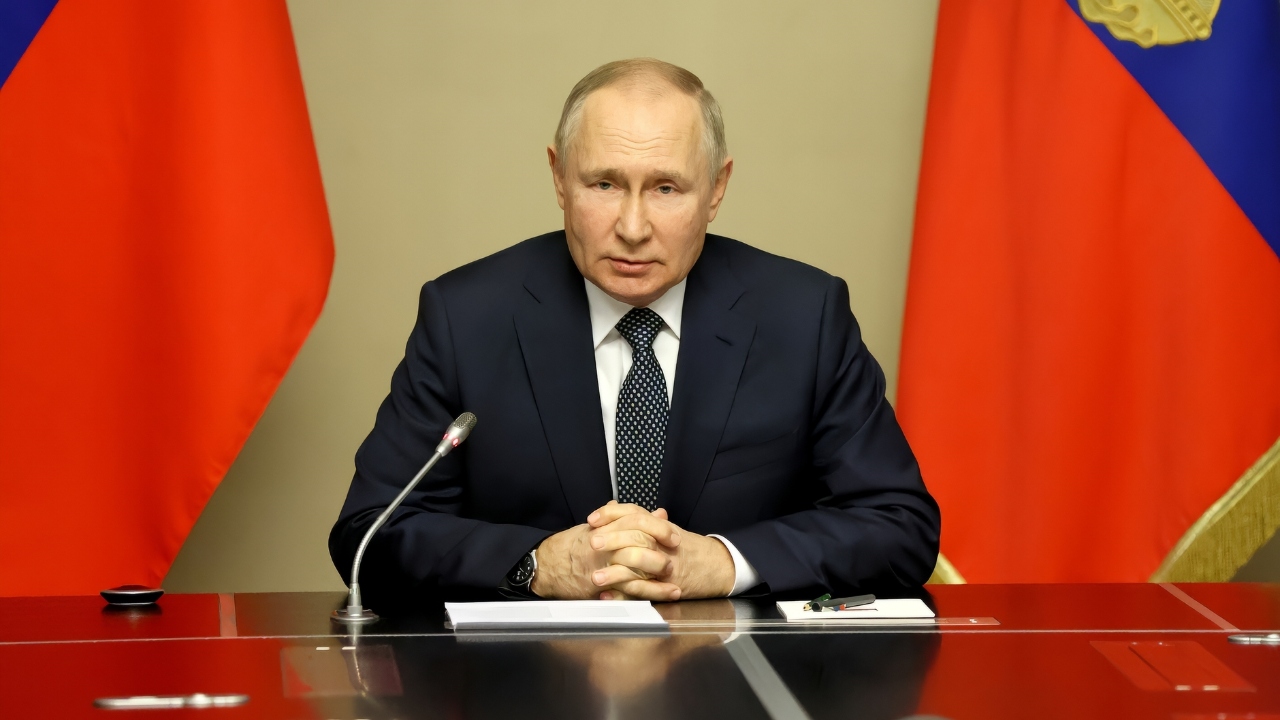
Putin November 2022. Image Credit: Creative Commons.
-The timing overlaps intense Russian assaults near Pokrovsk and continued missile strikes on Ukrainian cities—part deterrent signaling, part domestic theater.
-Whether operational or not, these systems amplify nuclear coercion risks and pressure Western decision-making as the war grinds on.
Russia’s ‘Flying Chernobyl’ Could Flatten Coastal Cities
Russia says it has successfully tested a nuclear-powered underwater drone that could cause a “radioactive tsunami.”
Speaking to soldiers wounded in Ukraine, Russian president Vladimir Putin said the Poseidon test, conducted earlier this week, marked “a huge success,” adding that its power surpasses even Russia’s famous Sarmat intercontinental missile.
He boasted that the newly tested device’s nuclear propulsion system had been activated for the first time from a submarine launch.
The so-called “Poseidon”, named after the mythical king of the sea revered in ancient Greece, was first unveiled in 2018, blurring the line between torpedo and drone.
However, the road to it becoming operable has been a long one, with Russian television broadcasts catching wind of it after citing a briefing book reference to it back in 2015.
It can reportedly loiter underwater before detonating its nuclear warhead near shorelines and even destroy coastal towns and cities.
The weapon’s test follows Sunday’s announcement of a flight by the Burevestnik, a cruise missile propelled by a miniature nuclear reactor and derided as an environmental ticking-time bomb.
Some commentators have dubbed the weapon “flying Chernobyl” for its potential to disperse radiation.
Second Strike
Writing for the War Zone magazine, Thomas Newdick argued that this pair of sophisticated weapons could work in tandem to provide “second strike” capability, meaning a military’s ability to carry out nuclear strikes after already being the victim of a nuclear attack itself.
Putin’s timing was less than subtle. As he hailed these new strategic weapons, Ukrainian troops were battling intense Russian assaults around the eastern city of Pokrovsk. Kyiv dismissed Kremlin claims that its forces were surrounded, describing the suggestion as “fantasy.” Ukraine’s military said supply routes into the city remain open, though the DeepState open-source project warned that the situation was “critical.”
President Volodymyr Zelenskyy called the fighting near Pokrovsk “the most difficult along the 1,250-kilometre front,” with Russian units massed nearby. His nightly address noted some regained control near Kupiansk, but said Moscow’s forces are exploiting bad weather and gaps in Ukrainian defences.
Elsewhere, on Wednesday a Russian missile struck a children’s hospital in southern Ukraine, injuring nine people, four of them children. “They could not have been unaware of where they were striking,” Zelenskyy said.
Moscow’s flashy display of its nuclear capabilities might help reassure its public of its country’s military strength, but it also looks like a Kremlin that is running out of options, and could opt for a non-proverbial nuclear option.
Still, such a powerful reminder of Russia’s nuclear prowess could help push Washington toward accommodating Russia’s demands rather than Ukraine’s in any further talks.
About the Author: Georgia Gilholy
Georgia Gilholy is a journalist based in the United Kingdom who has been published in Newsweek, The Times of Israel, and the Spectator. Gilholy writes about international politics, culture, and education. You can follow her on X: @llggeorgia.
More Military
China’s H-20 Stealth Bomber Has a Message for the U.S. Air Force
China’s New J-35 Stealth Fighter Has a Message for the U.S. Air Force
China Is Studying the Ukraine War to Become a Drone Superpower
The Road to a China-America Nuclear War
China Could Fire Mach 6 Hypersonic Missiles from Bombers to Sink Navy Aircraft Carriers


