


Key Points and Summary – Conceived as a lighter, cheaper counterpart to the Su-27 and a foil to America’s F-16, Mikoyan’s MiG-29 was built for short-to-medium-range fights from austere strips.
-Agile, with IRST, helmet cueing and R-73 missiles, it traded range and cockpit ergonomics for rugged frontline punch.

MiG-29 Fighter U.S. Air Force Museum July 2025. Image Credit: National Security Journal.
-After 1991, ex-Warsaw Pact fleets scattered: reunified Germany flew MiGs alongside F-4s, then sold 23 to Poland in 2003 for one euro.
-Today, the jet is back in headlines as Slovakia’s prosecutors deemed Bratislava’s transfer of MiG-29s to Ukraine lawful.
-The MiG-29 endures as the ‘low’ half of the Soviet high-low mix—simple, survivable, and still relevant today.
The MiG-29 Fulcrum Fighter Just Won’t Go Away
Conceived of in the 1970s as a less expensive, lighter-weight, and lower-performance counterpart to the Sukhoi Su-27, Mikoyan’s MiG-29 was a direct response to the United States’ F-16 Fighting Falcon, itself a protege of the larger F-15 Eagle.
And while Sukhoi’s jet was meant to rival the larger F-15, the MiG-29 was instead intended to give the Soviet Air Force a tactical edge on the frontline, should the Cold War turn hot.
In short and medium-range engagements over Central Europe, the MiG-29 would have been Moscow’s fighter jet workhorse.
To play that role, the MiG-29 was highly maneuverable, with outstanding agility and a very responsive cockpit control suite, enabling it to execute sustained high-G maneuvers. However, in contrast to the F-16, the MiG-29 was designed to operate far forward from austere, makeshift airfields.
Rugged air intakes with protective covers enable the jet to operate from damaged runways or rough terrain without its engines ingesting ground debris.

MiG-29 Fighter. Image Credit: Creative Commons.
A helmet-mounted display, combined with an infrared search and track system, allowed MiG-29 pilots to fire their R-73 missiles on the fly and with minimal care required.
Combined with the jet’s approximate 870-mile combat radius, the MiG-29 was explicitly designed for local air engagements at the tactical level rather than long-range patrol or interception roles.
An Early Assessment
When Western observers first caught wind of the MiG-29, the jet’s true capabilities could only be guessed at. Details were inferred from photographs of the jet, with the fighter’s top speed, range, and payload capacity deduced from these images.
However, information about the aircraft materialized in the 1980s, supplemented by details obtained from jets sold abroad as part of Soviet arms deals.
Early MiG-29s rivaled their counterparts in the United States, such as the US Navy’s F/A-18 Hornet and the F-16, flown by the Air Force, particularly in terms of maneuverability. However, the jet suffered from a lower fuel capacity and, consequently, a shorter range compared to its contemporaries.
Compounded by significantly less ergonomic and intuitive cockpit controls, the jet was seen as lacking the same degree of situational awareness that Western jets could offer their pilots.
More capable and advanced variants of the MiG-29, beyond the base configuration, improved pilot efficiency and partially rectified these issues.
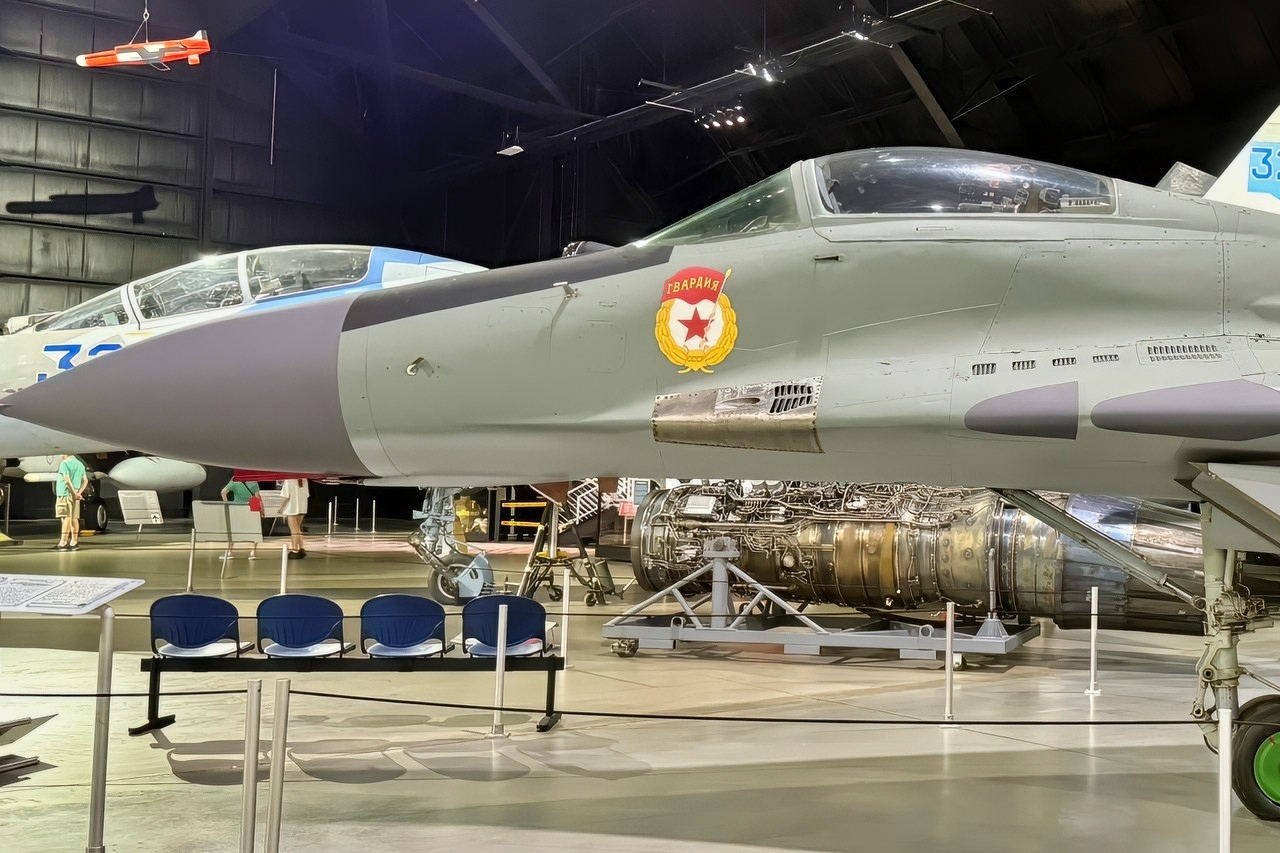
MiG-29 National Security Journal Photo Taken in July, 2025.
Cold War Fall
Following the collapse of the Berlin Wall, the Soviet Union, and the end of the Cold War, several countries found themselves in a peculiar position: ridding themselves of their overlords in Moscow, while also inheriting fleets of Soviet-built weapons and aircraft. The MiG-29 was no exception.
Following the end of the Cold War, former West Germany—surprisingly—operated both American-designed F-4 Phantom multirole fighters and Soviet MiG-29s in parallel. In 2003, for the symbolic price of a single Euro, Poland bought Germany’s 23 remaining MiG-29 jets.
MiGs for Ukraine? Or a Criminal Offense?
The MiG-29 made waves just days ago, following a ruling from Slovakia’s prosecutor’s office that went against the wishes of the Prime Minister’s office. The Slovak Prime Minister, Robert Fico, has been highly critical of Western military aid shipments to Ukraine and is widely seen as harboring close Russian sympathies.
And just last summer, Prime Minister Fico’s government filed a criminal complaint against former Prime Minister Eduard Heger and former Defense Minister Jaroslav Nad over Slovakia’s transfer of MiG-29 jets to Ukraine.
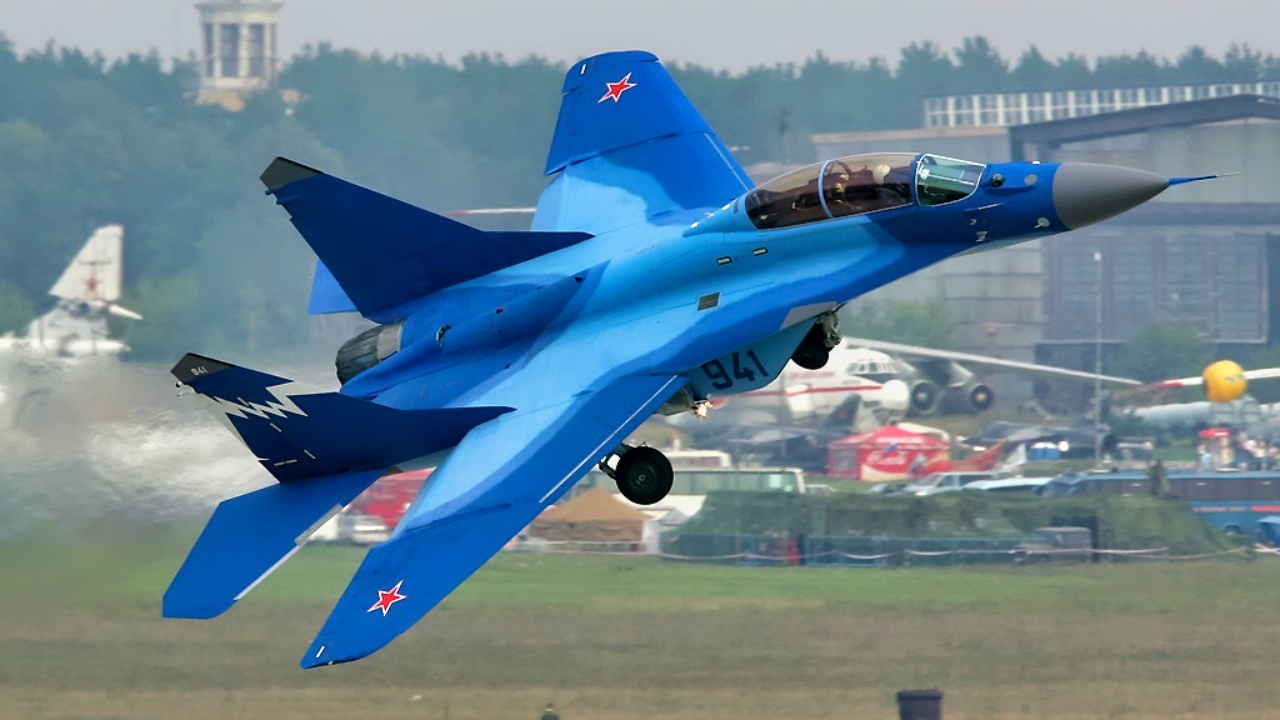
MiG-29K. Image Credit: Creative Commons.
However, the prosecutor’s office ruled that the Slovakian transfer of MiG jets to Ukraine was not a criminal offense and did not pose a threat to the security of the Slovakian state. The office stopped its investigation at the end of October “because it was sufficiently established that the act in question does not constitute a criminal offense and there is no reason to refer the case further,” POLITICO reported.
“Nor was it proven that members of the government acted with the intent to obtain an unlawful benefit for themselves or others, or that they exercised their authority in a manner contrary to the law or exceeded their powers,” a spokeswoman for the prosecutor’s office added.
Writing on Facebook, the former Defense Minister wrote that “It has been confirmed what I have repeatedly said: that the government of Eduard Heger, with me as Minister of Defense, acted not only morally correctly but also in the national interest of the Slovak Republic and fully in accordance with applicable laws and the constitution in connection with the donation of the MiG-29 aircraft.”
What Happens Now to the MiG-29?
The MiG-29 was intended to counter the F-16 directly, as well as similar aircraft such as the European Tornado fighter, in frontline combat scenarios. In that the jet would have excelled, thanks to its high maneuverability and robust short- and medium-range weapons suite.
The jet—the lower half of the Soviet Air Force’s high-low aircraft mix—also embodied the Soviet emphasis on ruggedness and simplicity, factors that could contribute to battlefield survivability and are seen today in Ukraine.
As a compliment to the higher-performance Su-27, Mikoyan’s MiG-29 could have been expected to hold its own, had Cold War hostilities erupted out into the open.
About the Author: Caleb Larson
Caleb Larson is an American multiformat journalist based in Berlin, Germany. His work covers the intersection of conflict and society, focusing on American foreign policy and European security. He has reported from Germany, Russia, and the United States. Most recently, he covered the war in Ukraine, reporting extensively on the war’s shifting battle lines from Donbas and writing on the war’s civilian and humanitarian toll. Previously, he worked as a Defense Reporter for POLITICO Europe. You can follow his latest work on X.
More Military
The ‘Super’ B-52H Stratofortress Bomber Is Already Flying
‘Go Home’: Stealth F-22 Raptor Flew Right Under Iranian F-4 Phantom Undetected
Russia’s ‘New’ PAK DA Stealth Bomber Has a Message for Every Military On Earth
China’s New H-20 Stealth Bomber Has a Message for Any Military on Earth
Mach 2 F-4 Phantom II Fighter Has a Message for Every Air Force on Earth


