


Key Points and Summary – Russia’s Tu-160M “Blackjack” bomber, powered by the most powerful combat engines ever, is undergoing a major modernization (Tu-160M) at President Putin’s “personal behest.”
-This reliance on an “ancient” 1980s airframe stems from “strategic necessity,” as Russia’s 5th-gen Su-57 stealth program is “significantly behind schedule.”
-In Ukraine, the Tu-160 is “unable to penetrate” defenses and is relegated to launching glide bombs and cruise missiles from the “relative safety” of Russian airspace.
-Leaked documents show seven new/repaired bombers are in production, ensuring this “stand-off” platform remains in service for decades.
Russia’s New Mach Tu-160M Bomber Is Coming
The Tu-160 jet bomber, a Russian aircraft inherited from the Soviet Union, is similar in some ways to America’s B-1B Lancer, another variable-sweep-wing strategic bomber.
Both aircraft play broadly the same roles within their respective armed forces; both could be used to deploy nuclear weapons against the other side, though they are also capable of delivering a variety of conventional weapons.
In the non-nuclear role, both jets excel. Thanks to the adjustable geometry of their wings, both the Tu-160 and the Lancer can cruise as efficiently as a fixed-wing aircraft, but also achieve a sprint at high speeds while carrying a significant weapons payload.
The Tu-160 is decidedly distinct from the Lancer in other ways, however.
The Russian jet bomber is powered by four Soviet engines—not just any engine, either, but the most powerful ever mated to a combat aircraft. Each of the engines produces a staggering 55,000 pounds of thrust.
Combined, they give the jet nicknamed “White Swan” a thrust of 220,000 pounds. And while the aircraft is not as old as others in the Russian fleet, a modernization program is keeping the 1980s-era bomber off the tarmac and in the air
The upgrade initiative apparently came at the personal behest of Russian President Vladimir Putin. “The program for upgrading the Tu-160 was launched under the president’s personal decision,” Tass wrote.
The restoration program saw crucial parts of the Tu-160 refurbished, along with the integration of new components.
“Under the government contract concluded between the Ministry of Industry and Trade and the Tupolev design bureau, the design documentation for the Tu-160M aircraft was fully digitized within a short period of time, the technique of vacuum welding of titanium products restored, and the production of airframe units was resumed. Rostec’s leading industrial enterprises in the field of metallurgy, aircraft design, engineering and instrument making revitalized their cooperation.”
The impetus behind the decision to modernize Russia’s Tu-160 bombers was simple strategic necessity.
Though Russia does have a nominally stealthy fighter-bomber in the works—the Su-57, a large, two-seater aircraft—that program is significantly behind schedule.
Much ink has been spilled about the Su-57’s stealth characteristics too. Though the jet does share some features common to fifth-generation aircraft, it lacks the comprehensive attention to detail of other stealthy aircraft in production in the United States, or increasingly in China.
Though Russia’s Su-57 was meant to fill several operational roles following the retirement of Russia’s older Cold War-era jets, the Tu-160’s modernization is an indication of Russia’s continued reliance on ancient aircraft.
Tu-160 Photo Essay

Tu-160 bomber Creative Commons Image
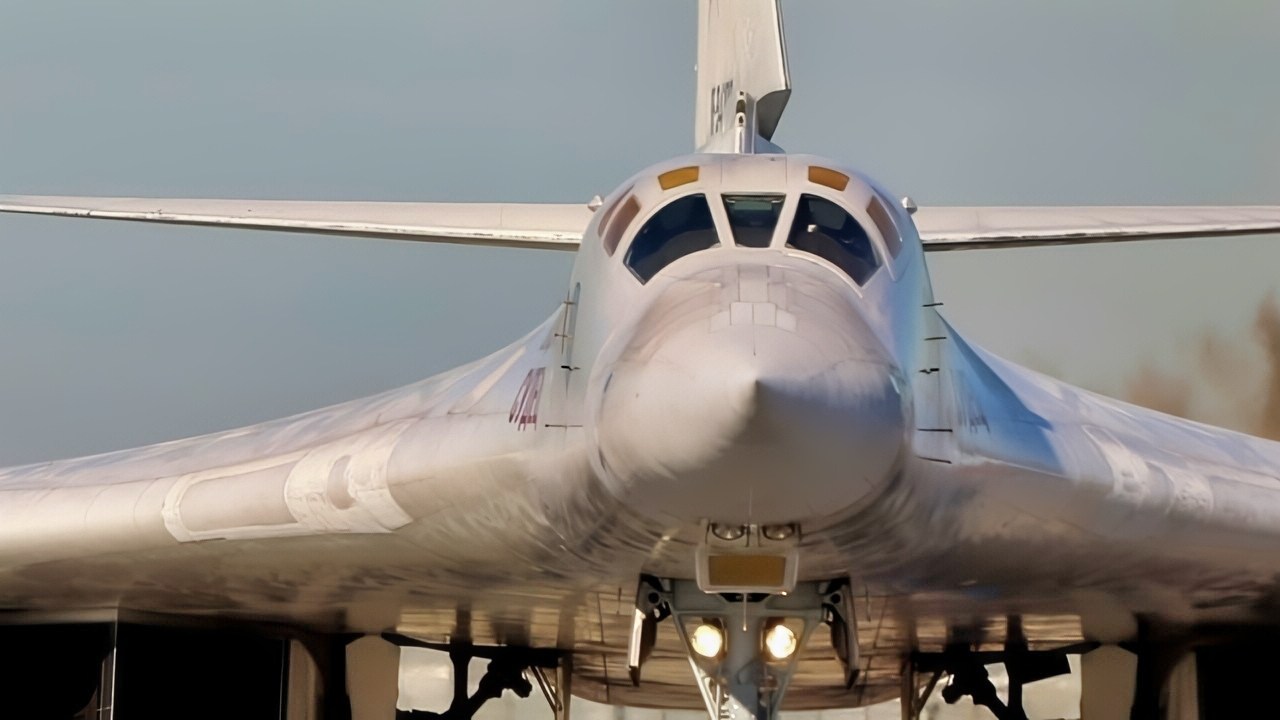
Tu-160 Up Close. Image Credit: Creative Commons.
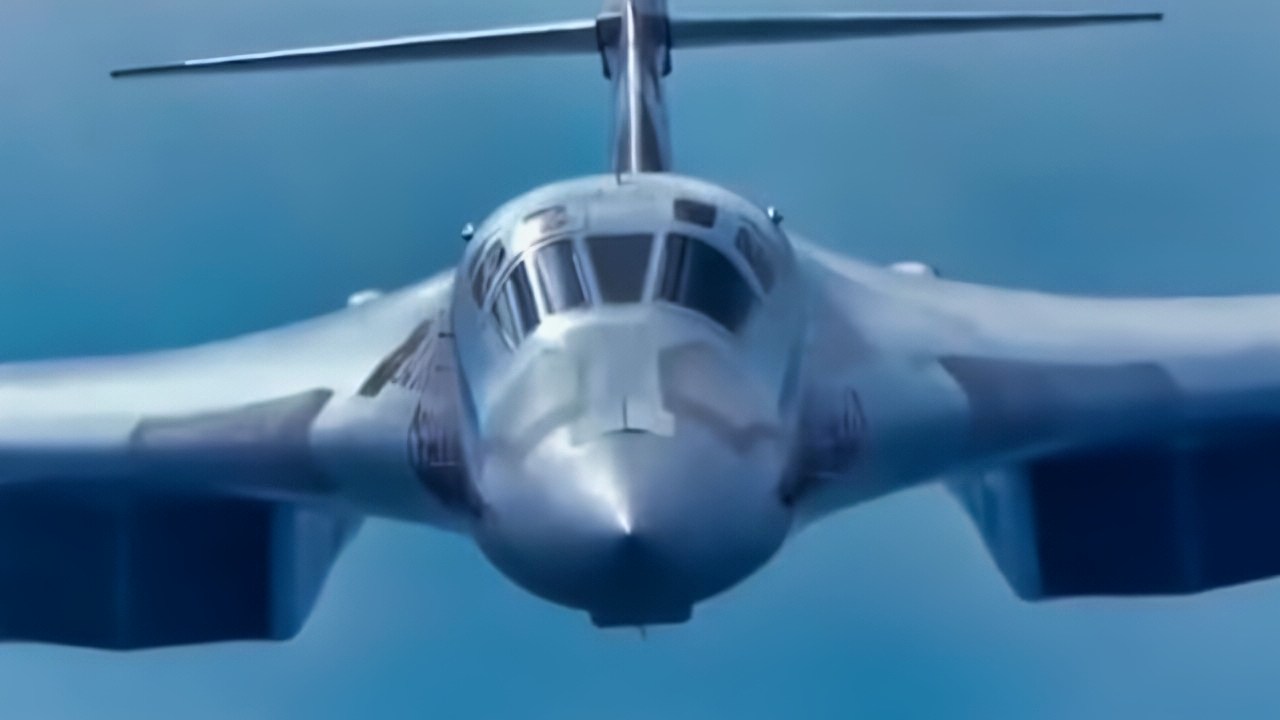
Tu-160 Bomber. Image Credit: Creative Commons.

Tu-160 Bomber Russian Air Force Photo
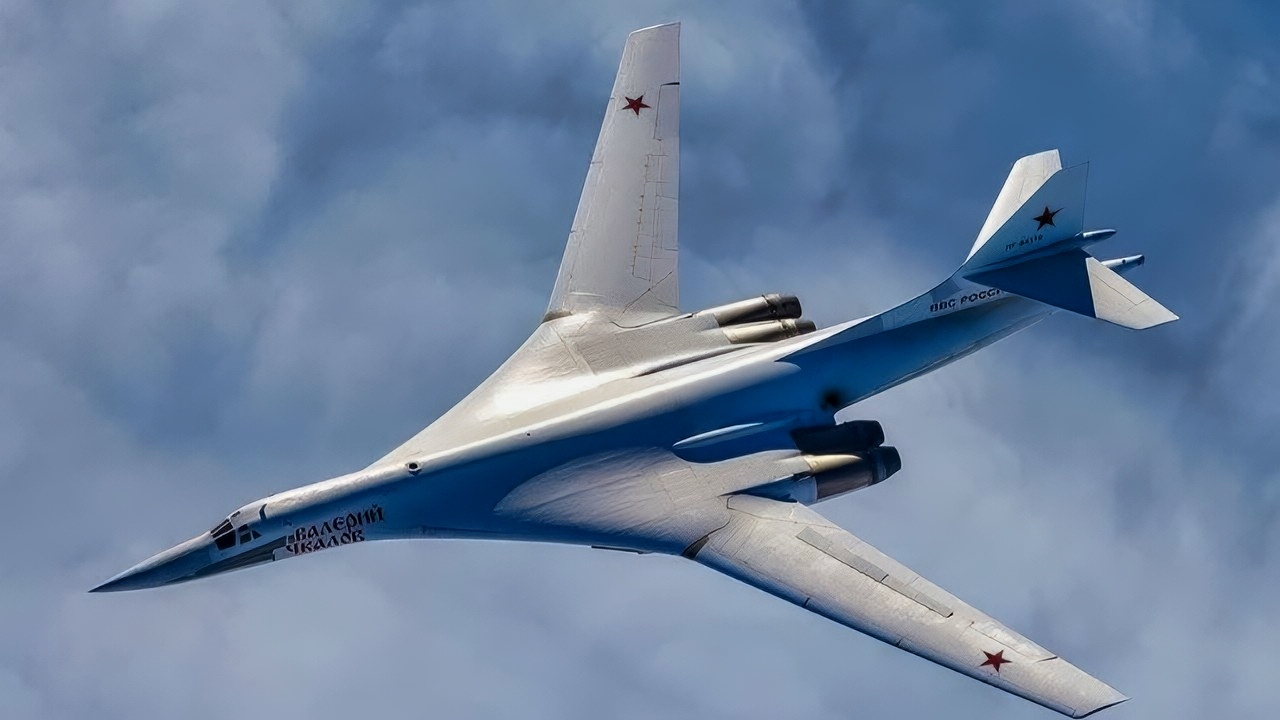
Tu-160 Bomber from Russia. Image Credit: Creative Commons.

Russia Tu-160 Bomber on Tarmac. Image Credit: Creative Commons.
Combat Record in Syria
At its debut with Soviet forces, the Tu-160 was envisioned as a fast, low-flying nuclear bomber.
With the speed and flexibility its engines and variable-sweep wings afforded it, the bomber would have penetrated NATO defenses and incinerated essential nodes in a nuclear fireball.
The jet’s combat record has been decidedly less sophisticated.
The Tu-160 saw much of its combat in Syria. To defend the Assad regime, Tu-160s flying from Engels Air Base in Russia launched cruise missiles at rebel targets across Syria.
In concert with Russian forces on the ground, Moscow managed to keep the Assad clan in power for many years, aiding the family’s brutal crackdown on civilian and anti-regime fighters.
But the Tu-160’s deployment also gave Russia the opportunity to test its Kh-101 cruise missile under real conditions. Crucially, however, Syrian rebel forces lacked robust air defense assets, and Russia’s Tu-160s, as well as other aircraft based within Syria, could fly with relative impunity.
War in Ukraine
Given the robust electronic warfare assets on both sides of the war in Ukraine, combat aviation has played a more minor role than was anticipated when Russia invaded in February 2022.
Bombers such as the Tu-160 cannot complete bombing runs across Ukraine with the same freedom they enjoyed in Syria.
The role of aircraft is significantly reduced in scope, and many Russian aircraft, including the Tu-160, launch munitions from relative safety inside Russia, rather than risk being shot down by Ukrainian forces.
Glide bombs have been one of the Tu-160’s calling cards. Immense, 3,300-pound bombs outfitted with basic wings and guidance kits travel hundreds of kilometers to their target, destroying civilian infrastructure and frontline assets alike.
But despite their large size, the weapons’ effectiveness on the battlefield has sagged since their introduction, largely due to Ukrainian electronic warfare and other defensive measures.
What Happens Now to the Tu-160M
Leaked documents related to the Tu-160 modernization give some insight into what exactly is being replaced and upgraded.
According to United 24: “Meanwhile, at the Kazan Aviation Plant named for S.P. Gorbunov—the central production hub for Tupolev aircraft—the backlog includes seven new-build and repair orders for Tu-160 supersonic bombers, along with two Tu-22M upgrades.
The specific airframes in the Tu-160 program carry serial numbers 705, 801, 401, 703, 804, 904 and 905, while the Tu-22M schedule covers airframes 8301 and 9205.
“Among these aircrafts, four Tu-160s are already deep in modernization, with completion slated by 2026. In parallel, Kazan is assembling the lone prototype of Russia’s futuristic PAK DA (‘Prospective Long-Range Aviation Complex’), codenamed ‘Izdelie 80.’ This static prototype, intended for ground testing of its stealthy ‘flying wing’ design, is currently in the midst of component installation and – barring any setbacks – could be completed within a few years.”
Despite the aircraft’s age and original role as a Soviet nuclear bomber, the ongoing war in Ukraine has given the jet a new lease on life as one of Russia’s platforms of preference for delivering long-range, stand-off munitions.
And with the Tu-160M upgrade program seemingly well underway, the bomber may remain in service for decades yet to come.
About the Author: Caleb Larson
Caleb Larson is an American multiformat journalist based in Berlin, Germany. His work covers the intersection of conflict and society, focusing on American foreign policy and European security. He has reported from Germany, Russia, and the United States. Most recently, he covered the war in Ukraine, reporting extensively on the war’s shifting battle lines from Donbas and writing on the war’s civilian and humanitarian toll. Previously, he worked as a Defense Reporter for POLITICO Europe. You can follow his latest work on X.
More Military
Russia’s Submarine Fleet Summed Up Simply in 4 Words
The Air Force Sent A-10 Warthogs to China’s Doorstep
The Air Force’s B-2 Bomber Nightmare Has Arrived
The Navy Tried for 4 Weeks to Sink Their Own Aircraft Carrier


