

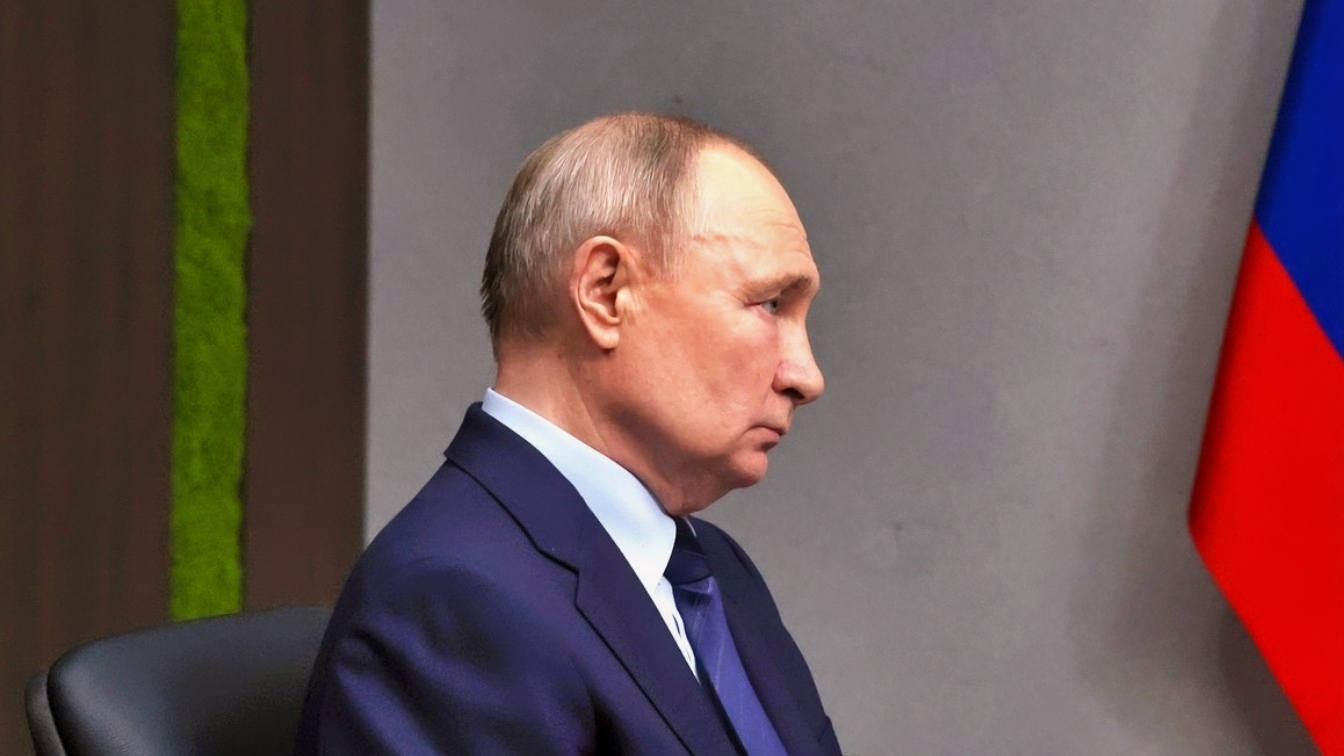
At the 7-8 July NATO Summit in Ankara, Turkey, leaders of the transatlantic alliance went through the usual formulaic program that accompanies all meetings of this type.
There was the standard and obligatory “class picture” of all the heads of state standing at the podium with the NATO emblem on the wall behind them.

Russian T-90 Tank. Image Credit: Creative Commons.
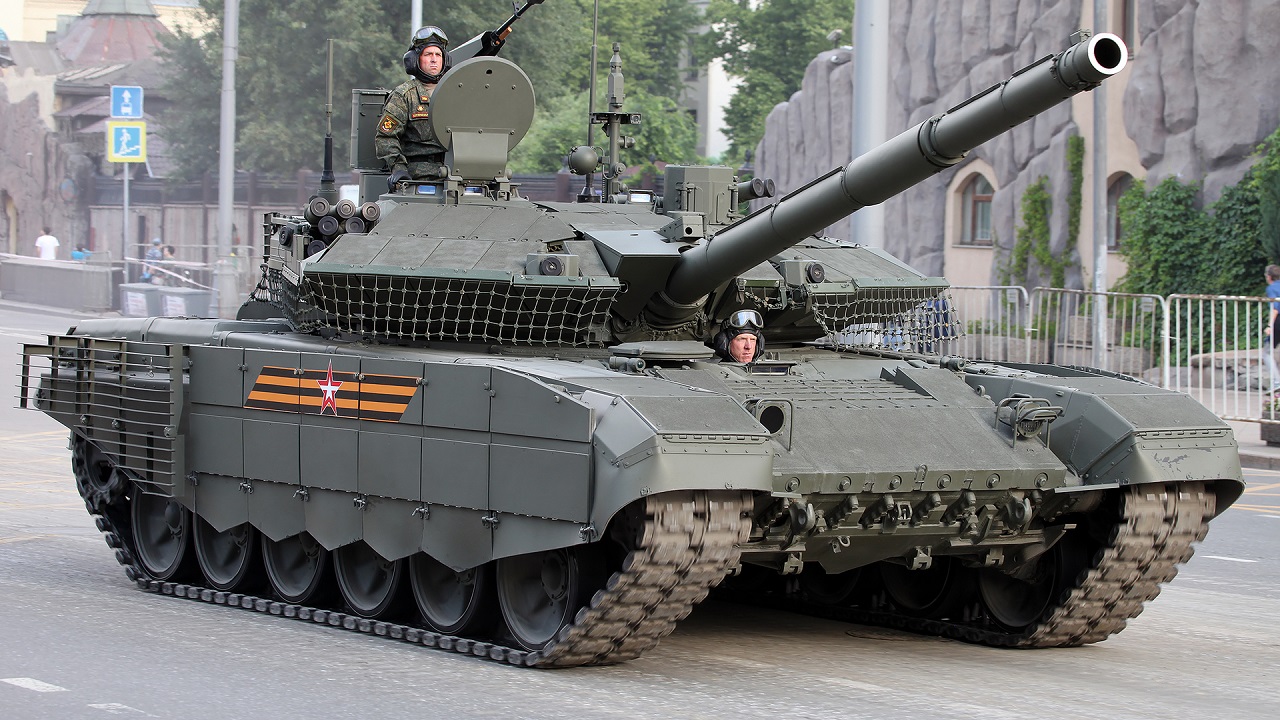
T-90M. Image Credit: Creative Commons.
Those same national leaders gave their perennial declarations of unequivocal and never-ending support for Ukraine.
As with not just NATO forums, but in the usual manner of almost all such international defense and security gatherings, the same predictable declarations were made.
A perfect example is the pledge made almost a month earlier by the Group of Seven nations, which reads “Ukraine contributes to transatlantic security, and Allies stand united in our unwavering support for Ukraine in defending its freedom, sovereignty, and territorial integrity. European Allies and Canada now finance the vast majority of security assistance to Ukraine through bilateral and multilateral means.”
Truth be known, this security assistance is not an act of pure altruism. There is an increasing self-interest triumphing over moral posturing entering into these nations’ equations when they continue to support Ukraine’s war effort.
Russia is increasingly a major security threat to the entirety of the European continent, in addition to that of non-European NATO nations and other allied states.
“What we have – in essence,” said Dr. Thomas Young, a retired former instructor at the DoD’s Defense Security Cooperation University who spoke to National Security Journal, “is the US and others supplying all manner of support for Ukraine: military hardware, training, ammunition, intelligence and satellite targeting data – all of which have contributed greatly to Kyiv’s increasing success to date – because this is least costly option in the political calculation.”
“Although there are no end of uninformed voices who complain and ask why we are sending Ukraine ‘all this money’, the reality is that the total US military assistance to Ukraine is a single-digit percentage of the US annual defense budget. In the process, not a single US or other allied serviceman has to die. We are spending treasure but no blood of our own – the Ukrainians are paying the blood portion. It is the best deal we – meaning the collective West – are ever going to get,” he continued.
Abstract v. Concrete Action
But the stalwart supporters of Ukraine like to point out as well that the concrete action by the alliance starts to drop off sharply once one departs from this sphere of military support and then traverses into the more-than-murky world of economic pressure.
Sanctions against Russia that would constrict their ability to prosecute this war are increasingly effective, but still leave much to be desired.
“This is where you see the abstract declarations about NATO and other nations being ‘behind’ Ukraine not being fully implemented in the form of concrete actions,” Young commented.
As a long essay in Time magazine this week details, the lofty ideals enunciated at the NATO summit were “a convergence of principled respect for the survival of a sovereign, peaceful neighboring nation” and the alliance standing firm “in the face of [Russian President Vladimir] Putin’s imperial agenda.”
Among the four authors are John E. Herbst, the senior director of the Atlantic Council’s Eurasia Center and the former US Ambassador to Ukraine from 2003-2006, and Alexander Browder, the 17-year-old son of the famous anti-Putin crusader William Browder.
They point out that the essence of sanctions consists of a “one-two punch” requiring both corporations withdrawing from engagement with Russia in the business sphere on one hand, and governments taking action to impose meaningful economic blockades on the other.
“Despite all of this critical [military] support, the West has had the power to end this war long ago—and at relatively modest cost—had it possessed the consistency to match its spirit with its actions,” they and their co-authors write.
The act of sanctioning Russian entities, they point out, is what prevents “principled firms from being undercut by opportunistic competitors.
Corporate withdrawal deprives the Kremlin of what legislation alone cannot reach: technology, capital and legitimacy. For four years, the corporate punch has landed.”
Sanction Russia: Governments’ Commitments Found Wanting
But, as they continue, “it is the government punch that has repeatedly been pulled, with western governments repeatedly relaxing sanctions on Russia precisely when they should be tightening them.”
At the top of the list of these failures is the uneven and somewhat porous imposition of energy sanctions on Russia.
From March-May 2026, the US Treasury Department “repeatedly issued or extended general licenses allowing Russian crude already at sea to be sold and unloaded,” they explain.
US officials had defended these waivers on the grounds that energy markets required being stabilized.
In December 2025, sanctions and other pressures put on Russia caused the price for Urals crude to fall to below $40 per barrel, putting oil and gas revenues at their lowest share of Russia’s state budget in two years. But the US then pulling back on sanctions threw Putin a much-needed and unexpected lifeline.
Subsequently, Russian crude exports jumped from 4.9 million barrels per day in February to six million by May. Since that time, the Kremlin has continued to benefit from rising oil prices – thus the war goes on.
The conclusion is that sufficient pressure that would drive Putin to end this war will not exist until “coordination of the left hand of government with the right hand of business” is effectively implemented and enforced.
About the Author: Reuben F. Johnson
Reuben F. Johnson has thirty-six years of experience analyzing and reporting on foreign weapons systems, defense technologies, and international arms export policy. Johnson is the Director of Research at the Casimir Pulaski Foundation. He is also a survivor of the Russian invasion of Ukraine in February 2022. He worked for years in the American defense industry as a foreign technology analyst and later as a consultant for the U.S. Department of Defense, the Departments of the Navy and Air Force, and the governments of the United Kingdom and Australia. In 2022-2023, he won two awards in a row for his defense reporting. He holds a bachelor’s degree from DePauw University and a master’s degree from Miami University in Ohio, specializing in Soviet and Russian studies. He lives in Warsaw.


