

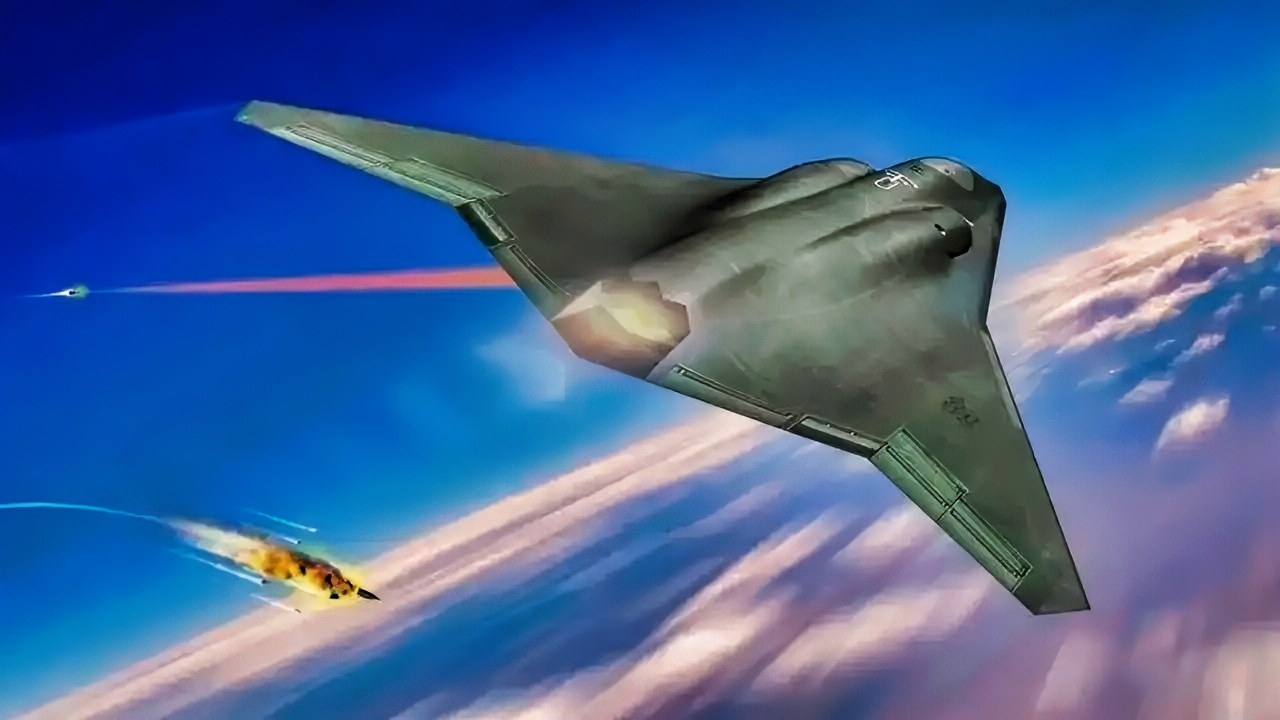
More than a year ago, I speculated here about a connection between the forthcoming Boeing F-47, a modest technology demonstration program from the 1990s and a little-remembered pioneer of stealth.
A set of images of an unknown aircraft in an infra-red video, released this month, suggests I may have been on target. The video was taken by Youtube creators Project Fear, close to the secure flight-test facility known as Area 51. The footage has been vouched for by Anders Otteson, who brought us another classified aircraft in January.
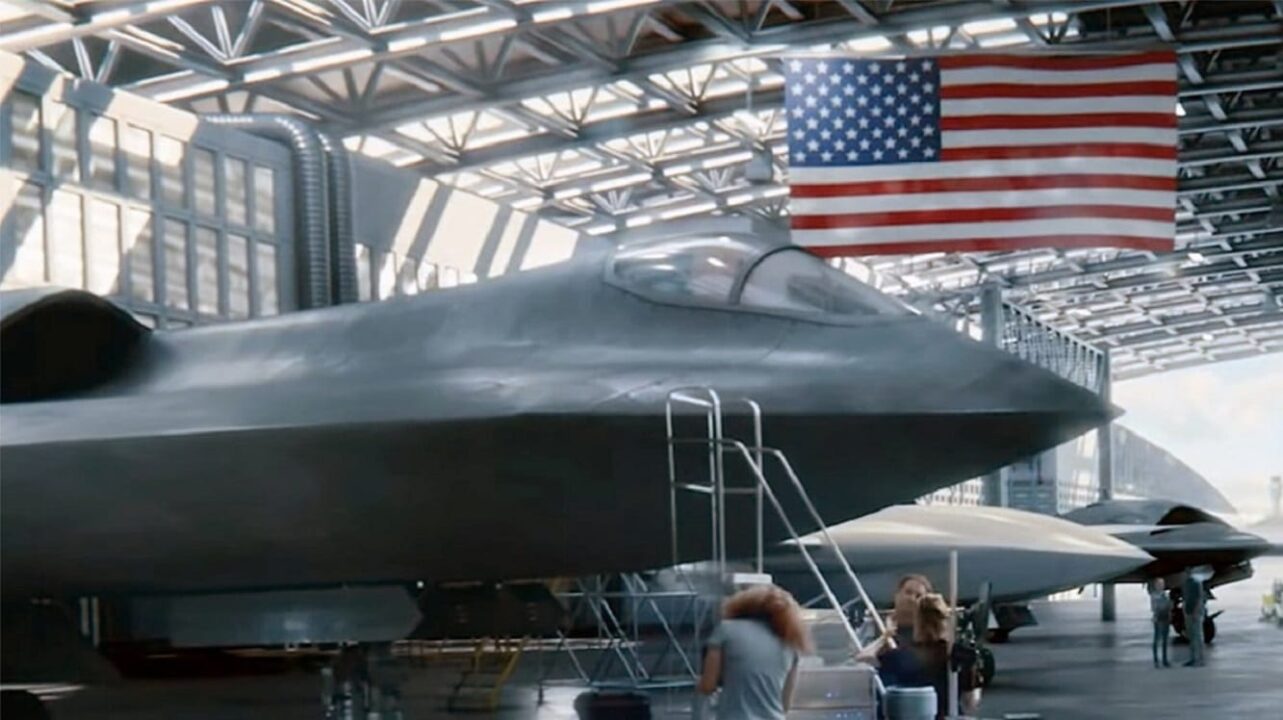
NGAD F-47. Image Credit: Creative Commons.
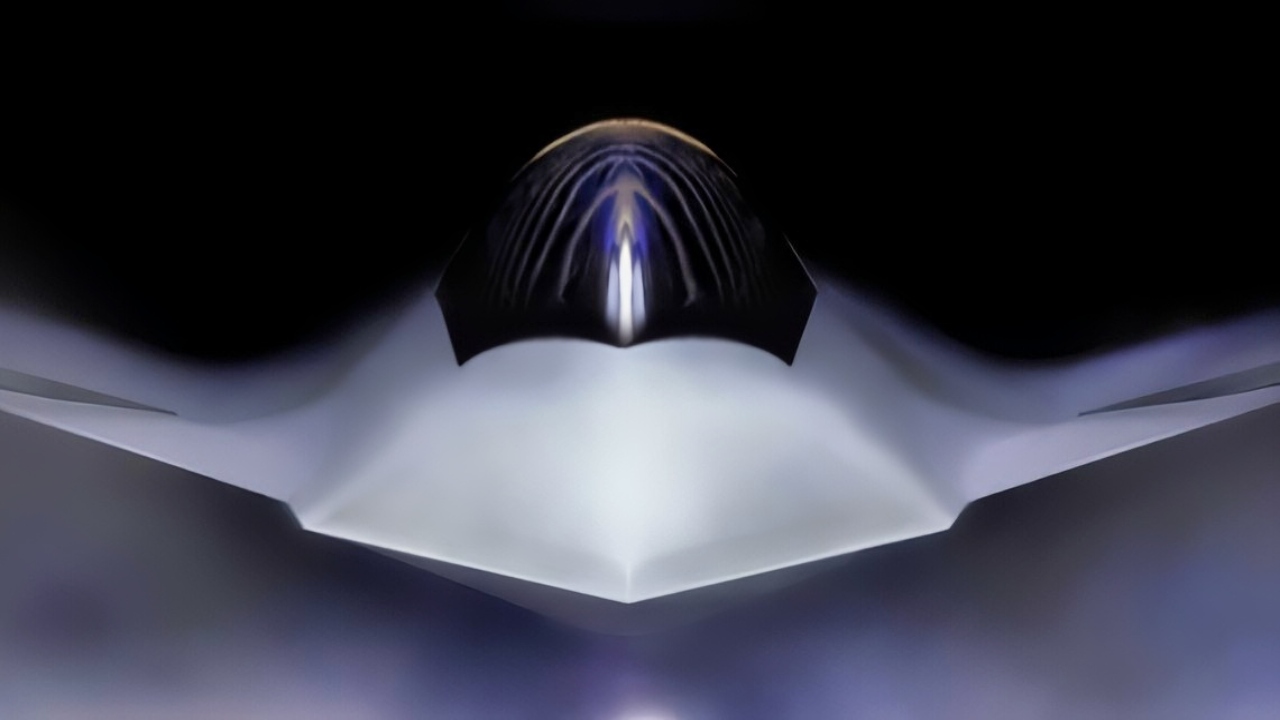
Shown is a graphical artist rendering of the Next Generation Air Dominance (NGAD) Platform. The rendering highlights the Air Force’s sixth generation fighter, the F-47. The NGAD Platform will bring lethal, next-generation technologies to ensure air superiority for the Joint Force in any conflict. (U.S. Air Force graphic)
What we see is a three-aspect match.
First, it looks like a twin-engine aircraft, and as I wrote in March 2025, we have had many indications that the F-47, the US Air Force’s future air-dominance centrepiece, is big – not exactly a follow-on to the F-22 but a ‘penetrating counter-air’ aircraft supporting deep attack at long range, which means hitting ground-based air defences and air-surveillance radars as much as engaging in combat with fighters. A big fighter that could do that would have two engines.
Second, the lean shape and sharply swept, aft-set wings of the unknown Area 51 aircraft look well optimised for supersonic cruise. The Pentagon’s adaptive-engine program, which has run in parallel with the Next Generation Air Dominance (NGAD) effort that has produced the F-47, is intended to deliver supersonic cruise, but without the high specific fuel consumption at subsonic speeds that has bedevilled the F-22 and its F119 engine.
Third, what we’ve now seen over Area 51 is a pretty good ringer for the 1990s X-36 demonstrator. The X-36 was tiny and slow: 380 km/h and 565 kg with an engine from the AGM-129 Advanced Cruise Missile. Its one job was to show that a supersonic, stealthy shape with no vertical tails could be controlled at low speed.
So we must strongly suspect that what’s just appeared over Area 51 is an F-47 prototype or perhaps a pre-development aircraft shaped like the F-47.
The link between X-36 and NGAD, as reported last March, is the late Alan Wiechman, who led McDonnell Douglas’s, later Boeing’s stealth work from the mid-1980s until he retired in 2014. He reached the rank of vice-president of special technology innovation, as broad a hint of his involvement in stealth as you could want.
Wiechman worked in secret. I knew he existed only because I was a friend of one of his colleagues. And he was, I think, a bit surprised when I introduced myself at the rollout of the YF-118G Bird of Prey in 2001. He worked alongside Denys Overholser, Alan Brown and others at Lockheed’s Skunk Works in the late 1970s and was known for his ownership of a Chevrolet Corvette that had a mysterious inability to be clocked on the California Highway Patrol’s radar guns.
The McDonnell Douglas stealth group that Wiechman joined in 1981 was talented but not as influential as it might have been. As the USAF evolved its Advanced Tactical Fighter (ATF) requirement, which led to the F-22, between 1981 and 1984, McDonnell Douglas’s program manager was a hard-charging fighter general who had flown combat missions in World War II, Korea and Vietnam, and he thought stealth was downright unmanly.
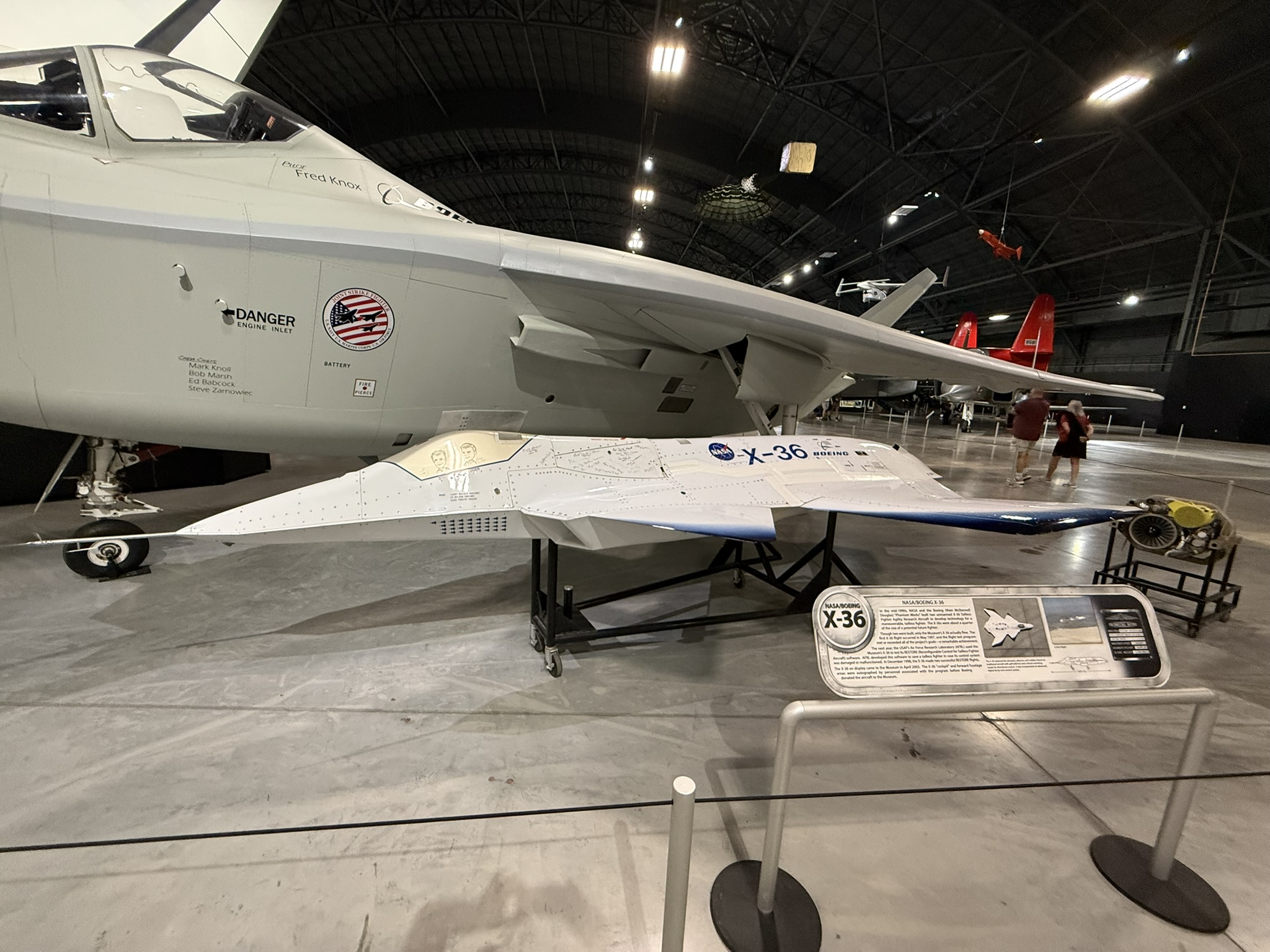
X-36. Image Credit: National Security Journal.
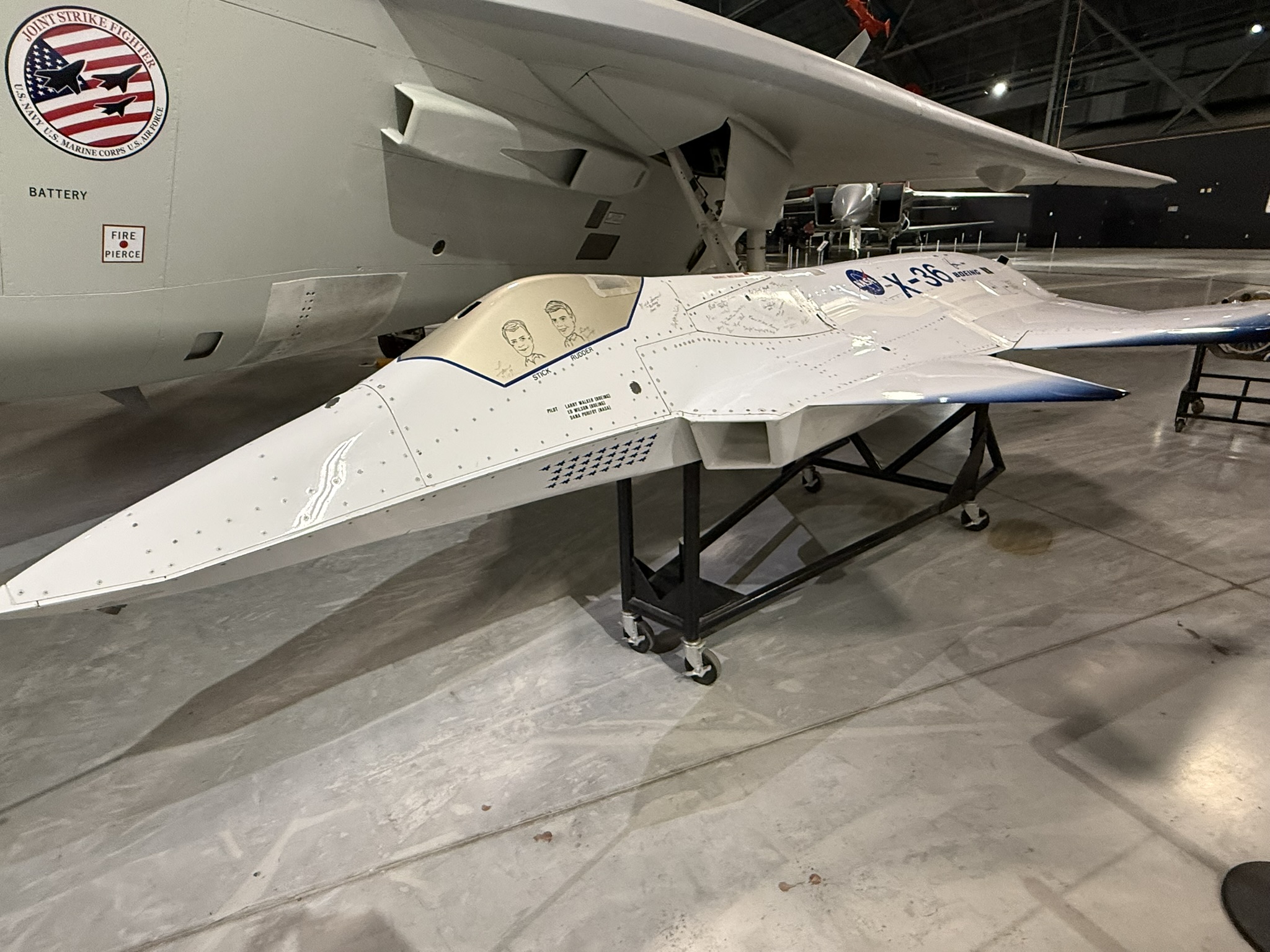
X-36. National Security Journal Image.
The problem was that some of the people in the ATF system project office had flown under his command in Vietnam and detested him. They were happy to indulge the general’s view that stealth was a passing fad. McDonnell Douglas bid a conventional ATF design and got handed fifth place behind awardee team leaders Lockheed and Northrop, General Dynamics and, worst of all, Boeing, which had not delivered a fighter to the Air Force since Franklin D Roosevelt’s first term.
At the same time, McDonnell Douglas found itself playing second banana to General Dynamics on the Advanced Tactical Aircraft program, the US Navy’s stealth bomber.
McDonnell Douglas president Sanford McDonnell decided that enough was enough and elevated Wiechman to leadership of a stealth-focused team in St Louis. The group had two distinguishing features. One was a dual focus: as well as looking at the extremes of stealth in new, specialised designs, the team studied how to reduce the radar cross-section of conventional aircraft. The latter effort contributed to the development of the F/A-18E/F Super Hornet. There was a parallel study for the F-15.
The team’s other distinguishing feature was that it was hidden in plain sight under the banner of the company’s advanced-prototyping division, the Phantom Works. In there it was alongside a group that was focused on production cost and better ways to build combat aircraft. A tour that I got in 1992 was educational. Here were high-speed machining cells. There was a low-cost radar cross-section range. There were carbon-loaded sneaker prints near a laboratory door (indicative of work on radar-absorbing materials), and low-cost chipboard forms that, in retrospect, resembled the rear end of the Bird of Prey.

YF-118G Bird of Prey at USAF Museum 2025. Image Credit: Harry J. Kazianis/National Security Journal.
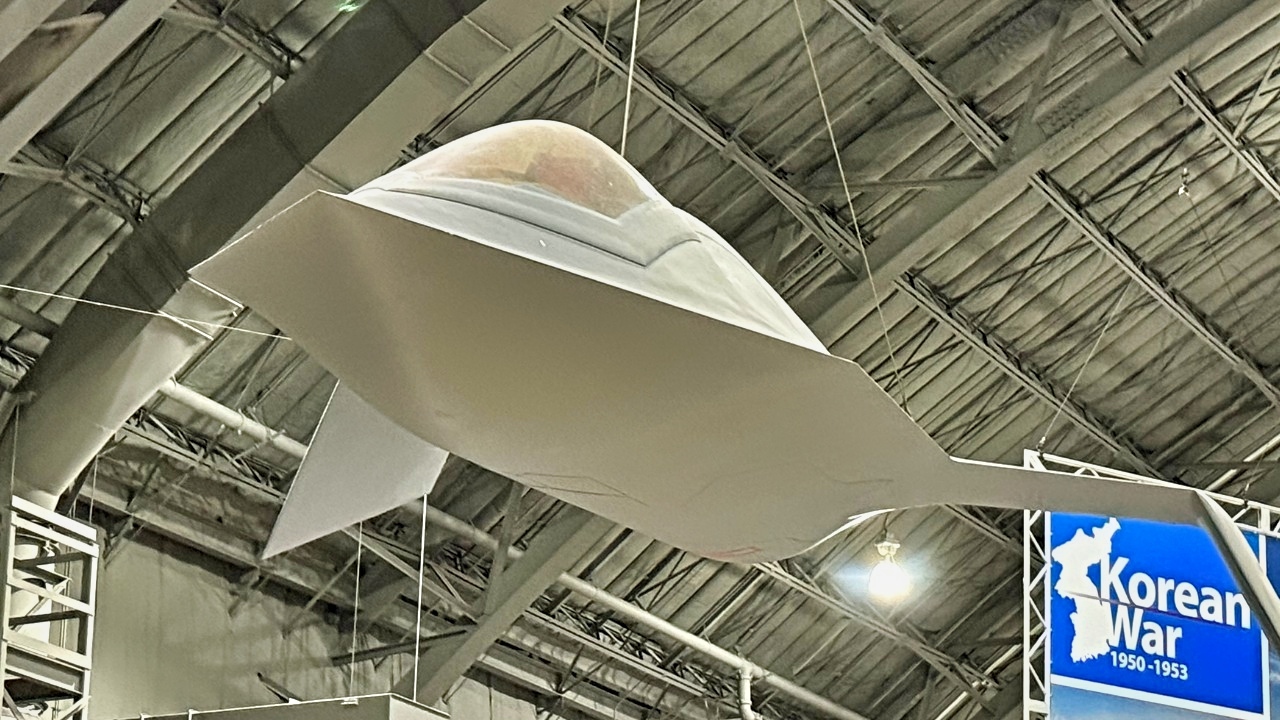
YF-118G Bird of Prey Hanging Above F-22. Image Credit: National Security Journal.
Wiechman himself was invisible. At one point, I searched for him on the company website. There was one mention in a list of 25-year employees.
The X-36 and Bird of Prey designs were different and complementary. The Bird of Prey was intended to be stealthy enough to vanish in daylight (with lighter paint around the inlet, counter-shading what would otherwise be a giveaway shadow).
The X-36 represented an agile supersonic configuration lacking a vertical tail, an item that’s best left out to improve stealth but is missed because it’s so important to stability. Elevons and canards might control the aircraft’s pitch and roll, but there was no hint of anything to control its yaw. General Electric’s advanced programs lead, Harvey Maclin, was at the time talking about fluidic thrust vectoring — injecting air into an engine’s exhaust on one side or the other — as a solution that did not involve stealth-defeating outside flaps.
Maclin was GE’s advocate for an engine design (the Controlled Overall Pressure-ratio Engine) that had evolved from the variable-bypass F120, the losing candidate for powering the ATF. This new design could switch from a configuration good for subsonic flight (as a turbofan) to a turbojet mode that could push a fighter through the air supersonically without afterburning – that is, it could cruise supersonically. The design was the direct ancestor of today’s adaptive engines and a perfect match for an X-36-like combat aircraft.
So, that’s what may have happened. Wiechman’s obituary in 2023 noted that he had ‘most recently’ been an adviser on stealth to the USAF Rapid Capabilities Office. And now there’s an X-36-like shape over Nevada.
Consider. There’s an alternative history narrative where in the mid-1990s the USAF goes forward with the delta-winged F-16 Falcon 21, on United Arab Emirates money, and Wiechman’s stealth-treated F-15. And the service invests seriously in its next-step airframe and Maclin’s engine, two decades before NGAD.
Instead, the USAF is buying warmed-over 1980s-tech F-15Es and looking at 50-year-old F-16s flying in the 2040s, while the aircraft chosen, among other reasons, because it might — but didn’t — solve the Marines’ airpower problems, is mired in an endless upgrade. This makes China happy.
There are words for this, but my editor does not want to print them.
About the Author: Bill Sweetman
Bill Sweetman is a veteran, award-winning journalist and aerospace industry executive. This first appeared in ASPI’s The Strategist.


high-end faight
July 20, 2026 at 6:58 am
All these highly excellent theories are based on one very important premise, – the intended victim will readily allow your fancy aircraft to roam near his workspace, oops, airspace, at will.
Military technology has advanced at a fairly fast clip, since the hey days of Ben rich and his black budget projects.
Today, or actually tomorrow, or tomorrow morning if you like, the outcome of the battle (or slaughter) won’t,t be decided by f-47s or f-55s or f-21s.
The outcome would be decided (or dictated) by tactical nukes, tacs in the form of missiles powered by scramjet engines, and tactical glide nukes like jassms and b61-13 bombs.
Thus, the intended victim needs to do his homework now, today. ASAP.
Today we think of the triad, or the strategic bomber-icbm-sub trio as ultimate security insurance. This is fast going the way of the dodo.
Today, we need a new kind of triad, – the space nukes, the FOBS nukes and the sea nukes.
Today, we need space-based nukes, advanced FOBS rockets and a fleet of fast warships carrying IRBMs and SRBMs with hypersonic nuke warheads.
That will force any waehawk to think twice before embarking on any reckless military adventure.
yor uncle bob
July 20, 2026 at 7:29 am
Today, the war in Ukraine, and that current one in the gulf, have shown that starlink and ‘mizarVision’ are important in fighting modern wars.
Thus fighters like the f-47 and the f-35 and the f-18 are pretty useless, as their bases are fully vulnerable to counter strikes.
Thus, unable to win, the aggressor will resort to the use of nukes.
Nukes are blunderbusters; even if they missed, their targets are obliterated anyway. This is what people like Biden, netanyahu and trumpo trump like.
Thus the wars of tomorrow will be fought mainly using nukes.
The first to strike is likely to emerge as the…..winner !