

Democrats are deeply confident about their prospects in the November 3 midterm elections—a confidence recent polling supports. Indeed, national polls suggest Democrats have advantages that could translate into capturing Congress.
However, not everyone is convinced.
Republican pollster Patrick Ruffini, founding partner of Echelon Insights, is cautioning against predictions of a Blue Wave.
In an October 19 interview with POLITICO, Ruffini argued that polling may be exaggerating Democratic advantages in traditionally Republican states.
His central argument is that Democrats can benefit from a favorable national political environment without necessarily flipping deeply Republican Senate seats. Ruffini nevertheless considers Republican Senate control a coin flip.

Barack Obama. Image Credit: Creative Commons.
The Expanding Battleground
Democrats are targeting Senate seats in several states that have historically favored Republicans.
Major targets include Texas, Iowa, Ohio, and Alaska—President Donald Trump carried each state by at least 11 percentage points in 2024.
Democratic ambitions have expanded to include even more Republican-leaning states, including Kansas, South Carolina, and Mississippi.
Polling suggests some traditionally safer Republican races could become competitive, and Republican strategists are taking the threat seriously.
According to POLITICO, Republicans have redirected resources from North Carolina and Georgia to other Senate races.
But Ruffini believes the idea that the electoral battlefield is suddenly expanded may be foolish; he’s not convinced that national Democratic enthusiasm will necessarily translate into victories in states where Republicans hold advantages.

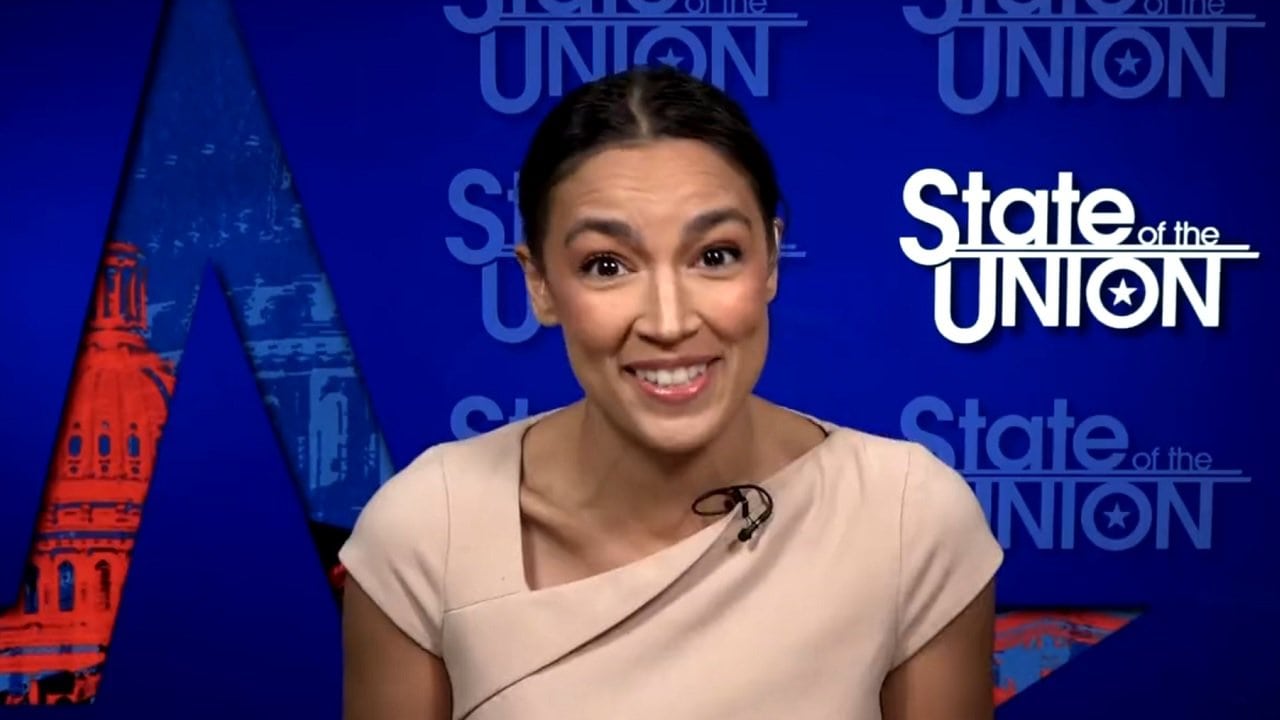
AOC. Image Credit: Creative Commons.
Polarization Limits Swings
Ruffini argues that the United States has become increasingly polarized along partisan and geographic lines; as a result, voters in heavily Republican states tend to remain Republican even in unfavorable national political environments.
Historically, centrist candidates could win states that strongly support the opposing party’s presidential nominee, but such outcomes have become less common as voting patterns have grown more rigidly aligned with national party identification.
Ruffini accepts that Democrats may see a significant national shift in their favor, but he questions whether that shift will overcome double-digit Republican advantages in states like Iowa and Ohio.
He expects some races will move back toward their state’s partisan alignment as Election Day approaches. For Democrats to sweep deeply Republican states would just be historically unusual.
Democratic Overrepresentation?
Ruffini identifies nonresponse bias as a major concern in current polling.
Nonresponse bias, as the name suggests, occurs when certain types of voters are more likely than others to participate in surveys. According to Ruffini, Democratic voters have responded to some polls at about twice the rate of comparable Republican voters.
So, Ruffini argues, actual turnout is unlikely to reflect such a large disparity, and if polling adjustments don’t account for these differences, poll results will be jacked up. Ruffini also pointed to historical polling errors in the Midwest, where polls have overstated Democratic competitiveness in states like Iowa and Ohio.
This year, Ruffini views Democratic optimism in Kansas with heavy skepticism; he would be surprised if polling advantages in ruby-red Kansas actually translate into Democratic gains.
Flip Potential
Ruffini does not dismiss, however, the possibility of major Democratic Senate victories.
Indeed, he considers several Republican-held seats truly vulnerable. In Alaska, Democrat Mary Peltola has demonstrated an ability to attract support beyond traditional Democratic voters.
And Alaska’s unusual political dynamics make the state less predictable than other Republican-leaning states.
Ruffini believes a Democratic victory is possible here. In Texas, Democrat James Talarico could defeat Republican Ken Paxton, Ruffini says.
He cites candidate quality as a potentially important factor; nevertheless, Talarico will face an uphill battle in Texas, a long-standing Republican stronghold. In Ohio, Republican Jon Husted faces former Democratic Senator Sherrod Brown.
Ruffini believes Republican support may be underestimated because of historic polling errors in the Midwest.
But Ruffini is more skeptical of Democratic victories in Iowa and Kansas, where Republicans have major advantages.
In all, Ruffini’s warning highlights the uncertainties surrounding the upcoming midterms.
Democrats may enjoy a national advantage—but that might not translate into taking back Senate seats.
About the Author: Harrison Kass
Harrison Kass is a writer and attorney focused on national security, technology, and political culture. His work has appeared in Tablet, City Journal, The Hill, The Spectator, and The Cipher Brief. He holds a JD from the University of Oregon and a master’s in Global & Joint Program Studies from NYU. More at harrisonkass.com.


