

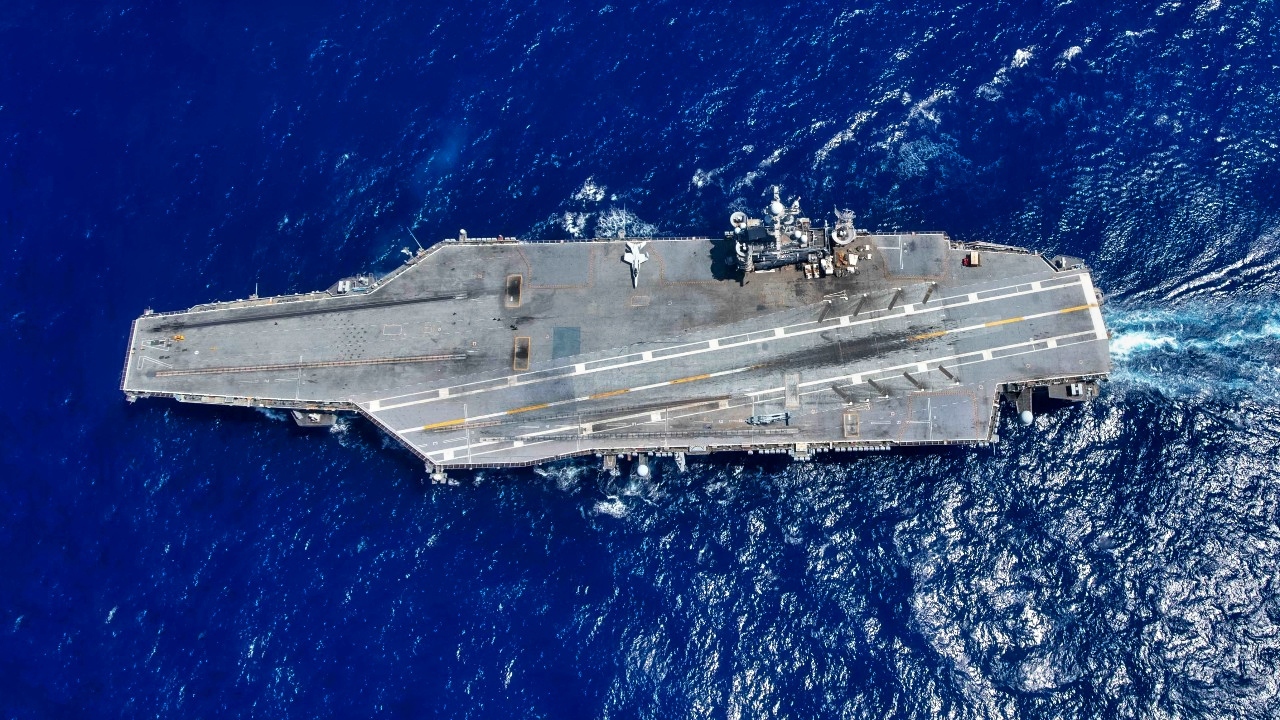
Multiple projectiles struck a tanker ship sailing off the coast of Qatar, the United Kingdom Maritime Trade Operations, an emergency contact body known by its acronym UKMTO, reported. It added that casualties were also reported.
The ship in question was struck while 94 kilometers, or about 58 miles, north of Madinat ash Shamal, a city in the country’s north.
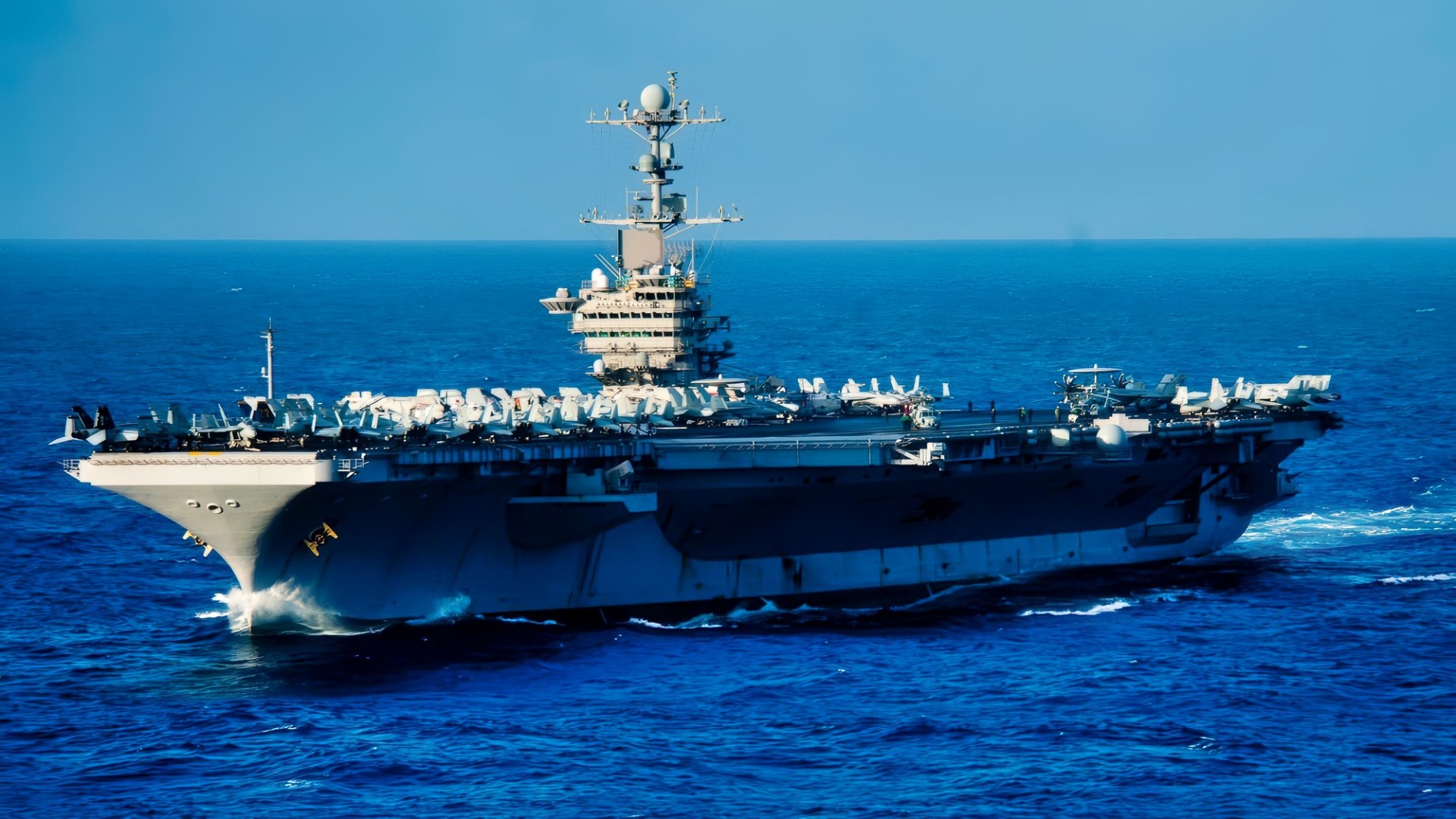
USS John C. Stennis Carrier. Image Credit: Creative Commons.
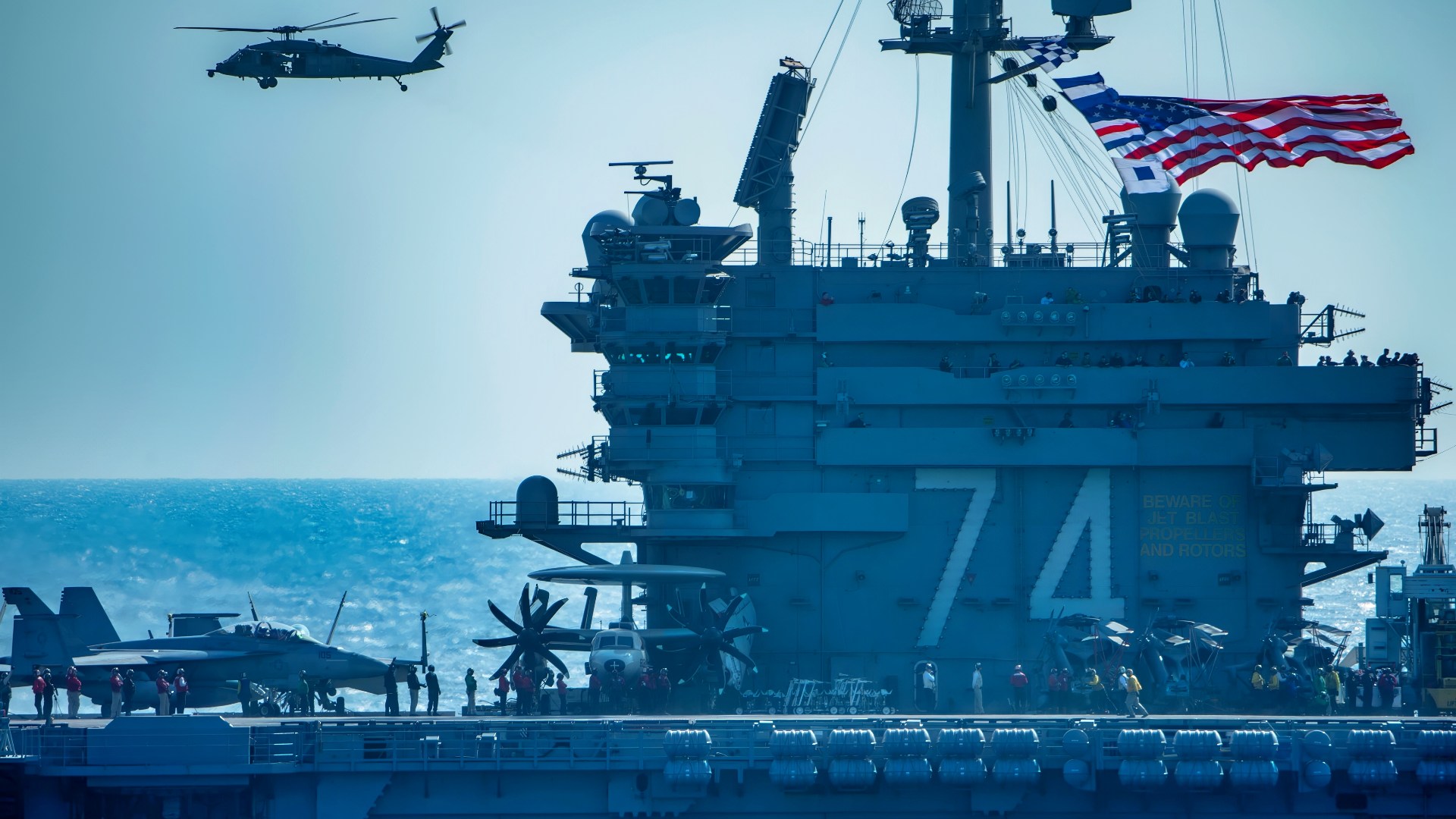
ARABIAN SEA (Dec. 14, 2018) The Nimitz-class aircraft carrier USS John C. Stennis transits the Arabian sea with the Essex Amphibious Ready Group (ARG) and 13th Marine Expeditionary Unit (MEU). The John C. Stennis Carrier Strike Group, Essex ARG, and 13th MEU are conducting integrated operations in the Arabian Sea to ensure stability in the Central Region, connecting the Mediterranean and the Pacific through the western Indian Ocean and three strategic choke points. (U.S. Navy photo by Mass Communication Specialist 3rd Class Tyler Diffie)
The incident, as reported by UKMTO, occurred in the Persian Gulf, but it did not specify the ship’s flag.
Before the attack, UKMTO had reported nine attacks on tanker ships transiting through the Strait of Hormuz in October.
Attacks on shipping through the Strait of Hormuz have increased, with around 20 tanker ships coming under attack. But oil exports from the region have surged in recent days, and in September flows are believed to have reached over 80 percent of prewar levels.
Before the war in Iran erupted, about 125 ships transited the Strait every day, a number that plummeted and only recently has begun to rebound.
But ships making the run through the Strait of Hormuz run a gauntlet of fire. Ships handling oil from multiple countries have been hit.
Some of those strikes have been fatal.
When counting the Strait of Hormuz and the Gulf of Aden, at least one ship per day has been hit by Iranian forces or the Houthi rebels in Yemen they back.
Intriguingly, however, oil still moves out of the region and onward to international markets.
Despite the Danger, Oil Keeps on Flowing
Data from Kpler, a trade intelligence platform, shows oil outflows are rising and are expected to keep increasing.
While diplomacy was previously seen as a necessary precursor to ending the stalemate between Washington and Tehran, that no longer seems to be the case.
“Kpler is moving away from the assumption that reopening the Strait of Hormuz requires a comprehensive political agreement. Our base case will instead reflect slower, uneven normalization under continued conflict, with shipping recovering through operational adaptation rather than following a single diplomatic trigger,” Kpler writes.
“This better reflects what the physical market is already showing. The consensus view had been that a political deal was necessary to reopen the Strait.
Instead, rising transits show it is being prized open operationally. Indeed, transits have risen despite persistent hostilities, challenging the previous assumption that sustained attacks would keep traffic close to zero.”
As a consequence, the price of oil is falling relative to their peak earlier this spring, a reflection of increased availability of oil.
This has been a boon to American President Donald Trump, who has repeatedly asserted the United States Navy’s complete dominance of the region and, by extension, his own as Commander in Chief.
While Tehran has strenuously disputed that claim, the global price of oil is a strong reflection of the relatively wide availability of oil.
But not all the oil leaving the region seems to be moving through the Strait of Hormuz.
How It Is Getting Out
Saudi Arabia’s use of the East-West Pipeline, which bypasses the Strait of Hormuz entirely, has helped oil exit the region.
The pipeline ends at Yanbu, a Saudi port on the Red Sea, and as of Tuesday, it facilitates the transfer of 5.8 million barrels of oil per day, according to the Saudi energy minister, a figure representing more than five percent of global supply.
Ship-to-ship transfers have also helped facilitate the movement of oil.
During those operations, smaller ships sail with transponders turned off and shuttle oil to larger ships waiting at anchor just beyond the Strait of Hormuz.
While the strategy seems to be working for now, it is unclear whether it will be sustainable long term.
Attacks by the Houthis have resulted in temporary closures of the East-West Pipeline, though the kingdom has, seemingly, parried many of those thrusts successfully despite widespread attacks.
The shuttle strategy also has downsides, including higher shipping and freight costs.
It also requires many ships to pull off successfully, diverting tonnage from other locations where it could be used.
Some Asian oil purchasers have been forced to source oil elsewhere.
At the same time, oil prices remain relatively high, even if they are lower than they were.
The Group of Seven agreed last week to release up to 100 million barrels of oil held in reserve, a move likely to cool oil prices, but burning through reserves comes at its own cost.
One is less flexibility to respond to future crises, and the sustainability of multiple repeated releases is questionable.
About the Author: Caleb Larson
Caleb Larson is an American multiformat journalist based in Berlin, Germany. His work covers the intersection of conflict and society, focusing on American foreign policy and European security. He has reported from Germany, Russia, and the United States. Most recently, he covered the war in Ukraine, reporting extensively on the war’s shifting battle lines from Donbas and writing on the war’s civilian and humanitarian toll. Previously, he worked as a Defense Reporter for POLITICO Europe. You can follow his latest work on X.


