

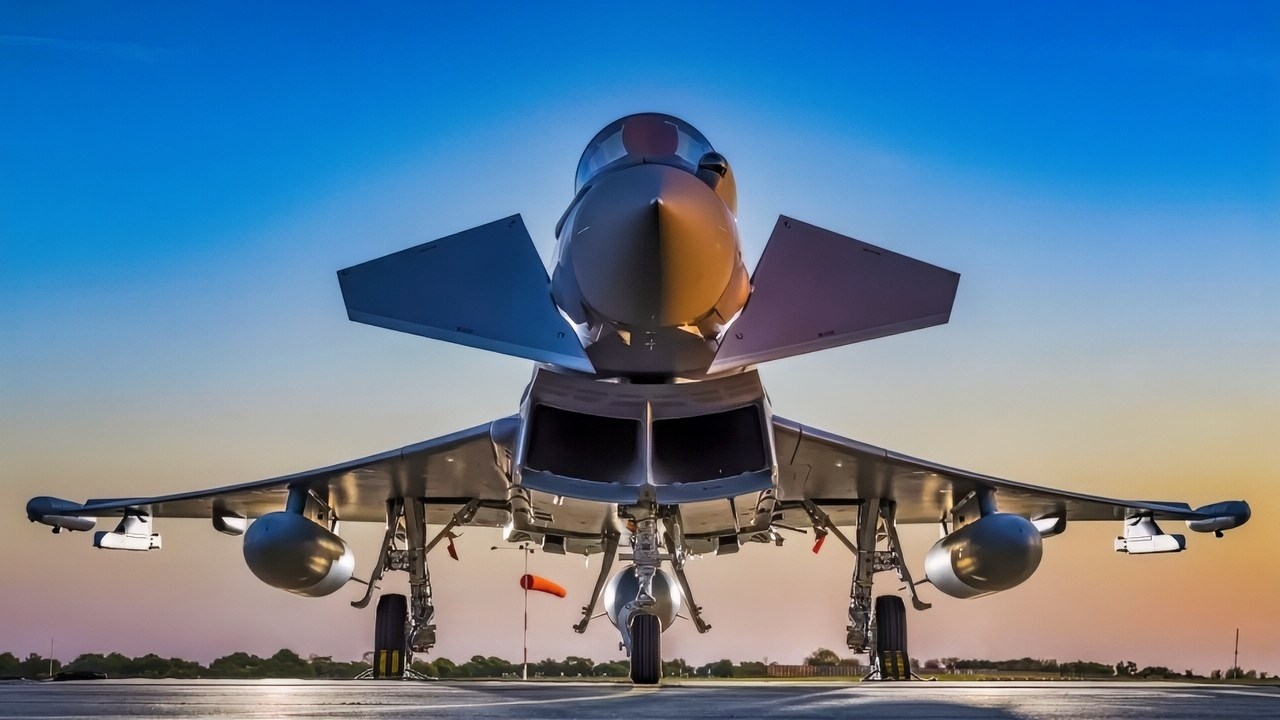
Summary and Key Points: Defense expert Harrison Kass evaluates the Eurofighter Typhoon, a multinational delta-wing platform designed for high-maneuverability air combat.
-Despite the shift toward stealth networking, the Typhoon maintains relevance through Block 4 upgrades, including Active Electronically Scanned Array (AESA) radar and the Meteor long-range missile.

Eurofighter Typhoon Upgrade. Image Credit: Creative Commons.

Eurofighter Typhoon Fighter Training. Image Credit: Creative Commons.
-Kass explores the “Thriftier Option” logic, in which the Typhoon offers a lower lifecycle cost than the F-35 Lightning II.
-The report concludes that the Typhoon’s evolution into a multirole platform—capable of SEAD and maritime strikes—combined with European industrial offsets, ensures its position as a Tier-1 kinetic alternative in the 2026 global fighter market.
The Eurofighter Typhoon Legacy: Why 4th-Gen Lethality Still Competes in the Age of Stealth
The Eurofighter Typhoon first entered service in the early 2000s, the product of a multinational European effort to produce a modern air superiority fighter.
Originally designed during the late Cold War to counter Soviet aircraft, the Typhoon’s role has been incrementally expanded, allowing for enduring relevance long after the Soviet threat has disappeared. And despite the emergence of fifth-generation stealth aircraft, like the F-22 and F-35, the Typhoon continues to attract new export customers around the world.
Germany, the United Kingdom, Italy, Spain, Saudi Arabia, Kuwait, Qatar—all still operate the Typhoon, raising the question: why are countries still so interested in a fourth-generation Cold War design in the era of fifth-generation stealth and networking?
Introducing the Eurofighter Typhoon
The Typhoon was the result of a European consortium involving the U.K., Germany, Italy, and Spain. With development beginning in the 1980s, NATO was focused on countering advanced Soviet fighters—a design goal that the Typhoon embodied.
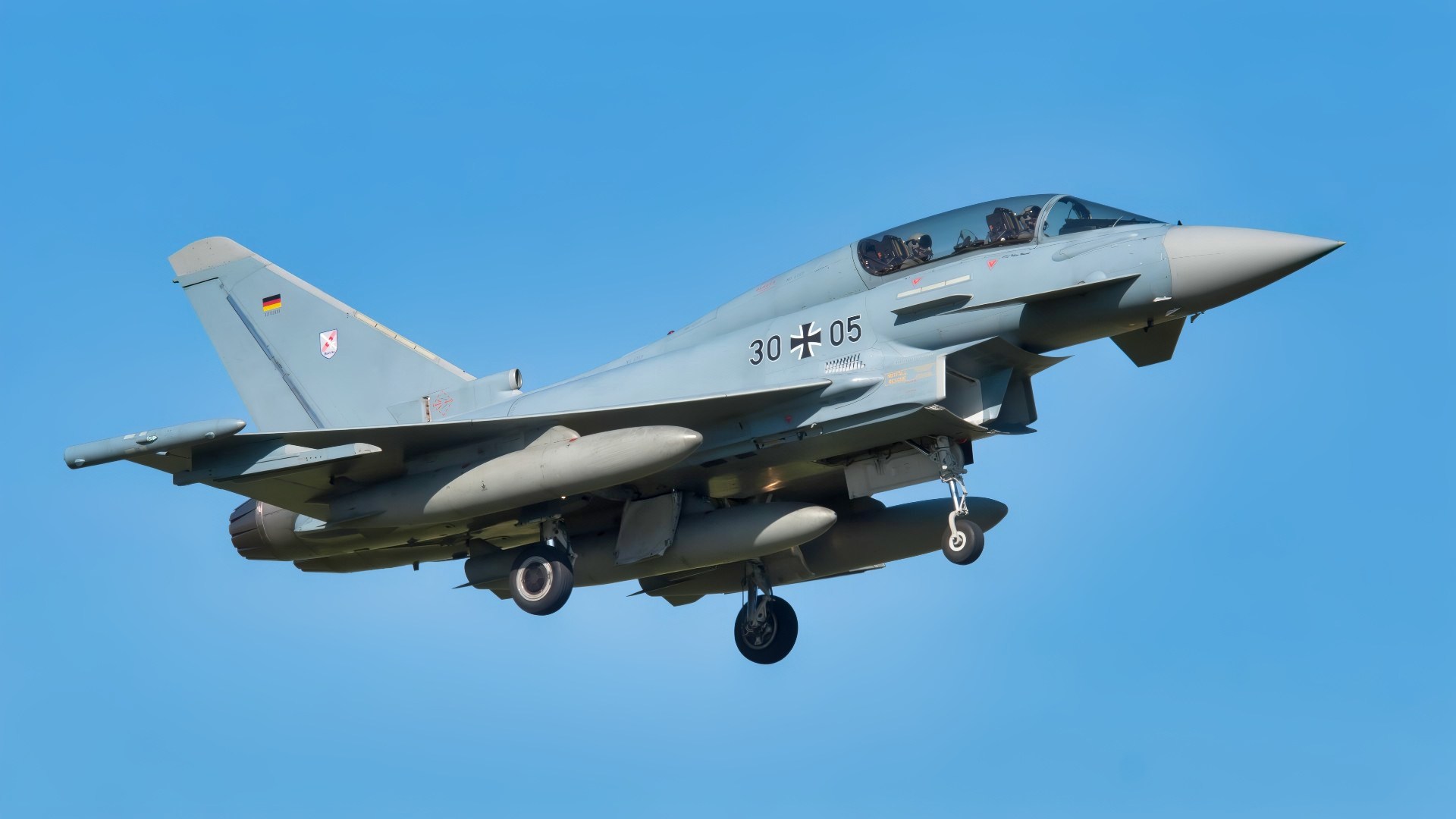
Eurofighter Typhoon Training in Sky. Image Credit: Creative Commons.
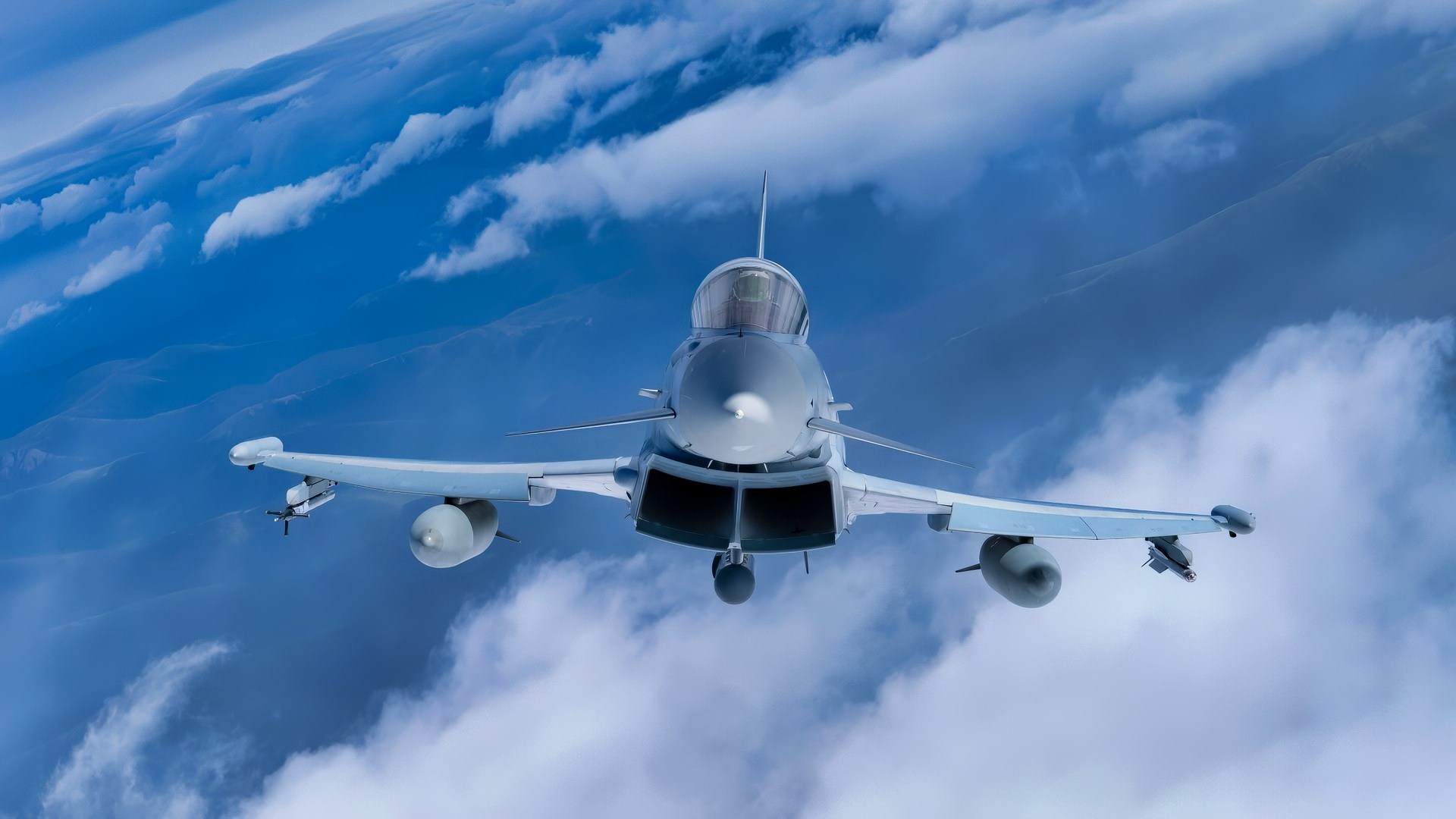
A German Air Force Eurofighter Typhoon flies over Alaska during exercise Arctic Defender 24 at Joint Base Elmendorf-Richardson, Alaska, July 8, 2024. Arctic Defender is a German Air Force-led exercise that provides a unique opportunity to integrate various forces into joint, coalition and multilateral training from simulated forward operating bases and is part of several exercises under Pacific Skies 24. Pacific Skies is a combination of several exercises in the Indo-Pacific theater in which German, French and Spanish air forces participate with U.S. forces. (U.S. Air Force photo Senior Airman Shelimar Rivera Rosado)
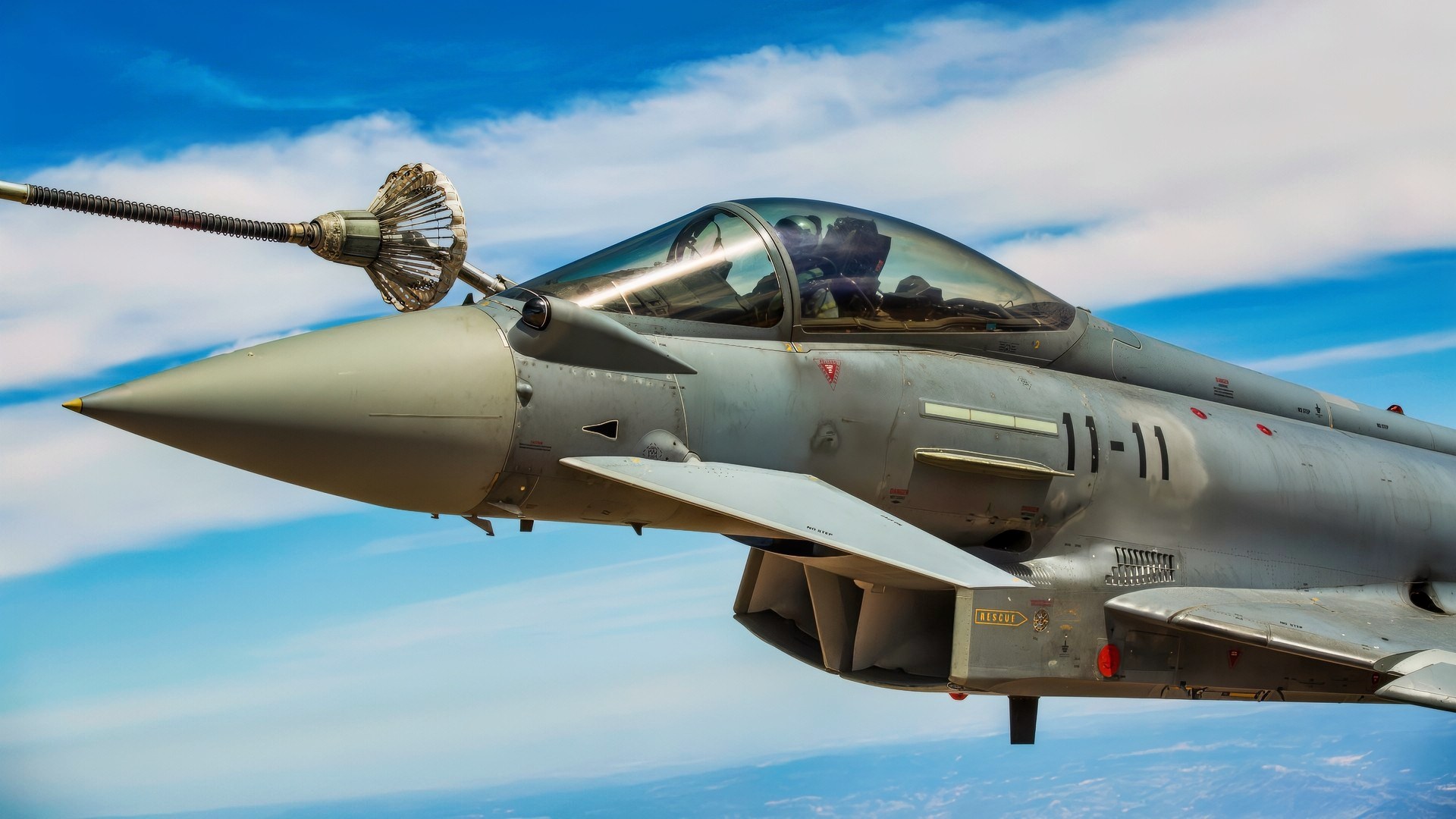
A Eurofighter Typhoon with the Spanish Air Force based out of Morón Air Base, Spain, refuels from a KC-130J Hercules, a first for the Marines from Special-Purpose Marine Air-Ground Task Force Crisis Response-Africa, Aug. 13, in Spain. The U.S. and Spain have been fostering one of the closest defense partnerships around the world for more than 60 years. (U.S. Marine Corps photo by Staff Sgt. Vitaliy Rusavskiy/Released)
Its key design priorities included: air-to-air performance, high maneuverability, long-range radar detection, the ability to operate in NATO air defense networks, etc.
The aircraft’s delta-wing and canard configuration allowed for exceptional agility, and the twin engines provide strong thrust and high speed—giving the Typhoon impressive kinetic performance. Even today, decades later, the Typhoon remains one of the most capable non-stealth fighters in service.
Built for Air Superiority
One reason the Eurofighter Typhoon is still relevant in the export market is the platform’s capable air-to-air performance.
With a high thrust-to-weight ratio, excellent maneuverability, and powerful radar/sensors, the Typhoon is effective at both dogfighting and beyond-visual-range combat. Modern upgrades—i.e., AESA radar, advanced electronic warfare suites, integration with the Meteor air-to-air missile—have only continued to enhance the aircraft’s air superiority prowess, allowing the Typhoon to remain competitive against many modern fighters.
Multirole Conversion
Although the Typhoon was initially designed for air superiority, the jet has evolved into a multirole aircraft (following the trajectory of both the F-15 and the F-16). Now, the Typhoon is capable of precision ground attack, suppression of enemy air defenses (SEAD), maritime strike missions, and other missions.
This flexibility makes the Typhoon attractive to air forces that want a single platform capable of performing multiple missions—which happens to be most air forces.
Proven Operational Record
The Eurofighter Typhoon has been used in several real-world military operations, demonstrating that the aircraft is combat-capable.
Examples include NATO operations in Libya, coalition air operations in Iraq and Syria, and air policing missions across Europe.
This combat experience shows that the Typhoon is reliable and adaptable in the tighter-margined world of combat—a demonstration that enhances the jet’s value on the export market.
The Political Angle
Aircraft purchases are rarely about pure technical performance. (Just ask the Canadians.) And here, the Typhoon benefits from the political and industrial advantage of being European. Countries purchasing the aircraft often receive industrial offsets, technology transfers, and local production opportunities.
This approach allows governments to support domestic aerospace industries. And buying European is generally a more neutral option than buying American or Russian. Indeed, for many purchasers, the Typhoon facilitates strategic independence.
Buying European aircraft reduces reliance on U.S. defense systems, strengthens Europe’s aerospace sector, and supports regional defense cooperation. Therefore, the Typhoon plays an important role in maintaining Europe’s ability to design and produce advanced combat aircraft.
Thriftier Option
Let’s not forget: fifth-generation fighters are expensive. The American F-35, for example, offers significant advantages, but also includes expensive acquisition prices, complex maintenance requirements, and specialized infrastructure needs. That’s not cheap. By comparison, the Typhoon can be purchased, and operated over the life cycle of the jet, for much less. For some countries, the Typhoon is a practical and affordable option that brings sufficient capability.
Still Selling
The Typhoon occupies a unique position in the global fighter market, combining strong air combat performance with modern upgrades and European political backing.
For countries that can’t afford fifth-generation fighters—or do not want to become too entangled with the United States—the Typhoon remains an attractive, combat-proven option. As long as modern upgrades continue, and export partnerships remain strong, the Typhoon is likely to be a relevant fighter for years to come.
About the Author: Harrison Kass
Harrison Kass is an attorney and journalist covering national security, technology, and politics. Previously, he was a political staffer and candidate, and a US Air Force pilot selectee. He holds a JD from the University of Oregon and a master’s in global journalism and international relations from NYU.


