

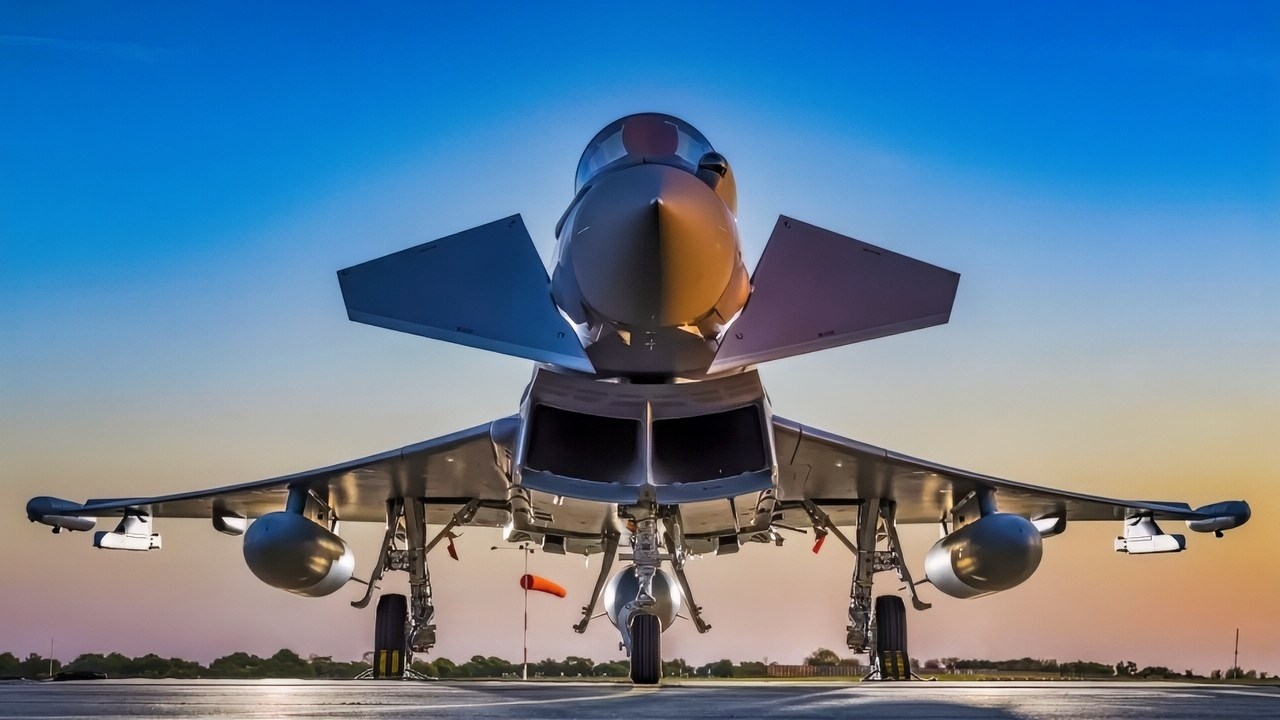
Key Points and Summary – The Eurofighter Typhoon began life as a pure air-superiority dogfighter, but Europe’s security environment and budget realities have turned it into something very different.
-Instead of sliding into legacy status, the jet is evolving into a “Super Typhoon” through rolling upgrades in sensors, engines, weapons, and electronic warfare.
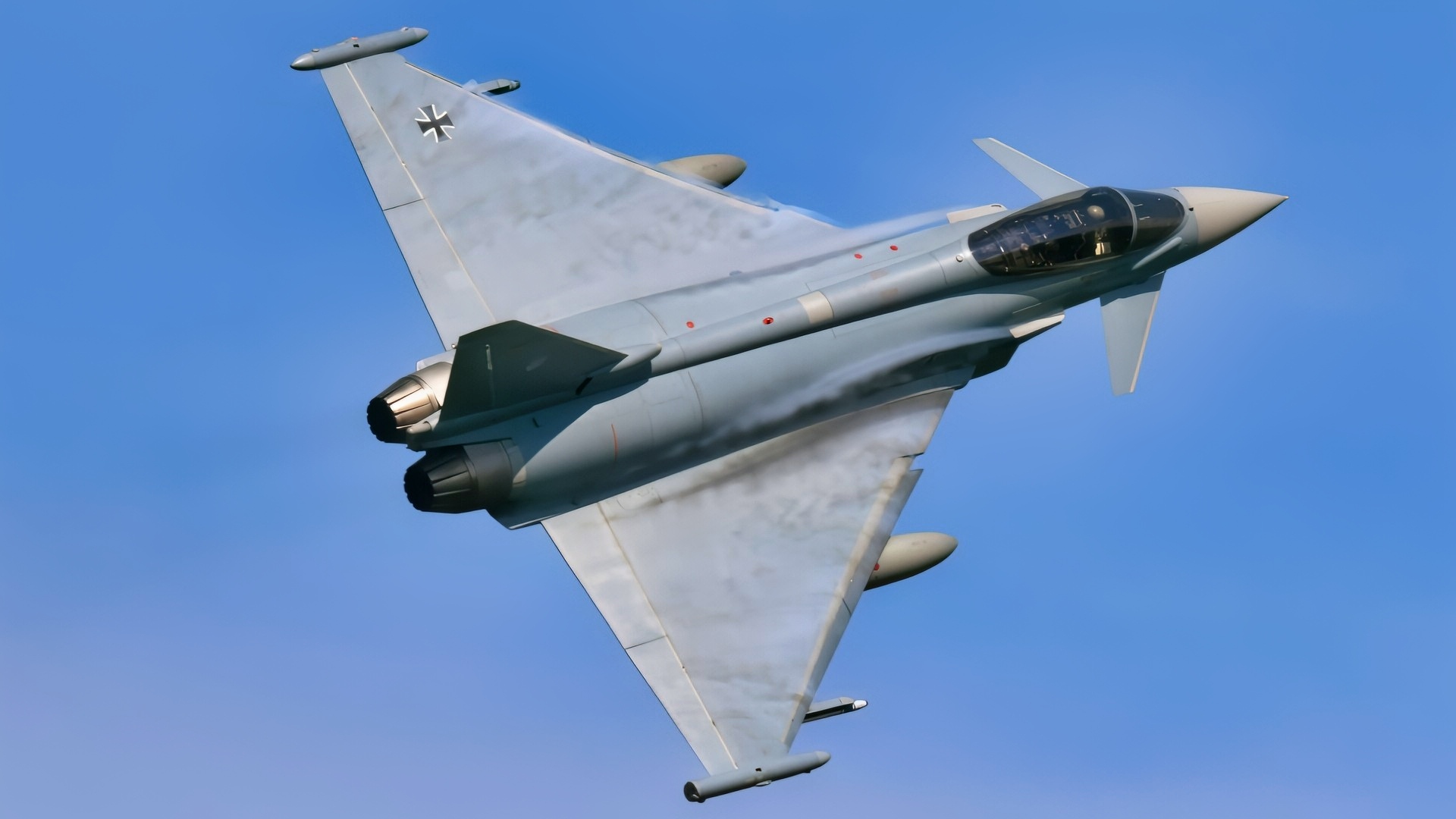
A German Air Force pilot, assigned to the German Air Force Weapons School, conducts strafing runs with an Eurofighter Typhoon in conjunction with U.S. Air Force Joint Terminal Attack Controller assigned to 2d Air Support Operations Squadron identifying targets on the ground at the 7th Army Training Command’s Grafenwoehr Training Area, Germany, June 9, 2021. (U.S. Army photo by Gertrud Zach)
-With ECRS AESA radar, more powerful EJ200 engines, and Meteor, Storm Shadow, and Taurus integration, the Typhoon is being reshaped into a true 4.5-generation multirole platform.
-For Europe, it is both an industrial lifeline and a combat-credible bridge—buying time until sixth-generation fighters like FCAS finally arrive in the 2040s.
Super Eurofighter Typhoon: How Europe Turned the Eurofighter Into a 4.5-Gen Beast
When the Eurofighter Typhoon entered service in the early 2000s, it was a pure air-dominance platform, optimized for dogfighting and high-altitude interception, nothing else.
Two decades later, however, the platform has been modified for multirole service.
Instead of fading into legacy status, the Typhoon continues to receive upgrades, effectively turning the aircraft into a fourth-generation-plus platform.
The upgraded Typhoons have come to be known as the “Super Eurofighter Typhoon.”
Still, the Super Typhoon is not a single platform, but instead a rolling evolution of upgrades designed to keep the Typhoon competitive until a European sixth-generation fighter arrives.
Historical Context
The Typhoon was developed through a collaborative program involving the UK, Germany, Italy, and Spain. Developed during the late Cold War, the Typhoon was a European effort to counter advanced Soviet fighters like the MiG-29 and Su-27.
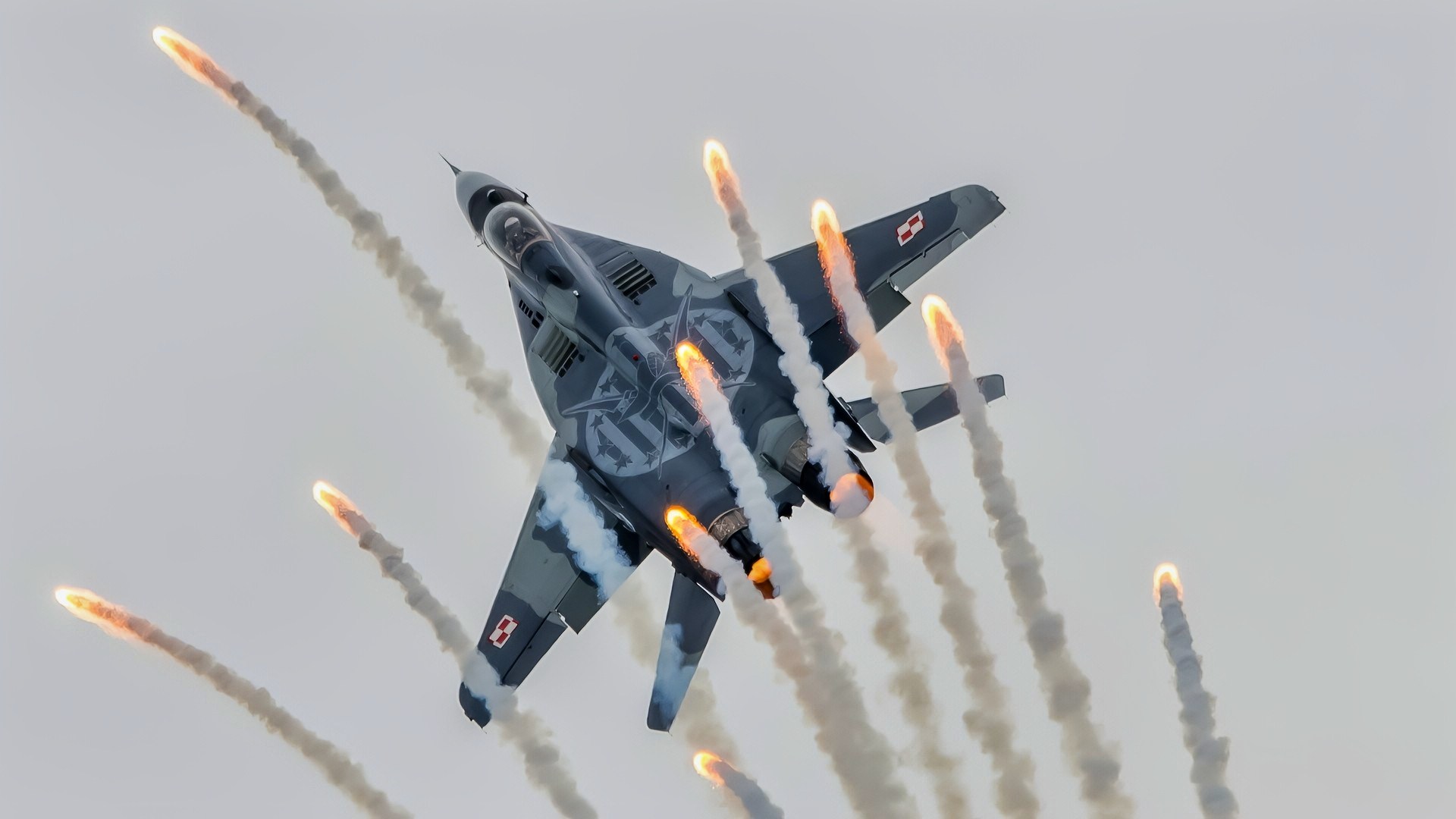
MiG-29 Flair Drop Creative Commons Image.
Program delays prevented the Typhoon from serving during the Cold War; service was delayed until the turn of the century, when pure air-dominance fighters were less necessary, given the Soviet collapse.
Accordingly, the Typhoon was modified from its original function as a pure dogfighter with agility and climb rate on par with the American F-15 to a multirole fighter.
The Typhoon relied on two Eurojet EJ200 turbofans, each with 20,000 pounds of thrust, for propulsion.
With Mach 2 speed, a 1,800-mile range, an 800-mile combat radius, and a service ceiling of 55,000 feet, the Typhoon was crafted with an impressive performance envelope.
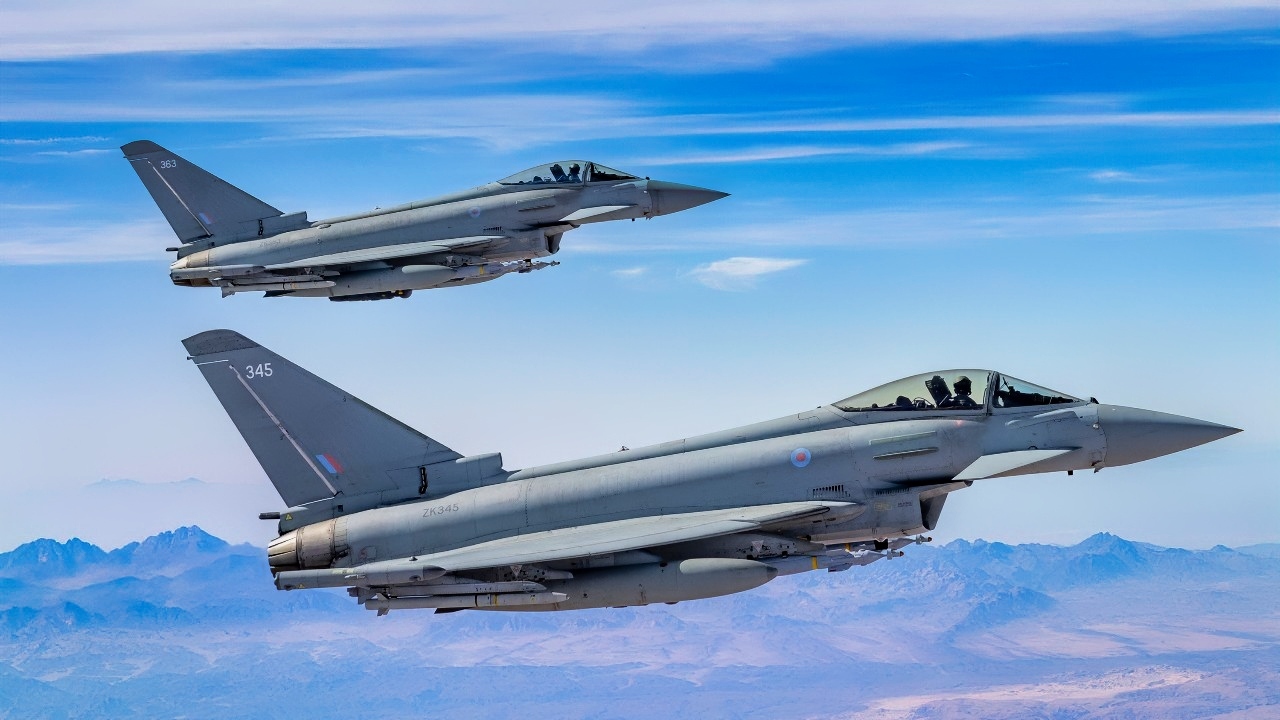
Image of two RAF Typhoon FGR Mk 4 aircraft, seen here during a routine mission over the Middle East as part of Operation Shader.
Op SHADER air to air refuelling sortie took place on Wednesday 13th November, maintaining Typhoon presence across the Middle East running routine missions.
Typhoon, Voyager and Atlas A400 aircraft operate from RAF AKrotiri as part of Op SHADER, part of the International coalition effort fighting terrorist organisations in the Middle East region.
The RAF has been engaged in this mission since 2014 combating Daesh in Iraq and Eastern Syria as well as Houthi Rebels more recently in Yemen who threaten global shipping. Image Credit: Creative Commons.

A UK Typhoon flies above the Baltics on 25 May 2022. Image Credit: NATO.
The delta wing-canard design and extremely high thrust-to-weight ratio gave the Typhoon fantastic acceleration and agility.
And with 13 hardpoints, the Typhoon was capable of hefting an impressive 16,5000 payload.
More importantly, these performance specs gave the Typhoon the fundamental value to keep investing in and upgrading over the decades.
Why Upgrade?
Developing new fifth- or sixth-generation aircraft from scratch is one of the most taxing industrial endeavors a nation can undertake.
Only a few of the world’s 200+ nations have the capacity to execute such an endeavor with any reasonable likelihood of success.
And such endeavors cost hundreds of billions, and take decades to complete. Developing new fifth- and sixth-generation aircraft is highly prohibitive. Europe is already underway with the design of a sixth-generation fighter, the FCAS, which won’t arrive until the 2040s at the earliest. But that leaves a nearly two-decade gap.
Fortunately, the Typhoon’s airframe is so aerodynamically strong that it still outperforms many modern jets in terms of pure kinetics. So the airframe is worth investing in.
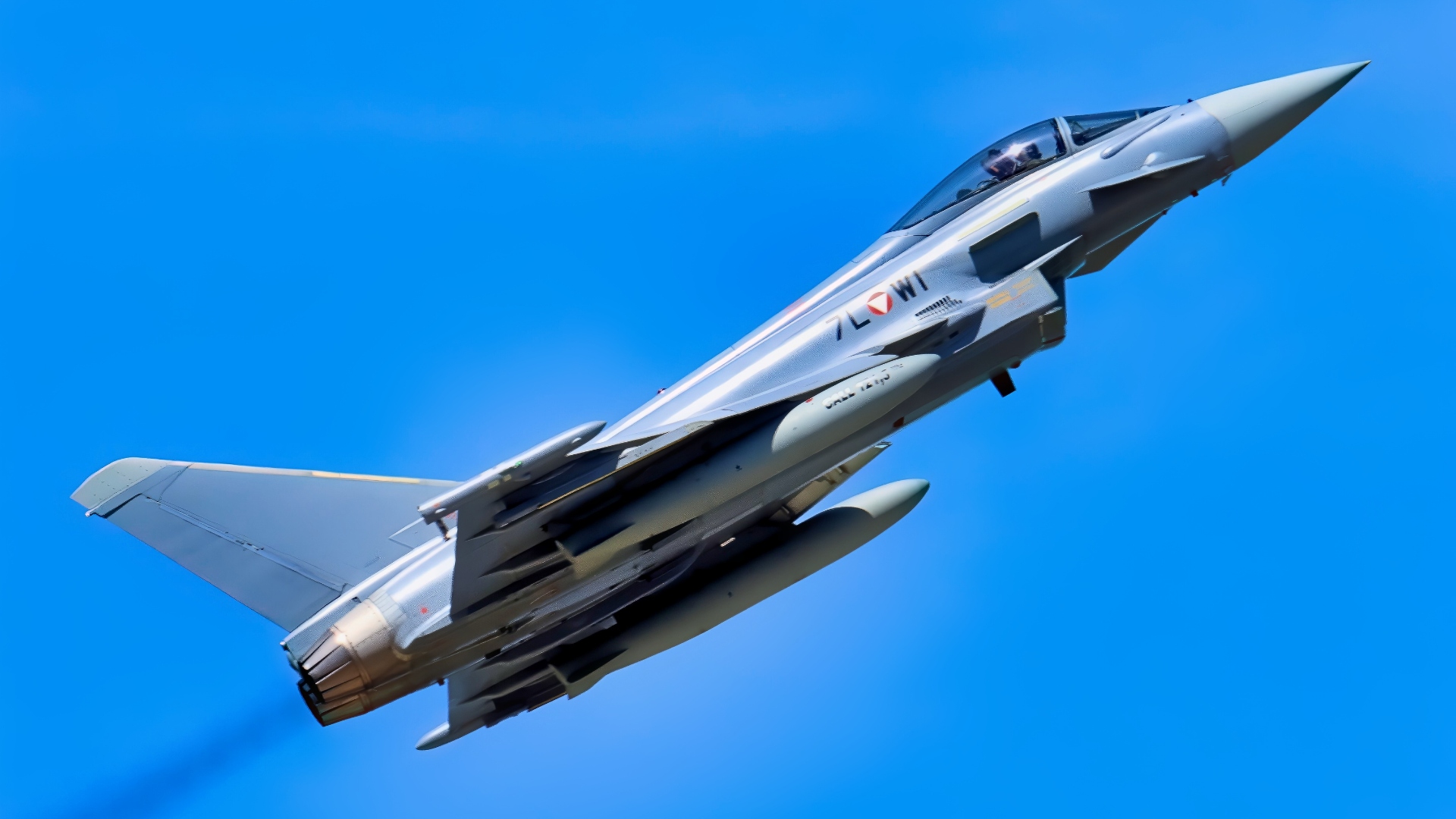
Eurofighter Typhoon. Image Credit: Creative Commons.
There are also political benefits to upgrading an aircraft; upgrades keep domestic aerospace industries alive and interconnected.
And European countries want something functional now, something that can counter Russian and Chinese threats.
An upgraded Typhoon is one of the easiest ways to offer a meaningful counter without waiting for a new platform.
Key Upgrades
One of the primary upgrades to the Super Eurofighter Typhoon is the ECRS AESA radar.
The Mk 2 variant, especially, offers game-changing electronically scanned radar capabilities with Wideband jamming, electronic attack functions, high-resolution SAR mapping, and significant BVR tracking improvements, giving the Typhoon the ability to conduct an EW role comparable to that of the American EA-18G Growler.
The engine can also be upgraded. While the EJ200 already offers excellent thrust, an upgraded version will deliver 15 percent more thrust, with improved durability and fuel economy.
The new engine will allow for heavier payloads, faster climb rates, and longer supercruise.
Advanced weapon integration is also available.
The Meteor, a ramjet BVR missile, is the world’s best long-range air-to-air missile, giving the Typhoon a leg up in the long-range contests that now dominate aerial combat. Storm Shadow and Taurus cruise missiles will enable the Typhoon to conduct deep-strike missions.
A variety of anti-ship weapons will help expand the Super Eurofighter Typhoon into an aircraft capable of conducting long-range strike missions.
These upgrades should give Europe a credible counter to Russia’s Su-57 and China’s J-20 while reducing European dependence on US fifth-generation exports like the F-35.
Upgrades also bolster the Typhoon’s export strength, helping Eurofighter compete with Saab, Dassault, and American companies for a slice of an increasingly competitive market.
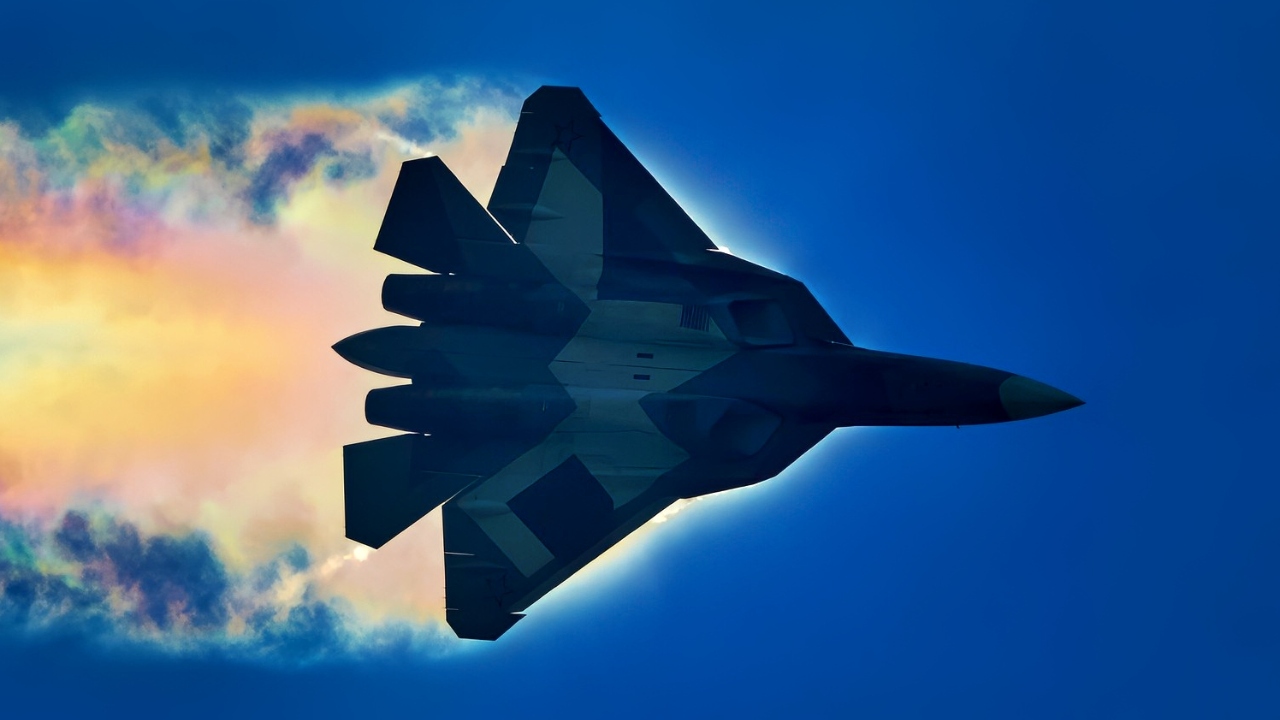
Su-57 Felon Fighter with Trail. Image Credit: Creative Commons.
In sum, the Super Eurofighter Typhoon isn’t going anywhere; the aircraft will continue to be upgraded, with future iterations of the Super Typhoon providing a feasible bridge to forthcoming sixth-generation fighters.
About the Author: Harrison Kass
Harrison Kass is an attorney and journalist covering national security, technology, and politics. Previously, he was a political staffer and candidate, and a US Air Force pilot selectee. He holds a JD from the University of Oregon and a master’s in global journalism and international relations from NYU.


