

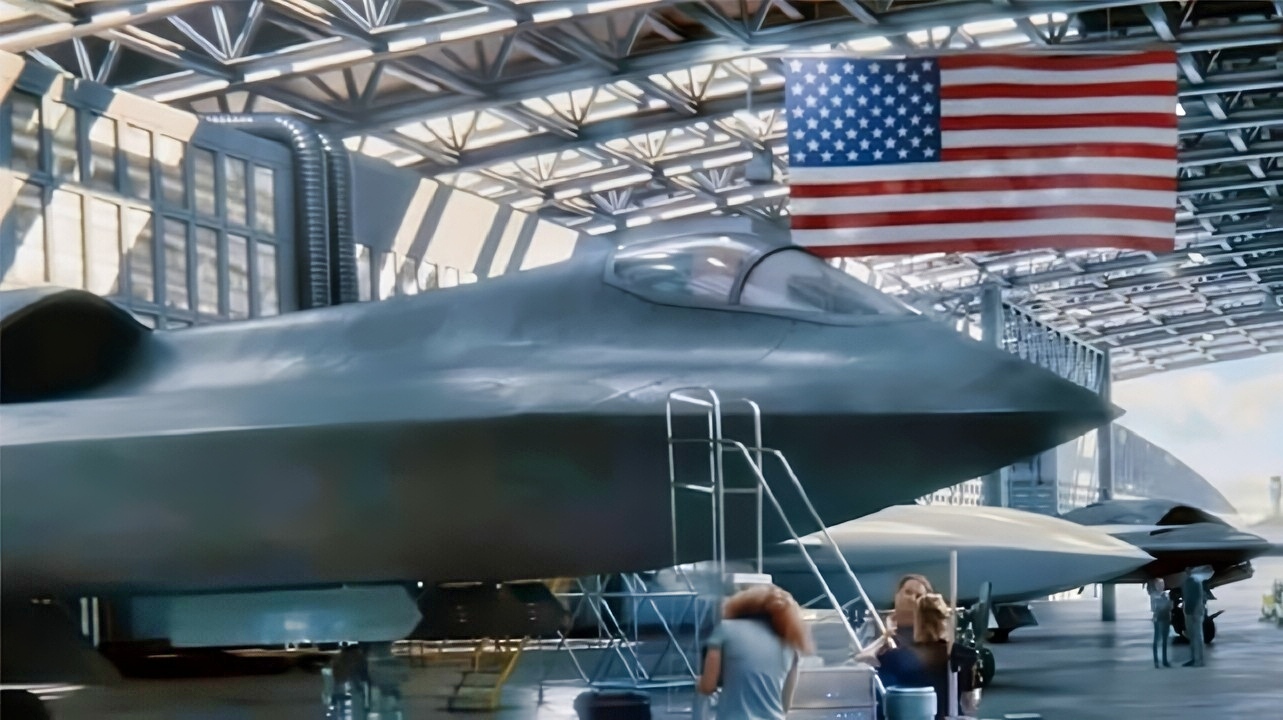
Key Points and Summary – The Navy’s secretive F/A-XX isn’t a luxury add-on to the F-35C but a necessary leap for Pacific warfighting. China’s emerging carrier fighters and long-range “carrier-killer” missiles demand a jet with much greater range, B-21-like stealth and sixth-generation sensors and AI.
-While the F-35C can be steadily upgraded, Osborn contends there are hard limits to what its airframe and architecture can absorb.
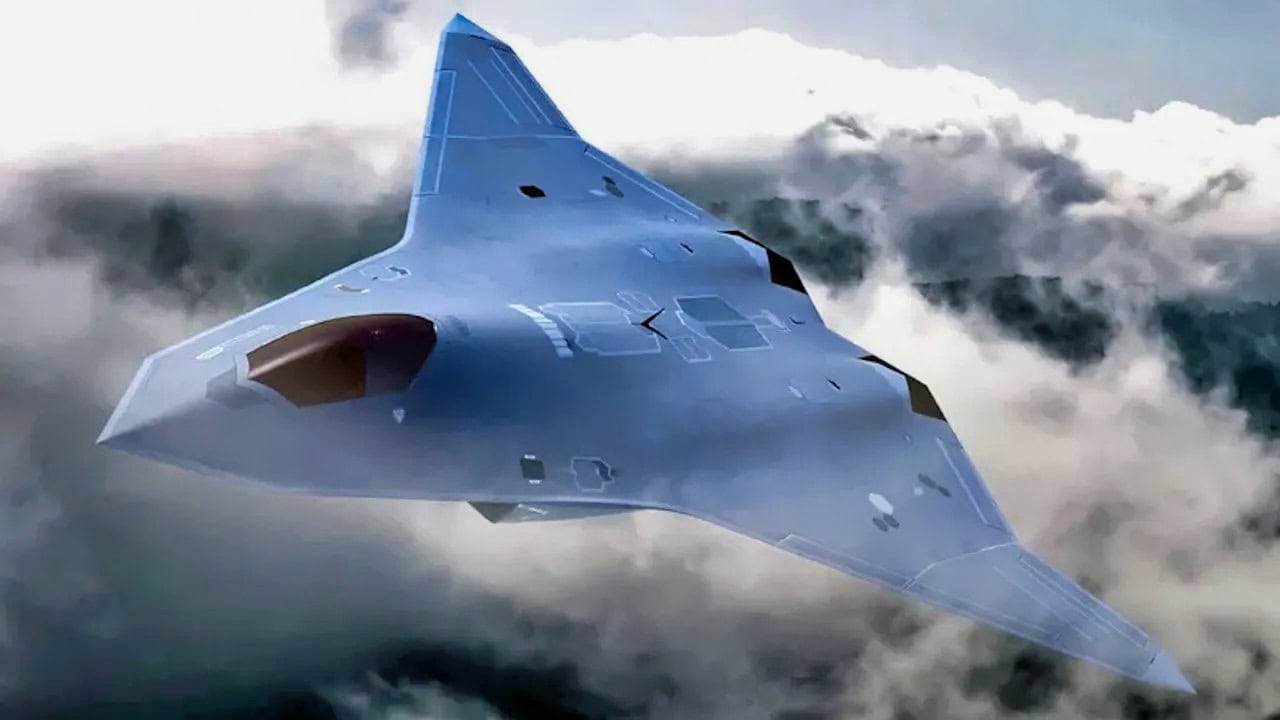
F/A-XX Fighter Mockup. Image Credit: Creative Commons.
-A clean-sheet F/A-XX flying alongside the F-35C into the 2070s would restore reach, survivability and networked lethality from the carrier deck—if budget politics don’t kill it first.
-The emerging yet mysterious and still uncertain F/A-XX carrier-launched stealth fighter appears headed toward existence and eventual operational life.
The One Reason the Navy Still Needs the F/A-XX Stealth Fighter
The jet continues to inspire the imagination, as it may introduce the stealthiest, fastest, and most capable maritime fighter the world has ever seen.
It is also conceivable that the program could be cut or cancelled, thereby imperilling the Navy’s ability to retain maritime warfare superiority.
The arrival of the People’s Liberation Army Air Force’s carrier-launched J-35, and the possibility that a 6th-gen J-36 or J-50 could have a carrier-launched variant, suggests that acquiring F/A-XX would be essential for the Navy.
Indeed, there have been many technological breakthroughs since the dawn of the now cutting-edge, stealthy, carrier-launched F-35C.
Yet some might wonder whether there are sufficient capability advances to justify a new F/A-XX platform. This seems to be a fair question, given the massive extent to which the F-35C can be continuously upgraded.
Block 4 software upgrades, for example, will introduce the next-generation Stormbreaker and AARGM-ER weapons. Computing can be continuously upgraded with AI-capable systems, and stealth coatings and radar-absorbent materials can also be improved in the coming years.

FA-XX Render from Northrop Grumman.
Therefore, is there truly an operational need for an F/A-XX in light of the continued promise of the highly capable F-35C?
While there are sure to be many unknowns when it comes to this question, there do appear to be some potentially paradigm-changing technological advances in recent years that strongly support the argument for an F/A-XX.
Perhaps of greatest significance, the F/A-XX would not replace the F-35C but would fly alongside it for decades to come. An upgraded F-35 will remain relevant and potentially superior to rival aircraft in many respects into the 2070s.
Yet there will continue to be defining advances in stealth technology, fighter jet range, sensing and targeting fidelity, and AI-enabled computing and data processing.
Stealth Breakthroughs
In terms of pure stealth, the available renderings of F/A-XX configurations suggest substantial breakthroughs in reducing the radar signature of a fighter jet.
It appears possible that an F/A-XX jet could be built to achieve fighter jet-like agility, speed, and performance parameters with a fully horizontal, ultra-stealthy bomber-like blended wing-body fuselage configuration.
Stealth bombers such as the B-2 and B-21 are regarded as the stealthiest in existence, given their purely horizontal, smooth, rounded exteriors.
The absence of protruding structures, tails, and vertical shapes offers ground-based enemy radar “pings” very few contours off of which to “bounce” and generate a return rendering.
A B-21, for instance, is expected to appear like a small bird to enemy radar systems.
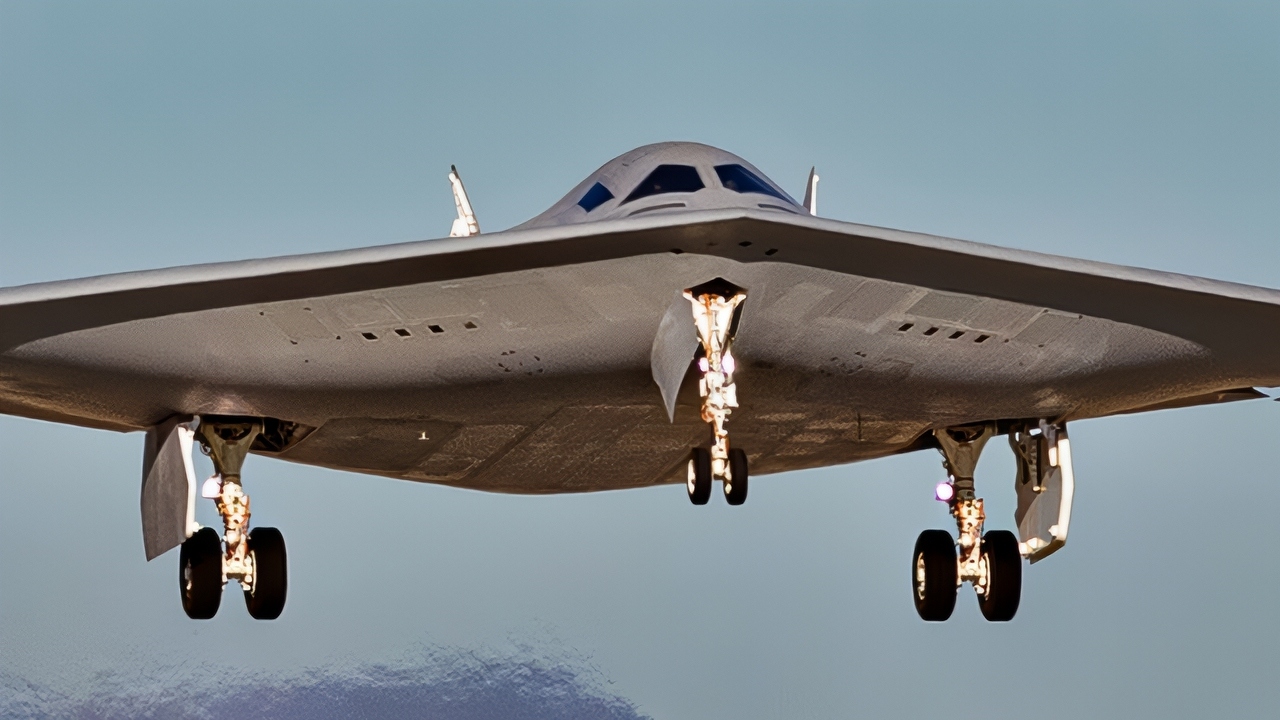
A second B-21 Raider test aircraft takes off, Sept. 11, from Palmdale, Calif., to join the Air Force’s flight test campaign at Edwards Air Force Base, Calif. The addition of the second test aircraft expands mission systems and weapons integration testing, advancing the program toward operational readiness. (Courtesy photo)
Fighter jets, while still stealthy, are considered less stealthy than high altitude bombers because they have historically needed fins, tails, sharp angles, and other protruding structures to “vector” and aerodynamically achieve air combat agility.
However, it appears technological breakthroughs in aerial maneuverability may enable a purely horizontal stealth fighter, such as the F-47 or F/A-XX, to achieve F-22 and F-35-like air dominance with a much stealthier, bomber-like airframe.
In essence, the F/A-XX could have B-21-like stealth capability combined with F-22 speed and aerial maneuverability. This possibility alone, it seems, could be sufficient to justify building an entirely new aircraft.
F/A-XX: AI, Sensing, Range
The F-35 was deliberately engineered to accommodate sensing, computing, and weapons upgrades with technical standards designed to integrate new technologies as they emerge.
This will serve the aircraft well into the future and helps explain why the Pentagon plans to fly the F-35 into the 2070s.
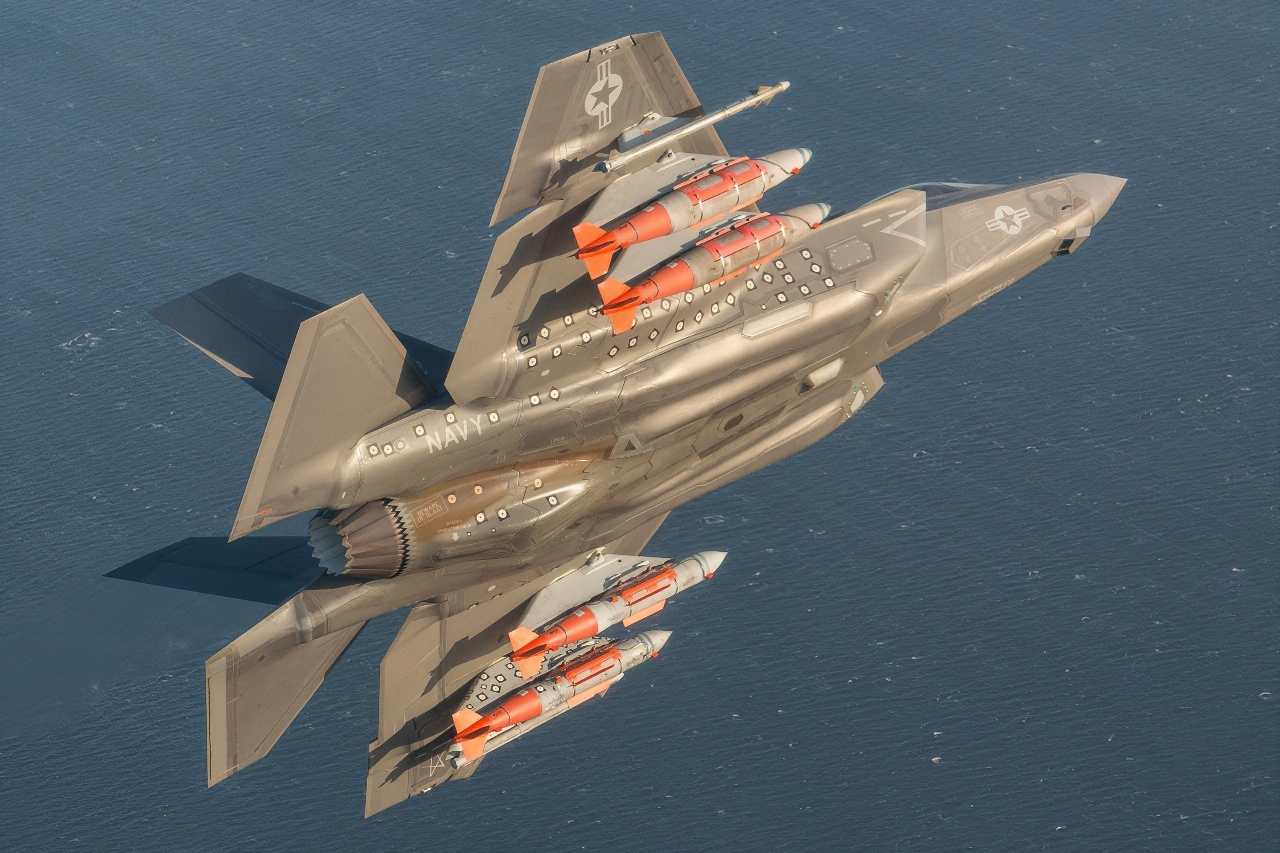
Billie Flynn, F-35 Pax River ITF, conducts an external GBU-31 and AIM-9x buffet and flutter test flight (Flt 592) from Naval Air Station Patuxent River, Maryland, April 4, 2018, in an F-35C test aircraft, CF-2. Photo courtesy of Lockheed Martin.
However, advances in AI, sensing, targeting, and range could be sufficient to require a new jet, yet another generation beyond the F-35.
It is possible that, despite the F-35’s upgrade potential, there could be limitations on the extent to which new mission systems, sensing, and AI-enabled computing can be accommodated by its hardware.
It might be necessary to engineer an entirely new aircraft to best leverage a new generation of AI, long-range sensing, and weapons.
About the Author: Kris Osborn
Kris Osborn is the President of Warrior Maven – Center for Military Modernization. Osborn previously served at the Pentagon as a highly qualified expert in the Office of the Assistant Secretary of the Army—Acquisition, Logistics & Technology. Osborn has also worked as an anchor and on-air military specialist at national TV networks. He has appeared as a guest military expert on Fox News, MSNBC, The Military Channel, and The History Channel. He also has a Masters Degree in Comparative Literature from Columbia University.


JOSEY WALES
December 4, 2025 at 6:54 pm
BY THE TIME THAT ROLLS OFF THE PRODUCTION LINE THE WAR WILL ALREADY BE OVER AND WE’LL BE SCROUNGING THREW RADIOACTIVE RUMBLE FOR SURVIVAL. IT TAKES YEARS FOR ANY THING ON THE DRAWING BOARDS TO MAKE IT TO THE TROOPS. BY THE TIME IT THE TROOPS GET ANYTHING THE WEAPONS SYSTEMS ARE ALREADY OBSOLETE AND OVER BUDGET BY BILLIONS.
Jay
December 5, 2025 at 12:04 pm
I’d like to fly it, but with the radar signature of a small bird moving at Mach 2, or even just 200 knots, I’m not sure how much stealth it really provides. The radar handlers are probably going to call their supervisors over to look at this bird signal moving at jet speeds. Ok, so a BVR might not lock on to it as easily, but the technology is developing so fast that by the time the airplane is built, there will have to be a total reassessment of missile capabilities.