


Key Points and Summary – Expert Dr. Robert Farley lays out a growing fight over the Navy’s F/A-XX sixth-generation fighter.
-While Congress tries to keep the program alive, Defense Secretary Pete Hegseth and the Trump Pentagon have slashed funding and prioritized the Air Force’s F-47, arguing industry can’t support two next-gen jets.

Boeing NGAD F/A-XX Fighter Rendering. Image Credit: Boeing.
-Critics say that ignores history and risks leaving future carriers without a true sixth-gen aircraft once Super Hornets age out.
-Hegseth’s political troubles over a controversial strike near Venezuela only sharpen tensions. Killing F/A-XX, Farley warns, would reshape naval aviation for decades without any clear replacement plan.
F-47 vs F/A-XX: Is the Pentagon Betting on Just One Sixth-Gen Jet?
Is Pete Hegseth going to be able to kill the Navy’s F/A-XX sixth-generation fighter?
Or is the Navy betting that it will be able to outlast his tenure at the Pentagon?
The Trump administration has resolutely supported further development of the Air Force’s F-47 jet.
Still, Hegseth’s Department of Defense has resisted plans to move forward with the Navy’s counterpart aircraft, arguing that two different Sixth Generation fighters represent useless redundancy and that the US aviation industry can’t handle building two aircraft at once.

F/A-XX Handout Photo from Northrop Grumman.
Congress has pushed back on the administration’s claims and has attempted to maintain funding streams for the F/A-XX project.
A newly released letter from Secretary Hegseth underscores DOD skepticism about the Navy’s project and, consequently, suspicion that the new fighter may never get off the ground.
The F/A-XX
The F/A-XX is a sixth-generation multirole carrier-based strike fighter designed to replace the Navy’s F/A-18 Super Hornet fleet as the latter reaches the end of its natural life in the 2030s, and to serve alongside the F-35C.
The projected fighter resembles the F-47, featuring stealth, supercruise, long-range capabilities, an advanced sensor suite, and the capacity to manage a group of unmanned aerial vehicles.
The aircraft is being designed with an open-architecture approach, enabling significant upgrades throughout its life cycle and mitigating concerns about obsolescence.
DoD was supposed to announce a prime contractor for the F/A-XX in March 2025, but instead of deciding between Boeing and Northrop Grumman, the Pentagon slowed down the F/A-XX program in favor of a concentration on the F-47.
In June, news arrived that the Pentagon would dramatically reduce the appropriation for the F/A-XX (to a paltry $76 million) while investing over three billion dollars in the F-47.
It looked as if things might be over for the F/A-XX, but in July the Senate rejected the proposed cuts and attempted to refund the program.

F/A-XX Fighter from Boeing. Image Credit: Boeing.
Hegseth’s letter indicates that the Trump administration has not backed down and that the Department of Defense still thinks that it can do without the Navy’s new fighter.
In the letter, Hegseth reiterated concerns about the US aviation industry’s capacity to handle two major sixth-generation fighter projects at once.
While there’s a logic to this argument, it’s also puzzling with respect to the long-term development of the US aviation industry.
US industry has easily handled two (or more) fighter projects in the past, and generally speaking, the way to increase industrial capacity is to have multiple firms engaging in innovation and production over an extended period of time… or, in other words, precisely what would happen if the US decided to build both the Navy and the Air Force jets.
Hegseth Vulnerabilities
The dispute has come to a head at a moment of vulnerability for Secretary Hegseth, who has come under fire for his role in a follow-up strike that killed two survivors of an alleged Venezuelan drug smuggling boat.
Hegseth has given conflicting accounts over the past several days as to his culpability in the attack, which is (by almost every extant legal authority) a clear violation of International Humanitarian Law (IHL) and the Law of Armed Conflict (LOAC).
While the two issues are technically unrelated, they both reveal conflict within the Department of Defense over Hegseth’s leadership.
Of course, it is unclear how much of the Pentagon’s hostility to the F/A-XX stems from Hegseth’s personal evaluation and how much from broader resistance within the Trump administration.
Hegseth vs. F/A-XX
There’s no apparent connection between Hegseth’s role in naval operations off Venezuela and his opposition to the F/A-XX.
However, if the Secretary of Defense continues to oppose the aircraft, it could generate ill will in the Navy that might spill over into debate over legal culpability in the strikes.
There is known to be significant concern in the Navy over the legality of operations against drug cartels in the Caribbean, and concern in one area can often spill over into another.
That said, if Secretary Hegseth simply represents the will of the Trump administration, his vulnerability may be utterly irrelevant to the aircraft’s future.
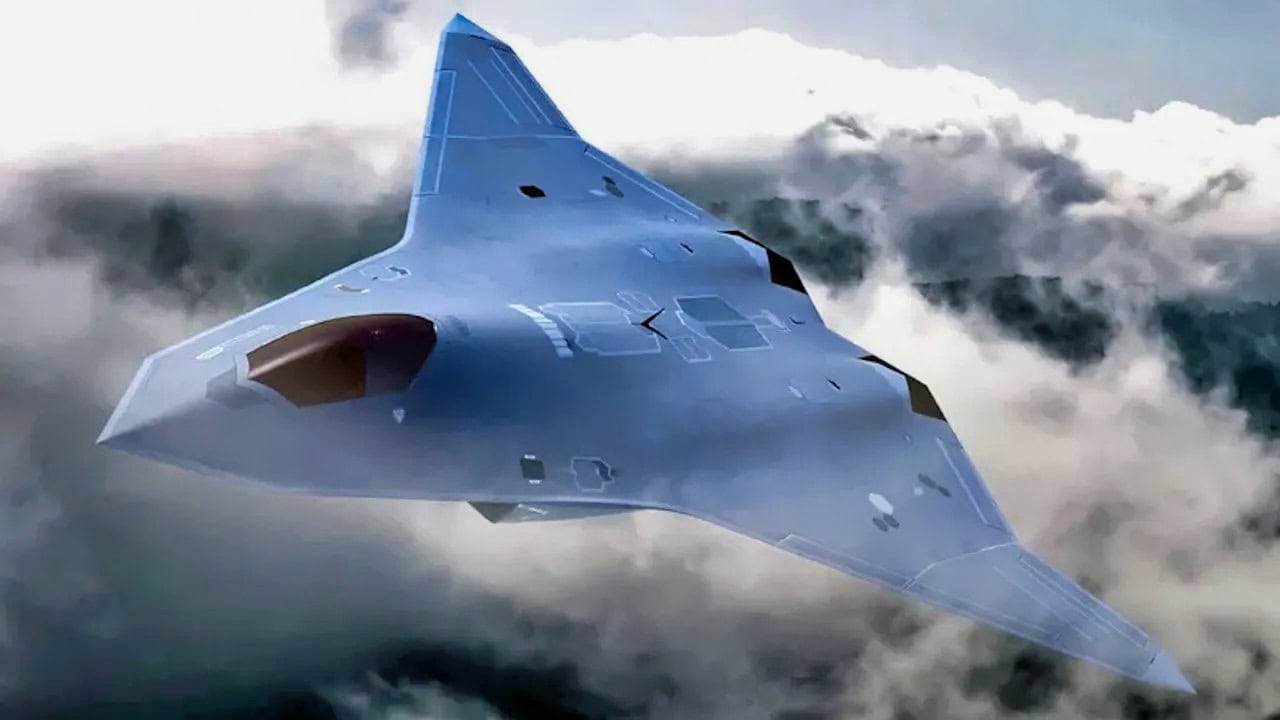
F/A-XX Fighter Mockup. Image Credit: Creative Commons.
But make no mistake; the decision to curtail the F/A-XX would mean a massive change for the future of naval aviation.
Unless the F-47 can be repurposed for carrier operations, killing the F/A-XX would put a stark time limit on the fighter strength of the Navy’s carrier fleet.
Given that the USN expects its most modern carriers to serve another fifty years, this has enormous implications for what the ships will be expected to do.
Unfortunately, Secretary Hegseth’s Pentagon has yet to articulate a clear vision for the future of America’s fleet of capital ships. Confusion over the mission around Venezuela does little to solve this problem.
***CORRECTION: At the top of the piece, we have corrected an instance in which the F/A-XX was referred to as the F-47 NGAD. We apologize for any confusion this caused.
About the Author: Dr. Robert Farley
Dr. Robert Farley has taught security and diplomacy courses at the Patterson School since 2005. He received his BS from the University of Oregon in 1997, and his Ph. D. from the University of Washington in 2004. Dr. Farley is the author of Grounded: The Case for Abolishing the United States Air Force (University Press of Kentucky, 2014), the Battleship Book (Wildside, 2016), Patents for Power: Intellectual Property Law and the Diffusion of Military Technology (University of Chicago, 2020), and most recently Waging War with Gold: National Security and the Finance Domain Across the Ages (Lynne Rienner, 2023). He has contributed extensively to a number of journals and magazines, including the National Interest, the Diplomat: APAC, World Politics Review, and the American Prospect. Dr. Farley is also a founder and senior editor of Lawyers, Guns and Money.


